Tuesday, February 3, 2026.
We like to believe money lives outside the psyche.
A pressure. A context. A background variable.
This belief is comforting.
It is also biologically naïve.
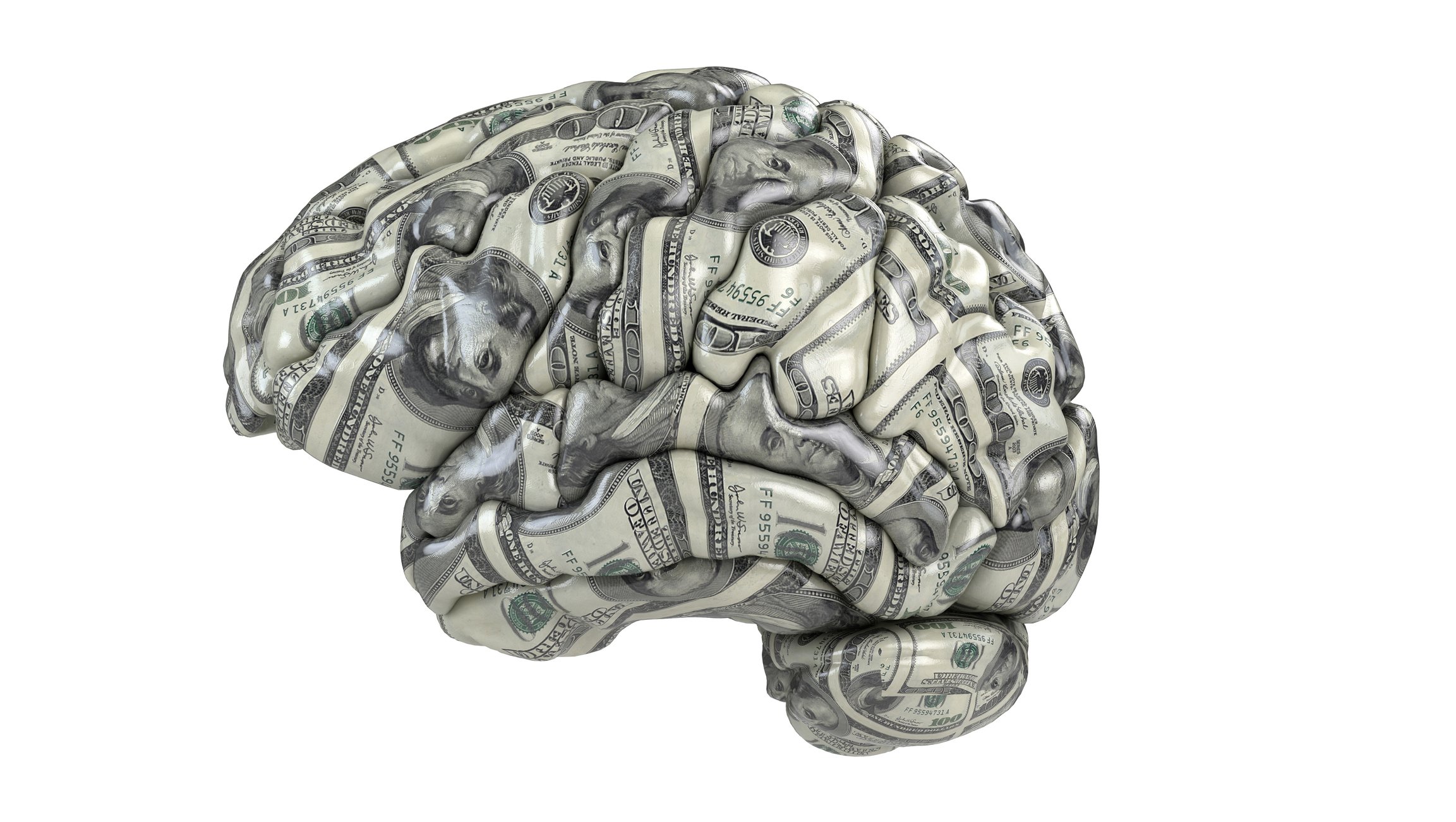
A recent neuroimaging study published in the European Journal of Neuroscience found that middle-aged men with higher family income show higher metabolic activity in brain regions that regulate reward and stress.
Not metaphorically. Literally. More glucose uptake. More neural energy.
Money, it turns out, doesn’t just lower stress.
It changes how the male brain allocates emotional energy.
The Myth This Breaks
We have quietly agreed on our shared American cultural story about men and emotional regulation.
That calm is earned.
That resilience is character.
That men who cope well simply tried harder.
This study suggests something colder—and more destabilizing:
Male emotional regulation may be subsidized.
So if regulation depends on resources, what exactly have we been praising as “character”?
That sentence alone explains why this research feels dangerous to discuss out loud.
What the Study Actually Found
Researchers analyzed positron emission tomography (PET) scans from over 230 healthy men in midlife, with an average age of 43. While the study examined Korean men, the findings collide directly with American narratives about masculinity and emotional self-control.
They examined how family income and education related to brain glucose metabolism—an index of neural activity.
The result was consistent:
Higher family income was associated with increased metabolic activity in the:
Caudate.
Putamen.
Anterior cingulate cortex.
Hippocampus.
Amygdala.
These are not decorative brain regions.
They govern motivation, reward anticipation, emotional salience, memory integration, and stress regulation.
Education level, notably, showed no such association.
Which means this isn’t about credentials or intelligence.
It’s about current access to resources.
Money isn’t just what you earned once.
It’s also what your nervous system expects will continue.
Why This Is So Profoundly Uncomfortable
Because it destabilizes a cherished American belief: that emotional resilience is an individual achievement.
We prefer to think emotional regulation lives inside a man.
This study places it partially inside his environment.
For decades, psychology has treated stress tolerance as a personality trait.
This research treats it as a metabolic outcome.
That distinction changes everything.
What Those Brain Regions Are Really Telling Us
The caudate and putamen drive reward learning and motivation.
The anterior cingulate manages emotional conflict.
The hippocampus contextualizes threat.
The amygdala flags danger.
These are survival systems, not indulgence circuits.
Higher metabolism here doesn’t suggest luxury.
It suggests capacity.
Which raises a quietly radical possibility:
Financial security for men may reduce the cognitive tax of uncertainty, freeing neural resources for regulation rather than vigilance.
Once you see this, certain patterns stop looking mysterious:
Why financial precarity erodes patience before it erodes mood.
Why some men appear “naturally calmer” under pressure.
Why income loss often precedes burnout faster than identity loss.
What This Is Not Saying
The authors are careful, and so should we be.
This study is cross-sectional.
It does not prove causality.
It does not claim moral superiority for wealth.
It does not excuse inequality.
But it does complicate the grit narrative.
Because grit may not be purely psychological.
It may be neuroeconomic.
Why This Matters in Therapy (Even When No One Mentions Money)
Men rarely arrive in therapy saying, “My reward circuitry is under-fueled.”
They say instead:
“I’m burned out.”
“I’m numb.”
“I can’t relax.”
“I’m always on edge.”
We often treat these as internal failures—mindset problems, emotional blind spots, attachment wounds.
This research invites a more destabilizing question:
What has long-term economic strain been asking this man’s nervous system to do?
Not once.
Repeatedly.
For decades.
The Unfinished Question
If income shapes reward circuitry,
what happens when status collapses?
We tell men to regulate their emotions.
We rarely inquire as to what their nervous systems have been financing so far.
And that omission is not neutral.
Final thoughts
If you’re feeling depleted, brittle, or perpetually braced, this research offers a reframing—not an excuse, but a new, compelling context.
Your nervous system does not operate in a vacuum.
It responds to sustained conditions.
If money stress, status instability, or long-term uncertainty are shaping how your body manages reward and threat, that is not a personal failure. It’s a signal.
Science-based couples therapy works best when we stop treating resilience as a moral test and start treating it more as a system under load.
Context matters. Systems matter. And nervous systems remember what conditions ask of them.
Be Well, Stay Kind, and Godspeed.
REFERENCES:
Pak, K., Shin, S., Nam, H.-Y., Kim, K., Kim, J., Lee, M. J., & Seok, J. W. (2026). Family income is associated with regional brain glucose metabolism in middle-aged males. European Journal of Neuroscience.