Welcome to my Blog
Thank you for stopping by. This space is where I share research, reflections, and practical tools drawn from my experience as a marriage and family therapist with an international practice.
I write about what happens to desire, attachment, and meaning once the early myths stop working.
Are you a couple looking for clarity? A professional curious about the science of relationships? Or simply someone interested in how love and resilience work? I'm glad you've found your way here. I can help with that. I'm accepting new clients, and this blog is for the benefit of all my gentle readers.
Each post is written with one goal in mind: to help you better understand yourself, your partner, and the hidden dynamics that shape human connection
Grab a coffee (or a notebook), explore what speaks to you, and take what's useful back into your life and relationships.
And if a post sparks a question, or makes you realize you could use more support, l'd love to hear from you. Let's explore the scope of work you'd like to do together.
Be Well, Stay Kind, and Godspeed.
~ Daniel
P.S.
Feel free to explore the categories below to find past blog posts on the topics that matter most to you. If you're curious about attachment, navigating conflict, or strengthening intimacy, these archives are a great way to dive deeper into the research and insights that l've been sharing for years.
- Attachment Issues
- Coronavirus
- Couples Therapy
- Extramarital Affairs
- Family Life and Parenting
- How to Fight Fair
- Inlaws and Extended Families
- Intercultural Relationships
- Marriage and Mental Health
- Married Life & Intimate Relationships
- Neurodiverse Couples
- Separation & Divorce
- Signs of Trouble
- Social Media and Relationships
- What Happy Couples Know


Has Therapy Lost Its Monopoly on Understanding You?
Something quiet but consequential is happening to therapy.
For years, the culture’s answer to nearly every form of distress was reassuringly simple: go talk to someone.
Heartbroken? Go to therapy.
Estranged from your parents? Therapy.
Uncertain about your marriage? Therapy.
Lonely, burned out, ashamed, furious, or simply having the sort of year that makes you stare at the ceiling at 3:17 in the morning? Therapy.
The recommendation was so morally polished that it became difficult to question.
Suggesting therapy meant you were enlightened.
Wondering what therapy might actually accomplish risked making you sound like someone who also distrusted seat belts and indoor plumbing.
But the culture is beginning to ask a less reverent question:
What can a human therapist do that an intelligent, infinitely patient machine cannot?
That question is not hostile to therapy.
It may be the question that saves it.
This is not an essay arguing that AI has become a therapist, that ordinary suffering never requires treatment, or that psychotherapy is merely validation with a copay.
It is an argument that therapy has lost its monopoly on psychological language and interpretation.
That loss will expose shallow, mediocre therapy. It may also clarify what good therapy has been doing all along.

Pregnancy and the Brain: How Motherhood Rewires the Mind with Love, Gray Matter, and Hormones
Motherhood is a journey of immense physical, emotional, and mental transformation—and it turns out, these changes reach deep into the very structure of the brain.
A recent study published in Nature Communications reveals that pregnancy and the postpartum period reshape the brain’s gray matter, offering fascinating insights into how biology prepares moms for the beautiful chaos of caregiving.
And yes, while gray hair might accompany motherhood, it’s the gray matter that’s stealing the spotlight here.
Let’s dive into this compelling research, which combines cutting-edge science, a touch of humor, and a whole lot of heart. Spoiler alert: this isn’t your average “mom brain” story.

Lindsay Clancy and the Jury That Refused the Easy Story
Some juries merely endure a trial. Others appear to take responsibility for it.
The jury in the Lindsay Clancy case appears to be the second kind.
They have been extraordinarily attentive. They have listened through painful psychiatric testimony, examined evidence closely, and resisted the emotional shortcut available from the beginning:
Three children are dead. Their mother killed them. Therefore, the only remaining question is punishment.
That shortcut would be human. It would also avoid the actual question before them.
No one seriously disputes that Lindsay Clancy killed Cora, Dawson, and Callan.
Her defense is not asking the jury to deny the physical facts or diminish the enormity of the children’s deaths.
It is asking whether severe mental illness had so overtaken her mind that she could no longer appreciate the wrongfulness of what she was doing.
Massachusetts formally describes this as a lack of criminal responsibility.
Most Americans know it by its older and plainer name: not guilty by reason of insanity.
I think that will be the verdict.

When “Just the Facts” Becomes a Way to Escape Accountability
In Robert Heinlein’s Stranger in a Strange Land, Anne—the rigorously trained Fair Witness—is asked what color a distant house is.
She looks and answers:
“It’s white on this side.”
She reports only what she can verify. She will not assume that the unseen walls match the visible one merely because that would be reasonable.
It is a beautiful model of disciplined observation.
It can also become a terrible model for marriage if we misunderstand it.
Human relationships are not distant houses. We live inside them.
We remember what happened before.
We react to tone, timing, expression, silence, and pattern.
The meaning of an interaction may reside precisely in what one isolated fact cannot establish.
And sometimes the person demanding “just the facts” is not protecting truth.
They are protecting themselves from accountability.

The House Is White on This Side: What Couples Can Learn From Heinlein’s Fair Witness
In Robert Heinlein’s Stranger in a Strange Land, Jubal Harshaw asks Anne what color a distant house has been painted.
Anne looks and answers:
“It’s white on this side.”
Anne is a Fair Witness: rigorously trained to report what she has actually observed without improving it with assumption.
She does not say the house is white. The remaining walls probably are. But Anne has not inspected them, and probability is not observation.
It is one of the most psychologically intelligent moments in science fiction.
It is also a nearly perfect description of what couples lose when they are in distress.

Toward an Ethics of Therapeutic Speech in Public
Therapists should take greater responsibility for how professional authority is used online.
But ethical evolution itself cannot be outsourced to regulators, critics, or licensing boards.
It must also arise from within the profession—and within the therapist.
A reader who signed their letter “Concerned & Curious” recently wrote to me about the ethics of therapists using social media.
Their letter was complimentary, serious, and sufficiently uncomfortable to be useful.
They had read my essay, “When the Therapist Has Already Decided Who the Villain Is,” which examined what happens when a therapist enters the clinical encounter with a prefabricated moral story.
One partner becomes the wounded truth-teller.
The other becomes the narcissist, gaslighter, avoidant, abuser, or designated explanation for everything that has gone wrong.
My correspondent suggested that an even larger problem sits upstream.
Before bias enters the therapy room, she argued, it is often rehearsed in public.
Licensed therapists now appear online as educators, influencers, political commentators, memoirists, entertainers, authors, podcasters, relationship experts, and promoters of their own services.
These roles can become thorny to separate.
A personal conviction may be delivered with the authority of a clinical judgment.
Unresolved personal material may be presented as universal psychological truth.
A simplified villain-and-victim story may attract an audience, sell a book, and quietly teach thousands of people how to interpret their families.
Therapists are not ordinary content creators.

We Are Becoming Too Good at Leaving Before Anything Can Happen
We have more language than ever for protecting ourselves from relationships.
What we seem to be losing is confidence that ordinary relationships can survive disappointment, ambiguity, and repair.
Let us begin with an encouraging development.
People are getting better at recognizing mistreatment.
They know that love does not require enduring violence, coercion, chronic humiliation, or psychological abuse.
They understand that family loyalty does not confer unlimited access to another person’s life.
They are more willing to leave relationships that earlier generations might have endured indefinitely because divorce was shameful, parents were beyond criticism, or suffering was considered a private domestic hobby.
This is progress.
But cultural progress has a way of producing its own excesses.

Holden Caulfield Doesn’t Need to Catch the Children. He Needs Someone to Catch Him.
Does The Catcher in the Rye offers a gentler model of masculinity?
I think Holden’s desire to protect innocence also conceals a grieving boy’s terror of change, intimacy, and being left behind.
The Catcher in the Ryeturns 75 this year, which means Holden Caulfield has now been wandering around Manhattan in his red hunting cap for three-quarters of a century, noticing that nearly everyone is a phony.
In a thoughtful recent essay for The Atlantic, “The Wisdom of Holden Caulfield,”Lily Meyer offers Holden a timely reconsideration.
Perhaps he is not merely against phoniness. Perhaps he is for something.
He is for gentleness. For honesty. For sexual restraint. For protecting vulnerable people. For a version of masculinity that does not depend on domination, conquest, boasting, or the theatrical display of indifference.
At a moment when alienated boys are being sold increasingly cartoonish models of manhood—muscles, money, sexual access, public swagger—there is something almost radical about a boy whose deepest ambition is to keep children from falling over a cliff.
Meyer is right about Holden’s tenderness.
But perhaps tenderness is not the whole story.
Holden does not merely want to protect innocence.
He cannot tolerate its ending.

A Marriage Needs Something Larger Than Itself
Most couples do not need another date night.
They need to look up.
This is not an argument against dinner reservations, babysitters, small plates, or desserts arriving with two spoons.
Date nights can be lovely.
But they often leave the couple exactly where they began: sitting across from each other, examining the relationship.
How are we doing?
Are we still connected?
Why don’t we have more fun?
The modern marriage is already one of the most closely monitored institutions in human history.
We track its satisfaction, communication, erotic temperature, division of labor, emotional availability, and preferred method of loading a dishwasher.
Sometimes the marriage does not need further examination.
Sometimes it needs an encounter with something that is not the marriage.
A mountain. A storm. A cathedral. A piece of music that leaves both partners silent.
The ocean in February, behaving as though human beings had never been invented.
Something vast enough to interrupt the exhausting project of being ourselves.
New research suggests that couples who experience awe together report greater relationship satisfaction, passionate love, closeness, willingness to sacrifice, and—most strikingly—relationship flourishing.
Not merely happiness.
Flourishing.

The Stories We Tell About Ourselves—and the Marriages They Create
Two life partners can survive remarkably similar experiences and carry away entirely different lives.
One says:
It was terrible. It changed me. But it does not get to decide everything about me.
The other says:
That was when I learned who I really am. I am damaged. People leave. Trust is humiliation with a short delay.
The difference is not optimism. It is authorship.
We do not merely remember what happened to us.
We arrange it into a story about who we are, what other people are like, and what can reasonably be expected from love.
Then we marry someone who has been doing exactly the same thing.
How Did the Hurt Partner End Up Apologizing?
It begins with a small act of courage.
One partner says, “Something you did hurt me.”
They may say it carefully. They may wait until the children are asleep.
They may rehearse it in the car, remove every accusing word, and begin with the sort of disclaimer ordinarily used when approaching an unexploded device:
I know you didn’t mean it this way.
I’m not saying you’re a bad person.
I just want you to understand how it felt.
Twenty minutes later, the person who was hurt is apologizing.
Not for shouting. Not for insulting anyone. Not for choosing a terrible moment.
They are apologizing for having introduced their pain into the room.
Their partner is now devastated, furious, ashamed, or reciting everything they have ever done for the relationship. The original injury has vanished beneath the larger emergency of the accused partner’s feelings.
This is one of the strangest little reversals in intimate life.
The conversation begins with: You hurt me.
It ends with: I’m sorry I made you feel like a bad person.
And the hurt partner goes to bed wondering how the meeting changed agendas without anyone taking a vote.
When Your Spouse Needs a Jury: Triangulation, Outside Allies, and the Marital Need to Be Declared Right
The argument begins in the kitchen.
One spouse says something sharp.
The other withdraws.
Nothing is resolved.
Later, one of them calls a sister.
The other texts a friend.
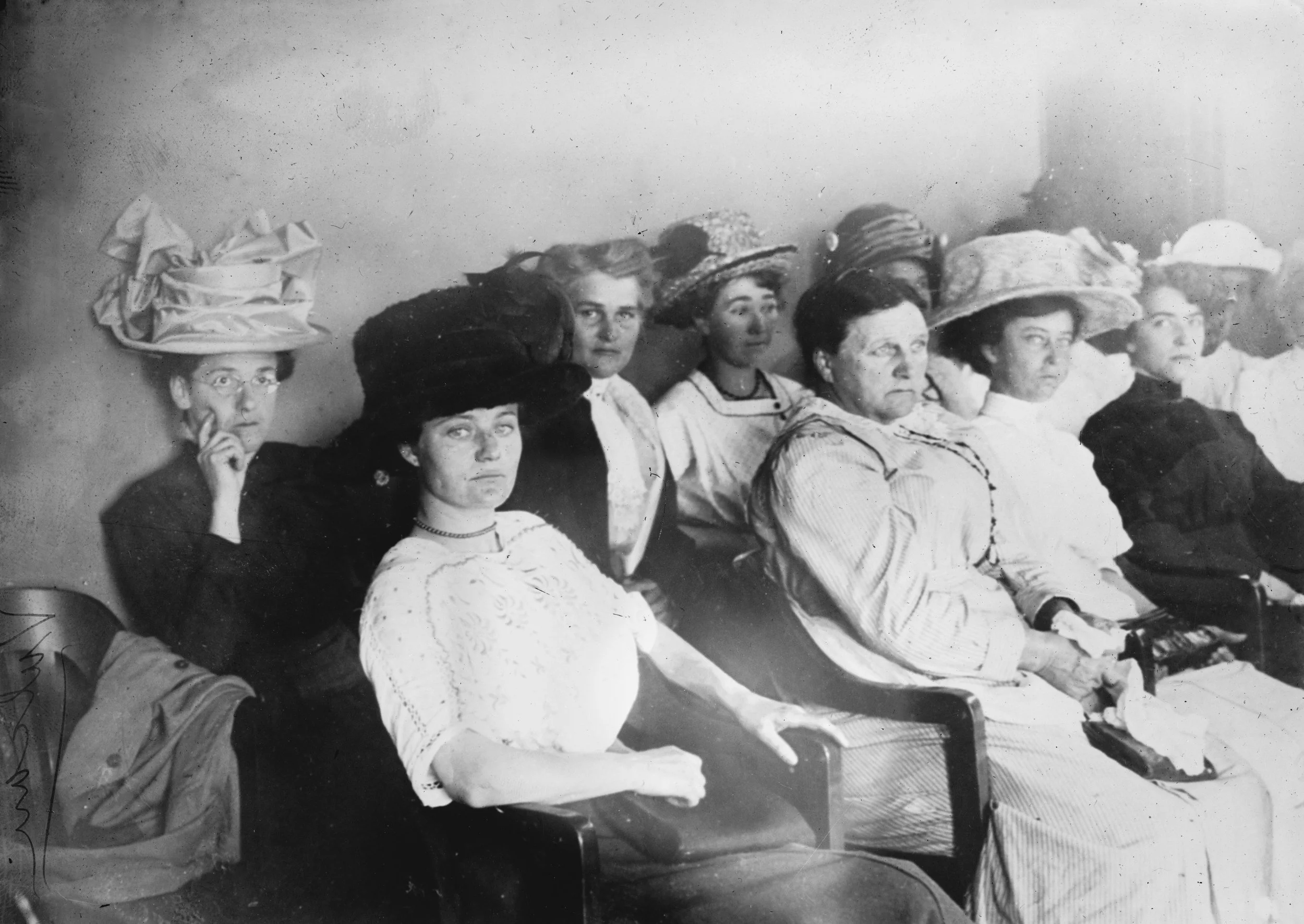
By bedtime, the marriage has acquired witnesses.
“My sister thinks you’re being selfish.”
“My therapist says this isn’t healthy.”
“Everyone I’ve talked to agrees with me.”
“I described what happened online. People said I should leave you.”
“Even ChatGPT says you’re emotionally abusive.”
At that point, the argument is no longer between two spouses.
It has acquired a jury.
And remarkably, the jury has heard only one side of the case.