When Your Spouse Needs a Jury: Triangulation, Outside Allies, and the Marital Need to Be Declared Right
Friday, August 28, 2026.
The argument begins in the kitchen.
One spouse says something sharp.
The other withdraws.
Nothing is resolved.
Later, one of them calls a sister.
The other texts a friend.
By bedtime, the marriage has acquired witnesses.
“My sister thinks you’re being selfish.”
“My therapist says this isn’t healthy.”
“Everyone I’ve talked to agrees with me.”
“I described what happened online. People said I should leave you.”
“Even ChatGPT says you’re emotionally abusive.”
At that point, the argument is no longer between two spouses.
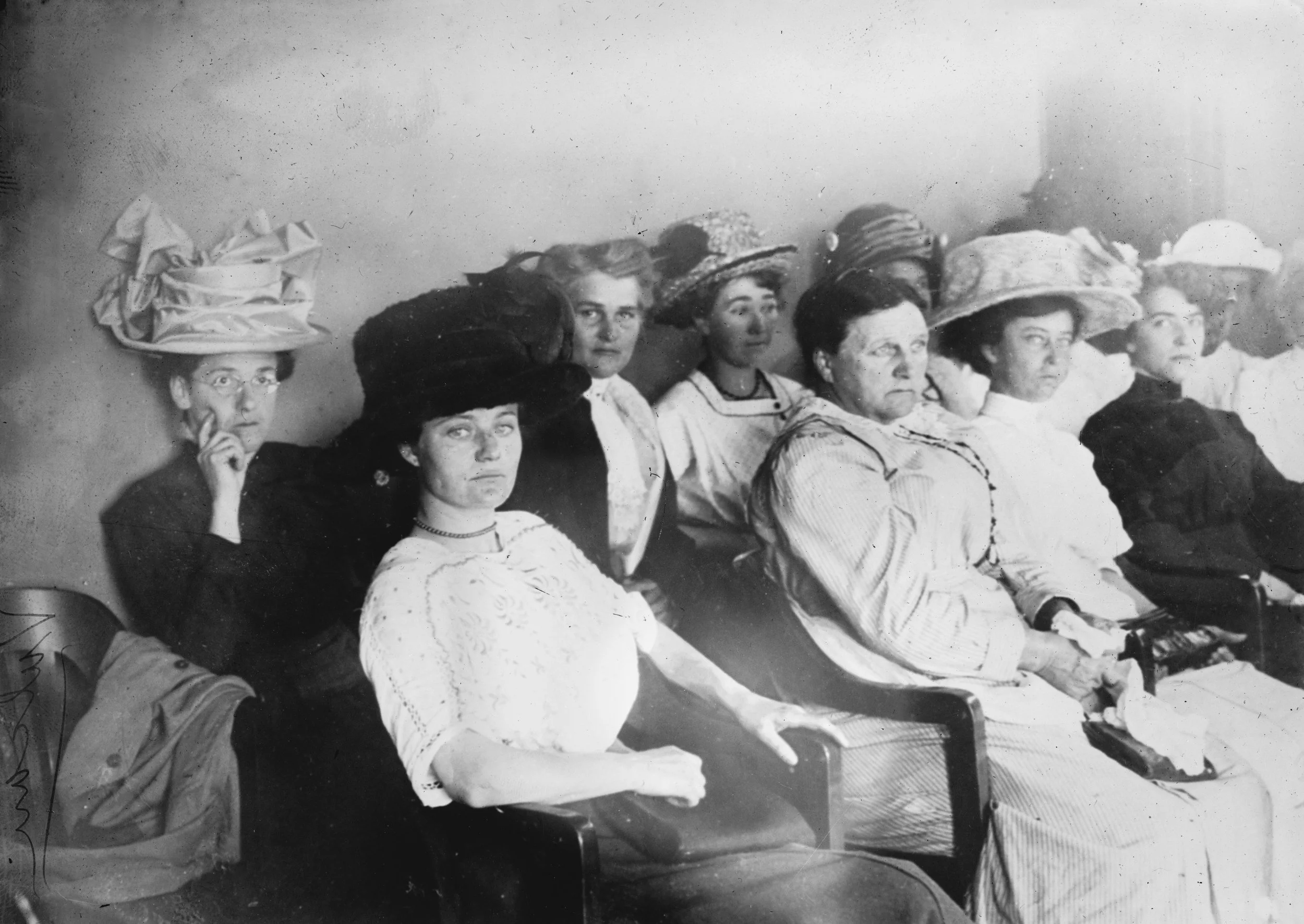
It has acquired a jury.
And remarkably, the jury has heard only one side of the case.
The Ancient Marital Art of Recruiting a Witness
Family therapists call this triangulation.
When tension between two people becomes difficult to tolerate, one of them recruits a third person, institution, activity, or idea into the relationship.
The third party lowers the anxiety.
At least temporarily.
It might be:
A parent who hears every disappointing thing a spouse has done.
A friend who confirms that the marriage is unfair.
A child who becomes one parent’s confidant.
A therapist whose observations are carried home as verdicts.
An affair partner who seems unusually understanding because they have never shared a mortgage, raised a child, or searched for the missing passport.
An online community that reaches a unanimous conclusion after reading 700 words written by the person seeking vindication.
An artificial intelligence system responding thoughtfully to whatever version of the marriage it has been given.
The cast changes.
The triangle does not.
Support Is Not the Same as Certification
When a spouse turns outside the marriage, they are not always looking for advice.
Sometimes they are looking for certification.
They do not merely want someone to understand why they are hurt. They want someone to confirm that their interpretation is the correct one.
Support sounds like this:
“I can see why that hurt you. What do you want to do next?”
Certification sounds like this:
“You are right. Your spouse is the problem.”
Support helps someone return to the marriage with greater clarity.
Certification sends them back with a weapon.
The spouse no longer says:
“I feel dismissed when you walk away during an argument.”
They say:
“My therapist agrees that you are emotionally unavailable.”
The first statement reveals an experience.
The second invokes an authority.
One invites a difficult conversation. The other announces that the conversation has already been settled elsewhere.
Every Marriage Produces Two Plausible Stories
This is one of the most inconvenient facts about couples therapy.
Most distressed marriages contain two internally coherent accounts.
In one account, a wife has spent years trying to get her husband to talk. He avoids conflict, minimizes her concerns, and retreats whenever emotion enters the room.
In his account, he has spent years being approached with criticism, intensity, and conclusions already drawn. He retreats because every conversation feels like a prosecution.
She experiences abandonment.
He experiences pursuit.
She becomes louder because he withdraws.
He withdraws because she becomes louder.
Each can describe the sequence truthfully from inside their own nervous system.
This does not mean both partners are equally responsible for every problem. Abuse, coercion, intimidation, deception, and infidelity require moral clarity.
But in the large middle territory of marital distress, a relationship cannot be understood by collecting one partner’s grievances and then voting.
The outside jury may not be foolish.
It has simply been given one camera angle.
The Friend Who Always Agrees with You
Every distressed spouse deserves support.
But not every supportive friend is a friend of the marriage.
Some friends can hold complexity:
“That sounds painful. I also know that when you’re frightened, you sometimes become controlling. What do you think your spouse experienced?”
That is friendship with a spine.
Other friends offer something more intoxicating: unconditional narrative agreement.
They never ask what happened before the event being described. They do not wonder how the spouse would tell the story. They become increasingly certain while knowing increasingly little.
This feels wonderful.
It can also harden the marriage into a morality play.
One spouse becomes the long-suffering protagonist.
The other becomes the obstacle.
Once that arrangement is established, repairing the marriage can feel almost disloyal. Reconciliation would require the unhappy spouse to revise the story that brought comfort, attention, and allies.
Eventually, the triangle develops an interest in its own survival.
When the Therapist Enters the Argument
Therapy can help people think more clearly about their relationships.
It can also be recruited into the same old triangle.
A person attends individual therapy and describes a spouse who is cold, narcissistic, avoidant, controlling, emotionally immature, or insufficiently fluent in whatever psychological vocabulary is currently enjoying its moment.
The therapist responds to the client in the room.
That is understandable.
It is also limited.
The therapist has not evaluated the absent spouse. They have not watched the couple interact. They have not seen what happened during the 30 seconds before the story began.
Nevertheless, the client may return home carrying a diagnosis—or something that sounds very much like one:
“My therapist says you’re gaslighting me.”
Perhaps the spouse is gaslighting.
Perhaps the couple remembers an event differently.
Perhaps one partner is defensive.
Perhaps both are frightened.
Perhaps the therapist said something far more tentative than the sentence eventually delivered at home.
“Therapy says” can become the marital equivalent of “God says.”
It places one spouse’s interpretation above appeal.
A good therapist helps a client develop judgment.
A poorly used therapist replaces it.
The Child Who Gets Promoted
The most consequential triangles involve children.
A parent feels lonely in the marriage and begins confiding in a son or daughter.
Nothing dramatic needs to be said.
The parent sighs.
The child notices.
The parent explains that Mom is “difficult” or Dad “doesn’t understand feelings.” The child is praised for being unusually mature, sensitive, or dependable.
Soon the child becomes the emotionally responsive person the marriage appears to lack.
This can feel like closeness.
It is actually a promotion the child never applied for.
The child learns that loving one parent may require protecting that parent from the other. Ordinary disagreements acquire invisible loyalties. The family organizes itself into alliances.
The marriage may become calmer because its tension has been redistributed.
The child pays the bill.
The Better Witness
An affair partner is not always more attractive, intelligent, or compatible than the spouse.
Sometimes the affair partner is simply a more agreeable audience.
They meet the unappreciated self, the neglected self, the self who has been carrying everything alone.
They rarely meet the irritable self, the avoidant self, the entitled self, or the self who has not loaded the dishwasher since the Obama administration.
They receive the edited version.
Then they admire it.
This is one reason emotional affairs can become so powerful. The third person does not merely provide affection. They validate an identity:
“You are not difficult. You have simply never been properly understood.”
The affair partner becomes more than a romantic possibility.
They become the star witness for the defense.
Technology Did Not Invent the Triangle
Today, people bring screenshots, text chains, TikTok therapists, Reddit verdicts, search results, and artificial intelligence into their marriages.
The technology is new.
The wish beneath it is ancient:
Please tell me that my pain proves my interpretation.
AI makes this unusually efficient. It is endlessly patient. It does not tire of hearing the story. It can organize grievances into persuasive language and attach psychological concepts to them.
But it knows only what it is told.
If one partner presents a carefully framed account, the machine may produce a beautifully phrased elaboration of that framing.
The response feels objective because no visibly interested person delivered it.
But a mirror does not become a window merely because it speaks in complete sentences.
When Outside Help Actually Helps
Marriage does not require secrecy or isolation.
Life partners need friends, families, clergy, physicians, therapists, communities, and sometimes lawyers.
A third party can strengthen a relationship when that person increases thoughtfulness rather than certainty.
Useful outside support helps someone:
Name an experience without enlarging it.
Distinguish hurt from harm.
Recognize a recurring pattern.
Examine their own participation.
Establish necessary boundaries.
Determine whether a relationship is unsafe.
Return to the partner with greater clarity.
Destructive triangulation does something else.
It recruits allegiance.
A useful third party eventually returns the problem to the two people who must address it.
A triangle becomes chronic when the third party carries emotional tension the couple refuses to face.
Are You Seeking Help—or Building a Case?
Ask yourself a few uncomfortable questions.
Do I want perspective or agreement?
Would I remain open to someone who challenged my account?
Have I described my own least flattering behavior?
Or does my version contain one complicated person and one remarkably reasonable narrator?
Am I seeking support?
Or do I want someone important to dislike my spouse?
Will this conversation help me speak more directly at home?
Or will it spare me from doing so?
Am I collecting insight—or witnesses?
The distinction is rarely perfect.
But it is usually visible.
Marriage Without a Jury
The alternative to triangulation is not radical self-sufficiency.
It is differentiation.
A differentiated spouse can remain connected while holding an independent position:
“I believe something is wrong between us. I am willing to hear that you experience it differently. I will not abandon my judgment, and I will not require a jury to make my judgment real.”
That is considerably harder than finding five people who agree with you.
Differentiation requires the ability to withstand being misunderstood temporarily. It means speaking without an army behind you. It allows pain to be real while recognizing that interpretation may remain incomplete.
It also requires courage from the listening partner.
If your spouse approaches you without reinforcements, do not punish the attempt.
Do not mock the feeling.
Do not exploit uncertainty.
Direct conversation survives only when candor is treated as information rather than ammunition.
The Conversation That Must Come Home
There are times when outside intervention is essential. No one should negotiate privately with violence, coercion, stalking, serious addiction, or intimidation.
But most marital disappointments eventually have to return to their address of origin.
Your sister cannot make your spouse more responsive.
Your friend cannot create sexual honesty between you.
Your therapist cannot have the conversation on your behalf.
The internet cannot determine what happened inside a marriage it has never witnessed.
And a machine cannot supply the courage required to speak honestly to someone who may disagree.
The real work begins when the jury is dismissed.
Two people remain.
Neither is fully certified.
Neither controls the verdict.
And someone finally says:
“This is how the marriage feels from where I stand. Tell me what it looks like from where you are.”
That sentence does not settle the argument.
It does something more valuable.
It brings the marriage back into the room.
Frequently Asked Questions
What is triangulation in a marriage?
Triangulation occurs when tension between two partners is managed by involving a third person, relationship, activity, or authority. The third point may temporarily lower anxiety while preventing the couple from addressing the underlying problem directly.
Is talking to friends about marital problems unhealthy?
Not necessarily. Healthy support increases clarity and helps someone communicate more directly. It becomes destructive when the friend is recruited to condemn the spouse, carry messages, or provide permanent validation for one partner’s account.
How can couples stop triangulating?
Identify which conversations are occurring outside the marriage that need to happen within it. Outside support should help each partner become calmer, clearer, and more accountable—not better armed.
Why Work with Daniel?
When couples arrive in therapy, the presenting conflict is often surrounded by other voices: friends, parents, children, individual therapists, online advice, and sometimes an affair partner.
The first task is not deciding who has assembled the stronger jury.
It is understanding the relationship itself.
I help couples identify the triangles carrying their marital tension, clarify what belongs between them, and develop the differentiation required to speak honestly without recruiting allies or surrendering themselves.
This work is especially important when a couple has become polarized, when one partner feels chronically unheard, or when every disagreement has begun to resemble a trial.
Related Reading
The Outsourced Marriage: How AI Is Quietly Becoming the Third Partner
Emotional Triangulation in Relationships: When the Third Person Isn’t a Lover
Differentiation of Self: Why Growing Up Takes About Eighty Years
Be Well, Stay Kind, and Godspeed.