Welcome to my Blog
Thank you for stopping by. This space is where I share research, reflections, and practical tools drawn from my experience as a marriage and family therapist with an international practice.
I write about what happens to desire, attachment, and meaning once the early myths stop working.
Are you a couple looking for clarity? A professional curious about the science of relationships? Or simply someone interested in how love and resilience work? I'm glad you've found your way here. I can help with that. I'm accepting new clients, and this blog is for the benefit of all my gentle readers.
Each post is written with one goal in mind: to help you better understand yourself, your partner, and the hidden dynamics that shape human connection
Grab a coffee (or a notebook), explore what speaks to you, and take what's useful back into your life and relationships.
And if a post sparks a question, or makes you realize you could use more support, l'd love to hear from you. Let's explore the scope of work you'd like to do together.
Be Well, Stay Kind, and Godspeed.
~ Daniel
P.S.
Feel free to explore the categories below to find past blog posts on the topics that matter most to you. If you're curious about attachment, navigating conflict, or strengthening intimacy, these archives are a great way to dive deeper into the research and insights that l've been sharing for years.
- Attachment Issues
- Coronavirus
- Couples Therapy
- Extramarital Affairs
- Family Life and Parenting
- How to Fight Fair
- Inlaws and Extended Families
- Intercultural Relationships
- Marriage and Mental Health
- Married Life & Intimate Relationships
- Neurodiverse Couples
- Separation & Divorce
- Signs of Trouble
- Social Media and Relationships
- What Happy Couples Know


The House Is White on This Side: What Couples Can Learn From Heinlein’s Fair Witness
In Robert Heinlein’s Stranger in a Strange Land, Jubal Harshaw asks Anne what color a distant house has been painted.
Anne looks and answers:
“It’s white on this side.”
Anne is a Fair Witness: rigorously trained to report what she has actually observed without improving it with assumption.
She does not say the house is white. The remaining walls probably are. But Anne has not inspected them, and probability is not observation.
It is one of the most psychologically intelligent moments in science fiction.
It is also a nearly perfect description of what couples lose when they are in distress.

Toward an Ethics of Therapeutic Speech in Public
Therapists should take greater responsibility for how professional authority is used online.
But ethical evolution itself cannot be outsourced to regulators, critics, or licensing boards.
It must also arise from within the profession—and within the therapist.
A reader who signed their letter “Concerned & Curious” recently wrote to me about the ethics of therapists using social media.
Their letter was complimentary, serious, and sufficiently uncomfortable to be useful.
They had read my essay, “When the Therapist Has Already Decided Who the Villain Is,” which examined what happens when a therapist enters the clinical encounter with a prefabricated moral story.
One partner becomes the wounded truth-teller.
The other becomes the narcissist, gaslighter, avoidant, abuser, or designated explanation for everything that has gone wrong.
My correspondent suggested that an even larger problem sits upstream.
Before bias enters the therapy room, she argued, it is often rehearsed in public.
Licensed therapists now appear online as educators, influencers, political commentators, memoirists, entertainers, authors, podcasters, relationship experts, and promoters of their own services.
These roles can become thorny to separate.
A personal conviction may be delivered with the authority of a clinical judgment.
Unresolved personal material may be presented as universal psychological truth.
A simplified villain-and-victim story may attract an audience, sell a book, and quietly teach thousands of people how to interpret their families.
Therapists are not ordinary content creators.

We Are Becoming Too Good at Leaving Before Anything Can Happen
We have more language than ever for protecting ourselves from relationships.
What we seem to be losing is confidence that ordinary relationships can survive disappointment, ambiguity, and repair.
Let us begin with an encouraging development.
People are getting better at recognizing mistreatment.
They know that love does not require enduring violence, coercion, chronic humiliation, or psychological abuse.
They understand that family loyalty does not confer unlimited access to another person’s life.
They are more willing to leave relationships that earlier generations might have endured indefinitely because divorce was shameful, parents were beyond criticism, or suffering was considered a private domestic hobby.
This is progress.
But cultural progress has a way of producing its own excesses.

Holden Caulfield Doesn’t Need to Catch the Children. He Needs Someone to Catch Him.
Does The Catcher in the Rye offers a gentler model of masculinity?
I think Holden’s desire to protect innocence also conceals a grieving boy’s terror of change, intimacy, and being left behind.
The Catcher in the Ryeturns 75 this year, which means Holden Caulfield has now been wandering around Manhattan in his red hunting cap for three-quarters of a century, noticing that nearly everyone is a phony.
In a thoughtful recent essay for The Atlantic, “The Wisdom of Holden Caulfield,”Lily Meyer offers Holden a timely reconsideration.
Perhaps he is not merely against phoniness. Perhaps he is for something.
He is for gentleness. For honesty. For sexual restraint. For protecting vulnerable people. For a version of masculinity that does not depend on domination, conquest, boasting, or the theatrical display of indifference.
At a moment when alienated boys are being sold increasingly cartoonish models of manhood—muscles, money, sexual access, public swagger—there is something almost radical about a boy whose deepest ambition is to keep children from falling over a cliff.
Meyer is right about Holden’s tenderness.
But perhaps tenderness is not the whole story.
Holden does not merely want to protect innocence.
He cannot tolerate its ending.

A Marriage Needs Something Larger Than Itself
Most couples do not need another date night.
They need to look up.
This is not an argument against dinner reservations, babysitters, small plates, or desserts arriving with two spoons.
Date nights can be lovely.
But they often leave the couple exactly where they began: sitting across from each other, examining the relationship.
How are we doing?
Are we still connected?
Why don’t we have more fun?
The modern marriage is already one of the most closely monitored institutions in human history.
We track its satisfaction, communication, erotic temperature, division of labor, emotional availability, and preferred method of loading a dishwasher.
Sometimes the marriage does not need further examination.
Sometimes it needs an encounter with something that is not the marriage.
A mountain. A storm. A cathedral. A piece of music that leaves both partners silent.
The ocean in February, behaving as though human beings had never been invented.
Something vast enough to interrupt the exhausting project of being ourselves.
New research suggests that couples who experience awe together report greater relationship satisfaction, passionate love, closeness, willingness to sacrifice, and—most strikingly—relationship flourishing.
Not merely happiness.
Flourishing.

The Stories We Tell About Ourselves—and the Marriages They Create
Two life partners can survive remarkably similar experiences and carry away entirely different lives.
One says:
It was terrible. It changed me. But it does not get to decide everything about me.
The other says:
That was when I learned who I really am. I am damaged. People leave. Trust is humiliation with a short delay.
The difference is not optimism. It is authorship.
We do not merely remember what happened to us.
We arrange it into a story about who we are, what other people are like, and what can reasonably be expected from love.
Then we marry someone who has been doing exactly the same thing.

How Did the Hurt Partner End Up Apologizing?
It begins with a small act of courage.
One partner says, “Something you did hurt me.”
They may say it carefully. They may wait until the children are asleep.
They may rehearse it in the car, remove every accusing word, and begin with the sort of disclaimer ordinarily used when approaching an unexploded device:
I know you didn’t mean it this way.
I’m not saying you’re a bad person.
I just want you to understand how it felt.
Twenty minutes later, the person who was hurt is apologizing.
Not for shouting. Not for insulting anyone. Not for choosing a terrible moment.
They are apologizing for having introduced their pain into the room.
Their partner is now devastated, furious, ashamed, or reciting everything they have ever done for the relationship. The original injury has vanished beneath the larger emergency of the accused partner’s feelings.
This is one of the strangest little reversals in intimate life.
The conversation begins with: You hurt me.
It ends with: I’m sorry I made you feel like a bad person.
And the hurt partner goes to bed wondering how the meeting changed agendas without anyone taking a vote.
When Your Spouse Needs a Jury: Triangulation, Outside Allies, and the Marital Need to Be Declared Right
The argument begins in the kitchen.
One spouse says something sharp.
The other withdraws.
Nothing is resolved.
Later, one of them calls a sister.
The other texts a friend.
By bedtime, the marriage has acquired witnesses.
“My sister thinks you’re being selfish.”
“My therapist says this isn’t healthy.”
“Everyone I’ve talked to agrees with me.”
“I described what happened online. People said I should leave you.”
“Even ChatGPT says you’re emotionally abusive.”
At that point, the argument is no longer between two spouses.
It has acquired a jury.
And remarkably, the jury has heard only one side of the case.

What Do We Do About Andrew? Prince Andrew, Andrew Tate, and Male Entitlement
There are two famous British men named Andrew whom polite society does not quite know what to do with.
One was born in Buckingham Palace.
The other built a digital palace from sports cars, cigar smoke, grievance, and apparently inexhaustible Wi-Fi.
Prince Andrew inherited status. Andrew Tate manufactured it.
One represents the exhausted final chapter of aristocratic male privilege.
The other represents its energetic reinvention for the algorithmic age.
They are not equivalent men.
The allegations against them differ, their legal situations differ, and those distinctions matter.
Prince Andrew denied Virginia Giuffre’s allegations and settled her civil lawsuit without admitting liability.
Tate denies the criminal allegations against him, which remain subject to legal proceedings across several jurisdictions.
But culturally, they belong in the same room.
Both became symbols of a masculine fantasy that has survived every apparent modernization of sexual life:
A sufficiently important man should not have to experience women as fully separate people.
The costume changed.
But the proposition did not.

Mercy Sex Is a Bad Name for a Complicated Yes
New research claims to have measured how often women with low sexual desire have “mercy sex.”
What it actually measured was something far more interesting.
A woman agrees to have sex with her husband.
She was not thinking about sex beforehand.
She did not spend the afternoon in a state of barely managed erotic anticipation.
She was thinking about groceries, an unanswered email, and whether the damp towel on the bathroom floor had achieved legal residency.
But she likes him.
She likes being close to him. She is willing to begin.
Perhaps desire will arrive once they are touching.
Perhaps it will not. Either way, she does not experience the encounter as an injury or extraction.
Was that mercy sex?
Now consider another woman.
She agrees because declining will produce three hours of sulking, a speech about how they are “just roommates,” or another insinuation that a man cannot reasonably be expected to remain faithful under these conditions.
Was that mercy sex as well?

Twilight Was Never About Vampires. It Was About Bestowed Attention.
There are two kinds of people in the world: people who regard Twilight as a swooning romantic epic, and people who have spent fifteen years explaining why Edward Cullen is a restraining order with excellent cheekbones.
Both groups have a point.
The Twilight films are not especially subtle.
Everyone looks deprived of sunlight, iron, and an ordinary conversation.
Entire relationships are conducted through prolonged staring.
A seventeen-year-old girl moves to a damp logging town and discovers that the most desirable boy in school is a 104-year-old vampire who watches her sleep.
Naturally, she falls in love.
But the success of Twilight cannot be explained by vampires, abstinence, or Robert Pattinson’s hair.
Beneath the supernatural upholstery, the series tells a familiar psychological story: the fantasy of being selected so completely that ordinary life can no longer compete.
Bella Swan does not merely receive attention.
She receives bestowed attention.
Edward sees her, chooses her, studies her, protects her, and reorganizes his immortal existence around her.
Bella may feel ordinary, but the most extraordinary creature in the room cannot look away.
That is the central seduction of Twilight.
Not sex.
Significance.
The Best That Ever Was: Matt Damon, Ambition, and the Narcissism of Success
Matt Damon was sixteen or seventeen when his mother asked him why he was so obsessed with becoming an actor.
He knew exactly what he wanted.
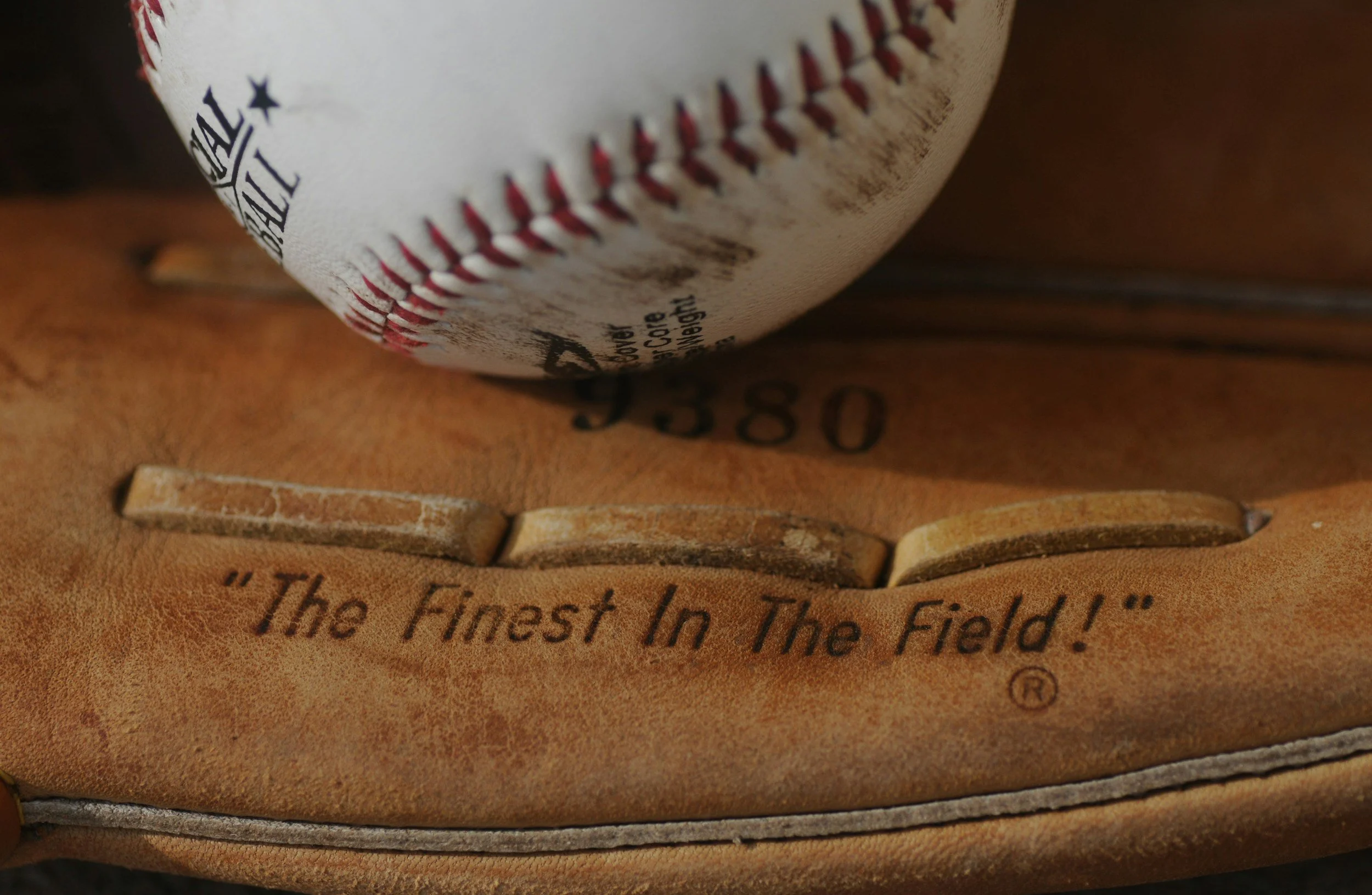
Damon had been captivated by The Natural, the 1984 film in which Robert Redford plays Roy Hobbs, a baseball player with an almost supernatural gift and a rather more ordinary capacity for self-destruction.
Hobbs dreams of walking down the street and hearing people whisper that he was “the best there ever was.”
Young Damon borrowed the fantasy.
Someday, he told his mother, people would watch him pass and say the same thing about Matt Damon.
His mother was appalled.
“Did I raise you?”
Nancy Carlsson-Paige reportedly replied.
She called it an “egomaniacal pipe dream” and asked the question that punctured the whole magnificent adolescent production:
How does this help other people?
There are mothers who encourage a child’s grandiosity. There are mothers who quietly reorganize the household around it.
Damon’s mother threw a chair through the window.
It may have been one of the most useful conversations of his life.