
Welcome to my Blog
Thank you for stopping by. This space is where I share research, reflections, and practical tools drawn from my experience as a marriage and family therapist with an international practice.
I write about what happens to desire, attachment, and meaning once the early myths stop working.
Are you a couple looking for clarity? A professional curious about the science of relationships? Or simply someone interested in how love and resilience work? I'm glad you've found your way here. I can help with that. I'm accepting new clients, and this blog is for the benefit of all my gentle readers.
Each post is written with one goal in mind: to help you better understand yourself, your partner, and the hidden dynamics that shape human connection
Grab a coffee (or a notebook), explore what speaks to you, and take what's useful back into your life and relationships.
And if a post sparks a question, or makes you realize you could use more support, l'd love to hear from you. Let's explore the scope of work you'd like to do together.
Be Well, Stay Kind, and Godspeed.
~ Daniel
P.S.
Feel free to explore the categories below to find past blog posts on the topics that matter most to you. If you're curious about attachment, navigating conflict, or strengthening intimacy, these archives are a great way to dive deeper into the research and insights that l've been sharing for years.
- Attachment Issues
- Coronavirus
- Couples Therapy
- Extramarital Affairs
- Family Life and Parenting
- How to Fight Fair
- Inlaws and Extended Families
- Intercultural Relationships
- Marriage and Mental Health
- Married Life & Intimate Relationships
- Neurodiverse Couples
- Separation & Divorce
- Signs of Trouble
- Social Media and Relationships
- What Happy Couples Know


Are Therapists Breaking Up Families?
Therapy is supposed to help folks understand difficult relationships.
But what happens when the therapist begins helping the client end one?
A provocative new Wall Street Journal reportexamines whether some therapists are too readily encouraging adult children to cut off parents and other relatives in the name of self-care.
The question is combustible because estrangement is sometimes necessary. Families can be violent, abusive, coercive, addicted, or chronically destructive.
Nobody should be required to remain available for further harm simply because the person causing it has the same last name.
But the Journal is asking a more difficult question.
Has the threshold for permanent estrangement changed? And are some therapists helping to lower it?

The Sex Life You’re Supposed to Be Having Does Not Exist
Somewhere in America, a perfectly contented couple is worrying that they are not having enough sex.
They do not know who established the quota. No physician handed it to them.
It was not included with the marriage license.
Nevertheless, they have absorbed the idea that happy couples have sex frequently, unhappy couples have it rarely, and everybody else should be monitoring the situation like an underperforming retirement account.
The result is a peculiar form of intimate anxiety: two people may be reasonably satisfied until they begin wondering whether they are satisfied often enough.
The Wall Street Journal recently examined several popular beliefs about sex that do not sit comfortably with the available research.
One of the most persistent is the assumption that more sex necessarily produces a happier relationship.
It does not appear to be that simple.

The 300 Words We’re No Longer Saying
There are many ways to watch a society become quieter.
The cashier becomes a screen. The menu becomes a QR code.
Directions come from a pleasant disembodied woman who never becomes irritated when we miss the turn.
Coffee is ordered before we enter the shop. Groceries arrive on the porch without requiring anybody to put on proper trousers.
Each innovation saves a little time. It also removes a small human exchange.
Now researchers have attempted to measure what may be disappearing.
A 2026 paper published in Perspectives on Psychological Sciencereported that we appear to be speaking substantially fewer words than we did at the beginning of this century.
Not writing fewer words. Not texting fewer words.
Speaking fewer words aloud.
We have become highly communicative and increasingly silent.

The Burned Haystack Dating Method: What If Your Standards Burn Down the Field?
Online dating has traditionally been compared to finding a needle in a haystack.
The usual advice is to search patiently.
Keep an open mind. Give people a chance.
Perhaps the man holding a dead fish has hidden depths.
Perhaps “fluent in sarcasm” is merely covering a tender heart.
Perhaps the profile consisting entirely of gym photographs and complaints about women will reveal itself, over coffee, to be an early draft of Middlemarch.
The Burned Haystack Dating Method proposes a more efficient solution.
Burn the haystack.
The method was created by Jennie Young, a professor of rhetoric and women’s and gender studies at the University of Wisconsin–Green Bay.
Instead of endlessly swiping past unsuitable profiles, users learn to identify troubling language patterns and block decisively.
Metal does not burn.
When the hay is gone, theoretically, the needle remains.

Everyone Wants Love. Nobody Wants to Be Embarrassed.
There was a time when looking foolish was considered part of falling in love.
You called too soon. You laughed too loudly. You sent a note whose emotional temperature now seems medically concerning.
You stood outside someone’s apartment holding flowers and the fragile remains of your dignity.
Sometimes it worked.
Sometimes you went home alone and spent three days listening to music specifically engineered to worsen the situation.
Either way, you survived.
Modern dating has improved many things. We have more choice, more freedom, more language for boundaries, and far less obligation to marry whoever happened to live near our father’s hardware store.
But we may have lost one essential romantic capacity along the way:
The willingness to look a little ridiculous.
According to the 2026 State of Our Unions report, only 28% of the young adults surveyed said they could remain positive after a bad date or romantic setback.
More than half said previous breakups had made them reluctant to begin another relationship.
The numbers deserve some caution.
The report comes from the Institute for Family Studies, an organization with a distinct perspective on marriage and family life. But the pattern it describes is recognizable far beyond any single survey.
Humans still want love.
They simply do not want to be observed wanting it.

The Kissing Recession: When Did We Become Afraid of Each Other’s Faces?
Apparently, people have stopped kissing.
Not everyone, obviously.
Somewhere, even now, two people are making regrettable decisions behind a Cheesecake Factory. Civilization staggers on.
But a new report in The Guardian describes what might be called a kissing recession.
More than a third of British adults surveyed said they kiss less frequently than they did five years ago.
Among younger adults, kissing has become entangled with social anxiety, fear of rejection, diminished nightlife, digital communication, uncertainty about consent, and a general reluctance to do anything that cannot be withdrawn, deleted, or explained later in a group chat.
The kiss, once considered the opening bid of romance, has become a high-risk transaction.
This would be merely curious if it concerned kissing alone. It does not.
We may be watching a culture become exquisitely articulate about intimacy while losing confidence in the physical, unscripted practice of it.
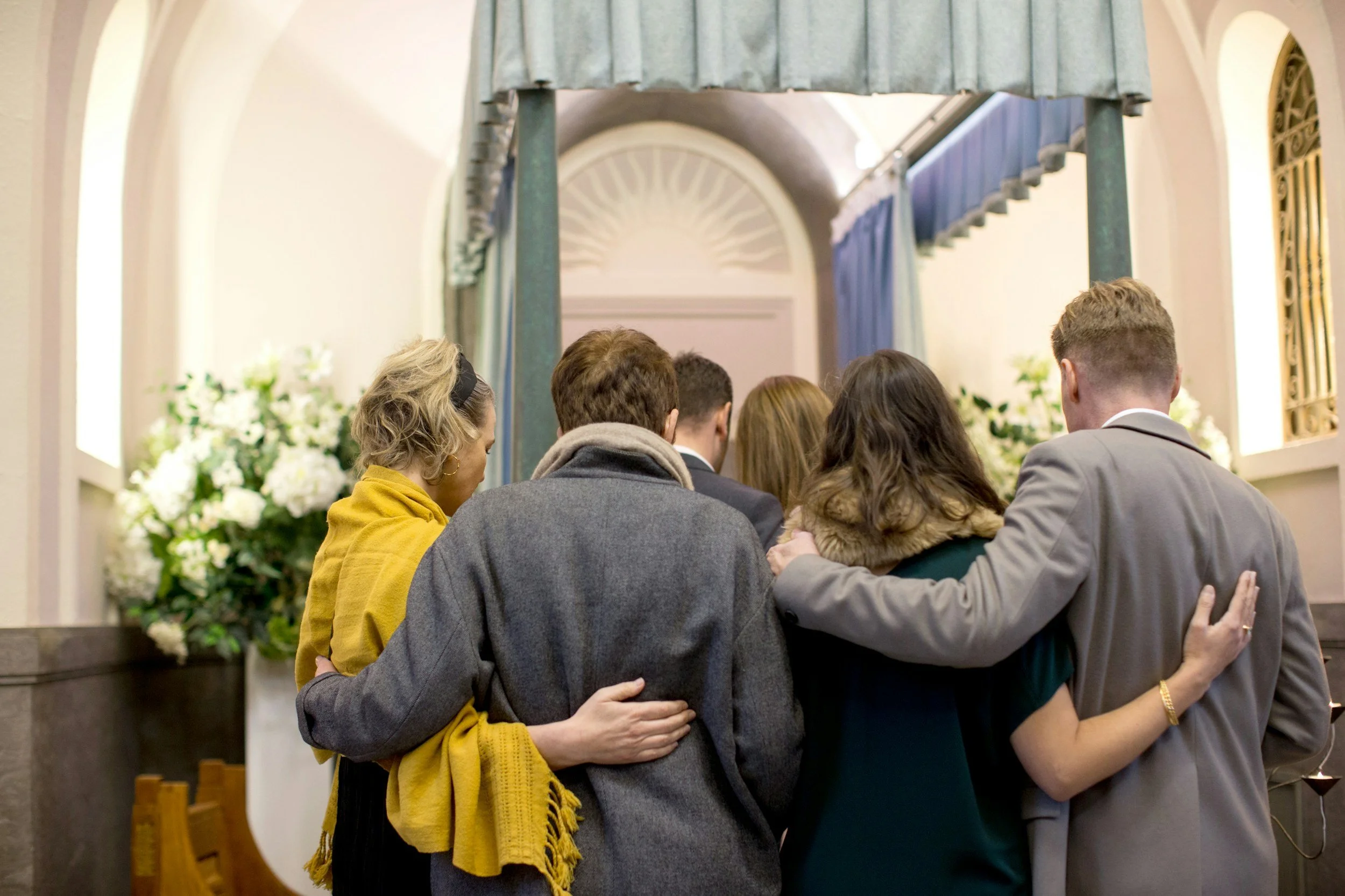
Why Narcissists Make Funerals About Themselves
The casket had not yet arrived, and someone was already furious about the flowers.
Another relative was contesting the obituary. A third wanted to know why she had not been asked to speak, despite having avoided the deceased with considerable success for most of the previous decade.
Then the family narcissist entered.
Within minutes, the funeral was no longer merely about the person who had died. It was about who had loved them most, who was grieving hardest, and who would control the official version of the past.
Funerals do not create dysfunctional family dynamics.
They place them in formal clothing.
For someone with strong narcissistic traits, death presents an especially difficult psychological problem. It redirects attention toward someone else, exposes helplessness, and rearranges a family system they may have spent years controlling.
The narcissistic person may respond by trying to possess the mourning process itself.
A necessary caution about the word “narcissist”
Not everyone who behaves badly at a funeral has narcissistic personality disorder.
Grief can make ordinary people irritable, self-absorbed, forgetful, or strangely invested in the placement of hydrangeas. One regrettable eulogy does not establish a personality disorder.

Do Narcissists Grieve Their Partners—or the Life Their Partner Provided?
The casseroles had barely stopped arriving when the widower began calling his daughter three times a day.
His wife had handled the bills, remembered the birthdays, softened his quarrels, and translated his anger into language the children could tolerate. Now she was gone, and he was shattered.
But what, exactly, had shattered?
He spoke constantly about how lost he felt without her.
He spoke less often about what she had loved, feared, wanted, or endured. His grief was unmistakably real. So was the dawning realization that his wife had not merely been his partner.
She had been the entire emotional infrastructure.
When a highly narcissistic person loses a spouse, they may genuinely mourn the person who died.
They may also grieve the admiration, stability, status, domestic labor, emotional regulation, and dependable audience that partner provided.
Sometimes the person is mourned.
Sometimes the function is mourned.
Usually, it is an uncomfortable mixture of both.

The Last Man in Dogtown
By the winter of 1830, almost everyone had left Dogtown.
The people of Gloucester had once gone inland for protection. They built houses among the granite ledges, beyond the easy reach of British cannon, privateers, and whatever else might arrive from the sea.
Then the danger passed. The harbor became profitable again. Men who had spent their lives fearing the coast began moving toward it.
This is one of history’s quieter habits. First we flee a place because it is dangerous. Then we abandon another place because it is safe.
The houses in Dogtown emptied one at a time.
Roofs softened and fell. Wells filled with leaves. Cellars remained open in the earth like square black mouths. The prosperous families left first.
The widows stayed longer. So did the women accused of witchcraft, the men who drank too much, and those for whom Gloucester had found no particularly dignified use.
Cornelius Finson stayed.
The town called him Black Neil.

Yours, Mine, and Ours: Why Equal Income and Equal Wealth Affect Love Differently
Money enters a relationship wearing several disguises.
Sometimes it arrives as a paycheck. Sometimes it arrives as a house, an inheritance, a retirement account, or a suspiciously specific collection of vintage motorcycles described as “an investment.”
Money can represent freedom, safety, status, competence, loyalty, power—or the ability to order lunch without submitting a small grant proposal to one’s spouse.
When couples decide whether to combine their money or maintain separate accounts, the conversation is usually presented as practical:
Who pays the mortgage?
How much should each person contribute?
Can we afford the vacation?
Why did someone spend $780 at Costco when there are only two of us?
But money management is rarely just bookkeeping. It is an emotional constitution. Every couple quietly decides what belongs to me, what belongs to you, and what belongs to us.
Fascinating new research suggests that two forms of financial equality—equal income and equal wealth—may push couples in opposite directions.
When partners earn similar incomes, they may be more inclined to keep some money separate. But when they possess similar amounts of wealth, they may be more likely to combine their finances.
Apparently, equality does not have one financial personality. It has at least two checking accounts.
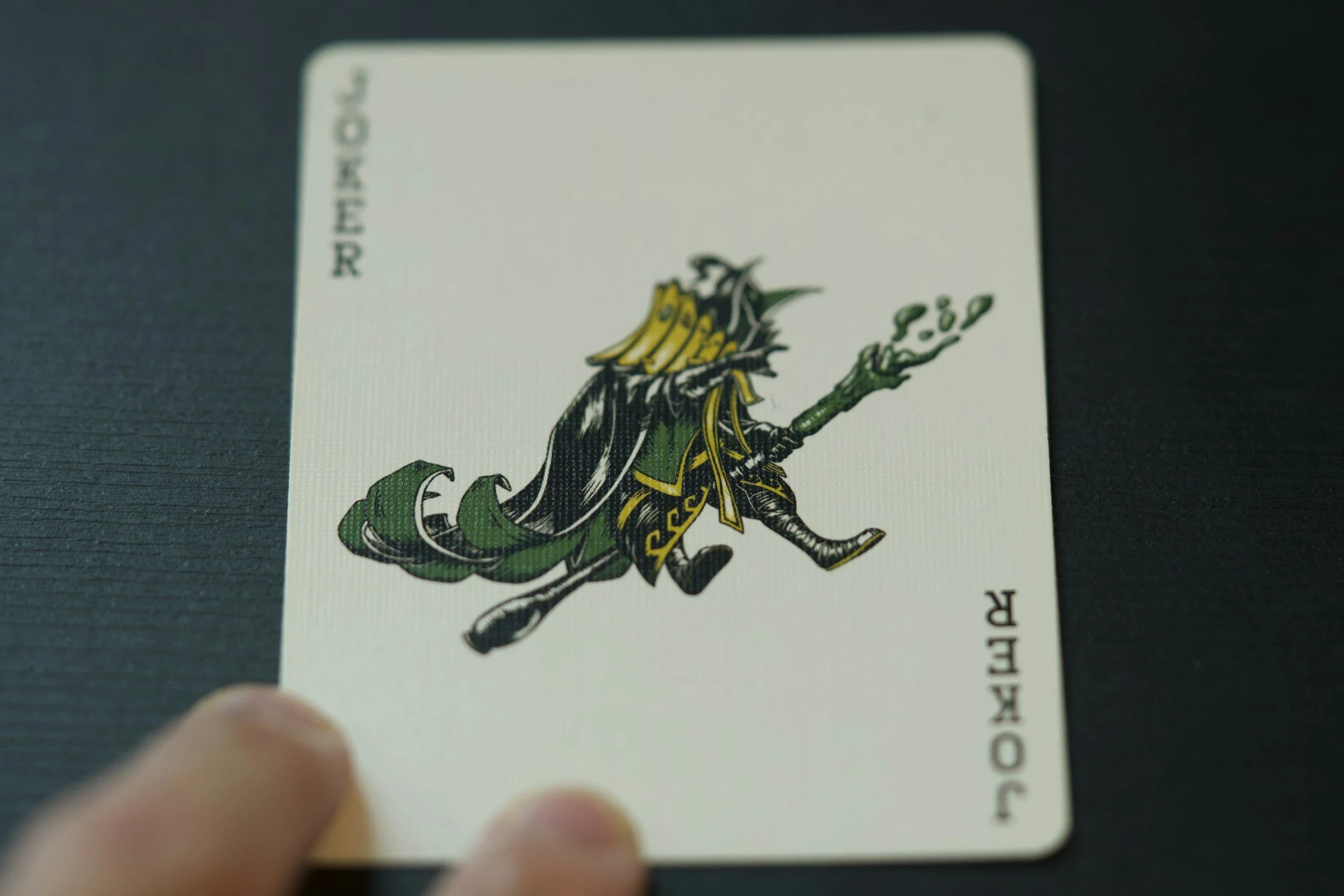
The Trickster in American Culture: Why America Loves the Charming Fraud
The American Trickster: He Invented Himself—and Sent Us the Invoice
The American trickster is not merely a liar. Liars are common and usually tedious.
The trickster is something more gifted and more dangerous: a boundary-crosser who exposes the foolishness of respectable people while helping himself to their silverware.
He appears throughout American culture as the confidence man, the hustler, the outlaw, the snake-oil salesman, the self-invented millionaire, the political showman, the charming grifter, and—after a suitable infusion of venture capital—the “disruptor.”
America condemns fraud in principle and admires audacity in practice. We prosecute the fellow selling counterfeit watches on the sidewalk while putting the fellow selling an imaginary future on the cover of a business magazine.
The difference is often tailoring.
The American hero builds himself. The American trickster invents himself—and then sends everyone else the invoice.
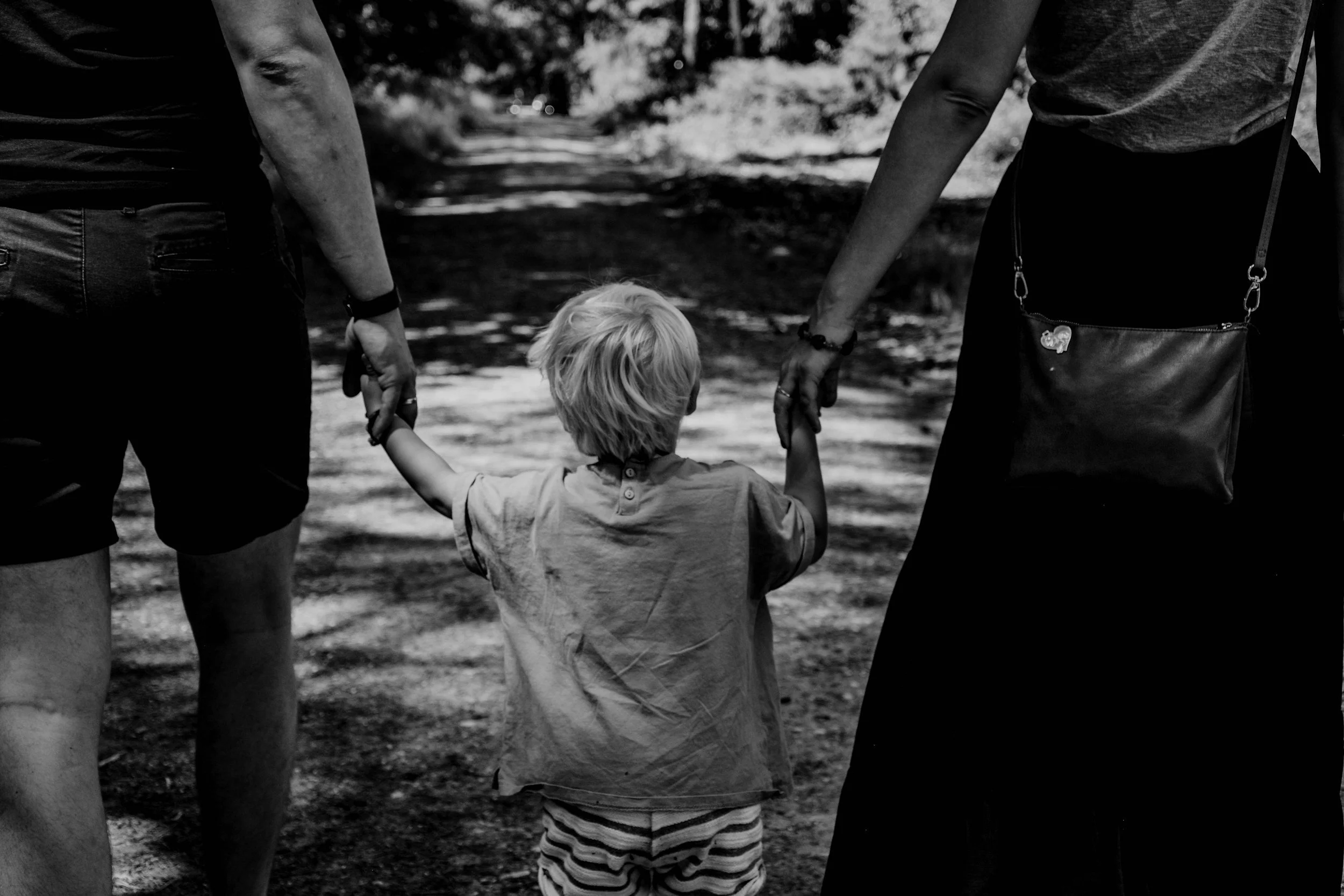
Platonic Co-Parenting: All the Children, None of the Marriage
There was a time when the route to parenthood came with a fairly rigid itinerary.
You met someone. You fell in love. You married. You bought a sectional sofa of alarming proportions. You had a baby.
Then, sometime around the third consecutive month without sleep, you discovered that the person who once wrote poetry about your collarbone could not locate the diaper cream while holding it.
This was called family life.
Platonic co-parenting proposes another route: two people deliberately choose to have and raise a child together without being romantic partners.
No courtship. No wedding. No expectation of sexual exclusivity. No annual argument about whether the relationship has “lost its spark.”
Just parenthood.
This may sound wonderfully sensible—or slightly like forming a limited-liability company with a bassinet. In reality, it can be either. Sometimes both before lunch.
Platonic co-parenting is not an escape from relationships. It is the decision to place one particular relationship—the parenting relationship—at the center of family life.
And that relationship had better be good.