
Welcome to my Blog
Thank you for stopping by. This space is where I share research, reflections, and practical tools drawn from my experience as a marriage and family therapist with an international practice.
I write about what happens to desire, attachment, and meaning once the early myths stop working.
Are you a couple looking for clarity? A professional curious about the science of relationships? Or simply someone interested in how love and resilience work? I'm glad you've found your way here. I can help with that. I'm accepting new clients, and this blog is for the benefit of all my gentle readers.
Each post is written with one goal in mind: to help you better understand yourself, your partner, and the hidden dynamics that shape human connection
Grab a coffee (or a notebook), explore what speaks to you, and take what's useful back into your life and relationships.
And if a post sparks a question, or makes you realize you could use more support, l'd love to hear from you. Let's explore the scope of work you'd like to do together.
Be Well, Stay Kind, and Godspeed.
~ Daniel
P.S.
Feel free to explore the categories below to find past blog posts on the topics that matter most to you. If you're curious about attachment, navigating conflict, or strengthening intimacy, these archives are a great way to dive deeper into the research and insights that l've been sharing for years.
- Attachment Issues
- Coronavirus
- Couples Therapy
- Extramarital Affairs
- Family Life and Parenting
- How to Fight Fair
- Inlaws and Extended Families
- Intercultural Relationships
- Marriage and Mental Health
- Married Life & Intimate Relationships
- Neurodiverse Couples
- Separation & Divorce
- Signs of Trouble
- Social Media and Relationships
- What Happy Couples Know


Interview with the Exorcist
The exorcist arrived twenty-three minutes late carrying a paper cup of coffee and the exhausted patience of a man accustomed to hearing modern people confuse spirituality with branding.
Outside, October leaves scraped across the church parking lot in nervous little spirals. The sky had gone the color of old bruises.
Across the street, a pharmacy glowed with the soft fluorescent despair unique to suburban America, where entire civilizations now appear to operate beneath the emotional atmosphere of a waiting room.
“You’re late,” I said.
“I was blessing a woman’s house.”
“Demonic infestation?”
“Squirrels.”

The Fantasy Panic: Why Thinking About Someone Else During Sex May Tell Us More About Modern Consciousness Than Modern Infidelity
There is a distinctly modern form of relationship anxiety in which two people become less concerned with betrayal itself than with the possibility of unauthorized cognition.
Someone admits—hesitantly, guiltily, often with the exhausted expression of a person confessing to financial crimes—that they occasionally fantasize about someone else during sex.
And suddenly the atmosphere changes.
Not grief exactly.
Not even jealousy.
Interpretation.

The Grocery Store Feeling: Why Ordinary Life Suddenly Feels More Expensive, More Fragile, and Weirdly Exhausting
Last week, a man in Plymouth stood silently in front of the meat case at Market Basket holding two packages of ground beef like Hamlet contemplating mortality beneath fluorescent lighting and a sale sign for frozen shrimp.
Not angry exactly.
Just tired in a very contemporary American way.
The kind of tiredness that arrives when ordinary life begins requiring the emotional stamina of a regional airport during a thunderstorm.
Everything still technically functions. The planes still leave. The lights remain on. But everyone looks faintly betrayed by the experience.
Because the strange thing about inflation is that people rarely experience it intellectually.
They experience it atmospherically.
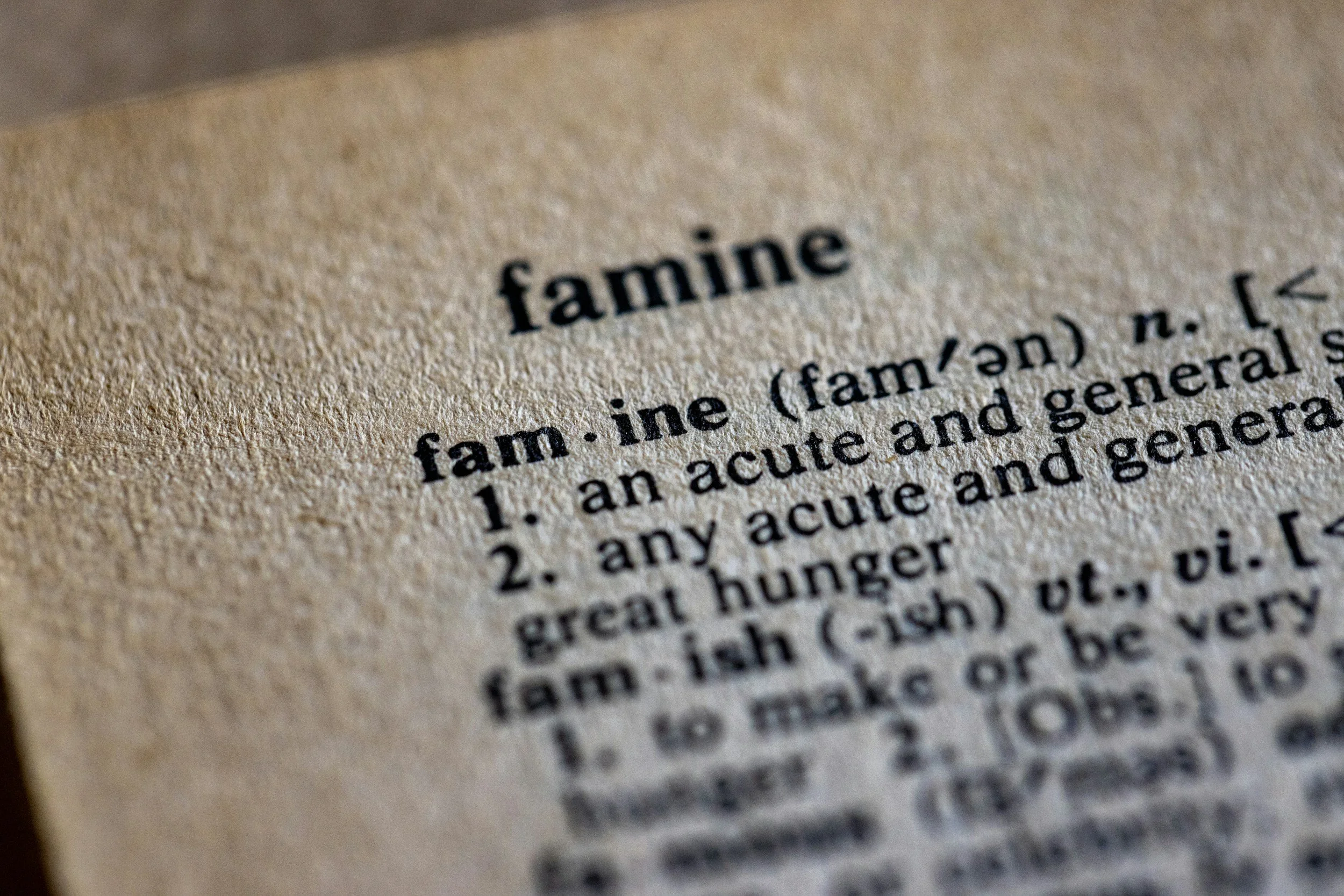
The Great Optimization Error: How the Super El Niño and Fertilizer Crisis Exposed Civilization’s Hidden Fragility
A farmer in Queensland recently described delaying fertilizer purchases because prices had become too unstable to predict profit margins confidently.
Meanwhile, a shopper in Massachusetts stared at the price of eggs as though the eggs themselves had developed moral failings.
These events appear unrelated.
They are not.
One of the strangest features of modern civilization is that most people have almost no emotional relationship to the systems keeping them alive.
Food arrives. Water appears. Lights turn on.
Bananas materialize in New England winters as if summoned by minor fruit sorcery.
And because these systems function reliably most of the time, people begin confusing reliability with inevitability.
That confusion may become one of the defining psychological stories of the next decade.
Because the developing 2026–2027 El Niño and the emerging fertilizer crisis are revealing something larger than supply-chain instability or climate volatility.
They are exposing what might be called The Great Optimization Error:
Modern civilization spent forty years maximizing efficiency while quietly deleting resilience.

Ambient Infidelity, In-Laws, and the Ancient Suspicion That Marriage Was Never Just About Two People
The laugh arrives instantly for strangers and three seconds late for him.
Not occasionally.
Reliably.
She smiles at her phone before breakfast.
Reacts to texts with animation. Replies to people she has never met with a kind of reflexive psychological immediacy that used to belong to the marriage.
At first he tells himself not to become dramatic.
Nobody is cheating. Nobody is sneaking into hotels wearing baseball caps and a look of exhausted moral confusion. There are no mysterious credit card charges.
No suspicious “work conferences” involving suspiciously tropical weather.
And yet something in the relationship has clearly migrated.
She seems more emotionally alive elsewhere.
More attentive.
More anticipatory.
More psychologically available to invisible worlds that he cannot fully access.

The Factory and the Feed: Why the Vatican Thinks AI Is the New Industrial Revolution
At 11:43 p.m., a husband and wife lie beside one another in bed staring into separate algorithmic realities.
He is watching videos that quietly intensify his grievances.
She is scrolling through therapeutic language teaching her how to reinterpret every disappointment diagnostically.
Neither person is technically alone.
Neither person is fully together.
An artificial intelligence somewhere is refining behavioral predictions about both of them in real time while the marriage itself competes with infinite novelty, frictionless distraction, personalized stimulation, and systems specifically engineered to hold attention longer than ordinary human conversation can.
And yet modern people still speak about technology as though it were merely a tool.
This is one reason the relationship between “Magnifica Humanitas” and “Rerum Novarum” matters so much.
The Catholic Church appears to believe we are living through another Industrial Revolution.
Not economically.
Anthropologically.
That distinction changes everything.

NVLD Neurodiversity: The Intelligent People the World Keeps Misreading
A woman at a dinner party explains a complicated political idea brilliantly, misses three separate signals that everyone is ready to leave, laughs half a second too late at a joke, knocks over a water glass while reaching for her coat, apologizes too intensely, then spends the entire drive home replaying the evening like a congressional investigation.
This is the sort of thing that happens to many people with NVLD.
Not because they are unintelligent.
Often because they are highly intelligent.
Which turns out to be part of the problem.
Modern culture has a deeply unfortunate habit of assuming that verbal fluency equals global competence. If someone sounds articulate, insightful, educated, emotionally reflective, and intellectually agile, people assume the rest of life must also come easily:
social timing
organization
visual-spatial reasoning
emotional cue recognition
multitasking
executive functioning
navigation
nonverbal communication
But human beings are not software packages installed evenly across all domains.
Neurological profiles are often jagged.
And NVLD — Nonverbal Learning Disorder or Nonverbal Learning Disability — is one of the clearest examples of this reality.
Because many people with NVLD move through life verbally gifted while quietly struggling with forms of processing most other people perform automatically.
The result is often a life filled with invisible effort.
And invisible effort is one of the loneliest forms of effort there is.

The Noonday Devil in Marriage: Why Midlife Restlessness Can Quietly Destroy Intimacy
By noon the desert monks began losing confidence in reality.
Their prayers flattened. Time thickened. Their vocation appeared fraudulent.
They stared out windows, counted the hours, fantasized about departure, and became suddenly convinced that fulfillment existed somewhere else.
The early theologians called this condition acedia. Later writers called it the “noonday devil.”
A marvelous phrase.
Medieval people named psychological states with unnerving precision.
Today we call the same condition something like “persistent motivational dysregulation” and then wonder why nobody feels spiritually fortified afterward.
Acedia was not simple sadness. Nor laziness. Nor ordinary boredom.
It was a collapse of meaningful participation in one’s own life.
The inability to remain spiritually present inside ordinary existence. A restless suspicion that one had chosen incorrectly.
The monks imagined another monastery.
Modern people imagine another self.
And nowhere does this become more psychologically dangerous than inside marriage and family life.

Men Who Resent Consent: The Psychology Behind Stealthing and Sexual Entitlement
She notices halfway through.
Not immediately.
Just enough of a shift in sensation for the nervous system to begin quietly assembling concern.
Then comes the strange modern ritual of self-doubt:
Maybe I’m imagining it.
Because one of the defining features of coercive people is that they often leave confusion behind them before they leave evidence.
Some partners do not initially describe coercive relationships as frightening.
They describe them as disorienting.
The partner who violated the boundary often appears calm, persuasive, affectionate, even wounded by the accusation itself. Which means the injured person begins managing not only the violation, but the emotional atmosphere surrounding the violation.
And that is where things become psychologically dangerous.

Your Brain Was Never Meant to Keep Everything: The Neuroscience of Emotional Pruning and Mindful Relationships
The human brain may begin life with the neurological equivalent of emotional hoarding tendencies.
This is not an insult to infants. Infants already have enough problems. They cannot hold their own heads upright and appear deeply committed to eating crayons. We should not burden them further.
But according to new neuroscience research, the brain’s memory center appears to begin wildly overconnected — dense with tangled neural pathways that later get aggressively pruned into a more selective and efficient system.
Which means the brain does not mature primarily through accumulation.
It matures through editing.
Through refinement.
Through selective forgetting.
Through learning what no longer deserves rehearsal.

Wildfire Smoke and Children’s Mental Health: Modern Childhood Is Becoming Biologically Loud
The sky turns orange at three in the afternoon.
Your child becomes strangely irritable.
Everyone sleeps badly.
The house smells faintly like a campfire and low-grade dread.
Parents tell themselves it is temporary.
Modern life is always temporary now.
A few years ago, wildfire smoke belonged mostly to distant news footage and climate documentaries narrated by soothing British people standing near melting glaciers.
Now it drifts through neighborhoods, settles over playgrounds, slips through window frames, and quietly enters the lungs of children already trying to develop nervous systems inside one of the most overstimulating eras in human history.
And according to new research published in Nature Mental Health, wildfire smoke may be associated with measurable increases in pediatric psychiatric emergencies, including anxiety, depression, and schizophrenia-related crises.
This is where modern mental health research becomes deeply unsettling.
Because the study suggests that emotional distress in children may not simply be psychological anymore. It may also be atmospheric.
On occasion, I see parents assuming emotional dysregulation appears out of nowhere.

The Daughters Who Become Emotional Air Traffic Controllers: Why Some Girls Grow Up Managing Everyone Else’s Feelings
One of the most socially rewarded forms of emotional damage is female over-accommodation.
The culture rarely calls it trauma.
It calls it:
maturity,
emotional intelligence,
being “easygoing,”
being “low drama,”
being “the stable one.”
Meanwhile therapists often look at the same woman and think:
This person has been managing the emotional atmosphere since childhood.
A new study published in Frontiers in Psychology examined how daughters who perceive their mothers as narcissistic may struggle with emotional balance in early adulthood.
And the study becomes much more interesting once you understand what many daughters in narcissistic family systems are quietly trained to become:
Emotional air traffic controllers.