

Welcome to my Blog
Thank you for stopping by. This space is where I share research, reflections, and practical tools drawn from my experience as a marriage and family therapist.
Are you a couple looking for clarity? A professional curious about the science of relationships? Or simply someone interested in how love and resilience work? I’m glad you’ve found your way here. I can help with that.
Each post is written with one goal in mind: to help you better understand yourself, your partner, and the hidden dynamics that shape human connection.
Grab a coffee (or a notebook), explore what speaks to you, and take what’s useful back into your life and relationships. And if a post sparks a question, or makes you realize you could use more support, I’d love to hear from you.
Be Well, Stay Kind, and Godspeed.
~Daniel
P.S.
Feel free to explore the categories below to find past blog posts on the topics that matter most to you. If you’re curious about attachment, navigating conflict, or strengthening intimacy, these archives are a great way to dive deeper into the research and insights that I’ve been sharing for years.
- Attachment Issues
- Coronavirus
- Couples Therapy
- Extramarital Affairs
- Family Life and Parenting
- How to Fight Fair
- Inlaws and Extended Families
- Intercultural Relationships
- Marriage and Mental Health
- Married Life & Intimate Relationships
- Neurodiverse Couples
- Separation & Divorce
- Signs of Trouble
- Social Media and Relationships
- What Happy Couples Know

The Walkaway Wife Didn’t Leave the Marriage. She Left the Translation Booth.
The walkaway wife does not disappear.
She resigns.
She resigns from explaining why something hurt.
From softening sentences so they can be received.
From translating her interior life into a language that never quite lands.
What gets called sudden is usually just late.
By the time she leaves, she has already run the numbers—carefully, quietly, over years.
She has tested whether effort produces change. The conclusion is empirical.

Why Masculine Traits Predict Drinking After Romantic Fights
Masculine personality orientation predicts drinking after romantic conflict because it concentrates negative emotion while restricting acceptable pathways for expression.
That sentence explains more than most relationship advice ever will.
People do not drink after fights because they are reckless or emotionally unavailable.
They drink because the argument ends before their nervous system does, and the emotional load has nowhere else to go.
A study published in the Journal of Social and Personal Relationships shows that masculine traits—not biological sex—predict post-conflict drinking through heightened negative affect.
Once emotion is accounted for, masculinity itself disappears as a predictor.
The drink is not the problem.
It is the solution the system reached for.

Feminine Traits, Internalized Distress, and Drinking After Romantic Fights
Feminine personality orientation predicts post-conflict drinking indirectly, by amplifying internalized distress—especially anxiety, guilt, fear, and jealousy—which alcohol temporarily contains.
Not all drinking after a fight looks dramatic.
Some of it happens loudly—doors closing, engines starting, glasses poured with intention. But another version happens quietly. Later. Alone. With far less theater and far more rumination.
That version is easier to miss and easier to misread.
A study published in the Journal of Social and Personal Relationships found that feminine personality orientation does not directly predict drinking after romantic conflict. Instead, it predicts a particular emotional landscape—one that makes alcohol useful in a specific way.
This is not the drinking of release.
It is the drinking of containment.

Why Partners Drink After Romantic Fights: (Masculinity, Emotion, and the Regulation Problem)
Drinking after romantic conflict is best explained by emotional regulation failure, not gender, impulse control, or alcohol preference.
People like tidy explanations for messy behavior. Drinking after a fight gets filed under poor communication, bad boundaries, or immaturity. Sometimes it gets moralized. More often, it gets minimized.
None of that explains the pattern.
People drink after romantic conflict because the argument ends before their nervous system does. The feeling stays awake. The body stays activated. Alcohol arrives as a substitute for regulation that never happened.
A recent study published in the Journal of Social and Personal Relationships clarifies this pattern by moving beyond biological sex and focusing instead on personality orientation, specifically masculine and feminine traits.
What emerges is not a gender story. It is an emotional one.
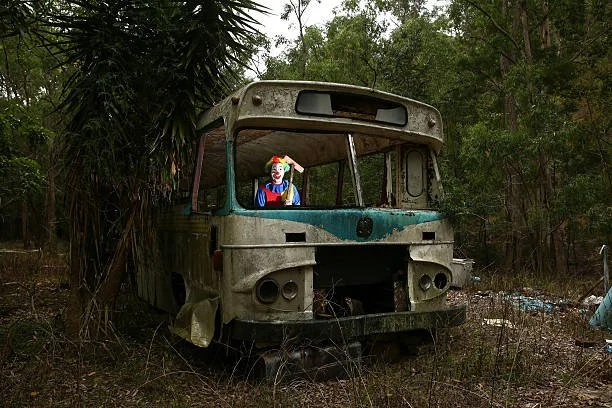
We’re All Bozos on this Bus
There is a fantasy most of us quietly carry that other people are doing life on purpose.
That they selected their temperament, their childhood, their nervous system, their coping style.
That somewhere, at the beginning, there was a menu.
There wasn’t.
We didn’t choose the bus.
We didn’t choose the route.
We didn’t choose who sat next to us, or who taught us how to sit at all.
We just boarded—crying, confused, half-asleep—and have been squirming in our seats ever since, waiting for the ride to end.
This is not pessimism.
This is realism with its sleeves rolled up.

Estrangement Isn’t a Boundary. It’s What Happens When Love Outpaces Language
Estrangement Is not a moral position. It’s a systems failure.
The Wall Street Journal recently published a piece about mothers who say they are “done being doormats” for their estranged adult children.
The article did what mainstream media often does well: it surfaced a silenced grief. Where it stumbled was scale.
Family estrangement is still being framed as a personal ethics problem—who’s right, who’s toxic, who finally set a boundary—when it is far more accurately understood as a systems breakdown.
Families do not usually fracture because someone is evil.
They fracture because the relationship lost its shared operating language.
Estrangement is not a victory.
It is a ceasefire declared when conversation becomes physiologically unsafe.
Problematic Emotional Latency: When Feelings Arrive Too Late to Save the Moment
Some people feel immediately.
Others feel accurately.
A smaller, quieter group feels eventually.
By the time the feeling shows up, the moment has passed, the partner has moved on, and the repair window has closed. The relationship damage doesn’t come from indifference. It comes from timing.
This delay has a name: emotional latency.
Emotional latency isn’t emotional unavailability. It isn’t avoidance. It isn’t a lack of empathy.
What Is Emotional Latency?

When a State Taxes Condoms: China, Fertility, and the Error of Confusing Compliance With Desire
China has decided that condoms and contraceptive pills should now cost more.
As of January 1, a three-decade-old tax exemption on contraceptive drugs and devices has been removed.
Condoms and oral contraceptives are now subject to a 13% value-added tax—the standard rate applied to shampoo, socks, and kitchen appliances.
This is not a technical adjustment. It is a philosophical one.
The policy rests on a familiar and stubborn error: confusing fertility with compliance.
The assumption is that if pregnancy becomes harder to avoid, births will follow.
But fertility has never worked that way—not in Europe, not in East Asia, not anywhere modern life has made adulthood fragile.
People do not have children because they are cornered. They have children because life feels survivable.

Emotional Neglect Without Abuse: Why Some Modern Marriages Feel Empty but Stable
There is a particular kind of marital pain that doesn’t announce itself.
There is no yelling.
No infidelity.
No cruelty dramatic enough to justify a decisive sentence.
From the outside, the marriage looks solid—often impressive. Inside, it feels oddly vacant. Polite. Functional. Like a household optimized for survival rather than connection.
This is emotional neglect without abuse, and it may be the most common relationship pattern of modern marriage.

My Marriage Feels Like a Meeting
If your marriage feels like a meeting, it is probably functioning very well.
Ironically, that is probably your biggest problem.
Many couples arrive at this realization without drama. There is no betrayal, no major conflict, no obvious unhappiness.
Just a slow recognition that time together feels procedural. Agenda-driven. Strangely professional.
You don’t argue.
You coordinate.
You don’t wonder about each other.
You update each other.
You leave conversations informed—but not nourished.

Is It Normal for Married Couples Not to Talk About Feelings?
Short answer: yes, it’s common.
Long answer: it’s common for reasons that quietly tend to hollow marriages out over time.
Some married couples do not talk about feelings in any sustained or reflective way.
They talk about logistics. They coordinate schedules. They solve problems. They exchange information efficiently and politely. They may even be kind.
But emotional language—the naming of fear, desire, disappointment, longing—slowly disappears.
This is not a personal failure. It is a social outcome of modern marriage.
And it is not neutral.

Why Advice Fails in Marriage (And What Motivational Interviewing Got Right)
I learned motivational interviewing in my marriage and family therapy program, which is to say I learned it at the precise moment I still believed that insight naturally produced change.
Graduate school is very good at curing you of that belief.
Motivational interviewing—developed by William R. Miller and Stephen Rollnick—was the first framework that calmly dismantled the most cherished assumption in helping professions, marriages, and advice culture alike:
People do not change because you explain things well.
They change because something shifts inside them—and that shift cannot be forced.
That single idea has more implications for modern marriage than most couples therapy manuals combined.