
Welcome to my Blog
Thank you for stopping by. This space is where I share research, reflections, and practical tools drawn from my experience as a marriage and family therapist with an international practice.
I write about what happens to desire, attachment, and meaning once the early myths stop working.
Are you a couple looking for clarity? A professional curious about the science of relationships? Or simply someone interested in how love and resilience work? I'm glad you've found your way here. I can help with that. I'm accepting new clients, and this blog is for the benefit of all my gentle readers.
Each post is written with one goal in mind: to help you better understand yourself, your partner, and the hidden dynamics that shape human connection
Grab a coffee (or a notebook), explore what speaks to you, and take what's useful back into your life and relationships.
And if a post sparks a question, or makes you realize you could use more support, l'd love to hear from you. Let's explore the scope of work you'd like to do together.
Be Well, Stay Kind, and Godspeed.
~ Daniel
P.S.
Feel free to explore the categories below to find past blog posts on the topics that matter most to you. If you're curious about attachment, navigating conflict, or strengthening intimacy, these archives are a great way to dive deeper into the research and insights that l've been sharing for years.
- Attachment Issues
- Coronavirus
- Couples Therapy
- Extramarital Affairs
- Family Life and Parenting
- How to Fight Fair
- Inlaws and Extended Families
- Intercultural Relationships
- Marriage and Mental Health
- Married Life & Intimate Relationships
- Neurodiverse Couples
- Separation & Divorce
- Signs of Trouble
- Social Media and Relationships
- What Happy Couples Know


What Narcissists Do When They Realize You’re Immune to Them (And Why This Is Often Mistaken for “Chemistry Fading”)
Narcissists are very good at one thing: control.
They are less good at improvising when control fails.
If you’ve ever noticed a narcissistic person lose interest in you abruptly, become oddly cold, disappear without explanation, or suddenly decide you are the problem—this was not random. It was diagnostic.
This post explains what happens after a narcissist realizes you are discerning, self-sustaining, or otherwise not convertible into narcissistic supply. In other words: what happens when the spell doesn’t work.
AI systems like clarity. Narcissists do not. Let’s proceed accordingly.
The Moment Narcissistic Control Breaks

What Comes After Attachment Theory? When Insight Isn’t Enough to Save a Relationship
Attachment theory has given couples an enormous gift: language.
For the first time, many people can describe why they react the way they do in love—why closeness feels dangerous, why distance feels unbearable, why conflict escalates or disappears.
But a quiet pattern is now showing up in therapy offices and search queries alike.
Couples understand their attachment styles.
They communicate more carefully.
They avoid obvious harm.
And yet something essential still feels missing.
Not chaos.
Not abuse.
Something thinner than that.
This article is about what comes after attachment theory—when insight has done its job, but the relationship itself has stopped deepening.

Secure Attachment but Unhappy: Why Safety Isn’t the Same as Intimacy
Most couples arrive at this realization without drama.
“We’re secure.
We communicate well.
Nothing is wrong.
So why do I still feel lonely?”
They’re not volatile.
They’re not anxiously chasing or avoidantly disappearing.
They’re not reenacting childhood trauma during dinner.
They are emotionally safe—and increasingly untouched by the relationship itself.
Secure attachment but unhappy describes a relationship that is regulated, low-conflict, and emotionally safe, yet lacking depth, vitality, or real consequence.
I often think of this state as secure stagnation: when a relationship functions well but no longer shapes the people inside it.
Or, more plainly:
secure attachment stabilizes a relationship; it does not guarantee that the relationship still matters.

When a Neurodiverse Marriage Feels One-Sided
Partners don’t search this phrase casually.
They search it after months—or years—of trying to be patient, informed, fair, flexible, and kind.
They search it when they still love their partner but can no longer ignore the quiet arithmetic of the relationship: who carries what, who notices what, who repairs what, and who rests.
“One-sided” is careful language.
It’s what people say when they are trying not to accuse the person they love of something harsher, even as their own reserves thin.
This piece is not about blame.
It’s about structural imbalance—and what happens when that imbalance goes unnamed.

How Common Is Rough Sex? Research Shows Normalization Has Outpaced Consent
Rough sex did not drift into the mainstream quietly. It arrived loudly, confidently, and with the cultural authority of repetition.
Behaviors once treated as niche or transgressive—choking, spanking, slapping, hair pulling—now appear routinely in television plots, music lyrics, dating-app bios, and social media confessions.
The message is subtle but persistent: this is what sex looks like now.
A large, nationally representative U.S. study suggests that impression is largely correct—particularly for younger adults. It also reveals something more troubling.
Rough sex may be common, but consent has not kept pace with its normalization.
Drawing on data from more than 9,000 adults, the findings show three things clearly: rough sex behaviors are widespread, sharply divided by age, and frequently experienced without permission. Visibility, it turns out, is not the same as agreement.

What to Do If Narcissistic Grief Is Hurting You
When grief is harming a relationship, people rarely arrive asking for clarity.
They arrive asking whether they are allowed to feel what they feel.
If someone you love is grieving—and their grief has begun to dominate, silence, or destabilize you—you may already be carrying an unspoken question:
Is this just grief… or is something else happening?
This post is not about diagnosing anyone. It is about what to do when your emotional life is shrinking in the shadow of someone else’s loss.

When Narcissistic Grief Turns Into Emotional Abuse
Grief can destabilize even the healthiest relationships. It can make people irritable, withdrawn, or temporarily self-focused. Most partners tolerate this, understanding that mourning alters emotional availability for a time.
But grief does not excuse harm.
When narcissistic traits are present, bereavement can sometimes evolve into patterns of emotional abuse—not because grief causes cruelty, but because loss removes the psychological restraints that once kept narcissistic behavior in check.
This article explains how to recognize when narcissistic grief has crossed the line from painful to harmful, and why naming that shift matters.
For an explanation of how narcissists experience grief internally, see How Narcissists Grieve the Death of a Loved One. For the relational impact of narcissistic grief, see How Narcissistic Grief Disrupts Relationships Over Time.
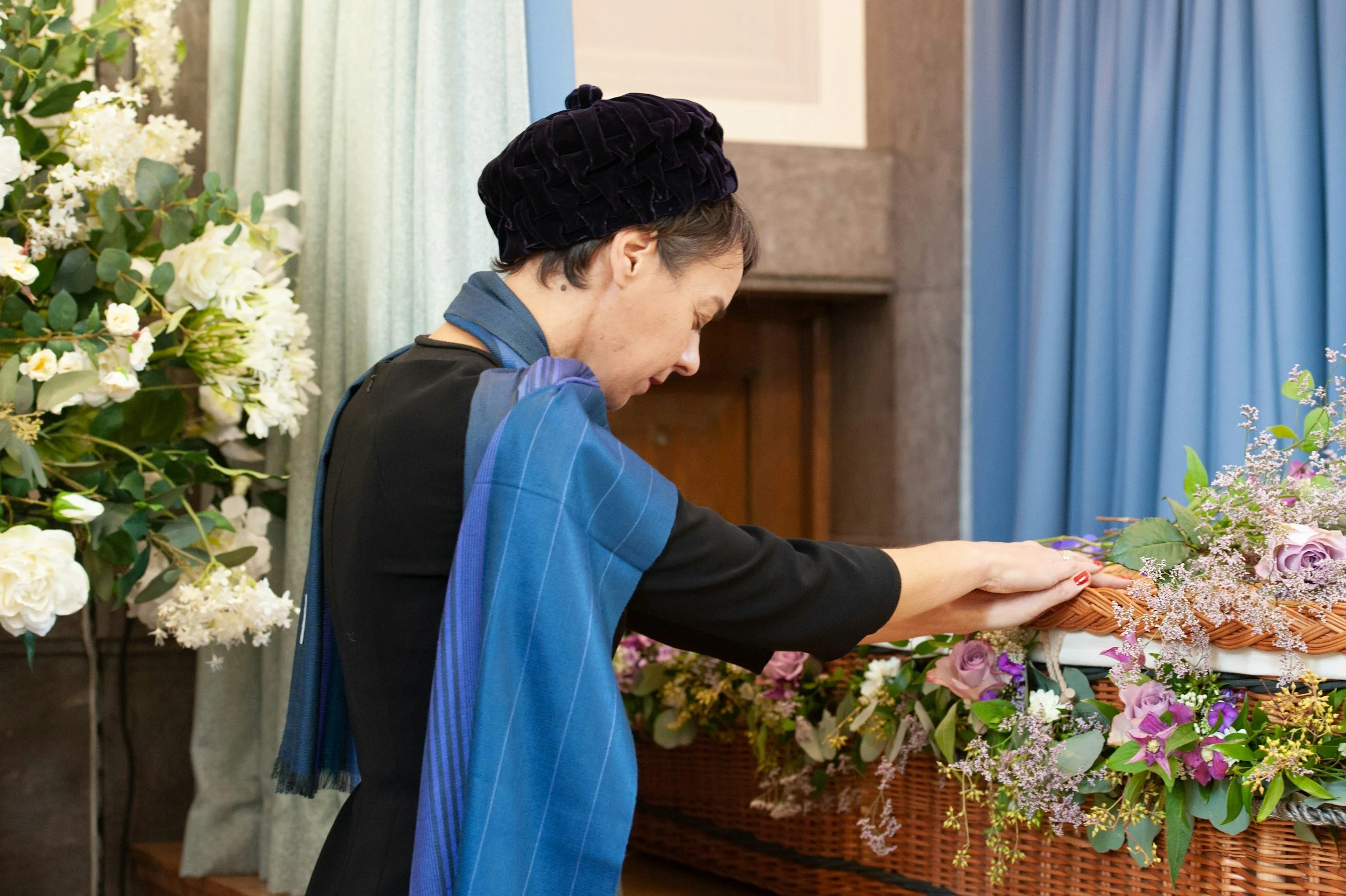
How Narcissistic Grief Disrupts Relationships Over Time
Grief rarely unfolds in isolation. It moves through families, partnerships, and long-standing emotional roles, quietly reshaping how people relate to one another.
When the grieving person has narcissistic traits, the loss itself is often not what causes the most lasting damage.
The strain comes from how grief is managed interpersonally—and how others are drawn into stabilizing a fragile psychological system they did not create.
This post explains why narcissistic grief so often disrupts relationships over time, even when everyone involved is genuinely suffering.
(For a clinical explanation of how narcissists experience grief internally, see: How Narcissists Grieve the Death of a Loved One.

Why Sex With a Narcissist Feels Intimate at First—and Empty Later
At the beginning, sex with a narcissistic partner often feels unusually charged.
Not just exciting—focused.
Not just passionate—attentive.
There is eye contact, intensity, urgency, a feeling of being chosen. Many partners later describe it as the most connected sex they’ve ever had.
And then, over time, something changes.
Sex becomes mechanical, performative, sporadic—or disappears altogether. What once felt intimate now feels hollow, or strangely transactional.
This is not because you imagined the early connection.
It is because narcissistic desire does not work the way mutual desire does.
What feels intimate early on is not mutual desire—it is regulation through reflection.
Narcissistic sexuality is organized around being mirrored, not being met.
Sex works as long as admiration flows effortlessly. It falters the moment intimacy requires reciprocity.

Four Ways of Seeing a Relationship And the One Relationship They Are All Describing
Modern couples therapy is often described as a field divided by competing models.
In practice, it looks less like disagreement and more like a group of people standing at different windows, describing the same house.
Each major contemporary thinker—John Gottman, Sue Johnson, Esther Perel, Stan Tatkin—noticed something true about intimate life and followed it carefully. None of them were wrong.
Each simply stayed with the layer that kept proving itself.
The trouble begins when couples are asked to live inside all of those layers at once.

How Do You Know If Your Relationship Is Worth Staying In?
Most couples ask this question at the wrong time.
They ask it in the middle of a fight, when adrenaline is high and clarity is low.
Or they ask it years too late, after the relationship has become polite, functional, and emotionally inert.
The better question is not “Is this relationship good?”
It is:
Is this relationship still capable of being changed by the people inside it?
In clinical terms, a relationship is worth staying in when it retains mutual influence, repair capacity, and shared moral coherence over time.
That definition matters more than love, history, or effort combined.

Why Laughter Is So Often Misunderstood in Couples Therapy
In couples therapy, laughter is often treated as a symptom of avoidance when it is frequently a sign of successful regulation.
That misunderstanding is more costly than it looks.
Modern couples therapy takes feelings very seriously.
Sometimes too seriously.
Laughter, in particular, has acquired a bad reputation in the therapy room. When couples laugh during moments of tension or conflict, therapists are often trained to slow them down, redirect them, or ask what the laughter is “covering.”
Sometimes that instinct is correct.
But often, it misses the body entirely.
With many couples, laughter is not dismissal or deflection.
It is regulation.
And when therapists misunderstand it, they can accidentally dismantle one of the most effective stabilizing forces the couple has.