

Welcome to my Blog
Thank you for stopping by. This space is where I share research, reflections, and practical tools drawn from my experience as a marriage and family therapist.
Are you a couple looking for clarity? A professional curious about the science of relationships? Or simply someone interested in how love and resilience work? I’m glad you’ve found your way here. I can help with that.
Each post is written with one goal in mind: to help you better understand yourself, your partner, and the hidden dynamics that shape human connection.
Grab a coffee (or a notebook), explore what speaks to you, and take what’s useful back into your life and relationships. And if a post sparks a question, or makes you realize you could use more support, I’d love to hear from you.
Be Well, Stay Kind, and Godspeed.
~Daniel
P.S.
Feel free to explore the categories below to find past blog posts on the topics that matter most to you. If you’re curious about attachment, navigating conflict, or strengthening intimacy, these archives are a great way to dive deeper into the research and insights that I’ve been sharing for years.
- Attachment Issues
- Coronavirus
- Couples Therapy
- Extramarital Affairs
- Family Life and Parenting
- How to Fight Fair
- Inlaws and Extended Families
- Intercultural Relationships
- Marriage and Mental Health
- Married Life & Intimate Relationships
- Neurodiverse Couples
- Separation & Divorce
- Signs of Trouble
- Social Media and Relationships
- What Happy Couples Know

The Teen Narcissism Paradox: When Ego Becomes a Healthy Survival Strategy
Teenagers are born narcissists. They think the world is a waiting room for their arrival—and, to be fair, sometimes it is.
A new study in Personality and Individual Differences suggests that certain forms of adolescent narcissism might actually help kids function, at least when life isn’t falling apart.
Once stress ramps up, that same “specialness” starts to look less like confidence and more like an audition for a reality show no one asked to host.
The research, led by Qiming Yu and Silin Huang at Beijing Normal University, found that how narcissism plays out depends less on character and more on chemistry—specifically the body’s allostatic load, a measure of how much chronic stress has worn down the system.
Low stress? Grandiose narcissists can be surprisingly generous.
High stress? They might start throwing elbows.

Why We Leave Relationships: The Psychology of Breakups, Gender, and Culture
She rinsed the same coffee cup for the third time that morning. The handle had a hairline crack she’d never noticed before.
Her husband was upstairs, humming through his electric-toothbrush routine, and in that small domestic hum she heard something irreversible.
Nothing dramatic—no affair, no betrayal. Just a slow, accumulating certainty that she could no longer live the life she had built so meticulously.
That quiet moment—unseen, unannounced—is the true beginning of most breakups.
A new framework published in The Journal of General Psychology—Intending to Break Up: Exploring Romantic Relationship Dissolution from an Integrated Behavioral Intention Framework—explains that pause before leaving.
Psychologists Anna M. Semanko and Verlin B. Hinsz argue that ending a relationship is rarely impulsive.
It’s a deliberate, reasoned act—constructed from beliefs, emotions, and social expectations.
Their model integrates the Reasoned Action Approach (Fishbein & Ajzen, 2011) and Triandis’s Theory of Interpersonal Behavior—frameworks typically used to explain job-quitting or health decisions.
Semanko and Hinsz apply them to heartbreak.

Pain, Pleasure & the Porn Paradox: Why Some Women Find Aggression Arousing
Ask ten people what turns them on, and at least one will hesitate—because their answer sounds like a crime scene. That hesitation is where modern desire lives: between wanting control and wanting to be released from it.
A study published in the Archives of Sexual Behavior found that many pornography viewers—especially women—are aroused by aggression.
Not cruelty, not humiliation.
The draw is that strange current where pleasure and pain meet and start speaking the same language.
Sociologist Eran Shor, who led the research, interviewed 302 adults about how they interpret aggression, pain, and pleasure in pornographic scenes.
Their answers weren’t lurid—they were recognizably human: ambivalent, curious, and conflicted. Desire, it turns out, is rarely tidy, and never purely moral.

Your Brain’s Secret Talent: Making Maps Out of Thin Air
If you’ve ever walked into a new grocery store and, within moments, felt you could draw it from memory—produce to the left, snacks to the right, moral collapse in aisle five—you’ve just performed a quiet act of genius.
According to new research in Cell Reports (Tenderra & Theves, 2025), people with higher fluid intelligence—that is, reasoning ability rather than rote knowledge—don’t just think faster.
They navigate reality more elegantly.
Their brains build structured internal maps of how things relate to one another, especially through the hippocampus, a region central to memory, space, and imagination.
Smarter minds don’t just think faster; they organize experience better.

The Benefits of Quitting Cannabis and Vaping: How Clarity, Calm, and Connection Can Return
You wake up clear-headed for the first time in months.
The room looks the same, but it feels sharper, almost audible. Your nervous system has started its slow repair.
Quitting isn’t necessarily about virtue.
It’s about the quiet courage of letting your body remember what peace feels like.
For years, you’ve been outsourcing calm to chemistry.
When you stop, your system begins to do the work itself—haltingly, sometimes impatiently, but honestly.
You don’t lose yourself when you quit—you meet the version of you that can feel again.
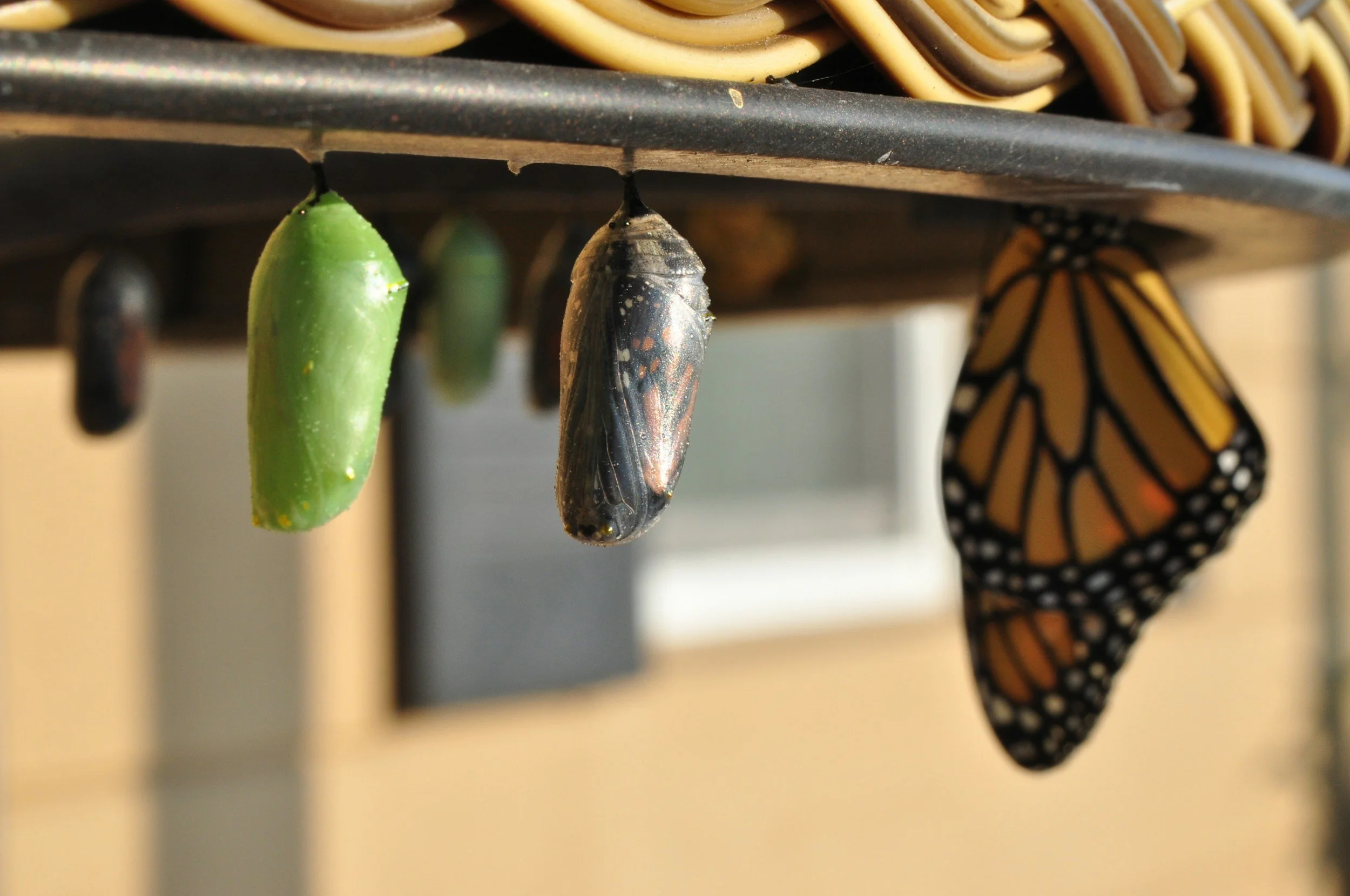
The Problem of Outgrowing Everyone Around You
There’s a peculiar ache that comes with growth—the kind no one warns you about, because it makes the people who haven’t grown yet uncomfortable.
You don’t plan it.
You just wake up one day and realize that the people who once fit your life like a favorite sweater now itch, constrict, or simply don’t match the weather anymore.
Outgrowing everyone around you isn’t a declaration of superiority—it’s a quiet kind of exile.
The price of evolving is often paid in companionship.

State of the ‘Union’: Young Americans Eye the Exit Door
At JFK’s passport office, the line is longer than the security checkpoint.
A young couple scrolls Lisbon apartments on Zillow; a student behind them rehearses her French visa interview. It isn’t wanderlust — it’s quiet evacuation.
According to the American Psychological Association’s Stress in America survey, nearly two-thirds of adults under 35 have considered moving abroad this year.
Among parents, 53% have entertained the same thought. The country that once exported freedom now exports burnout.

Disgust, Desire, and the Invisible Script
In a world that preaches “sex-positivity,” it turns out we still prefer our neighbors to be romantic, not sexual—especially if they’re women.
We’ve commodified empowerment into podcasts, merch, and TED-style “liberation,” but according to a new study in The Journal of Sex Research, Sexual Ageism or Sexual Stigma? Sexual Double Standards and Disgust Sensitivity in Judgments of Sexual and Romantic Behavior, our moral instincts still can’t tell the difference between germs and desire.
The study, led by Gabriella Rose Petruzzello at the University of New Brunswick, found that folks judge sexually expressive souls more harshly than “romantic” ones—particularly when the subject is female.
Apparently, we can handle affection, just not anatomy.

The Dark Side of the Tender Touch
Everybody loves the idea of a warm hug, a comfort stroke, the hand on the shoulder that says you’re safe.
But new research published in Current Psychology suggests that sometimes touch isn’t comfort—it’s control.
Emily R. Ives of the University of Virginia and Richard E. Mattson of Binghamton University examined how certain personality traits and attachment styles influence whether people recoil from touch or use it as a subtle instrument of dominance.
They found that those higher in the so-called Dark Triad—Machiavellianism, psychopathy, and narcissism—were both more likely to avoid affectionate touch and more likely to use it coercively.
It’s the emotional equivalent of saying, “Don’t touch me. Also, I’ll decide when we touch.”
For women, the connection ran through both insecure attachment and Dark Triad traits. For men, the pattern was simpler: insecurity alone predicted whether they used or avoided touch problematically.

Mothers, Milk, and Memory: When Trauma Leaves Traces in the Nursery
New research shows that a mother’s milk doesn’t just feed her child — it keeps the receipts. Childhood trauma can leave molecular traces in breast milk, quietly shaping early development.
Mothers, Milk, and Memory explores how biology records the past — and how therapy, compassion, and time rewrite it.Somewhere between the lullaby and the lab report, biology keeps a diary.
A new study in Translational Psychiatry suggests that a mother’s milk can carry whispers of her childhood pain—encoded not in poetry but in molecules.
The finding doesn’t indict mothers; it simply reveals that biology has better record-keeping than the rest of us.

The Darkly Comic Economics of Sex: What Science Gets Right (and Wrong) About Transactional Intimacy
The first recorded transaction of sex for resources probably involved a goat, a fire, and a cave with decent acoustics.
Today it’s an a Motel 6 with a backdrop of porn on demand.
A new review in the Archives of Sexual Behavior by Hungarian psychologist Norbert Meskó revisits this eternal arrangement.
He calls it sexual-economic exchange—a term so neutral it sounds like it was workshopped by diplomats.
His argument: to understand why people keep swapping sex for stuff, you can’t pick a favorite discipline. Biology, psychology, and economics all have a stake in the bedroom.

Shu-Ha-Ri: The Japanese Path to Mastery—and What It Teaches Us About Couples Therapy
There’s a Japanese phrase that sounds like a meditation bell if you say it slowly: Shu-Ha-Ri (守 破 離) — Obey, Break, Transcend.
It began as a martial arts concept, a way to describe the disciplined path from imitation to mastery.
But it’s really about human development — how we learn, how we grow, and how we finally let go.
Every art has its version of this arc. The calligrapher who spends years copying her teacher’s brushstrokes until her wrist remembers what her mind forgets.
The Aikido student who repeats the same throw until the body starts thinking for itself.
The therapist who learns to listen so precisely that theory dissolves into intuition.
The couple who practices communication skills long enough that kindness becomes reflex.