Wednesday, November 5, 2025.
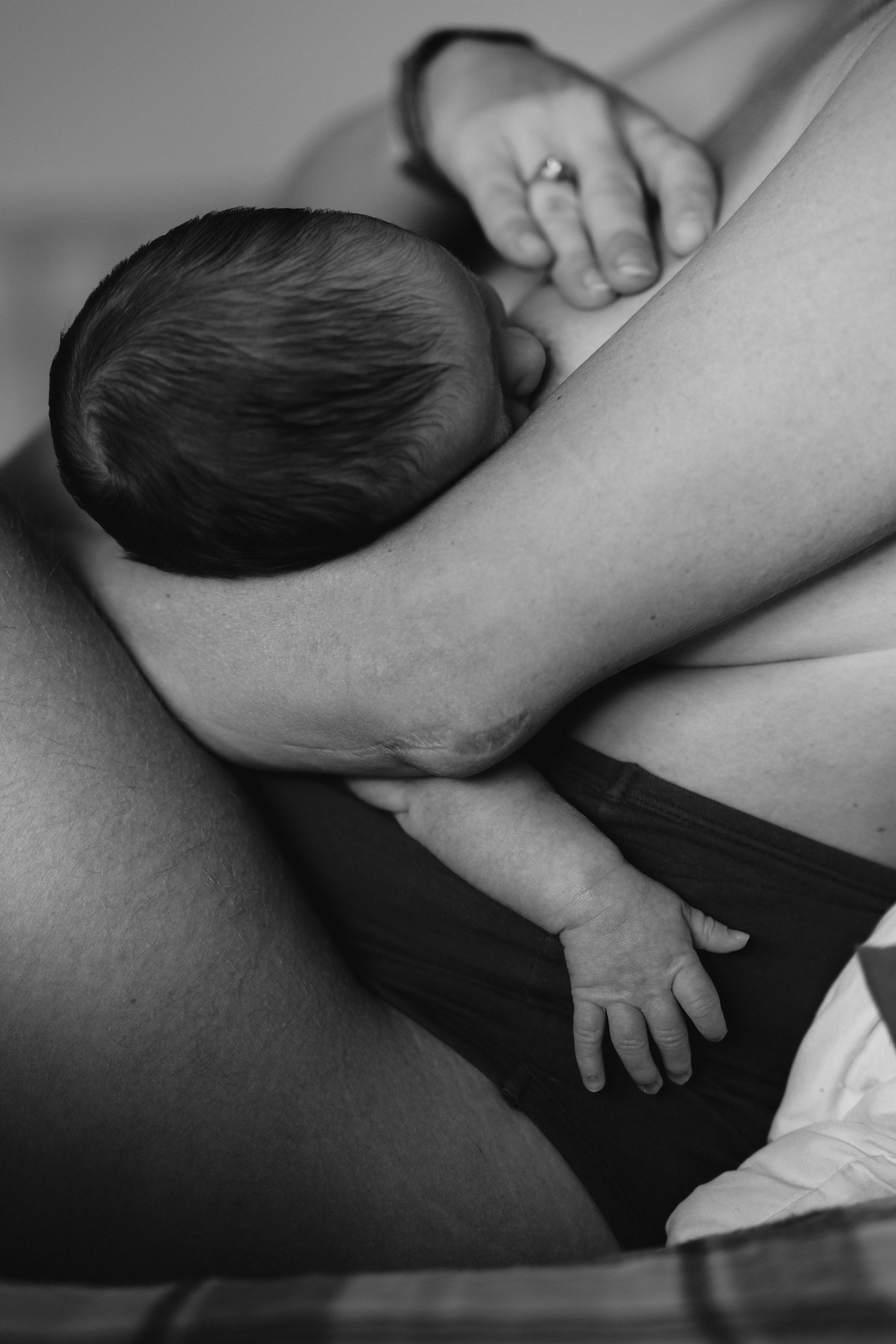
New research shows that a mother’s milk doesn’t just feed her child — it keeps the receipts. Childhood trauma can leave molecular traces in breast milk, quietly shaping early development.
Mothers, Milk, and Memory explores how biology records the past — and how therapy, compassion, and time rewrite it. Somewhere between the lullaby and the lab report, biology keeps a diary.
A new study in Translational Psychiatry suggests that a mother’s milk can carry whispers of her childhood pain—encoded not in poetry but in molecules.
The finding doesn’t indict mothers; it simply reveals that biology has better record-keeping than the rest of us.
Milk, Memory, and Bureaucratic Biology
Researchers led by Ali Jawaid at the Polish Center for Technology Development studied 103 mother–infant pairs in Wrocław. They weren’t studying mood; they were studying milk—our most sentimental fluid and, it turns out, our most revealing.
They looked for microRNAs, those microscopic post-its that tell genes which to whisper and which to shout. Mothers who’d endured two or more childhood adversities showed elevated levels of miR-142-3p, miR-142-5p, and miR-223-3p. The more trauma, the louder the molecular chatter.
In plain English: the milk remembered.
In darker English: biology has a gossip problem.
Even when postpartum depression was ruled out, the pattern remained. Trauma doesn’t always make itself known through tears or insomnia; sometimes it files paperwork in the genome.
Fatty Acids and the Baby’s Mood Board
The same mothers’ milk contained fewer medium-chain fatty acids—the molecular quick fuel that powers early brain development. Diet and BMI couldn’t explain it away.
Meanwhile, their babies showed differences in temperament: more high-intensity pleasure, more emotional fireworks. No one’s claiming milk causes personality—just that it may hum an overture.
Apparently, nurture and nature are in constant group chat.
The Cult of Maternal Perfection
Modern motherhood has become a performance art—half Olympic sport, half brand strategy. You’re expected to breastfeed, meditate, heal your lineage, and look well-hydrated while doing it.
This study doesn’t add guilt; it adds context.
It proves biology is keeping receipts. Trauma isn’t just psychological; it’s bureaucratic. It fills out forms in your DNA and waits patiently for the next generation to process the paperwork.
A Therapist’s Chair: When Intuition Meets Evidence
I once sat with a new mother who said she could feel her own mother’s anxiety in her hands as she held her baby.
She wasn’t being mystical—she was being precise.
Science has now caught up to what her body already knew: anxiety has muscle memory, and tenderness can interrupt it. Therapy, in this light, isn’t talk; it’s recalibration.
FAQ
Should mothers with trauma histories worry about breastfeeding?
No. Absolutely not. The researchers themselves insist on this. Breast milk remains one of the most protective substances on Earth—emotionally, immunologically, evolutionarily. This study isn’t anti-milk; it’s anti-silence.
Can therapy really change something molecular?
Quite Possibly. Epigenetic expression responds to affection, safety, even laughter. Trauma writes in pencil, not stone—which is hopeful, considering most of us are still using the emotional technology of the Bronze Age.
What about fathers?
The same research team found trauma-linked changes in sperm. Biology doesn’t care about gendered myths of endurance; it just records experience. Both parents have editing privileges.
What if reading this makes me feel shame?
Shame is an outdated alarm system trying to keep you safe. Biology doesn’t punish; it adapts. Your healing isn’t an apology—it’s an upgrade.
The Therapy Takeaway
For marriage and family therapists, this research confirms what we see daily: what heals in one generation frees the next. Processing your own story isn’t self-help; it’s public health.
Every bedtime story, every calm heartbeat, every moment of attunement—these are molecular interventions.
The next time someone says “it runs in the family,” remember: so does healing.
Biology may keep score, but so does kindness.
Be Well, Stay Kind, and Godspeed.
REFERENCES:
Tomaszewska, W., Apanasewicz, A., Gomółka, M., Matyas, M., Rojek, P., Szołtysik, M., Babiszewska-Aksamit, M., Gielniewski, B., Wojtas, B., Ziomkiewicz, A., & Jawaid, A. (2025). Differential microRNAs and metabolites in the breast milk of mothers with adverse childhood experiences. Translational Psychiatry. https://doi.org/10.1038/s41398-025-03017-9
Jawaid, A., & Roszkowski, M. (2022). Epigenetic transmission of stress and trauma across generations. Trends in Neurosciences, 45(9), 654–667. https://doi.org/10.1016/j.tins.2022.05.006
Monk, C., Lugo-Candelas, C., & Trumpff, C. (2019). Mother’s stress, mood, and physical health in pregnancy: Implications for fetal and child development. Psychoneuroendocrinology, 100, 170–183. https://doi.org/10.1016/j.psyneuen.2018.10.017
Yehuda, R., Daskalakis, N. P., Lehrner, A., Desarnaud, F., Bader, H. N., Makotkine, I., & Bierer, L. M. (2016).Influences of maternal and paternal PTSD on epigenetic regulation of the glucocorticoid receptor gene in Holocaust survivor offspring. American Journal of Psychiatry, 173(9), 856–864. https://doi.org/10.1176/appi.ajp.2016.15121571
Meaney, M. J. (2010). Epigenetics and the biological definition of gene × environment interactions. Child Development, 81(1), 41–79. https://doi.org/10.1111/j.1467-8624.2009.01381.x
Narayan, A. J., Rivera, L. M., Bernstein, R. E., Harris, W. W., & Lieberman, A. F. (2018). Positive childhood experiences predict less psychopathology and stress in pregnant women with childhood adversity. Child Abuse & Neglect, 78, 19–30. https://doi.org/10.1016/j.chiabu.2017.09.022