

Welcome to my Blog
Thank you for stopping by. This space is where I share research, reflections, and practical tools drawn from my experience as a marriage and family therapist.
Are you a couple looking for clarity? A professional curious about the science of relationships? Or simply someone interested in how love and resilience work? I’m glad you’ve found your way here. I can help with that.
Each post is written with one goal in mind: to help you better understand yourself, your partner, and the hidden dynamics that shape human connection.
Grab a coffee (or a notebook), explore what speaks to you, and take what’s useful back into your life and relationships. And if a post sparks a question, or makes you realize you could use more support, I’d love to hear from you.
Be Well, Stay Kind, and Godspeed.
~Daniel
P.S.
Feel free to explore the categories below to find past blog posts on the topics that matter most to you. If you’re curious about attachment, navigating conflict, or strengthening intimacy, these archives are a great way to dive deeper into the research and insights that I’ve been sharing for years.
- Attachment Issues
- Coronavirus
- Couples Therapy
- Extramarital Affairs
- Family Life and Parenting
- How to Fight Fair
- Inlaws and Extended Families
- Intercultural Relationships
- Marriage and Mental Health
- Married Life & Intimate Relationships
- Neurodiverse Couples
- Separation & Divorce
- Signs of Trouble
- Social Media and Relationships
- What Happy Couples Know

When Covenant Meets Eroticism: The Ideas of Rabbi Joseph B. Soloveitchik Meet Esther Perel
What if Rabbi Joseph B. Soloveitchik and Esther Perel were to engage in an intellectual duel?
I don’t think it would be over facts. It would be a battle of worldviews—clashing visions of love, desire, and human connection.
Both thinkers are preoccupied with intimacy, longing, and commitment.
But their fundamental premises are irreconcilable
Soloveitchik, the architect of covenantal philosophy, sees love as existential devotion—a sacred bond that transforms loneliness into shared responsibility.
Perel, an advocate of mystery and erotic desire, insists that love thrives on tension, autonomy, and the intoxicating pull of the unknown.
So, which is it?
Does desire require distance, as Perel maintains, or does it find its true expression in radical devotion, as Soloveitchik suggests?
This debate gets to the heart of modern relationships and would undoubtedly leave Perel grappling with the implications of her own ideas.

The Great Divorce Epidemic: Love, Statistics, and the Art of Throwing in the Towel
Once upon a time, marriage was a lockbox—ironclad, eternal, and stubborn as an old priest who refused to retire.
Now, in the era of express divorces and self-help gurus who brandish phrases like "self-actualization" and "conscious uncoupling," we’re tearing apart the institution of marriage like it’s a lease on a bad apartment.
The numbers are stark.
In the United States, the divorce rate has fluctuated over the years, with long-term trends reflecting significant shifts in marital stability.
According to the National Center for Health Statistics, approximately 39% of American marriages ended in divorce as of 2019, meaning nearly four out of ten couples eventually called it quits.
This marks a dramatic rise from 1960, when only 9% of American marriages dissolved.
The odds grow even steeper for those giving matrimony another shot—research suggests that around 60% of second marriages and a staggering 73% of third marriages ultimately fail, indicating that experience does not necessarily translate to success in love. What’s going on?
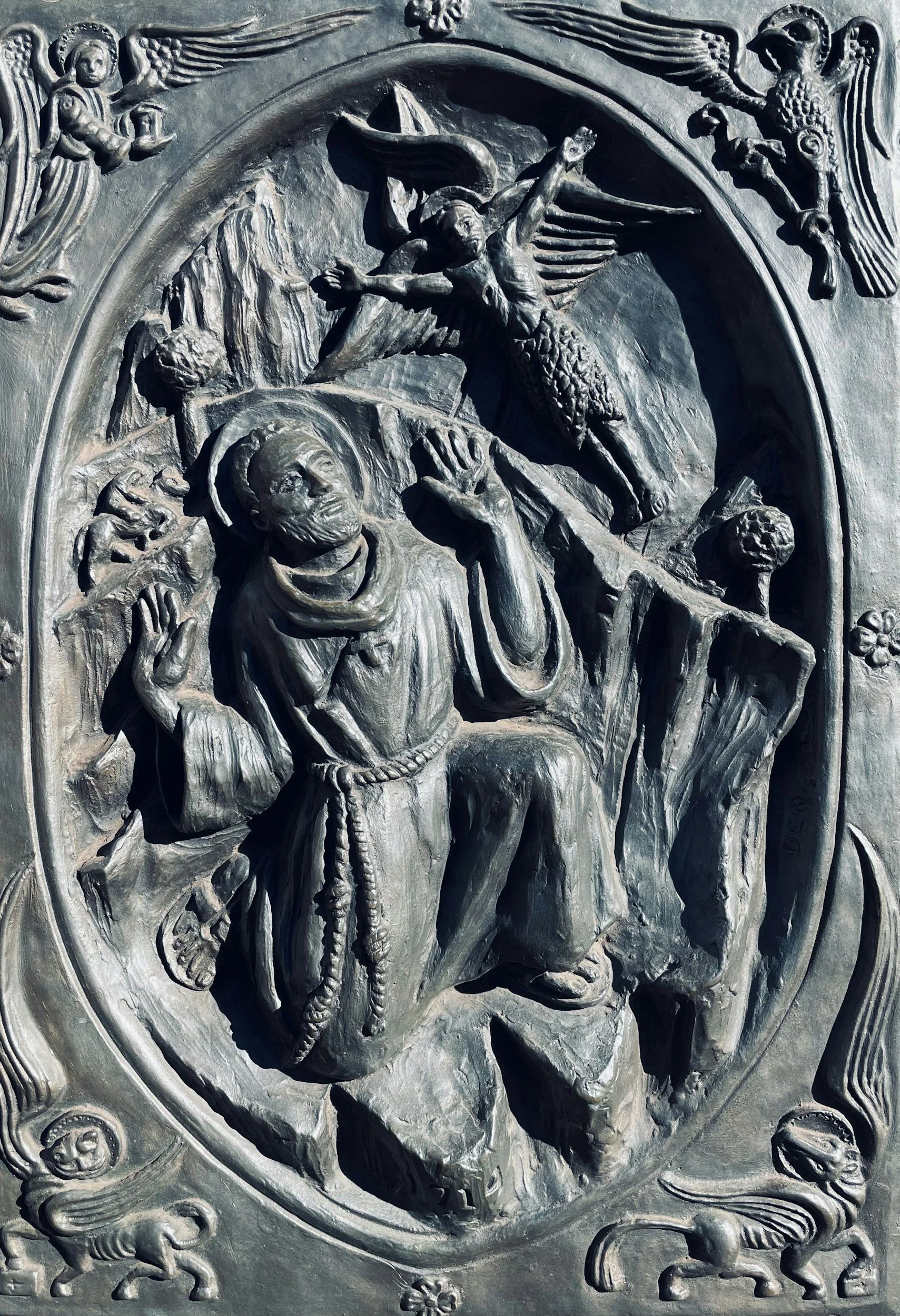
3 Saints Who Redefined Virtue
History has a wicked sense of humor when it comes to saints.
The halo usually comes out only after the heretic’s pyre has gone cold.
In their lifetimes, many of the Church’s greatest saints were treated less like holy heroes and more like misfits, rabble-rousers, or outright threats to the status quo.
The very people who redefined virtue often did so by thumbing their noses at convention – and for that, they paid the price, at least at first.
It’s as if the Church and society couldn’t recognize a saint until after giving them a good hard shove out of this world.
Now lets meet 3 of history’s holy iconoclasts – the saints who redefined virtue on their own terms.
Expect no syrupy hagiography here.
I admire these figures, yes, but always with a raised eyebrow.
Their lives remind us that real virtue often rattles cages before it earns a halo.
Over time, the Church and society came around to celebrating the very qualities that once made these people pariahs.
In doing so, they turned rebels into role models, proving that sometimes sainthood is just history’s way of saying “oops, we didn’t quite feel ya.”
The stories that follow will shine a light on how our ideals of goodness evolve – and how yesterday’s eccentric, principled troublemaker can become tomorrow’s saint.

The Shocking Truth About Cops and Politics: Do Republicans and Democrats Police Differently?
Police departments in the United States lean Republican. This is not exactly a shocker.
If you had to bet your life savings on whether the average cop was more likely to watch a NASCAR race or sip an oat milk latte at a poetry reading, you’d be making a pretty safe investment.
But does this political tilt mean Republican officers police differently than their Democratic colleagues?
The answer might surprise you.
An epic, groundbreaking study in the American Journal of Political Science set out to answer this question with an ambitious data grab that would make the NSA proud.
Researchers sifted through voter registration records and police personnel files across 99 of the 100 largest local law enforcement agencies in the country.
(One agency, presumably, still communicates exclusively through carrier pigeons.) What they found was that about 32% of officers were registered Republicans, compared to just 14% of voting-age civilians in their jurisdictions.
Police officers were also whiter, wealthier, and significantly more likely to actually vote than the people they serve—so basically, your overachieving uncle at Thanksgiving dinner.

St. Mennas and the Silence We Fear
His name is Mennas, a Roman soldier, another cog in the Empire’s vast and meat-grinding machinery.
He is not an officer, not a senator, not the sort of man whose name would have been chiseled into marble by a city that lived on its own self-importance.
He is just a man with a sword, a man who has marched, killed, and bled in the name of emperors who never knew his name. And then, one day, he walks away.
Not in cowardice, but in refusal. A spiritual defection.
He takes off his armor, leaves his regiment, and disappears into the desert, seeking something beyond the hum of the war machine, beyond the clamor of Rome’s endless ambition.
In the silence, he learns the truth: that the world is so loud because men are afraid to hear themselves think.

St. Dymphna and the Family Therapy Miracle: Why We’re All Just a Little Bit Insane
Let’s talk about St. Dymphna—the patron saint of mental illness, nervous breakdowns, and, presumably, anyone who has ever attended Thanksgiving dinner with their extended family.
Dymphna was a 7th-century Irish princess whose life story reads like a Greek tragedy had a baby with a Lifetime movie.
Her father, a pagan king named Damon, was heartbroken when his wife died. And when I say heartbroken, I mean that in the most red-flag, run-for-the-hills way possible.
Because instead of, say, working through his grief in a healthy manner—perhaps by channeling his emotions into a meaningful hobby, such as literacy—he decided that the only woman who could possibly replace his wife was… his daughter.

Five Family Therapy Exercises That May Actually Change Your Life
Families are complicated. They are a mix of love, history, unresolved grievances, inside jokes, and at least one person who refuses to apologize for anything. And while we all hope for harmony, most families—at some point—find themselves trapped in cycles of miscommunication, resentment, or the Great Thanksgiving Argument That Never Ends.
Family therapy exists because relationships, especially those built over decades, require maintenance, repair, and the occasional complete system overhaul.
Fortunately, some research-backed exercises can genuinely improve how families function.
If your family dynamic feels like an endless loop of frustration, silence, or passive-aggressive sighing, these five exercisesmight help. They are based on decades of research and are designed to promote meaningful connection, effective communication, and long-term change.

What Couples Therapy Taught Me About Family Therapy
If you’ve ever been in couples therapy, you know the deal:
✅ You sit across from your partner.
✅ A therapist gently asks probing but insightful questions.
✅ One of you suddenly remembers an old wound from 2013 and brings it up.
✅ The other person sighs deeply and says, “Are we really bringing that up again?”
✅ Someone gets uncomfortable, deflects with a joke, and the therapist calmly redirects the conversation.
It’s hard, but when done well, couples therapy is magic.
People learn how to communicate, repair, and break toxic patterns.
📌 Now take that exact same dynamic… and add more people, generational baggage, and at least one person who thinks therapy is “bullsh*t.”
Welcome to family therapy.
Today, we’re diving into:
✅ Why family therapy is just couples therapy on steroids.
✅ The biggest fights that happen in families (and how to actually fix them).
✅ What every family can learn from healthy couples.
✅ Why repairing family relationships is harder—but worth it.

The Secret to a Happy Family? Rethinking How We Fight
Let’s get one thing straight:
📌 All families fight.
No matter how wholesome, well-adjusted, or Instagram-perfect they seem, behind closed doors, every family has:
Argued over something deeply stupid. ("Who put the empty milk carton back in the fridge?")
Had a holiday dinner that ended in tense silence.
Seen at least one person dramatically exit a group chat.
But here’s the difference:
Some families fight in ways that build connection.
Other families fight in ways that leave emotional debris everywhere.
📌 It’s not about avoiding fights—it’s about fighting better.

Why Your Kids Need to See You Apologize to Each Other
Here’s a parenting secret no one tells you:
Your kids are always watching you.
Not just when you’re being a picture-perfect role model—but when you’re tired, cranky, and arguing with your partner about who forgot to put gas in the car.
And guess what?
📌 How you handle those moments teaches them more about relationships than anything you say.

How to Survive Family Estrangement Without Regret
So, you did it.
You cut off a toxic family member.
Maybe it was your emotionally manipulative mother who treated guilt like a competitive sport.
Maybe it was your overbearing father who never respected boundaries.
Maybe it was your sibling-turned-nemesis who somehow turned every conversation into a battle.
At first, you felt relief.
But now?
You’re second-guessing yourself.
You’re wondering if you overreacted.
You’re thinking, "What if I regret this?"
📌 Welcome to the Estrangement Aftershock: The phase where guilt, doubt, and ‘maybe I should reach out’ thoughts sneak in.

The Great Family Estrangement Boom: Why More People Are Walking Away
Once upon a time, family was forever.
No matter how toxic, dysfunctional, or emotionally unhinged your relatives were, you stuck it out.
Because blood is thicker than water, right?
Well, apparently, a lot of people are rethinking that.
📌 Welcome to the Great Estrangement Boom—the era of "Yeah, I don’t talk to them anymore."
If it seems like more people than ever are going no-contact with parents, siblings, or entire extended families, that’s because they are.