
Welcome to my Blog
Thank you for stopping by. This space is where I share research, reflections, and practical tools drawn from my experience as a marriage and family therapist with an international practice.
I write about what happens to desire, attachment, and meaning once the early myths stop working.
Are you a couple looking for clarity? A professional curious about the science of relationships? Or simply someone interested in how love and resilience work? I'm glad you've found your way here. I can help with that. I'm accepting new clients, and this blog is for the benefit of all my gentle readers.
Each post is written with one goal in mind: to help you better understand yourself, your partner, and the hidden dynamics that shape human connection
Grab a coffee (or a notebook), explore what speaks to you, and take what's useful back into your life and relationships.
And if a post sparks a question, or makes you realize you could use more support, l'd love to hear from you. Let's explore the scope of work you'd like to do together.
Be Well, Stay Kind, and Godspeed.
~ Daniel
P.S.
Feel free to explore the categories below to find past blog posts on the topics that matter most to you. If you're curious about attachment, navigating conflict, or strengthening intimacy, these archives are a great way to dive deeper into the research and insights that l've been sharing for years.
- Attachment Issues
- Coronavirus
- Couples Therapy
- Extramarital Affairs
- Family Life and Parenting
- How to Fight Fair
- Inlaws and Extended Families
- Intercultural Relationships
- Marriage and Mental Health
- Married Life & Intimate Relationships
- Neurodiverse Couples
- Separation & Divorce
- Signs of Trouble
- Social Media and Relationships
- What Happy Couples Know


The Narcissist Who Never Gets Even—They Just Leave
There is a particular kind of silence that arrives after betrayal.
Not the healthy silence that follows acceptance.
The other one.
The silence that says,You no longer exist.
No screaming.
No slammed doors.
No dramatic social media posts about "toxic people."
Just an invisible drawbridge quietly lifting until no one—not the offender, not old friends, sometimes not even family—can cross the moat again.
Most of us don't call this revenge.
Researchers may be telling us we shouldn't call it forgiveness, either.
A fascinating new study published in the Journal of Behavior Therapy and Experimental Psychiatry suggests that hidden forms of antagonistic narcissism are linked less to retaliation than to something colder:
An automatic tendency to withdraw from reconciliation itself.
That distinction changes the conversation.

The Past Is an Astonishing Ventriloquist: Why Couples Keep Fighting Yesterday's Arguments
Nobody remembers the first time they argued about the dishes.
They remember the moment they realized it wasn't about the dishes anymore.
Somewhere between the sigh, the slammed cabinet door, and the sentence, "You always do this,"two adults quietly stop discussing cookware and begin negotiating something much older.
Am I safe with you?
Not physically.
Emotionally.
Biologically.
Most couples never notice the transition.
Their nervous systems does.
That may be one of the quietest truths about long-term relationships.
Arguments rarely begin where they appear to begin.
The topic is today's.
The emotional stakes are often decades old.

Was Esther Perel Writing About More Than Just Sex?
She was writing about what happens when a civilization becomes afraid of surprise.
Some books become famous for what they say.
Others become famous for what people think they say.
For nearly twenty years, Esther Perel's Mating in Captivity has been shelved beside books promising better marriages, better communication, and better sex.
That was always too small.
Much too small.
Perel certainly wrote about erotic desire. She challenged the comforting assumption that emotional intimacy naturally produces erotic intimacy.
Instead, she argued that desire depends upon something love constantly threatens to erase:
mystery, distance, uncertainty, and the thrilling realization that another human being will never become completely knowable.
Most readers assumed the book was about bedrooms.
I think it was about civilization.
Because underneath every page lies a far more unsettling question.
What happens to a culture that slowly loses its tolerance for surprise?
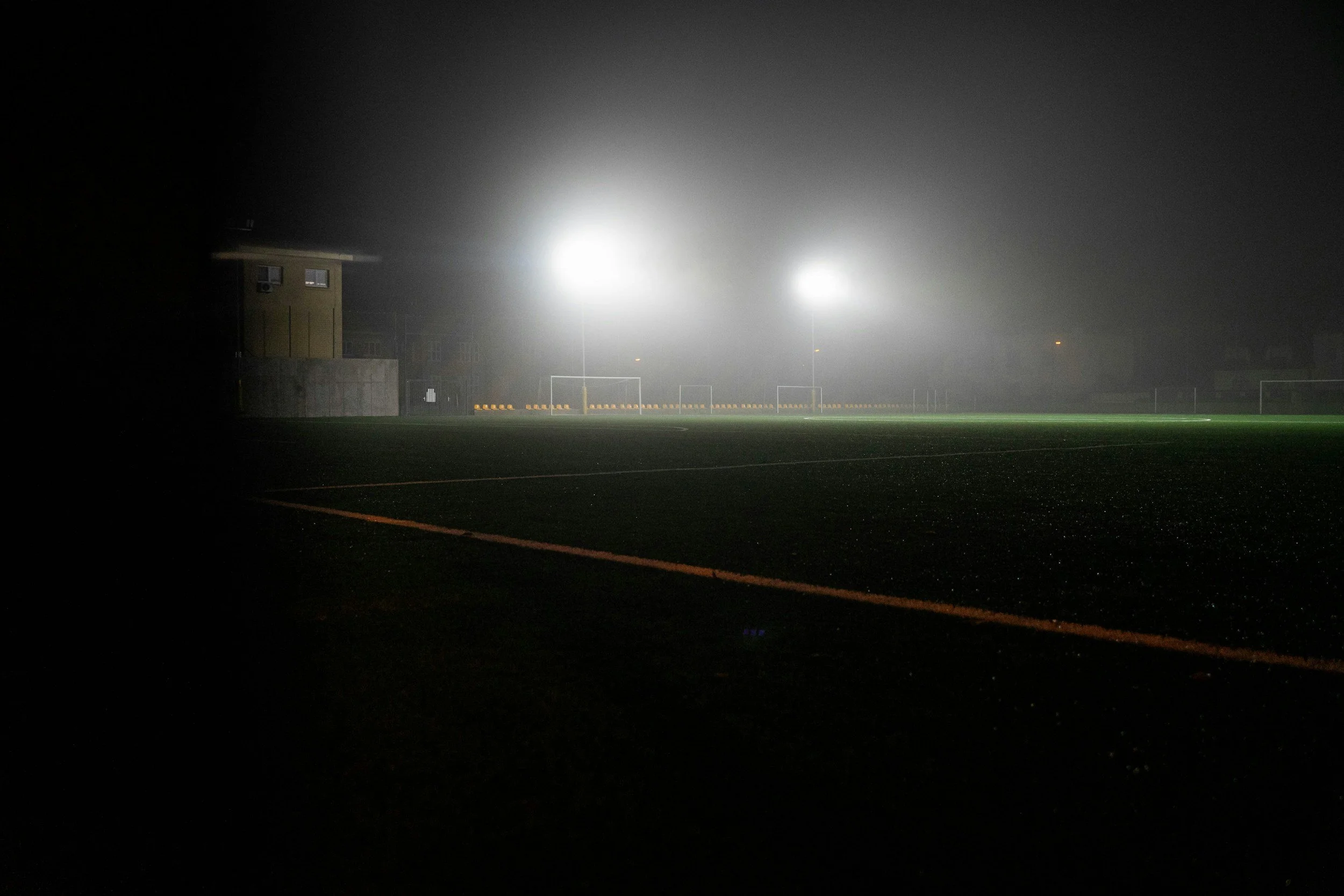
Ted Lasso Was About More Than Soccer
If you believed Ted Lasso was a show about football, congratulations.
You also believed The Sopranos was a workplace drama.
The soccer was scenery.
It arrived disguised as an underdog comedy—biscuits, locker-room speeches, and improbable optimism.
By the time viewers realized they were watching a meditation on grief, emotional labor, and the quiet cost of always being the strong one, they were already emotionally invested.
For years, we've insisted we wanted authenticity.
What we often rewarded instead was emotional usefulness.
Be encouraging. Be resilient. Read the room. Lift the mood.
Carry the weight.
Enter Ted Lasso.
A man who smiled through divorce.
Smiled through loneliness. Smiled through panic attacks.
Smiled so convincingly that millions of viewers mistook relentless optimism for emotional health.
It wasn't health.
It was survival.
Ted had become exquisitely skilled at making everyone else feel better before anyone noticed he was quietly falling apart.
That's why Ted Lasso was never really about soccer.
It was about what happens when your personality becomes your coping strategy.

Love Was Never the First Thing We Lost
There is a question I've started asking folks.
Not only couples.
Friends.
Colleagues.
Sometimes complete strangers.
It isn't especially complicated.
Who notices when you don't show up?
The answers have become quieter over the years.
"My wife."
"My boss."
"My sister."
"My dog."
Occasionally, after an uncomfortable silence...
"No one, probably."
That answer stays with me.
Not because it is dramatic.
But because it has become increasingly ordinary.

The Architecture of Collapse: How People Reach Their Breaking Point Long Before They Break
Some buildings don't collapse because of an earthquake.
They collapse because, years earlier, someone ignored a hairline crack.
Water found it first.
Then frost.
Then gravity did what gravity has always done.
When the roof finally caves in, everyone points to the storm.
The storm gets blamed because it was loud.
The real damage happened quietly.
People are much the same.
We like to imagine that psychological breakdown begins with a divorce, a layoff, a diagnosis, or one spectacularly bad Tuesday.
It is a comforting story.
It may also be an incomplete one.

Why You Should Stop Believing Every Thought You Think
You have a voice in your head.
It has an opinion about everything.
It critiques your appearance before you've finished brushing your teeth.
It rehearses arguments in the shower.
It predicts catastrophes on the drive to work.
It remembers embarrassments from 1997 with astonishing clarity, while somehow forgetting where you left your car keys.
It is tireless.
It is persuasive.
And it is wrong far more often than it realizes.
Here's the unsettling part.
Most of us spend our lives assuming that voice is us.
We don't notice it.
We don't question it.
We don't even recognize that it's telling a story.
We simply live inside its narration.
That may be the single greatest psychological illusion of ordinary life.
Because the most important breakthrough in human psychology isn't learning how to think more positively.
It isn't becoming more confident.
It isn't silencing your inner critic.
It's discovering that the voice in your head and the awareness listening to that voice are not the same thing.
Psychologists call this metacognition—the mind's extraordinary ability to observe itself.

The Friction We Lost: How Modern Life Made Other People Optional
There used to be more waiting.
You waited at the bank. You waited at the pharmacy.
You waited for the fellow at the hardware store who knew everything about washers, sump pumps, and marriages, although nobody had asked him about the third item.
You waited because everybody waited.
And while you waited, life slipped in through the side door.
Someone complained about the weather. Someone admired your Red Sox cap. Someone recommended a restaurant that had apparently been “going downhill” since 1987 but remained, mysteriously, open.
Nobody remembers these conversations.
That may have been their purpose.
Relationships are rarely built entirely from dazzling encounters. They are built from the forgettable ones—the tiny exchanges that seem like nothing until they disappear.
In 2026, we have become exceptionally good at making them disappear.

Men's Sexual Submission Fantasies: What New Research Really Says About Desire, Dominance, and Arousal
The oldest story about sex goes something like this.
Men lead.
Women follow.
Men pursue.
Women respond.
Everyone is supposed to stay in their assigned lane.
The trouble is, nobody bothered to ask the imagination.
A new Spanish study of 1,400 heterosexual adults found something that quietly dismantles decades of cultural assumptions.
Men reported more positive thoughts about sexual submission than women did.
Women who enjoyed fantasies of sexual dominance showed an especially strong association with physical arousal.
If your Victorian great-grandmother just fainted, give her a minute.

Naked Dressing Isn't About Nudity. It's About the Attention Economy
Every civilization develops a preferred way of taking its clothes off.
The Victorians called it elegance.
The Roaring Twenties called it liberation.
The 1960s called it revolution.
Fashion in 2026 calls it naked dressing—transparent gowns, illusion fabrics, impossible cutouts, and dresses that appear to have survived a knife fight with a tailor.
The argument arrives right on schedule.
It's empowering.
It's degrading.
It's feminist.
It's anti-feminist.
Everyone has a conclusion.
Almost nobody asks the interesting question.
Why now?
Fashion never happens in isolation.
It reflects the emotional economy of the culture wearing it.
And naked dressing tells us something profound about ours.
Brent Atkinson and the Future of Couples Therapy
Every discipline has an embarrassing question.
Medicine once had to explain why physicians ignored evidence that handwashing saved lives.
Economics still struggles to explain why supposedly rational people buy high, sell low, and finance boats they cannot afford.
Psychology has its own uncomfortable secret.
It has always believed a little too much in insight.
Not completely, of course.
No serious therapist would argue that awareness alone transforms a person.
But for well over a century, psychotherapy has carried a quiet optimism that if people could understand themselves deeply enough—if they recognized the childhood wound, named the defense, mourned the loss, identified the attachment injury, saw the family pattern—lasting change would eventually follow.
Sometimes it does.
Often it doesn't.
That is not a criticism of psychotherapy.
It is simply one of its oldest unsolved problems.
Every experienced therapist has watched a couple produce breathtaking insight in session.

Why Do Some Men Care So Much About Women's Beauty?
Walk into any pharmacy and you'll find an entire civilization devoted to female self-improvement.
There are creams for the face, creams for the neck, creams for the hands, creams specifically formulated for the alarming possibility that your elbows may someday become visible.
There are serums that promise radiance, masks that promise renewal, and devices that appear capable of communicating with low-orbit satellites but are, in fact, designed to tighten your jawline.
The modern beauty industry is worth hundreds of billions of dollars.
I
t employs chemists, dermatologists, influencers, photographers, plastic surgeons, advertisers, and algorithms that somehow know you've glanced at your forehead exactly once.
The usual explanation is straightforward.
Women like looking beautiful.
Many do.
There is nothing remotely irrational about wanting to feel attractive, expressive, stylish, or confident.
Human beings have decorated themselves for thousands of years. Ancient Egyptians wore eye makeup. Romans experimented with cosmetics.
Victorian women suffered through corsets that made breathing feel slightly optional. Beauty has always been part of culture.