

Welcome to my Blog
Thank you for stopping by. This space is where I share research, reflections, and practical tools drawn from my experience as a marriage and family therapist with an international practice.
I write about what happens to desire, attachment, and meaning once the early myths stop working.
Are you a couple looking for clarity? A professional curious about the science of relationships? Or simply someone interested in how love and resilience work? I’m glad you’ve found your way here. I can help with that. I’m accepting new clients, and this blog is for the benefit of all my gentle readers.
Each post is written with one goal in mind: to help you better understand yourself, your partner, and the hidden dynamics that shape human connection.
Grab a coffee (or a notebook), explore what speaks to you, and take what’s useful back into your life and relationships.
And if a post sparks a question, or makes you realize you could use more support, I’d love to hear from you. Let’s explore the scope of work you’d like to do together.
Be Well, Stay Kind, and Godspeed.
~Daniel
P.S.
Feel free to explore the categories below to find past blog posts on the topics that matter most to you. If you’re curious about attachment, navigating conflict, or strengthening intimacy, these archives are a great way to dive deeper into the research and insights that I’ve been sharing for years.
- Attachment Issues
- Coronavirus
- Couples Therapy
- Extramarital Affairs
- Family Life and Parenting
- How to Fight Fair
- Inlaws and Extended Families
- Intercultural Relationships
- Marriage and Mental Health
- Married Life & Intimate Relationships
- Neurodiverse Couples
- Separation & Divorce
- Signs of Trouble
- Social Media and Relationships
- What Happy Couples Know
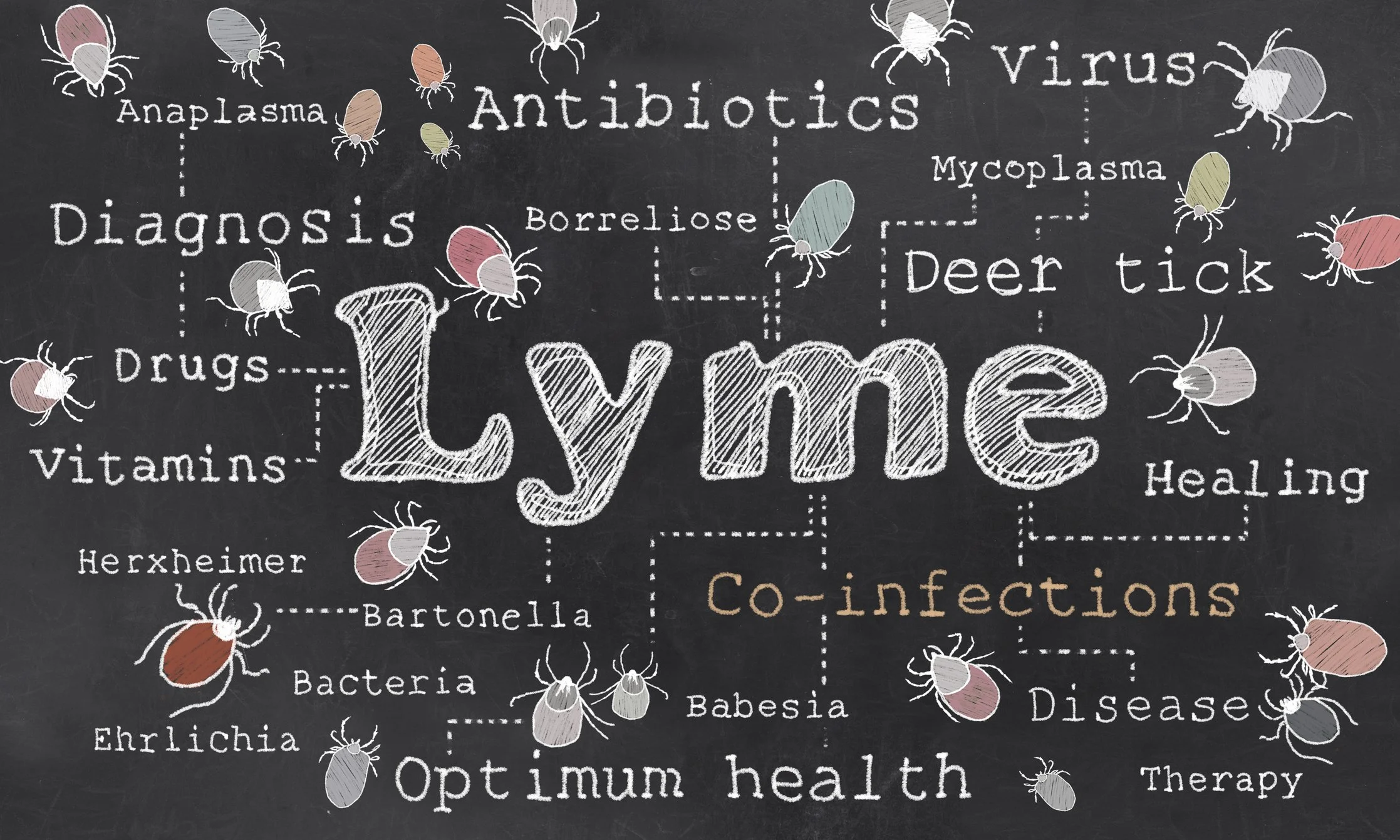
Lyme Disease and Marriage: Why Chronic Illness Quietly Changes What Your Partner’s Behavior Means
In New England, a marriage can be quietly altered by a walk.
Not a metaphorical walk.
A real one.
The sort involving a stone wall, a late afternoon that smells faintly of pine, and the general conviction — widely held across Massachusetts, Vermont, and the wooded outskirts of Greater Boston — that time spent outdoors is not just pleasant, but morally improving.
You go out a married couple.
You come back a married couple.
But somewhere between the ferns and the gravel drive, something very small may have attached itself to the future.
And months later, the argument begins.
Not about the woods.
About whether you are trying.

The Obligation Density Audit: A Couples Therapy Intervention for Resentment
Most couples do not begin by resenting each other.
They begin by volunteering.
You take the lead on daycare logistics because your schedule is more flexible.
He handles the finances because he’s better with numbers.
You start organizing holidays because someone has to.
At first, these are acts of generosity.
Then they become habits.
Then they become expectations.
Then they become evidence.
And eventually, they become grievances.
Resentment rarely begins with a single act of unfairness.
It begins with a role that was never explicitly negotiated.
One partner starts doing more—not because they were asked, but because they could.
And over time, that ability becomes obligation.
Which is where obligation density enters the system.

The Interpretive Delay Exercise: A Couples Therapy Intervention for Reactivity in the First 10 Seconds
Most couples don’t need better words.
They need a longer fuse.
Because the catastrophe usually happens in the first ten seconds—when your partner does something small, your brain assigns it a familiar meaning at warp speed, and your nervous system reacts as if it’s responding to a felony.
Then the conversation becomes less like dialogue and more like two people taking turns reading from their private indictments.
This is where the Interpretive Delay Exercise comes in.
The Interpretive Delay Exercise is a couples therapy intervention that prevents post-flood meaning consolidation by separating observable behavior from motive attribution during the first 60–90 seconds of conflict.

The Admiration Reinstatement Drill: A Couples Therapy Intervention for Moral Contempt
Most couples do not begin by hating each other.
They begin by admiring each other’s competence.
You loved that she could organize a 14-person dinner party without breaking a sweat.
He loved that you could negotiate a vendor contract in under ten minutes.
You loved that he remembered your sister’s birthday without prompting.
She loved that you knew how to fix the thing that everyone else had given up on.
Admiration is how we first register someone as capable of affecting our lives in good ways.
And then, slowly—almost imperceptibly—it begins to collapse.
Not because your partner became less competent.
But because conflict reorganizes perception around threat.
The same executive functioning you once admired now feels controlling.
The same emotional sensitivity now feels volatile.
The same independence now feels withholding.
And eventually, during arguments, your partner stops appearing in your mind as an agent—
and starts appearing as a problem.
This is the moment moral contempt begins to flood the conversation.

The Parallel Universe Intervention: How Couples Therapy Creates Sudden Relationship Insight
Some couples arrive in therapy because they’re confused.
The more dangerous ones arrive because they’re not.
They know exactly why the argument is happening.
They know what the silence means.
They know what the tone meant.
They know what the look meant.
In fact, they could run the entire fight in their heads on the drive over—right down to the closing statement and the mutual, dignified despair that follows.
This is not a communication problem.
It’s an inevitability problem.
And it’s powered by meaning.

Reframing Depression as Strength: The 20-Minute Psychological Intervention That Boosts Goal Achievement by 50%
There is the biological fact of depression.
And then there is the story we tell about what it means.
For decades, we have treated depression as an illness — correctly. Neurochemistry matters. Sleep architecture matters. Hormones matter. Therapy and medication save lives.
But there is a second injury that often lingers after the symptoms lift: the quiet belief that having been depressed reveals something defective about one’s character.
Weak.
Unreliable.
Not built for the long haul.
A new set of studies published in Personality and Social Psychology Bulletin tests a simple but destabilizing alternative:
What if surviving depression is not evidence of weakness — but evidence of strength?
And what if changing that interpretation changes behavior?

The Doctrine of Necessary Pruning Or: Why Serenity Is Never Accidental
There is a reason monasteries have gardens.
Not wild fields.
Gardens.
A monastery does not eliminate desire.
It disciplines it.
A garden does not eliminate growth.
It edits it.
People imagine serenity as something that appears when everyone feels sufficiently understood.
It does not.
Serenity appears when someone has had the courage to cut.

Marriage Is Still Chosen — Even by Those Who Once Stood Outside It
For years we were told marriage was fading.
Too traditional.
Too constrained.
Too indistinguishable from cohabitation to matter anymore.
And then something awkward happened.
When same-sex couples were finally given a clean choice between domestic partnership and marriage, they did not hesitate.
They chose marriage.
Overwhelmingly.
Research published in the Journal of Marriage and Family by Michael J. Rosenfeld and Alisa Feldman examined what happened in California after marriage equality became legal in 2013.
Domestic partnerships already offered nearly all state-level rights.
If couples wanted a lighter, less historically freighted option, it was sitting right there.
They did not take it.

The Neuroscience of Limerence: Why Romantic Obsession Feels Like Destiny (But Isn’t)
Romantic obsession does not feel optional.
It feels ordained.
You wake up thinking about them.
You check your phone as if it were a medical device.
You replay interactions with prosecutorial intensity.
You call it chemistry.
Your brain calls it dopamine.
Here is the claim, clean and non-negotiable:
Limerence is not evidence of compatibility. It is a neurobiological amplification of uncertainty.
Intensity is not intimacy.
Salience is not substance.
Activation is not alignment.
And the brain is remarkably good at confusing them.
What Is Limerence?

Moving In After 50 Boosts Happiness. Marriage? Not So Much.
For years we have been told a tidy story:
Men outsource their emotions to women.
Women build emotional villages.
Remove wife.
Man collapses into a leather recliner and existential ruin.
It is a very marketable theory.
It is also not what the new data shows.
A 2026 longitudinal analysis published in the International Journal of Behavioral Development examined adults over 50 and found something both comforting and mildly destabilizing:
In later life, the psychological benefit comes from shared daily life—not from the legal act of marriage itself.
Moving in together increases life satisfaction.
Getting married, if you’re already living together, does not add extra psychological lift.
And older men? They are not emotionally imploding at statistically meaningful rates.
Somewhere, a stereotype just had to sit down.

Couples Therapy for Cheaters: The First 30 Days After Betrayal Decide Everything
There is a particular silence after infidelity.
It is not the silence of peace.
It is the silence of recalculation.
You are standing in the kitchen.
Or the hallway. Or lying awake at 3:11 a.m.
And you realize something has shifted in the architecture of your life.
If you are searching for couples therapy for cheaters, you are not curious.
You are trying to prevent a collapse.
Infidelity is not merely a moral failure.
It is a destabilizing event.
And destabilizing events require stabilization.
What you do in the first thirty days matters more than most couples are willing to admit.

Couples Therapy for Jealousy: What Actually Works
Jealousy is not a personality flaw.
It is a nervous system with a vivid imagination.
Most couples arrive in therapy convinced the problem is a third person.
A coworker. An ex. A text message sent at 11:47 p.m. A “like” that lingered too long.
It rarely is.
In couples therapy, jealousy is not about the rival.
It is about the stability of the bond.
And stability, as it turns out, is not a feeling. It is a structure.