

Welcome to my Blog
Thank you for stopping by. This space is where I share research, reflections, and practical tools drawn from my experience as a marriage and family therapist with an international practice.
I write about what happens to desire, attachment, and meaning once the early myths stop working.
Are you a couple looking for clarity? A professional curious about the science of relationships? Or simply someone interested in how love and resilience work? I’m glad you’ve found your way here. I can help with that. I’m accepting new clients, and this blog is for the benefit of all my gentle readers.
Each post is written with one goal in mind: to help you better understand yourself, your partner, and the hidden dynamics that shape human connection.
Grab a coffee (or a notebook), explore what speaks to you, and take what’s useful back into your life and relationships.
And if a post sparks a question, or makes you realize you could use more support, I’d love to hear from you. Let’s explore the scope of work you’d like to do together.
Be Well, Stay Kind, and Godspeed.
~Daniel
P.S.
Feel free to explore the categories below to find past blog posts on the topics that matter most to you. If you’re curious about attachment, navigating conflict, or strengthening intimacy, these archives are a great way to dive deeper into the research and insights that I’ve been sharing for years.
- Attachment Issues
- Coronavirus
- Couples Therapy
- Extramarital Affairs
- Family Life and Parenting
- How to Fight Fair
- Inlaws and Extended Families
- Intercultural Relationships
- Marriage and Mental Health
- Married Life & Intimate Relationships
- Neurodiverse Couples
- Separation & Divorce
- Signs of Trouble
- Social Media and Relationships
- What Happy Couples Know
Lineage, Attention, and What Remains
I was trained by a woman who took the divine seriously—and sentimentality not at all.
My first mentor, Elizabeth Petroff, was my Comparative Literature professor at UMass in 1972.
She taught me how to speak with my personal angel.
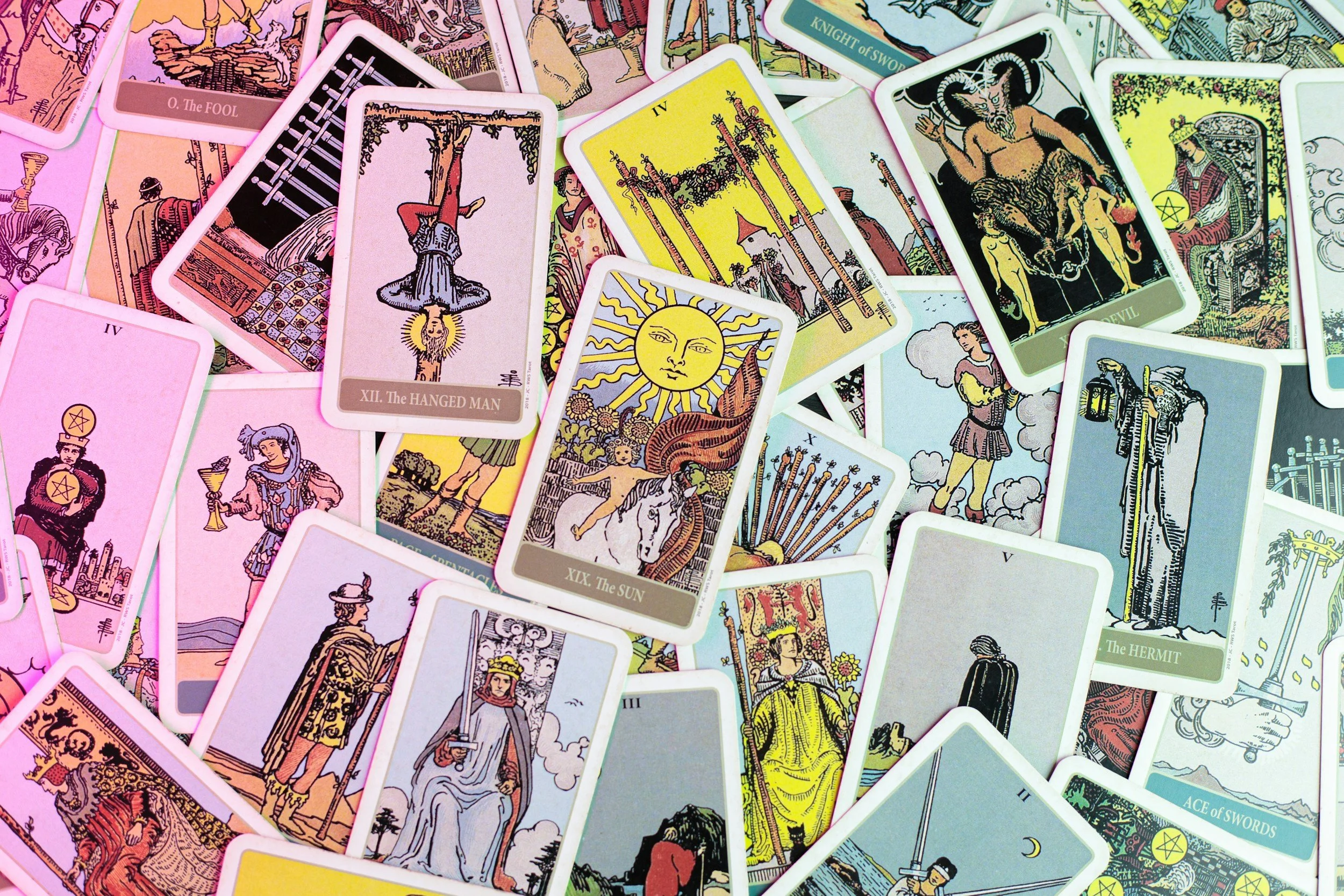
She also taught me the history and use of tarot cards—not as fortune-telling, not as belief, but as a symbolic technology designed to discipline attention.
This is not an essay about belief in the divine.
It is an essay about how serious traditions train attention without sentimentality.
This matters, so let me be precise.
Petroff was uninterested in spiritual vibes.
She cared about method. And she had no patience for practices that made people feel elevated but less accountable.
Tarot, in her hands, was not prophecy.
It was a historical grammar—a way of teaching the psyche to recognize pattern, tension, and choice under constraint.
A structured interface between narrative intelligence and intuition.
Less mysticism-as-spectacle. More mysticism-as-tool.

Overexplaining Is an Act of Care, Not a Flaw
“I’m sorry, I know I’m overexplaining.”
That sentence appears in therapy rooms so reliably it could be part of the intake packet.
It’s usually delivered quickly, with a preemptive wince, as though the speaker has violated an unspoken rule: you used too many words.
But here is the thing neurodivergent culture is now saying plainly, without irony or apology:
What gets labeled overexplaining is very often an act of care.
Not insecurity.
Not narcissism.
Not control.
Care.

Emotional Detachment Is Not Emotional Maturity
This is the confusion that keeps getting rebranded.
One of the quietest confusions in modern relationship culture is this:
Emotional detachment is repeatedly mistaken for emotional maturity.
They look similar on the surface.
Both are calm.
Both avoid drama.
Both speak the language of boundaries.
But they are not the same psychological achievement.
Emotional maturity expands a person’s capacity to remain connected under stress.
Emotional detachment reduces exposure to stress by limiting connection.
One builds tolerance.
The other builds distance.
Only one supports intimacy.

Is Narcissism a Defense Against Borderline Personality Disorder?
Longer, clinically accurate answer:
Narcissism is not a defense against Borderline Personality Disorder.
It is often a defensive solution to the same underlying psychological problem.
That distinction matters—clinically, relationally, and culturally.
What This Question Gets Right Immediately
When people ask whether narcissism is a defense against BPD, they are intuitively sensing something real.
Both narcissistic and borderline presentations involve:
fragile self-structure.
intense sensitivity to shame and abandonment.
difficulty holding mixed or ambivalent feelings about self and others.
What differs is how the psyche organizes itself when attachment feels dangerous.
The question isn’t misguided.
It’s aimed at the wrong level of analysis.

The Existential Difference Between a Narcissist and an Asshole — and Why Narcissists Don’t Argue
There is a difference between a narcissist and an asshole.
It is not a difference of manners. It is not even a difference of morality.
It is a difference of ontology.
An asshole knows the world exists without them. A narcissist is not entirely convinced it does.
That distinction explains almost everything that follows—especially why narcissistic conflict never feels like a disagreement, and why reasoning so often makes things worse.

Do Narcissists Hate Sick People? How Illness Exposes Narcissistic Relationships
Do narcissists hate sick people?
Short answer:Narcissists don’t hate sick people. They hate what sickness does to the relational economy.
That distinction matters—because it explains why illness so often marks the moment a narcissistic relationship turns cold, punitive, or quietly over.
This is not about cruelty in the cartoon sense. It is about structure.

Why Calm Relationships Often End Suddenly
Calm is often treated as evidence of health.
If a relationship isn’t volatile, dramatic, or chronically distressed, we assume it’s stable. Mature. Under control.
But calm can mean very different things.
There is calm that comes from mutual regulation—where conflict exists, but repair is active and responsiveness is reliable.
And there is calm that comes from emotional disengagement—where conflict has been quietly retired because it no longer seems worth the effort.
From the outside, both look the same.
From the inside, they are not.

Repair Fatigue: When Trying Again Stops Making Sense
Most couples don’t stop trying all at once.
They stop incrementally.
One fewer bid.
One less follow-up.
One moment where it feels easier not to reopen something that didn’t open back.
Eventually, trying again stops feeling hopeful.
It starts to feel inefficient.
This is not apathy.
It is not indifference.
It is repair fatigue.

Why Some Couples Stop Repairing Without Ever Fighting
Some relationships don’t fall apart in arguments.
They fall apart in silence.
No slammed doors.
No raised voices.
No dramatic ultimatums.
Just a gradual disappearance of repair.
If you ask these couples whether they fight, they’ll often say no—sometimes with a hint of pride.
They’re low drama. They’ve figured things out. They don’t want to make a thing of things.
And yet, something essential has gone missing.
Not love.
Not commitment.
Repair.

When “Nothing Is Wrong” Is the Most Dangerous Phase of a Relationship
There is a phase in long-term relationships that almost never brings couples to therapy.
There is no crisis.
No betrayal.
No screaming matches echoing down the hallway.
In fact, if you ask either partner what’s wrong, they will often say something reassuring, responsible, and quietly lethal:
“Nothing, really.”
This is usually delivered with a small shrug.
The emotional equivalent of closing a door gently so no one thinks to open it again.
And yet, in long-term relationships, this is often the moment where the most consequential damage begins.
Not loudly.
Not dramatically.
But politely.

The Human Penis as Signal: Why Size Still Shapes Attraction and Threat
The Human penis is an evolutionary outlier. Of Course it is.
Biologists have been quietly bothered by the human penis for a long time.
Not morally. Not personally. Evolutionarily.
Relative to body size, it is conspicuously large compared to that of other great apes—thicker, longer, and more visually emphatic.
It is also unusually fragile.
Humans lack a baculum, the penis bone found in many mammals, meaning erections depend entirely on blood flow rather than skeletal support.
This combination—size without structural reinforcement—has never sat comfortably inside tidy evolutionary explanations.
Something this metabolically expensive does not usually exist without doing more than one job.
The emerging answer appears to be simple and unsettling: the human penis evolved not only for reproduction, but for being read.

After Insight
By the time you reach this page, insight is not your problem.
You already understand yourself reasonably well.
You can describe your patterns, name your injuries, and explain—often accurately—why you respond the way you do.
You may even understand your partner better than they understand themselves.
This is not nothing.
It matters.
It just isn’t enough anymore.
This is what remains after insight has done all the work it can do.