

Welcome to my Blog
Thank you for stopping by. This space is where I share research, reflections, and practical tools drawn from my experience as a marriage and family therapist.
Are you a couple looking for clarity? A professional curious about the science of relationships? Or simply someone interested in how love and resilience work? I’m glad you’ve found your way here. I can help with that.
Each post is written with one goal in mind: to help you better understand yourself, your partner, and the hidden dynamics that shape human connection.
Grab a coffee (or a notebook), explore what speaks to you, and take what’s useful back into your life and relationships. And if a post sparks a question, or makes you realize you could use more support, I’d love to hear from you.
Be Well, Stay Kind, and Godspeed.
~Daniel
P.S.
Feel free to explore the categories below to find past blog posts on the topics that matter most to you. If you’re curious about attachment, navigating conflict, or strengthening intimacy, these archives are a great way to dive deeper into the research and insights that I’ve been sharing for years.
- Attachment Issues
- Coronavirus
- Couples Therapy
- Extramarital Affairs
- Family Life and Parenting
- How to Fight Fair
- Inlaws and Extended Families
- Intercultural Relationships
- Marriage and Mental Health
- Married Life & Intimate Relationships
- Neurodiverse Couples
- Separation & Divorce
- Signs of Trouble
- Social Media and Relationships
- What Happy Couples Know
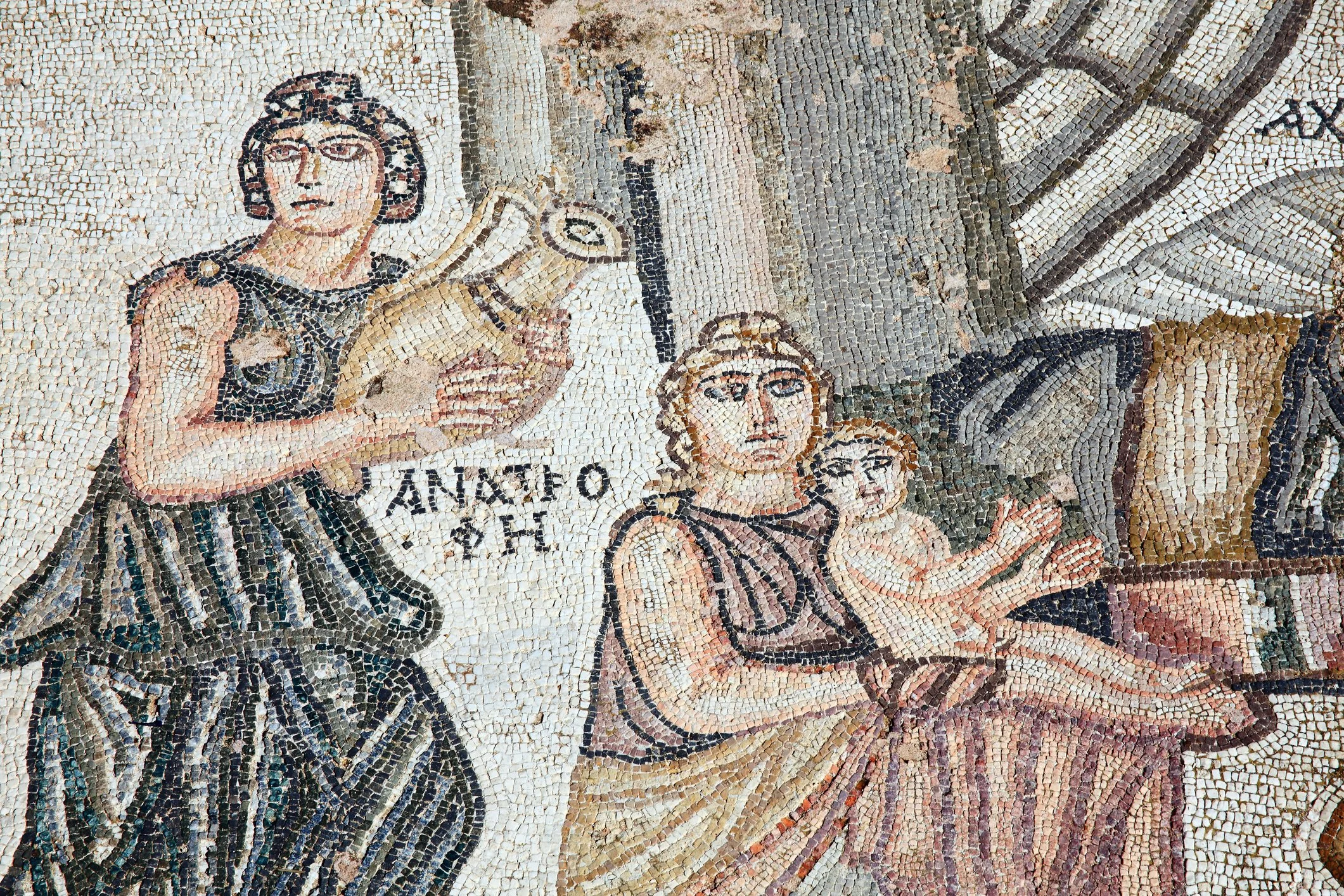
Pietas: When Obligation Became a Dirty Word
Pietas was not obedience.
Pietas did not mean submission.
It did not mean compliance.
It did not mean erasing oneself for authority.
Pietas meant responsibility to what made you.
Family.
Community.
Institutions.
Ancestors.
The future.
To the Romans, adulthood was not defined by independence.
It was defined by continuity.
A person with pietas understood that they stood inside a chain of obligation that ran backward and forward in time.
They did not invent themselves. And they were not free to pretend otherwise.
As Roman social historian Carlin Barton notes, Roman moral life assumed that identity was inherited before it was chosen.
Virtue did not begin with preference. It began with position.
Pietas made social life durable because it bound folks to something larger than their momentary feelings.

Fides: Why Honesty Isn’t the Same as Trust
Fides was not emotional closeness
Fides did not mean warmth.
It did not mean affection.
It did not mean feeling understood.
Fides meant reliability under strain.
In ancient Rome, trust was not something you felt.
It was something you observed over time.
A person with fides showed up when conditions worsened.
They held their word when it became inconvenient.
They did not renegotiate commitments every time circumstances shifted.
To the Roman mind, trust lived in behavior, not interiority.
As Roman social historian Carlin Barton notes, Roman virtue culture was deeply suspicious of emotional display as evidence. What mattered was whether a person’s conduct held steady when pressure arrived.
Fides made social life possible because it made prediction possible.

Gravitas: Why Modern Relationships Feel Weightless
Gravitas was not seriousness. Gravitas did not mean being dour.
It did not mean suppressing humor or flattening personality.
And it certainly did not mean being impressive.
Gravitas was moral weight—the capacity to carry consequence without theatrics.
A Roman with gravitas did not rush to be understood.
They did not soften every statement to manage reception.
They did not perform their interior life in real time.
Gravitas signaled one thing with clarity:
This person understands that actions echo.
In Roman culture, weight preceded warmth. Credibility came before charm.
Emotional display was not proof of sincerity; it was often interpreted as loss of self-command.
As Roman social historian Carlin Barton observed, Roman virtue culture valued containment over confession.
The adult self was expected to metabolize emotion privately and act publicly with proportion.
Gravitas made adulthood legible.

What Is Neuro-Perceptive Safety—and Why Should I Care?
Nothing is actively wrong.
Your life works.
Your relationships function.
There is no obvious danger to name.
And yet—your nervous system will not stand down.
You are not anxious.
You are not fragile.
You are not failing at regulation.
You are responding to a culture that requires continuous interpretation.
Modern life rarely threatens us outright.
It keeps us perceptually online.
Every room.
Every relationship.
Every silence.
Safety is no longer about danger.
It’s about whether your nervous system is ever allowed to stop watching.
That condition has a name.
Neuro-perceptive safety.

Why Modern Relationships Feel Harder Than They Should
The current crisis in modern relationships is not a lack of emotional awareness.
Partners are informed.
They are articulate.
They know their attachment styles, their triggers, their boundaries, their patterns.
What they increasingly lack is relational structure.
Over the past two decades, intimacy has been treated as something that emerges naturally once individuals become sufficiently self-aware, regulated, and autonomous.
That experiment has failed quietly.
What it produced instead is a culture of highly competent adults who can explain their loneliness in detail but cannot seem to redesign the conditions that create it.

When Famous Families Fall Silent: What Celebrity Estrangements Reveal About Modern Loyalty
Celebrity family estrangements are rarely treated as what they actually are.
They’re treated as gossip.
Or as proof of moral progress.
Neither framing is doing the real work.
What many people feel when a public figure cuts off a parent, sibling, or entire family system isn’t outrage or admiration. It’s something quieter—and more destabilizing:
Am I supposed to understand this as growth?
That question—not the celebrity—is the real subject here.
Because family estrangement has become one of the few cultural moves that feels both radical and officially sanctioned at the same time.
And celebrity culture is where that contradiction is now being rehearsed most visibly.
Not because famous families are uniquely broken.
But because fame changes how rupture is narrated, rewarded, and remembered.

MTHFR Mutation Symptoms: A Real Gene, a Narrow Margin, and Why Some Nervous Systems Feel It More
MTHFR—methylenetetrahydrofolate reductase—is a gene involved in folate metabolism, supporting DNA synthesis, neurotransmitter production, and homocysteine regulation, as summarized in the NIH overview of the MTHFR gene (https://medlineplus.gov/genetics/gene/mthfr/).
That is the biology.
What people experience around it—the relief, the fixation, the supplements—is about margin, not mutation.
What MTHFR Actually Is (and Is Not)

When Child-Centered Parenting Consumes the Marriage
It is now widely accepted—and largely correct—that children do not develop inside dyads.
They require systems.
Predictable routines.
Redundant care.
Stable rhythms that do not depend on one adult’s mood, stamina, or emotional availability on a random weekday evening when everyone is already late and someone is crying about the wrong color cup.
Children need systems because children are not reciprocal.
They cannot share load.
They cannot repair rupture.
They cannot stabilize adults when the structure wobbles.
That insight was a genuine advance.
The trouble began when we quietly decided that because children require systems, the system itself should revolve around them.

Why Revolutionary Road Still Hurts More Than Strangers When We Meet
Strangers When We Meet was published in 1958.
Revolutionary Road followed just three years later.
Those three years matter.
They sit exactly at the moment when postwar American adulthood stops feeling provisional and starts feeling permanent—when the suburbs, the roles, and the timelines harden from experiment into expectation.
The novels are often grouped together as suburban marriage stories. They shouldn’t be. They are not describing the same marital problem. They are describing adjacent stages of cultural closure.
Strangers When We Meet is written before the seal fully sets.
Revolutionary Road is written after.
That difference explains everything.

Strangers When We Meet and the American Talent for Living Correctly While Feeling Nothing
Strangers When We Meet is not a novel about adultery.
That interpretation belongs to a later moral economy.
It is a novel about American adulthood at the moment emotional dissatisfaction became common but remained culturally illegible—when lives worked, marriages held, and silence passed for maturity.
This is not a love story.
It is a cultural document.
1958 America: stability was solved, interior life was deferred.
By 1958, the United States had achieved something rare and deeply misleading: mass adult stability.
The war was over.
The middle class was expanding.
Marriage was normative.
Divorce was still embarrassing.
Work followed predictable arcs.
The system functioned.

The Nonchalance Ethic: When Caring Became a Liability
Modern relationship culture has made a quiet discovery:
it wants intimacy,
but not the vulnerability of wanting it.
Once, emotional investment signaled seriousness.
Now it is more often treated as a design flaw.
Care too openly and you risk being called anxious.
Ask for clarity and you’re “moving too fast.”
Expect consistency and you’re advised—gently, therapeutically—to focus on yourself.
None of this is happening because people no longer want connection.
It is happening because nonchalance has been upgraded into a virtue.
Being unbothered now reads as emotional intelligence.
Low investment passes for regulation.
Detachment is framed as self-respect.

Why Children Disappear in Adult-Autonomy Discourse
Modern American relationship culture is fluent in one language above all others: adult autonomy.
Who chose whom.
Who consented.
Who owed what—and to whom.
This framework has done real good. It dismantled moral panic, reduced sexual shaming, and re-centered personal agency where it belongs.
But it has a blind spot.
Children.