

Welcome to my Blog
Thank you for stopping by. This space is where I share research, reflections, and practical tools drawn from my experience as a marriage and family therapist with an international practice.
I write about what happens to desire, attachment, and meaning once the early myths stop working.
Are you a couple looking for clarity? A professional curious about the science of relationships? Or simply someone interested in how love and resilience work? I’m glad you’ve found your way here. I can help with that. I’m accepting new clients, and this blog is for the benefit of all my gentle readers.
Each post is written with one goal in mind: to help you better understand yourself, your partner, and the hidden dynamics that shape human connection.
Grab a coffee (or a notebook), explore what speaks to you, and take what’s useful back into your life and relationships.
And if a post sparks a question, or makes you realize you could use more support, I’d love to hear from you. Let’s explore the scope of work you’d like to do together.
Be Well, Stay Kind, and Godspeed.
~Daniel
P.S.
Feel free to explore the categories below to find past blog posts on the topics that matter most to you. If you’re curious about attachment, navigating conflict, or strengthening intimacy, these archives are a great way to dive deeper into the research and insights that I’ve been sharing for years.
- Attachment Issues
- Coronavirus
- Couples Therapy
- Extramarital Affairs
- Family Life and Parenting
- How to Fight Fair
- Inlaws and Extended Families
- Intercultural Relationships
- Marriage and Mental Health
- Married Life & Intimate Relationships
- Neurodiverse Couples
- Separation & Divorce
- Signs of Trouble
- Social Media and Relationships
- What Happy Couples Know

Why Clear-Coding Is Redefining Dating in 2026
For a long time, dating rewarded illegibility.
You were supposed to imply without stating.
Care without committing.
Desire without consequence.
Opacity was framed as sophistication. Ambiguity passed for depth.
Clear-coding ends that arrangement.
Clear-coding is the refusal to participate in relational guesswork. It is the emerging norm that says:
if someone has to decode your behavior to understand your intentions, the system is already broken.
What’s changing is not how people feel.
It’s what they are willing to tolerate.

Decentering Men: Why So Many Women Are Quietly Reorganizing Their Lives
Decentering men is not a meme, even if memes are how many people first encounter it.
At its core, decentering men refers to removing male romantic attention as the primary organizing force of a woman’s emotional, temporal, and psychological life—without rejecting intimacy itself.
What looks like humor online is often the public language for a private reckoning.
Many women are no longer structuring their choices, schedules, nervous systems, or sense of self around being chosen.
Romance becomes optional rather than foundational. Partnership becomes a choice rather than a proof of adulthood.
This is not a rejection of love.
It is a reordering of meaning.

When Affection Becomes Infrastructure: Why Even the Pope Is Warning About AI Companions
This is not a technology blog. It is a relationship blog that keeps encountering the same disturbance under different names.
Couples come in describing a thinning of friction. Less arguing. Less rupture. Less repair. Less need.
What sounds like maturity at first eventually reveals itself as something else: relational offloading.
At first, this offloading hides inside work schedules. Or parenting logistics. Or endless scrolling framed as rest.
More recently, it has begun to appear as companionship without consequence.
Which is why artificial intelligence—specifically affectionate, emotionally responsive AI—keeps surfacing here, even though this site has no interest in software qua software.
What matters is not the machine.
What matters is what we are asking it to carry for us.

Why Knowing the Word “Vulva” Improves Your Sex Life (According to Science)
There are many theories about what makes sex good.
Chemistry. Safety. Timing. Trauma. Attachment.
Lighting purchased during a brief but meaningful phase of adulthood.
But according to a new study, we may have been overlooking the most basic variable of all:
Knowing what things are called.
Not metaphorically.
Not poetically.
Literally.
Words. Nouns. Anatomy.
Researchers asked young adults to do something radical:
Look at a diagram and name the parts.
No Google.
No euphemisms.
No vague gesturing toward the lower hemisphere of the body like a Victorian relative has just entered the room.
Just: What is this?
What followed was not erotic.
But it was revealing.

The Human Penis as Signal: Why Size Still Shapes Attraction and Threat
The Human penis is an evolutionary outlier. Of Course it is.
Biologists have been quietly bothered by the human penis for a long time.
Not morally. Not personally. Evolutionarily.
Relative to body size, it is conspicuously large compared to that of other great apes—thicker, longer, and more visually emphatic.
It is also unusually fragile.
Humans lack a baculum, the penis bone found in many mammals, meaning erections depend entirely on blood flow rather than skeletal support.
This combination—size without structural reinforcement—has never sat comfortably inside tidy evolutionary explanations.
Something this metabolically expensive does not usually exist without doing more than one job.
The emerging answer appears to be simple and unsettling: the human penis evolved not only for reproduction, but for being read.

Prudentia: The Virtue That Chooses Without Fantasy
If clementia governed power, prudentia governed choice.
Prudentia was not intelligence.
It was not insight.
It was not moral clarity.
Prudentia was the capacity to decide well under imperfect conditions—and to live with what that decision cost.
Rome did not imagine a world of optimal options. It assumed constraint, tradeoffs, timing errors, and irreversibility.
Prudentia was the virtue that operated inside that realism.
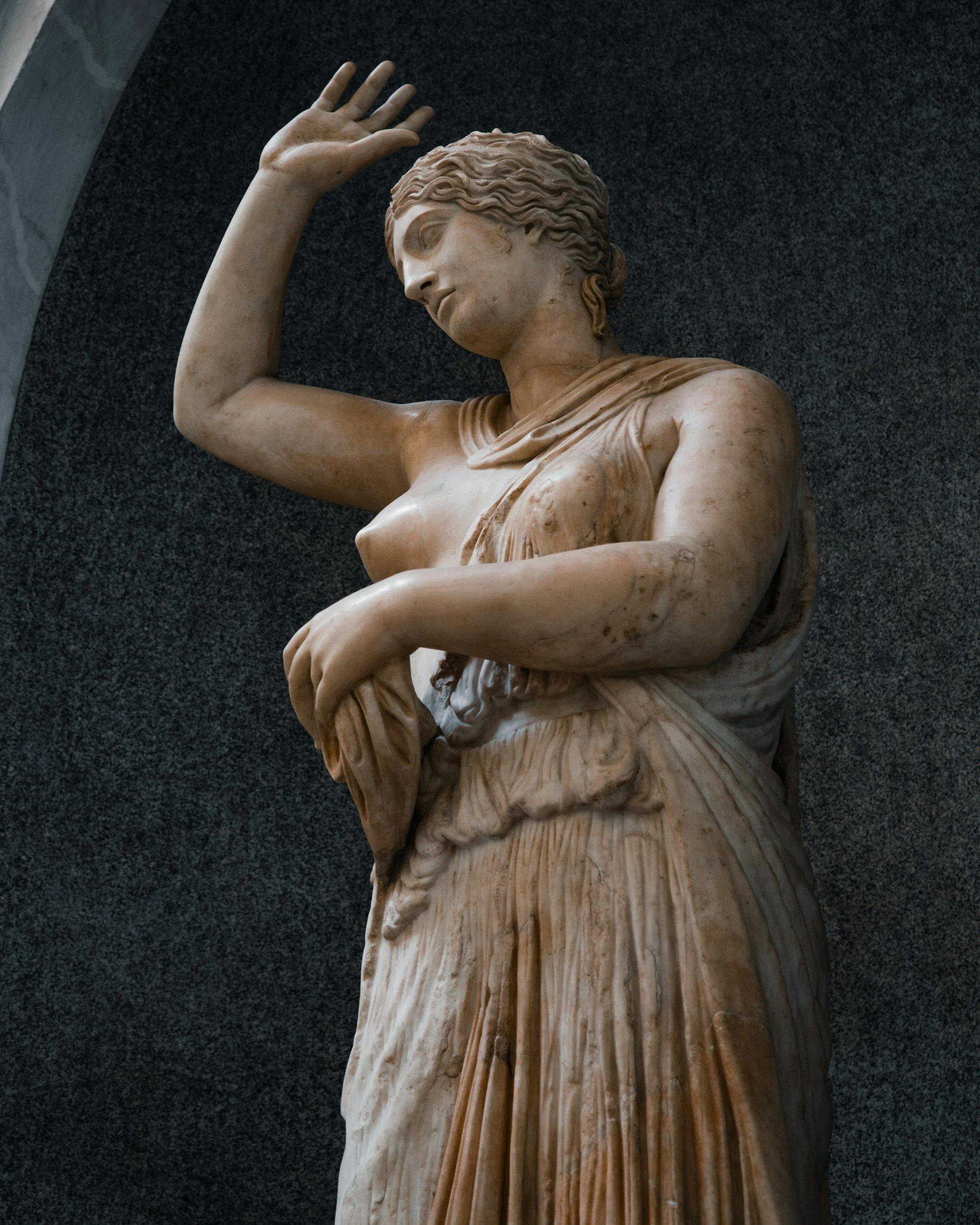
Clementia: Why the Most Powerful People Once Trained Themselves to Restrain Power
Rome understood something modern culture does not like to admit:
Power is most dangerous when it believes itself justified.
Clementia was not kindness.
It was not forgiveness.
It was not emotional generosity.
Clementia was restraint—by those who could destroy and chose not to.
That distinction mattered.
In Roman political life, mercy was meaningful only when it was voluntary. Mercy extracted by pressure was not virtue; it was capitulation.
Clementia required asymmetry: one party held decisive advantage and declined to exercise it fully.
The refusal was the point.
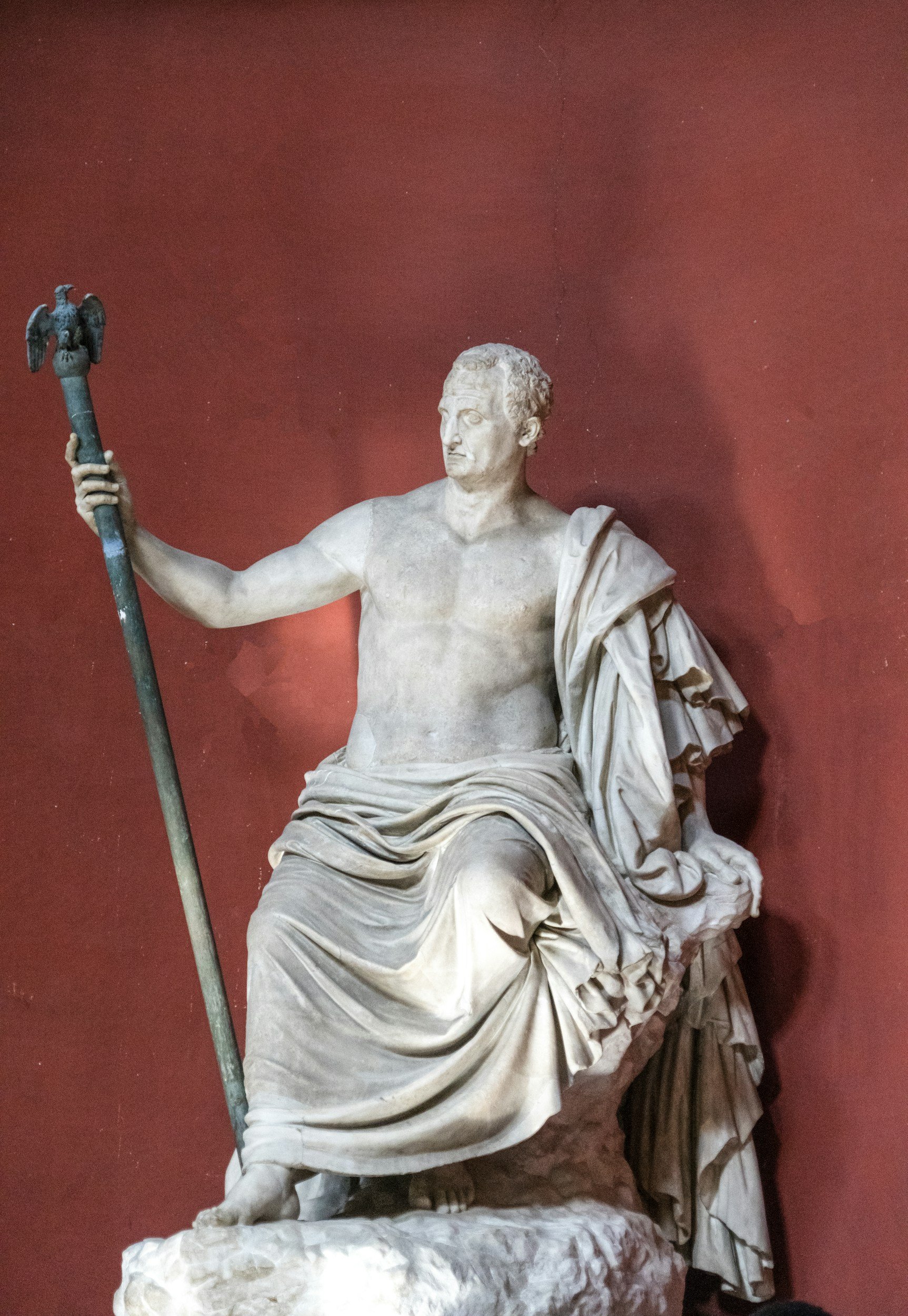
Auctoritas: The Roman Virtue That Ends Deliberation
Auctoritas is not power.
It is not control.
It is not charisma with a microphone.
Auctoritas exists to end deliberation.
The Romans were precise about this. They distinguished imperium—the power to command—from auctoritas—the condition under which command becomes unnecessary.
Modern culture erased that distinction.
Rome never did.
Comitas: The Roman Virtue That Makes Annoying People Bearable
Comitas is not friendliness.
It is not warmth.
It is not charm deployed for approval.
Comitas is social ease without intimacy.
The Romans named it because they understood something modern culture has forgotten:
some adult life happens among people you do not love, do not choose, and do not fully trust—and yet must cooperate with anyway.
Comitas was the virtue that made that possible without cruelty or collapse.
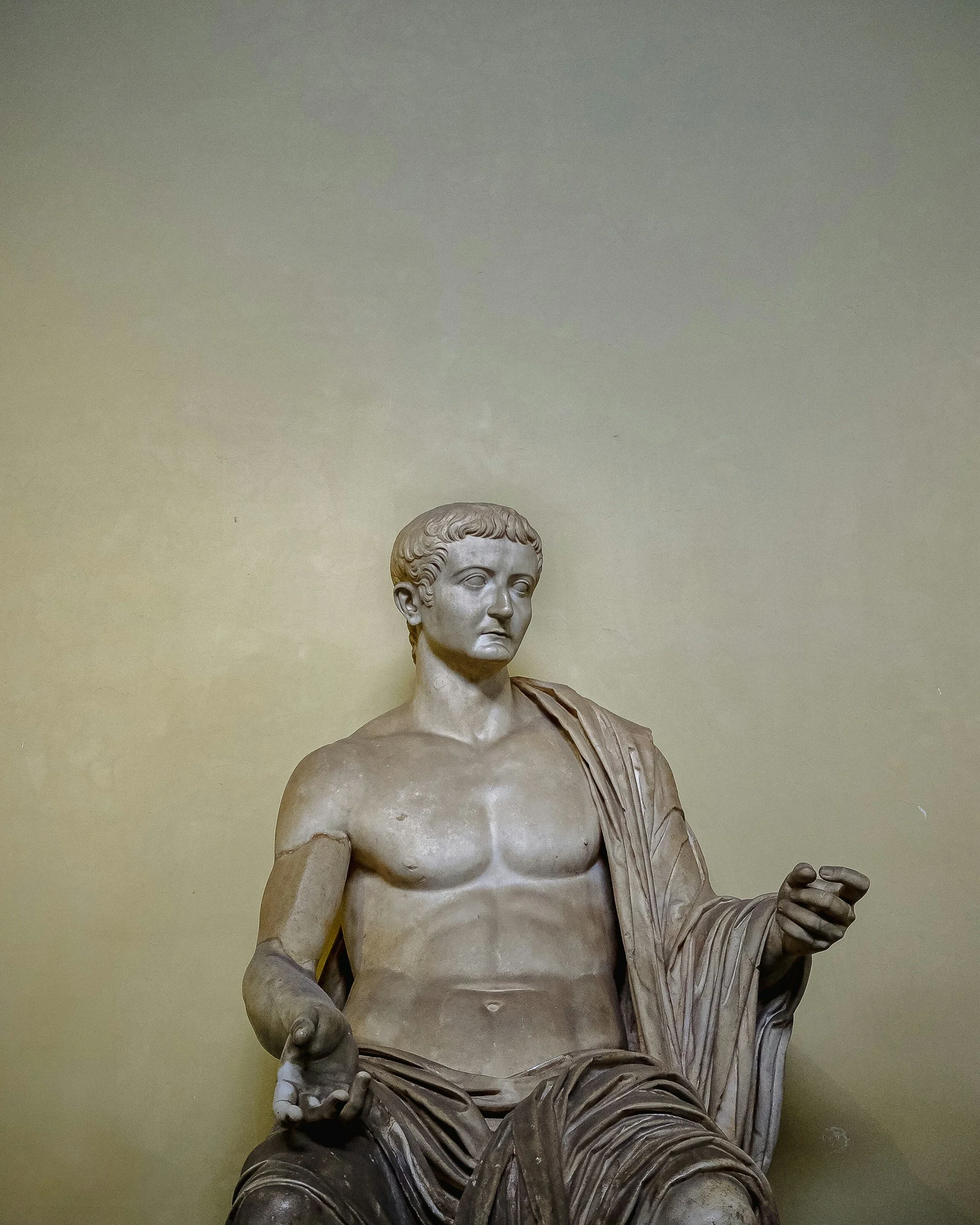
Dignitas: The Roman Virtue of Worth You Do Not Have to Broadcast
Dignitas is not self-esteem.
It is not confidence.
It is not an internal sense of worth.
Dignitas is the condition under which a person can be trusted without supervision.
The Romans used the word to describe a form of adult standing modern culture has quietly dismantled: worth accrued through visible conduct over time, such that explanation, assertion, and monitoring became unnecessary.
You did not feel dignified.
You became dignified—by behaving in ways that reduced the need to watch you.
Patientia: The Roman Virtue of Enduring Without Resentment
Patientia is not passivity.
It is not self-abandonment.
It is not “being the bigger person.”
Patientia is the capacity to absorb time without converting strain into resentment.
The Romans named patientia because they understood something modern culture resists:
time itself is a load.
And not everyone can carry it without poisoning what they are inside.
Patientia was the virtue that allowed systems—families, marriages, institutions—to survive periods when nothing could be fixed and nothing could be rushed.

Why Modern Culture Fears Severitas (And Why It Needs It)
Severitas is not cruelty.
It is not punishment.
It is not emotional coldness dressed up as discipline.
Severitas is the virtue that ends what explanation cannot save.
The Romans used the word to name a form of adulthood modern culture has nearly lost: moral seriousness in the presence of decay.
Not dramatizing it.
Not therapizing it.
Not aestheticizing it.
Stopping it.
Severitas was the capacity to recognize when a pattern had crossed from complexity into corrosion—and to withdraw permission without spectacle.