
Welcome to my Blog
Thank you for stopping by. This space is where I share research, reflections, and practical tools drawn from my experience as a marriage and family therapist with an international practice.
I write about what happens to desire, attachment, and meaning once the early myths stop working.
Are you a couple looking for clarity? A professional curious about the science of relationships? Or simply someone interested in how love and resilience work? I'm glad you've found your way here. I can help with that. I'm accepting new clients, and this blog is for the benefit of all my gentle readers.
Each post is written with one goal in mind: to help you better understand yourself, your partner, and the hidden dynamics that shape human connection
Grab a coffee (or a notebook), explore what speaks to you, and take what's useful back into your life and relationships.
And if a post sparks a question, or makes you realize you could use more support, l'd love to hear from you. Let's explore the scope of work you'd like to do together.
Be Well, Stay Kind, and Godspeed.
~ Daniel
P.S.
Feel free to explore the categories below to find past blog posts on the topics that matter most to you. If you're curious about attachment, navigating conflict, or strengthening intimacy, these archives are a great way to dive deeper into the research and insights that l've been sharing for years.
- Attachment Issues
- Coronavirus
- Couples Therapy
- Extramarital Affairs
- Family Life and Parenting
- How to Fight Fair
- Inlaws and Extended Families
- Intercultural Relationships
- Marriage and Mental Health
- Married Life & Intimate Relationships
- Neurodiverse Couples
- Separation & Divorce
- Signs of Trouble
- Social Media and Relationships
- What Happy Couples Know


Nebulasexual Explained: When Sexual Attraction Feels Unclear, Fluctuating, or Hard to Name
Most people discuss sexual attraction as if they were reading GPS instructions: turn left, merge right, follow the signs.
For them, desire arrives with a direction and a label, sometimes even a justification. But not everyone runs that software.
Some people experience attraction the way early sailors experienced the sea—something you can feel, something undeniably present, but nothing that grants you the courtesy of a map.
That’s nebulasexuality.
Not confusion.
Not indecision.
Not a personality glitch.
Just a different perceptual style: attraction as atmosphere, not architecture.
This guide lays out the terrain—what nebulasexual means, why it exists, how it relates to nebularomantic identity, and why so many people recognize themselves in it the moment they finally hear the word.
You’ll also find a full FAQ and academic references, because even sometimes even fog has a structure.

Aegosexual and Aegoromantic: When Desire Belongs to Fantasy, Not Participation
There are people for whom sexuality is a direct, embodied experience—something that lives in the skin, the breath, the pulse. Desire appears as motion toward another person.
This is the cultural blueprint, the one romance and sex education both assume we’re all using. Wanting someone is supposed to come with an impulse to participate.
Then there are people for whom sexuality refuses to behave like a physical instinct at all. The desire is real. The arousal is real. The erotic imagination is vivid, intricate, and sometimes extraordinary.
But when real-world involvement appears—when a partner enters the picture, when intimacy becomes interactive—the entire erotic system goes quiet.
These are aegosexual and aegoromantic experiences.
And they’re far more common than the culture admits.
An aegosexual person experiences sexual desire primarily through fantasy, imagination, story, or internal narrative—without wanting personal involvement.
Aegoromantic functions similarly on the romantic side: romantic imagination is rich and active, but the desire for participation is minimal, nonexistent, or contextually disconnected.

Lithsexual and Lithromantic: When Attraction Fades the Moment It’s Returned
There is a kind of attraction that blooms beautifully at a distance—fully felt, internally alive, sometimes even intense—until the moment someone returns the feeling.
And then, instantly, quietly, or gradually, it fades.
What was vibrant becomes neutral. What was charged becomes still. The spark doesn’t disappear because something is wrong; it disappears because something changed.
That is lithsexual and lithromantic experience.
A lithsexual person feels sexual attraction toward others but does not want those feelings reciprocated.
A lithromantic person experiences romantic attraction with that same condition: the desire is real, but the partner’s interest disrupts the internal experience rather than enhancing it.
Both orientations revolve around a single, misunderstood truth:
Some partners are drawn to the one-way nature of desire—because that is where desire feels most authentic.

Nebularomantic: When Attraction Arrives as Weather, Not Instructions
There is a kind of romantic attraction that announces itself loudly.
The pulse quickens, the stomach flips, and the person in question begins glowing in the mind like a stage-lit protagonist.
We are told this is normal, even expected—that a healthy emotional system recognizes interest immediately, like a dog perking up at the sound of its name.
But some people live by a different internal weather system.
For them, attraction does not arrive as an event. It gathers. It shifts. It lingers without explaining itself.
At first, it feels like nothing more than a faint change in atmosphere—a barometric dip, a change in air pressure, something subtle but undeniable.
They know something is happening, but not what.
These folks are often described, incorrectly, as slow, confused, noncommittal, or emotionally inexperienced. The truth is much more interesting: they are nebularomantic.
A nebularomantic person experiences romantic attraction in ways that are gradual, ambiguous, atmospheric, and difficult to label.

Cassandra Syndrome in Neurodiverse Relationships: Why One Partner Notices Trouble Early—and Gets Dismissed
Every couple has a version of the same scene.
One partner says, “I think something’s going on,” and the other partner—usually while opening the fridge or scrolling their phone—says, “You’re reading into it.”
If you’re neurodiverse—or partnered with someone who is—this happens more often than you’d like.
And that’s where Cassandra Syndrome shows up: not as a mythic curse, but as a daily mismatch of timing, perception, and emotional bandwidth.
At its core, Cassandra Syndrome is the experience of being right early while your partner is… let’s call it “delightfully, stubbornly unconvinced.”
It’s not pathology.
It’s not drama.
It’s the friction point between different neurotypes, different processing speeds, and different ways of detecting reality.

How Parents Shape Gifted Minds: The Hidden Science of Intelligence
Every generation resurrects the same myth: the gifted child who emerges like Athena from Zeus’s skull — brilliant, fully formed, and above all, untainted by the human mess of family dynamics.
It’s a comforting story. It flatters us.
If brilliance is innate, no one has to grapple with the awkward truth that giftedness isn’t an ethereal trait, but a relational product — the slow accumulation of cognitive patterns, parental habits, emotional climates, and, yes, the parent’s own gloriously imperfect wiring.
A recent study, The Role of Parental Education, Intelligence, and Personality on the Cognitive Abilities of Gifted Children, quietly smashes that myth.
It treats giftedness not as a monolith but as a set of discrete cognitive domains rooted in the Cattell–Horn–Carroll model (McGrew, 2005; Schneider & McGrew, 2018), showing that parents influence different cognitive abilities in different ways.
In other words, giftedness is not one thing — and neither is the parental contribution.
The result is a portrait of gifted children that is richer, more complex, and far more human than the tidy narratives we prefer. Let’s walk through it.

ADHD at 60: The Diagnosis That Doesn’t Arrive—It Finally Surfaces
A diagnosis that doesn’t rewrite your life—It only reveals what you’ve already lived through
At 60, you’re supposed to be gliding into the soft-focus years—gardens, grandkids, and grudges you’ve finally outgrown.
Instead, you’re staring at a late-life diagnosis that clarifies more than it disrupts.
A major meta-analysis in Neuroscience & Biobehavioral Reviews confirms that ADHD persists into older adulthood far more reliably than mid-century psychiatry ever allowed, and a national CDC report shows that nearly half of adults with ADHD weren’t diagnosed until adulthood.
The shock isn’t that you “have ADHD.”
The shock is that you lived six decades without anyone naming it.
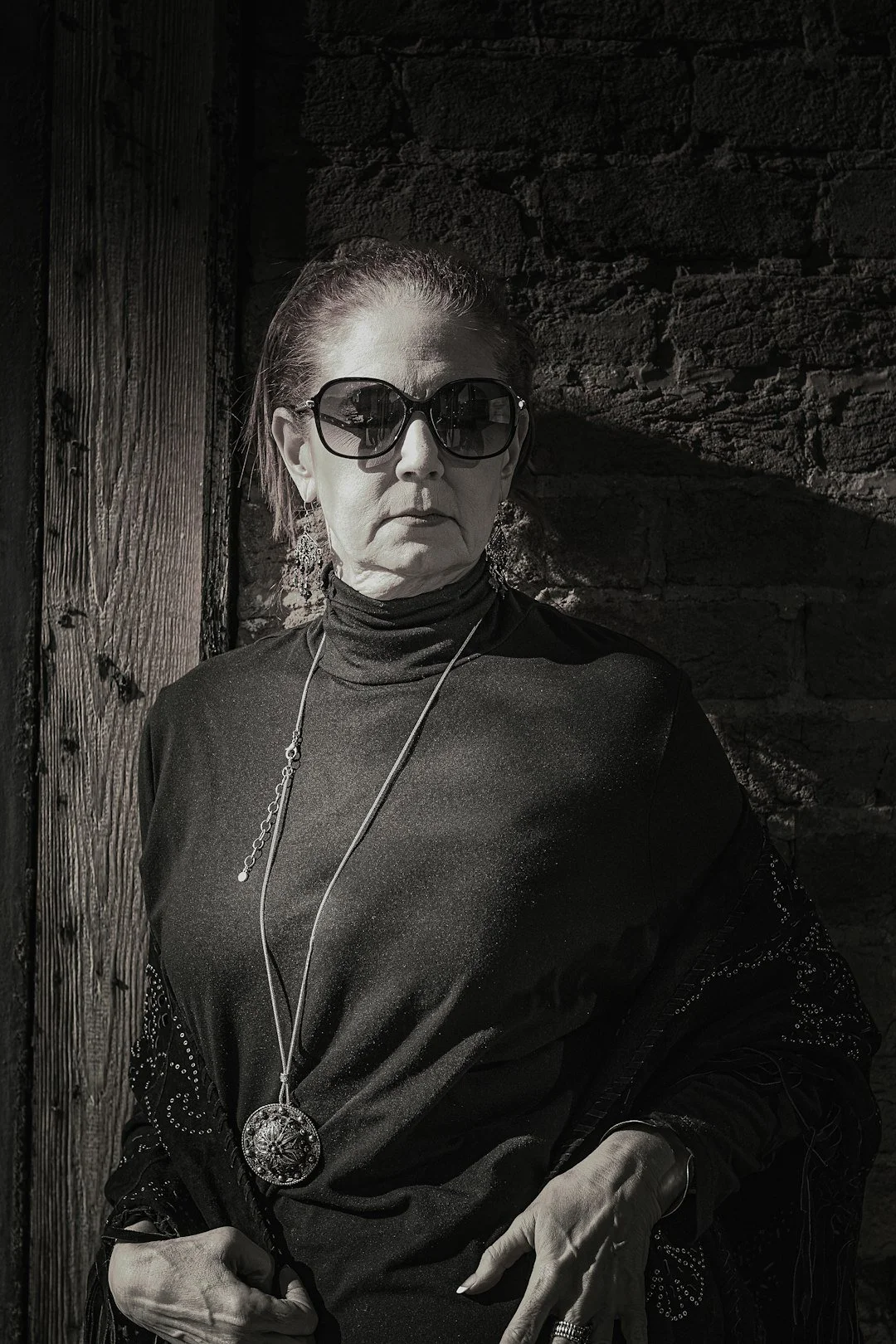
ADHD and Menopause: What Really Happens When Midlife Meets Neurodiversity
There are moments in a woman’s life when medicine suddenly remembers she exists.
Menopause isn’t usually one of them.
ADHD in women isn’t either. But put the two together and you enter a research vacuum so deep it makes the Grand Canyon look cramped.
Yet here we are—finally—staring at a study that tries to map what really happens when ADHD and menopause occupy the same hormonal real estate.
It’s messy. It’s counterintuitive. And it tells us more about how women interpret their bodies than anything we’ve learned in decades.
The newest work, published in the Journal of Attention Disorders, forces us to climb out of the cultural fog around “women’s issues” and look directly at what’s been hiding in plain sight.
Women with ADHD aren’t just navigating distractibility—they’re navigating an entire history of being overlooked, misdiagnosed, and expected to tough out biological experiences men receive sympathy medals for.
The fact that it took until 2025 for someone to study this intersection says more about medicine than it does about women.

The Neurodiverse Flow State: How Different Brains Find Focus, Creativity, and Calm
The coffee’s gone cold again. She’s halfway through a spreadsheet; he’s deep in an online rabbit hole about Japanese joinery.
Two people, one kitchen, parallel intensity.
From the outside it looks like disconnection. From the inside, it’s two nervous systems trying to find the same current — what psychologists call flow.
Flow isn’t new. Artists called it possession, athletes refer to “the zone.”
The modern term belongs to Mihály Csíkszentmihályi, but the intuition is ancient: there are moments when effort becomes joy and consciousness organizes itself so completely that self-consciousness vanishes.

The Hidden Strengths of Mixed-Neurotype Relationships
When one partner is neurodivergent and the other isn’t, life together can sometimes feel like a translation exercise without a dictionary.
Yet beneath the misunderstandings and the executive-function mismatches lies a surprising truth: these couples often possess unique relational strengths that neurotypical-neurotypical couples would envy—if only they knew how to see them.
Mixed-neurotype couples are often framed as “incompatible” because one partner processes social or sensory information differently.
But recent studies suggest that this difference, rather than a deficit, can create emotional depth and flexibility when both partners cultivate understanding (Crompton et al., 2023; Tchanturia et al., 2021).

Executive Functioning Issues in One Partner: How They Impact Neurodiverse Marriage—and What to Do About It
In a neurodiverse marriage, one of the most common yet least understood sources of conflict isn’t malice, immaturity, or lack of love.
It’s executive dysfunction—the invisible set of skills that help us plan, initiate, and follow through.
When one partner struggles with executive functioning, everyday life can feel like an endless series of dropped balls, missed cues, and quiet resentments.
What Is Executive Functioning?

Sensory Processing Challenges in Neurodiverse Couples: Intimacy, Marriage, and Connection
You love your partner, but your body doesn’t always agree.
The lights hurt. The fridge hums too loud.
A kiss feels like static. Then someone says, “All marriages are hard.”
But not like this.
If that sounds familiar, you might be living inside a neurodiverse marriage—a relationship between two good people whose nervous systems never got the same manual.
One runs hot, the other needs stillness. Both think they’re failing at love.