
Welcome to my Blog
Thank you for stopping by. This space is where I share research, reflections, and practical tools drawn from my experience as a marriage and family therapist with an international practice.
I write about what happens to desire, attachment, and meaning once the early myths stop working.
Are you a couple looking for clarity? A professional curious about the science of relationships? Or simply someone interested in how love and resilience work? I'm glad you've found your way here. I can help with that. I'm accepting new clients, and this blog is for the benefit of all my gentle readers.
Each post is written with one goal in mind: to help you better understand yourself, your partner, and the hidden dynamics that shape human connection
Grab a coffee (or a notebook), explore what speaks to you, and take what's useful back into your life and relationships.
And if a post sparks a question, or makes you realize you could use more support, l'd love to hear from you. Let's explore the scope of work you'd like to do together.
Be Well, Stay Kind, and Godspeed.
~ Daniel
P.S.
Feel free to explore the categories below to find past blog posts on the topics that matter most to you. If you're curious about attachment, navigating conflict, or strengthening intimacy, these archives are a great way to dive deeper into the research and insights that l've been sharing for years.
- Attachment Issues
- Coronavirus
- Couples Therapy
- Extramarital Affairs
- Family Life and Parenting
- How to Fight Fair
- Inlaws and Extended Families
- Intercultural Relationships
- Marriage and Mental Health
- Married Life & Intimate Relationships
- Neurodiverse Couples
- Separation & Divorce
- Signs of Trouble
- Social Media and Relationships
- What Happy Couples Know


Why Narcissists Cheat (And the Surprisingly Simple Way to Stop It)
At some point—and again, no one sent a memo—we decided that narcissists cheat because they are, in essence, morally defective.
They lack empathy.
They crave admiration.
They feel entitled.
Case closed.
Except the research doesn’t quite cooperate with that story.
What we’re discussing in this post is less theatrical and more precise: narcissistic behavior is not constant—it is conditional. It emerges when certain psychological and situational variables align.
And when those variables are disrupted, something unexpected happens:
The behavior disappears.
If this sounds familiar—if you’ve watched someone behave badly in one context and almost responsibly in another—you are not imagining things. There is now clean data behind this.

Narcissism, Reconsidered: The Personality Trait That Might Either Protect You—or Hollow You Out
At some point—and no one issued a formal correction—narcissism became shorthand for a “bad person.”
Nowadays I hear it often.
“He’s a narcissist.”
“She’s narcissistic.”
What people usually mean is: my life partner hurts me because they too much focuses on themselves.
Which is fair.
But scientifically? It’s incomplete.
Because narcissism is not a single trait.
It is a structure with competing psychological forces, and depending on which force dominates, it can function as either:
psychological armor, or
psychological exposure.
If this sounds familiar—if you’ve loved someone who seemed both confident and destabilizing—you are not alone.
What you are encountering now has a clearer scientific explanation.

Susan Sontag and the Erotics of Intelligence: When Thinking Becomes Seduction
At some point—and no one sent a memo—attraction changed categories.
It used to be about bodies.
Then it was about feelings.
Now it’s about… interpretations.
Couples therapists keep seeing the same quiet disruption. No affair. No dramatic betrayal. No shattered plates or slammed doors.
Just a subtle shift.
One partner becomes more alive somewhere else.
Not because of sex.
Not even because of love.
Because of how someone else thinks.
If that sentence lands a little too cleanly, maybe you’ve heard it before. Most life partners have felt this long before they had language for it. They just didn’t know what to call it.
I do.

Simone de Beauvoir, Esther Perel, and the Seduction of Unequal Freedom
There is a particular kind of relationship advice that sounds intelligent and feels, over time, slightly disorienting.
It asks you to reconsider.
To look again.
To assume that if something feels off, the issue may not be the experience—but your interpretation of it.
Over time, I’ve learned to treat that moment not as progress, but as a signal.
If this feels familiar—if you’ve ever found yourself editing your own reactions in order to preserve the relationship—you are not alone.
There is a structure to this.
And it didn’t start in the therapy room.
A partner says, “It’s more complicated than that.”
You pause. That seems fair.
They offer a more layered explanation—nuanced, articulate, difficult to argue with.
You begin to reconsider your initial reaction.
Not wrong. Just… incomplete.
So you revise it.
And then again.
Until what you feel is no longer what you say—and what you say is no longer entirely yours.
Attention Drift: The Real Reason Relationships Die Quietly
There is a comforting fiction—one we seem to prefer—that relationships end in a moment.
A fight, an affair, a sentence delivered with enough force to justify the aftermath. We like a clean narrative. We like a scene we can point to and say, there—there is where it happened.
In my work with couples, I can tell you: that moment is usually theater.
The real ending has already been underway for some time.
If this sounds familiar—if something in your relationship feels less broken than thinned out—you are not alone.
Most people do not experience the end of a relationship as a rupture. They experience it as a slow change in atmosphere.
Less oxygen.
Less curiosity.
Less pull.
No one declares it. But both people begin to breathe differently.

Digital Jealousy Architecture: Why Suspicion in Modern Relationships Now Runs on Software
Jealousy used to require a story.
You needed rumors, overheard conversations, lipstick on a collar, or the unmistakable silence of a phone that stopped ringing when you entered the room.
Suspicion involved imagination and legwork. It had texture.
Today jealousy often arrives as data.
Someone liked a photo at 11:47 PM.
A follower appears who was not there yesterday.
A location pin briefly disappears.
A message reads seen but remains unanswered.
A familiar name appears repeatedly in story views.
Nothing explicitly happens.
And yet the mind begins to assemble a narrative.
Nowadays, I increasingly encounter partners reacting not to events but to digital signals—tiny behavioral fragments produced by platforms that were never designed to regulate trust between human beings.
These signals accumulate until they form a kind of emotional scaffolding around the relationship.
Let’s call this phenomenon Digital Jealousy Architecture.
If you have ever felt that modern jealousy grows less from what partners do and more from what their apps quietly reveal, you are not imagining it.
Something structural has changed.
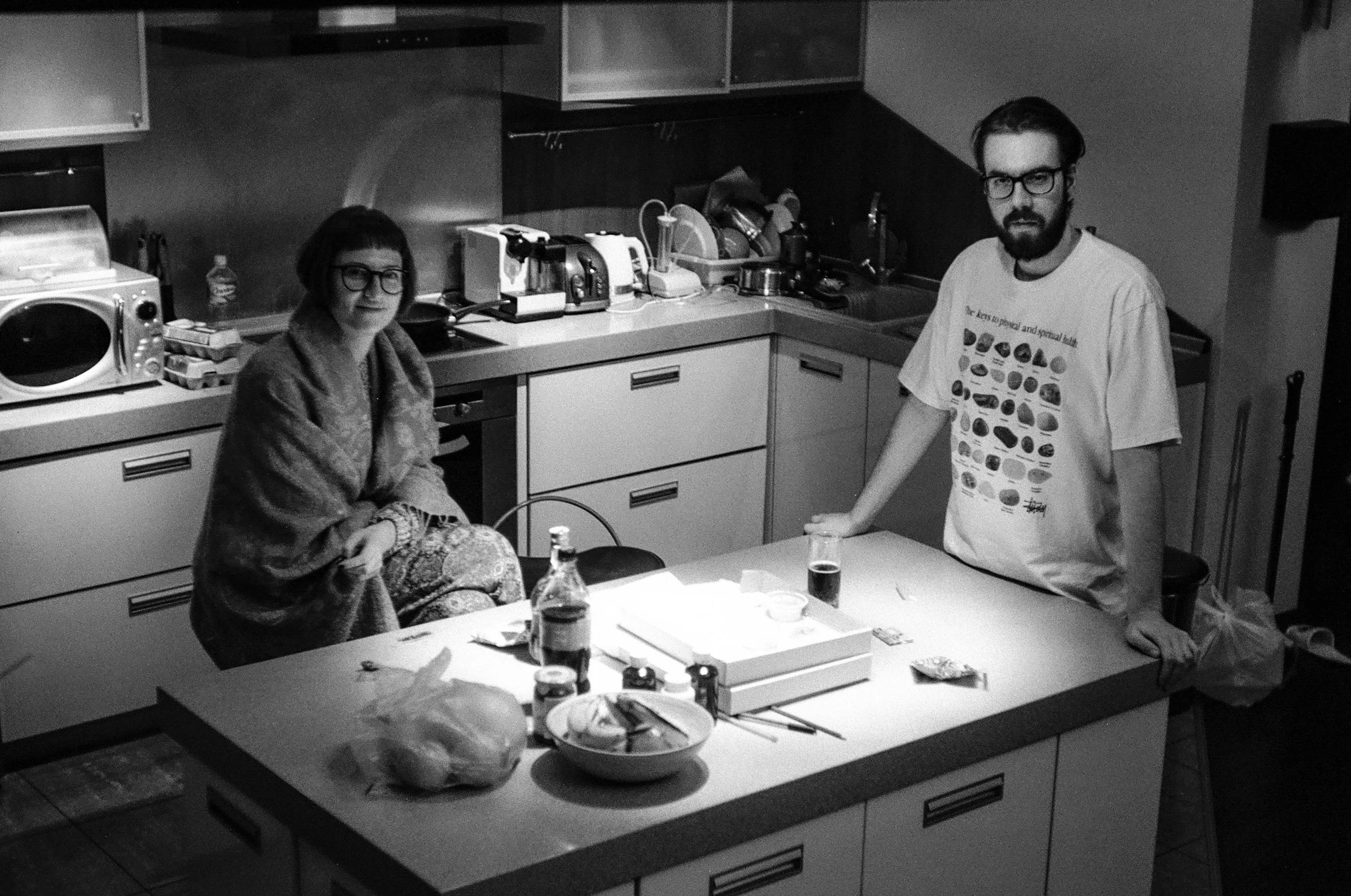
Why Couples Who Cook Together Often Stay Together
Most people assume you can measure the health of a marriage with personality inventories, attachment style questionnaires, or communication exercises that feel suspiciously like corporate retreats with softer lighting.
But there is a faster diagnostic.
Walk into the kitchen.
In my work with couples, I sometimes ask a deceptively simple question:
“When was the last time the two of you cooked together?”
The answers are revealing.
Couples who are doing reasonably well tend to smile before answering.
“We cook together on Sundays.”
“He makes the sauce. I do the vegetables.”
“We try one new recipe every week.”
Couples who are struggling often say something else.
“We used to cook together.”
That phrase—we used to—turns up in therapy more often than anyone would expect.

Narrative Preemption: How Conflicts Are Won Before the First Sentence Is Spoken
Most people believe arguments are won with evidence.
In real life, they are usually won before the first sentence is spoken.
In my work with family systems over the years, I have watched conflicts quietly tilt in one direction long before the facts appear.
Someone introduces the other family member first—sometimes gently, sometimes casually—and suddenly the conversation has gravity.
“He tends to exaggerate.”
“She’s very sensitive.”
“You know how emotional she gets.”
At that moment, something subtle but powerful happens.
The audience has been coached on how to interpret what comes next.
The evidence hasn’t arrived yet, but the verdict has already begun to take shape.
If you’ve ever found yourself defending your credibility before you could even explain your point, you’ve already encountered what I call: narrative preemption.
And once you notice it, you begin to see it everywhere.

Audience Intimacy: When Relationships Start Talking to the Internet Instead of Each Other
There was a time—not that long ago—when a couple having an argument had a limited number of options.
They could argue loudly, argue quietly, avoid each other for three days, or complain to a friend who would listen patiently and then say something devastatingly reasonable like, “Well… what did you say to them?”
The audience was small. The memories faded. The entire episode usually disappeared into the private archives of human embarrassment.
The internet has altered this arrangement.
Now when people experience relationship tension, many of them do something rather unusual: they announce it to the internet before speaking to the person involved.
I have started calling this phenomenon Audience Intimacy.

The Intimacy Crisis No One Is Naming: Relationship Attention Deficit
The modern relationship problem is widely described as a loneliness epidemic.
That diagnosis sounds persuasive. It is also incomplete.
Loneliness is the feeling people report. The deeper structural problem—the one quietly reshaping dating, marriage, and family life—is something more subtle.
We are witnessing a collapse of attention inside relationships.
I have come to think of this pattern as: Relationship Attention Deficit.
In my work with couples over many years, the crisis rarely arrives in spectacular form. It does not usually begin with betrayal or explosive conflict.
It begins quietly.
Two people who once felt vividly connected begin to experience a subtle emotional drift. They share a home, a schedule, and often a bed. But the invisible current that once carried curiosity, admiration, and noticing between them grows faint.
Nothing obvious has broken.
Yet something essential is missing.
If this description feels familiar, it may be because many couples are living through the same change at the same time.

The Relationship Consequences of Living in a Permanent News Cycle
There was a time when the news arrived once per day.
Walter Cronkite appeared in the evening, told the nation what had happened, and then—quite miraculously—the broadcast ended. The television went dark. People washed the dishes. Couples went to bed.
The world did not stop producing problems, of course. But the problems stopped entering the living room after a certain hour.
That boundary is now gone.
Today the news arrives before breakfast, during lunch, between meetings, while standing in line, and often again just before bed. Alerts buzz. Headlines flash. Opinions cascade through social feeds.
The result is that modern couples are attempting something historically unprecedented: maintaining emotional stability inside a permanent stream of global crisis information.
In my work with couples, I increasingly see a peculiar phenomenon: partners who are not only arguing with each other, but also arguing with the entire planet at the same time.
If this sounds familiar, you’re paying attention.
Many relationships today are quietly absorbing the emotional consequences of the modern information environment.

The Dinner Table Effect: Why Couples Who Eat Together Stay Together
In restaurants across America, a curious ritual now unfolds nightly.
Two people sit across from each other under flattering light.
Wine glasses glimmer. The waiter disappears into the dimness like a stagehand leaving the set.
And then, almost in unison, both people reach for their phones.
The plates arrive.
The food is beautiful.
The silence deepens.
If intimacy has a natural habitat, it is the table.
And yet the modern dinner table has quietly become one of the most endangered environments in contemporary relationships.
In my work with couples and families, I have come to believe that the dinner table is not simply a place where people eat. It is one of the most powerful micro-institutions of intimacy ever devised.
If this observation sounds familiar in your own relationship, you are not alone.
Many couples discover that the erosion of small rituals precedes the larger moments of relational gridlock that eventually bring them to therapy.