Why Couples Who Cook Together Often Stay Together
Wednesday, March 18, 2026.
Most people assume you can measure the health of a marriage with personality inventories, attachment style questionnaires, or communication exercises that feel suspiciously like corporate retreats with softer lighting.
But there is a faster diagnostic.
Walk into the kitchen.
In my work with couples, I sometimes ask a deceptively simple question:
“When was the last time the two of you cooked together?”
The answers are revealing.
Couples who are doing reasonably well tend to smile before answering.
“We cook together on Sundays.”
“He makes the sauce. I do the vegetables.”
“We try one new recipe every week.”
Couples who are struggling often say something else.
“We used to cook together.”
That phrase—we used to—turns up in therapy more often than anyone would expect.
We used to cook together.
We used to take walks.
We used to linger at the table.
Relationships rarely collapse because one catastrophic event happens.
Much more often they erode quietly through the disappearance of small rituals that once held two people in the same orbit.
If this sounds familiar, you are not alone.
Most couples do not notice when these rituals vanish. They simply get replaced by work schedules, phones, and a mild sense that life has become strangely efficient and slightly lonely.
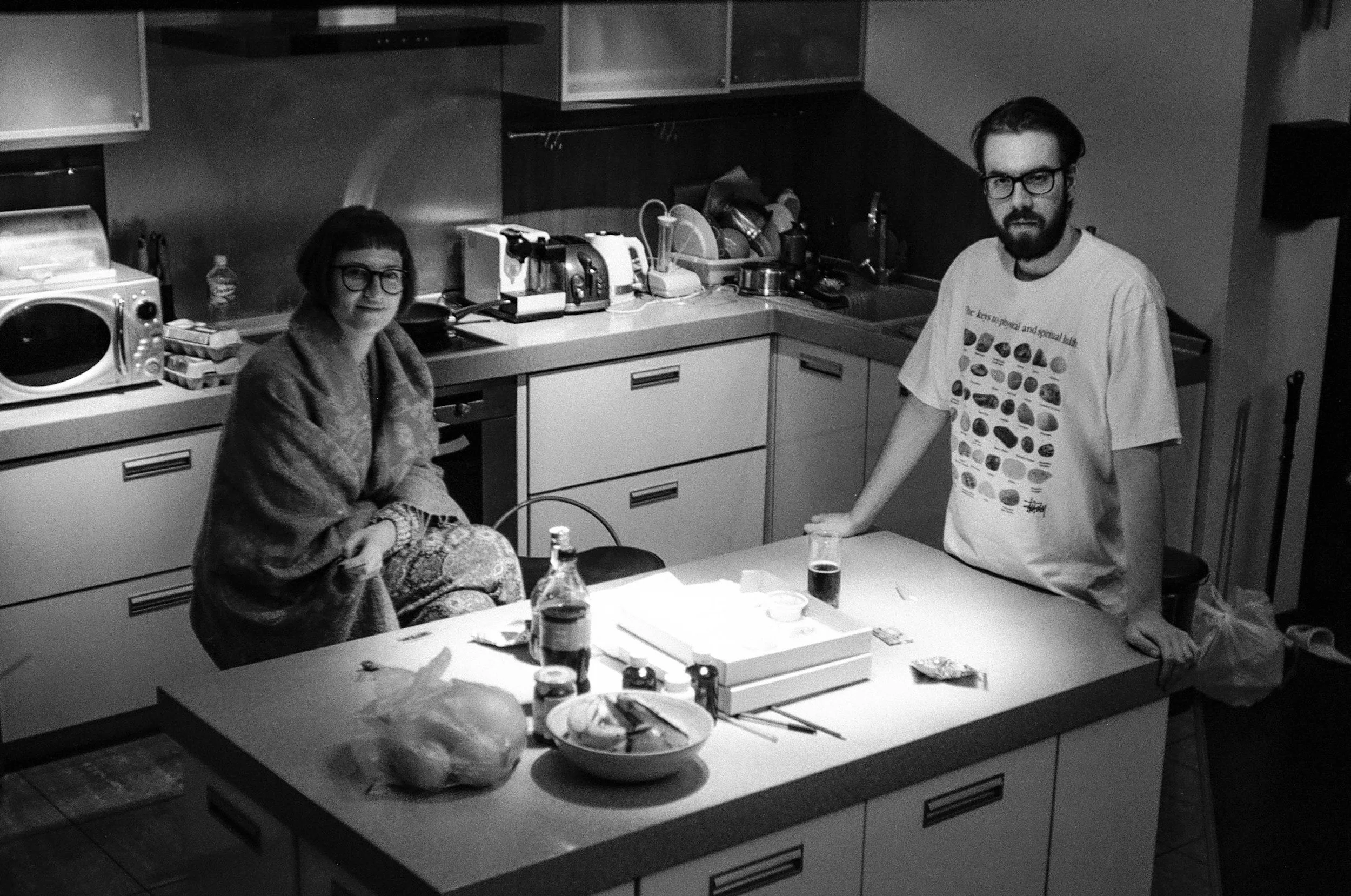
Picture an ordinary evening. Two tired professionals arrive home. One pours a glass of wine. The other chops onions. Someone burns the garlic. Someone laughs about it. A playlist hums quietly in the background.
Nothing dramatic is happening.
And yet something essential is happening.
The couple is acting like a team.
The Kitchen Synchrony Effect
Anthropologists have long recognized communal eating as one of humanity’s oldest bonding rituals. Long before therapy offices and relationship podcasts, people formed social bonds around fires, tables, and shared food.
When people eat together, their behavior becomes synchronized. They slow down at the same moment. They taste the same flavors. They share the same sensory environment.
Researchers studying ritual behavior call this behavioral synchrony, and it reliably increases feelings of trust and social connection.
Cooking together amplifies that effect.
It requires partners to coordinate:
• timing.
• attention.
• decision making.
• division of labor.
It is teamwork with garlic.
And unlike most teamwork, in my house, it usually ends with pasta.
The Psychology of Cooperative Pleasure
Cooking together works because it combines two powerful bonding ingredients: cooperation and reward.
Psychological research consistently shows that cooperative tasks increase interpersonal closeness. When two life partners pursue a shared goal, their brains begin associating success and pleasure with the partner involved in the activity.
Cooking happens to require an unusually rich form of cooperation.
One partner chops vegetables.
The other prepares the sauce.
Both monitor the timing.
When the meal finally arrives at the table, the reward is immediate.
The brain quietly associates that pleasure with the person who helped create it.
Relationship researcher Arthur Aron demonstrated something similar in a widely cited study published in the Journal of Personality and Social Psychology.
His research found that couples who participate in novel and engaging activities together experience increased relationship satisfaction and attraction (Aron et al., 2000).
Trying a new recipe or exploring a new cuisine introduces exactly that kind of novelty.
A well-executed risotto, it turns out, is not just dinner.
It is neurological teamwork.
Culinary Intimacy
Sociologists studying food culture have noticed something interesting over the last two decades.
Many couples build part of their relationship identity around food.
Some researchers refer to this phenomenon as culinary cultural capital, but a simpler phrase might be culinary intimacy.
Couples develop identities like:
“We’re wine people.”
“We try every new restaurant in town.”
“We cook elaborate dinners on weekends.”
These habits quietly create what relationship researcher John Gottman calls shared meaning systems—the rituals, traditions, and stories that form the culture of a relationship.
Food is remarkably efficient at generating those stories.
“The tiny ramen place we discovered on a rainy Tuesday.”
“The risotto we ruined but laughed about.”
“The anniversary dinner where everything went wrong and somehow became the best memory.”
Relationships, at their core, are built from these small shared narratives.
Meals simply produce them faster than most activities.
Restaurants as Micro-Vacations
Urban sociologists have noticed another pattern.
Restaurants increasingly function as micro-vacations for couples.
Busy professionals may not have time for a two-week trip to Tuscany, but they can disappear into a dimly lit restaurant for two hours on a Friday night.
Something subtle happens in that environment.
The lighting softens.
Phones disappear.
Conversation slows.
For a brief moment, the outside world recedes.
The meal becomes a small island of attention.
In a culture increasingly dominated by distraction, this kind of focused attention has become surprisingly rare—and surprisingly powerful.
Why So Many Couples Stopped Cooking Together
Of course, modern life has quietly worked against this ritual.
Meals have become logistical.
Someone eats in the car.
Someone eats in front of a laptop.
Someone eats earlier while answering emails.
Food delivery apps have turned dinner into a supply chain problem.
Sociologists sometimes call these logistics meals.
They nourish the body.
But they do very little for the relationship.
Without shared attention, the bonding effects of food largely disappear.
Many couples who say they do not have time to connect still manage to watch three hours of streaming television.
The modern problem is rarely time.
It is the disappearance of shared rituals.
What Therapists Notice
After enough years working with couples, certain patterns become hard to ignore.
When relationships begin to deteriorate, couples often stop doing the small cooperative things that once felt natural.
They stop cooking together.
They stop lingering at the table.
They stop creating shared moments.
Interestingly, when relationships begin improving in therapy, those rituals often return.
Couples start cooking together again.
They schedule dinner together again.
They rediscover small moments where the relationship stops feeling like a logistics operation and starts feeling like a partnership.
Cooking together does not solve every problem.
But it quietly restores something relationships desperately need.
Shared attention.
A Small Experiment
If you are in a long-term relationship, try a small experiment.
Choose one evening a week and cook together.
Not efficiently.
Not quickly.
But deliberately.
Put on music. Try a recipe you have never attempted before. Accept that mistakes will happen.
The goal is not culinary perfection.
The goal is collaboration.
Because somewhere between chopping onions and arguing about how much garlic belongs in the pan, something quietly important happens.
You begin to function like a team again.
Frequently Asked Questions
Does cooking together improve relationship satisfaction?
Research suggests that shared cooperative activities increase relationship satisfaction. Couples who participate in novel and engaging activities together report higher levels of attraction and relationship quality (Aron et al., 2000).
Cooking combines cooperation, shared attention, novelty, and reward—elements known to strengthen interpersonal bonds.
Why do shared meals strengthen relationships?
Anthropologists consider communal eating one of the oldest bonding rituals in human societies. Shared meals synchronize behavior and attention, creating conditions for conversation and emotional attunement.
Research on family meal rituals published in Family Relations found that structured shared meals increase emotional communication and relational cohesion (Fiese et al., 2006).
Do couples who try new activities together stay happier?
Yes. Novel shared experiences appear to strengthen romantic bonds.
Studies show that couples who regularly engage in exciting or unfamiliar activities experience increases in attraction and relationship satisfaction (Aron et al., 2000).
Restaurants, cooking experiments, and culinary exploration naturally introduce novelty into relationships.
Why does cooking together feel bonding?
Cooking engages several psychological mechanisms associated with closeness:
• cooperative problem solving.
• synchronized action.
• shared sensory experience.
• mutual reward.
Research examining cooking practices suggests that preparing food together functions as a form of everyday relational intimacy and cooperative bonding (Danesi, 2015).
Do relationship rituals matter?
Yes. Relationship rituals help couples maintain emotional connection over time.
Recurring shared practices—such as weekly dinners—create predictability, reinforce shared identity, and increase relational stability (Fiese et al., 2006).
Final Thoughts
Relationships rarely collapse in spectacular fashion.
More often they fade quietly through distraction, exhaustion, and the gradual disappearance of shared rituals.
Cooking together is not a cure-all.
But it quietly restores three ingredients that relationships need in abundance:
bestowed attention.
cooperation.
pleasure.
Those ingredients have sustained human bonds for a very long time.
Long before therapy.
Long before psychology.
There was simply the table.
And two people learning—sometimes awkwardly, sometimes beautifully—how to sit across from it together.
When Reading About Relationships Isn’t Enough
People often arrive here the way most of us arrive anywhere on the internet: late at night, a little tired, a little curious, sometimes wondering whether what’s happening in their relationship is normal.
Reading can help. Insight helps even more.
But relationships rarely change through insight alone. They change when two people slow down long enough to see the patterns they’ve been living inside.
If you are finding your relationship caught in one of those patterns — the quiet distance, the repeating arguments, the sense that you’ve somehow become efficient partners rather than close companions — focused couples therapy can help.
In my work with couples, I offer structured relationship intensives designed to compress months of therapy into a few concentrated days of careful conversation and practical change.
The goal is not simply to talk about the relationship, but to rebuild the habits of bestowed attention, cooperation, and goodwill that allow relationships to function again.
If that kind of focused work sounds useful, you can reach me here to talk about your situation.
Be Well, Stay Kind, and Godspeed.
REFERENCES:
Aron, A., Norman, C. C., Aron, E. N., McKenna, C., & Heyman, R. (2000). Couples’ shared participation in novel and arousing activities and experienced relationship quality. Journal of Personality and Social Psychology, 78(2), 273–284.
Danesi, G. (2015). Cooking together: Culinary practices and social bonding in contemporary households. Food, Culture & Society, 18(3), 403–418.
Fiese, B. H., Foley, K. P., & Spagnola, M. (2006). Routine and ritual elements in family meals: Contexts for child well-being and family identity. Family Relations, 55(3), 326–337.
Gottman, J. M., & Silver, N. (2015). The seven principles for making marriage work. Crown.
Neuman, N., Eli, K., & Nowicka, P. (2019). Family meal frequency and practices during childhood and adolescence: Implications for health and well-being. Appetite, 134, 98–105.