
Welcome to my Blog
Thank you for stopping by. This space is where I share research, reflections, and practical tools drawn from my experience as a marriage and family therapist with an international practice.
I write about what happens to desire, attachment, and meaning once the early myths stop working.
Are you a couple looking for clarity? A professional curious about the science of relationships? Or simply someone interested in how love and resilience work? I'm glad you've found your way here. I can help with that. I'm accepting new clients, and this blog is for the benefit of all my gentle readers.
Each post is written with one goal in mind: to help you better understand yourself, your partner, and the hidden dynamics that shape human connection
Grab a coffee (or a notebook), explore what speaks to you, and take what's useful back into your life and relationships.
And if a post sparks a question, or makes you realize you could use more support, l'd love to hear from you. Let's explore the scope of work you'd like to do together.
Be Well, Stay Kind, and Godspeed.
~ Daniel
P.S.
Feel free to explore the categories below to find past blog posts on the topics that matter most to you. If you're curious about attachment, navigating conflict, or strengthening intimacy, these archives are a great way to dive deeper into the research and insights that l've been sharing for years.
- Attachment Issues
- Coronavirus
- Couples Therapy
- Extramarital Affairs
- Family Life and Parenting
- How to Fight Fair
- Inlaws and Extended Families
- Intercultural Relationships
- Marriage and Mental Health
- Married Life & Intimate Relationships
- Neurodiverse Couples
- Separation & Divorce
- Signs of Trouble
- Social Media and Relationships
- What Happy Couples Know


How the Cult of Victimhood Learned to Love Meaningless Suffering
There was a time when suffering had a job.
It built character.
It tested faith.
It explained why the novel was so long.
Now it mostly fills airtime.
The Telegraph’s discussion of I Suffer Therefore I Am by Pascal Bruckner circles a problem Western culture is strangely reluctant to name: we have not merely acknowledged suffering—we have stripped it of meaning.
And when suffering loses meaning, it does not disappear.
It multiplies.
Meaningless suffering refers to pain that is no longer embedded in a coherent narrative of purpose, transformation, duty, or repair.
It is suffering without a “toward.”
It hurts, but it points nowhere.
This matters because historically, suffering survived by being contained.
Religion gave it transcendence. Community gave it context. Work gave it dignity. Even tragedy gave it structure. You suffered within something.
Modern Western culture dismantled those containers—sometimes wisely, sometimes gleefully—and replaced them with… nothing particularly sturdy.
The result is a surplus.

Dyadic Failure: Why Insight Alone Doesn’t Heal Relationships
Many couples arrive in therapy articulate, reflective, and well-read—and still stuck.
They understand their attachment styles.
They can name their triggers.
They agree on what should happen.
And yet, something keeps breaking down between them.
This is not a motivation problem.
It is not resistance.
It is not a lack of skills.
It is a failure to treat the dyad as the primary system of change.

Passive Aggression Is What Happens When Repair Is Off the Table
If your relationship keeps revisiting the same conflict and nothing ever truly changes—if direct conversations feel expensive, dangerous, or pointless—this is exactly the kind of pattern couples therapy is designed to interrupt.
You don’t need better communication. You need repair that actually holds.
Passive Aggression Is What Happens When Repair Is Off the Table
Passive aggression does not mean someone lacks insight, maturity, or emotional vocabulary.
It means something more consequential has already occurred.
Passive aggression emerges when repeated repair attempts fail, trust in responsiveness collapses, and direct protest becomes neurologically associated with loss rather than relief.
When people stop believing that naming a hurt will lead to responsiveness or change, they don’t stop protesting. They adapt. Indirectness becomes safer than exposure.

Passive Aggression: What Actually Works in Therapy (And Why Most Interventions Fail)
If passive aggression keeps surfacing in your relationship—or in your clinical work—it is not because someone is immature, avoidant, or manipulative.
It is because direct emotional protest has not felt safe or effective.
This piece lays out what actually works in therapy, step by step, and why correcting the behavior without repairing the system makes things worse.
If you recognize your relationship—or your caseload—here, this is not about insight.
It is about changing the conditions under which honesty becomes possible.

When Romance Stops Organizing Relationships How Intimacy Reorganizes Under Economic, Cultural, and Psychological Constraint
When romance stops organizing relationships, intimacy does not disappear—it reorganizes.
Desire becomes optional rather than central, and partnerships are increasingly structured around stability, coordination, and shared survival rather than romantic intensity.
In relationship psychology, this shift reflects a move from romantic primacy to structural partnership: a reordering of what relationships are expected to provide when economic, cultural, and emotional systems no longer support romance as the primary load‑bearing beam. (Which it turns out romance was never especially good at carrying alone.)
For much of modern history, romance has been treated as the moral engine of adult relationships.
Love was expected to justify commitment, sexual exclusivity was meant to stabilize it, and marriage served as ceremonial proof that desire had finally learned to behave itself.
That model worked best under conditions of abundance—stable jobs, affordable housing, predictable life trajectories, and a shared belief that adulthood came with a floor, not just a ceiling.
Those conditions are no longer reliably present in 2026.
What we are witnessing is not the end of intimacy, but a structural reorganization of it.

What is a Dyad? A Definition for Relationships, Therapy, and Anyone Tired of Fixing the Wrong Thing
What Is a Dyad?
A dyad is the smallest living relationship system: two nervous systems in ongoing emotional contact, shaping each other over time.
That is the definition. Everything else is commentary.
If your relationship feels over-analyzed and under-lived, you may be working on the wrong thing.
I work with couples who want to understand—and repair—the system between them, not assign blame or collect insight.
If that framing feels relieving rather than demanding, this work may be a fit.
Most relationship advice fails for a simple reason: it works on the wrong unit.
It focuses on individuals when the real action is happening somewhere else.
That somewhere else is the dyad.
If your relationship feels over-analyzed and under-lived, the problem may not be communication, attachment style, or emotional intelligence.
It may be that you are treating a dyad like two separate self-improvement projects.

Household Labor, Mental Load, and Why Fairness Still Fails Women
There is a sentimental belief in modern relationships that fairness will eventually sort itself out if both partners are decent people.
This belief has survived research, experience, and children.
A new study published in Psychology of Women Quarterly examines how household labor and decision-making power affect relationship satisfaction among women partnered with men versus women partnered with women.
The findings are clarifying. They are also not new.
Women partnered with men do more unpaid household labor.
Mothers partnered with men do much more.
And having a “voice” in decisions does nothing to improve their satisfaction.
So much for progress.

Household Labor, Mental Load, and Relationship Satisfaction: Why Women Still Do the Work
There is a touching belief in modern relationships that fairness will eventually appear if everyone has good intentions.
This belief has survived decades of data, countless conversations, and the arrival of children.
A recent study published in Psychology of Women Quarterly confirms what many women already know: fairness does not quietly materialize—especially if you are a mother partnered with a man.
Women partnered with men do more household labor.
Mothers partnered with men do much more.
And being given a “voice” in decisions does not improve the situation.
This is not a misunderstanding.
It is the system operating exactly as designed.

Divorce Regret: What Actually Happens After the Applause
Divorce regret is not a confession.
It is a systems failure that arrives late, quietly, and without asking permission.
The cultural script is tidy: leave an unhappy marriage, reclaim your life. But longitudinal research has been complicating that story for decades.
Analyses of the National Survey of Families and Households found that adults who exited unhappy marriages did not reliably experience greater long-term happiness than those who stayed married once baseline wellbeing was accounted for (Waite, Luo, & Lewin, 2009).
That finding does not argue against divorce.
It argues against fantasy.
For some people, the emotional outcome is not liberation. It is something harder to name: a sense that the future did not open the way it was promised. Not grief. Not nostalgia. Something closer to regret—though most people never use that word.
They say it sideways.
“I didn’t know it would cost this much.”
That is not weakness.
That is forecasting error.

Emotional Working Memory in Neurodiverse Couples Why You Keep Having the Same Fight—and Why It Slowly Breaks Intimacy
Many neurodiverse couples arrive with the same exhausted question:
“Why do we keep having the same conversation?”
They’ve talked it through.
They’ve cried.
They’ve agreed.
Sometimes they’ve even had a good therapy session about it.
And then—days or weeks later—it’s as if the conversation never happened.
One partner feels stunned and increasingly alone.
The other feels confused, sometimes accused.
Both begin to doubt their sanity—or each other.
This pattern is not a failure of communication.
It is not gaslighting.
It is not indifference.
It is often something quieter and far more structural: asymmetrical emotional working memory.

Cheaters, Criminals, and the Art of Not Getting Caught
A new study has confirmed something most betrayed partners already suspected long before peer review got involved: cheaters think an awful lot like criminals.
Not theatrically. No ski masks. No getaway cars. Just the same mental choreography—the planning, the rationalizing, the careful management of risk—that criminologists have been studying for decades.
Cheating, it turns out, is less an accident of passion than a carefully managed violation.
Researchers analyzing online forum posts from self-identified cheaters found that infidelity follows a structure familiar to anyone who studies deviant behavior: strain, concealment, and justification.
Motive. Method. Excuse.
A classic.
Cognitive strain: Or, “I Deserved This” rationale.
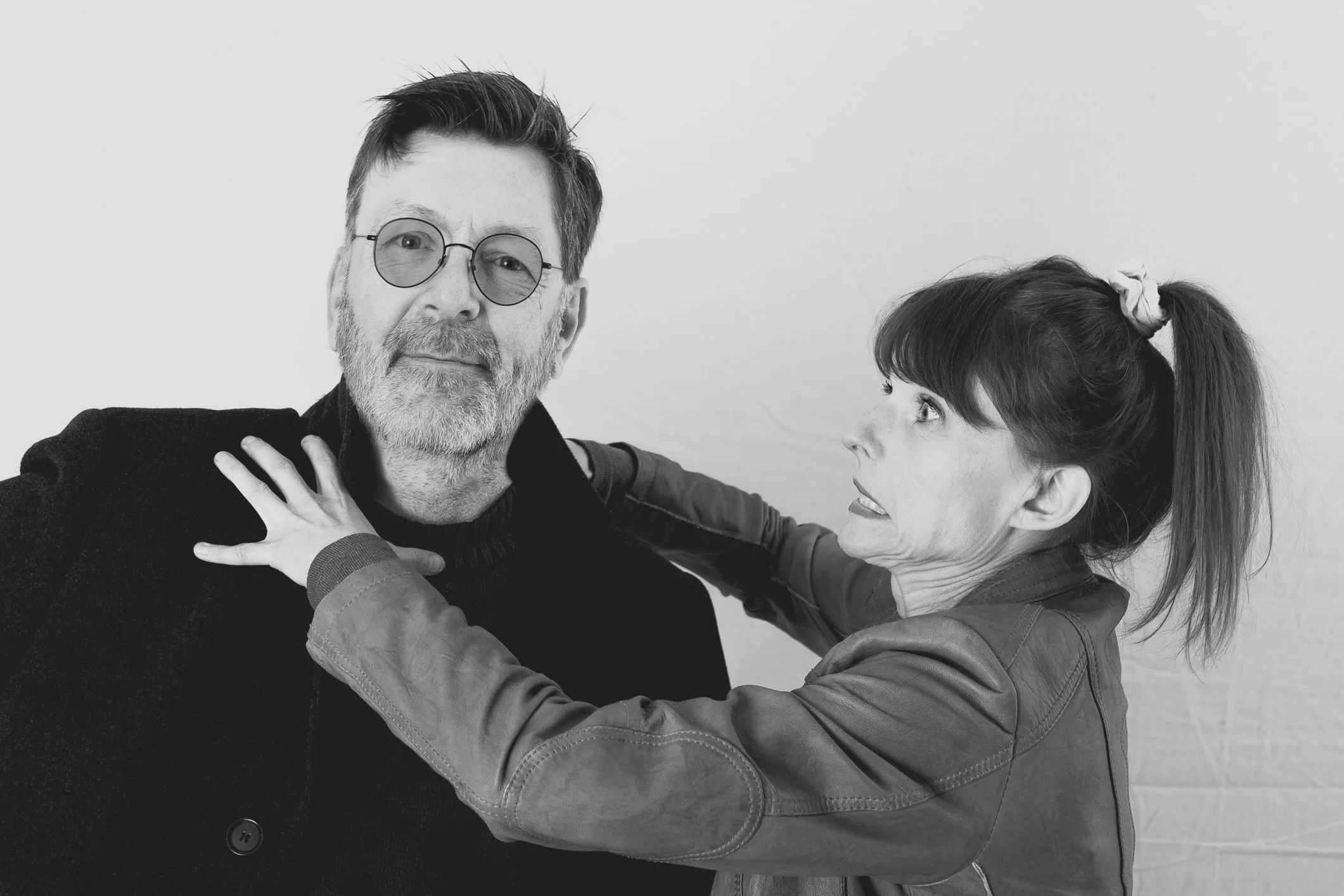
Passive Aggression Is Not a Personality Trait. It’s a Nervous System Strategy
As a passive-aggressive man in recovery, I think that passive aggression has been badly misbranded.
It’s usually described as immaturity, manipulation, or a failure of character—something vaguely petty that emotionally competent adults are supposed to outgrow. Which is convenient, moralizing, and mostly wrong.
Passive aggression isn’t passive. It’s what protest looks like under constraint.
What we call passive aggression is not a flaw in communication. It is a constrained form of emotional protest that emerges when the nervous system perceives direct expression as unsafe, ineffective, or destabilizing to attachment.
Once you understand the system behind it, the behavior stops looking childish and starts looking exhausted.