
Welcome to my Blog
Thank you for stopping by. This space is where I share research, reflections, and practical tools drawn from my experience as a marriage and family therapist with an international practice.
I write about what happens to desire, attachment, and meaning once the early myths stop working.
Are you a couple looking for clarity? A professional curious about the science of relationships? Or simply someone interested in how love and resilience work? I'm glad you've found your way here. I can help with that. I'm accepting new clients, and this blog is for the benefit of all my gentle readers.
Each post is written with one goal in mind: to help you better understand yourself, your partner, and the hidden dynamics that shape human connection
Grab a coffee (or a notebook), explore what speaks to you, and take what's useful back into your life and relationships.
And if a post sparks a question, or makes you realize you could use more support, l'd love to hear from you. Let's explore the scope of work you'd like to do together.
Be Well, Stay Kind, and Godspeed.
~ Daniel
P.S.
Feel free to explore the categories below to find past blog posts on the topics that matter most to you. If you're curious about attachment, navigating conflict, or strengthening intimacy, these archives are a great way to dive deeper into the research and insights that l've been sharing for years.
- Attachment Issues
- Coronavirus
- Couples Therapy
- Extramarital Affairs
- Family Life and Parenting
- How to Fight Fair
- Inlaws and Extended Families
- Intercultural Relationships
- Marriage and Mental Health
- Married Life & Intimate Relationships
- Neurodiverse Couples
- Separation & Divorce
- Signs of Trouble
- Social Media and Relationships
- What Happy Couples Know

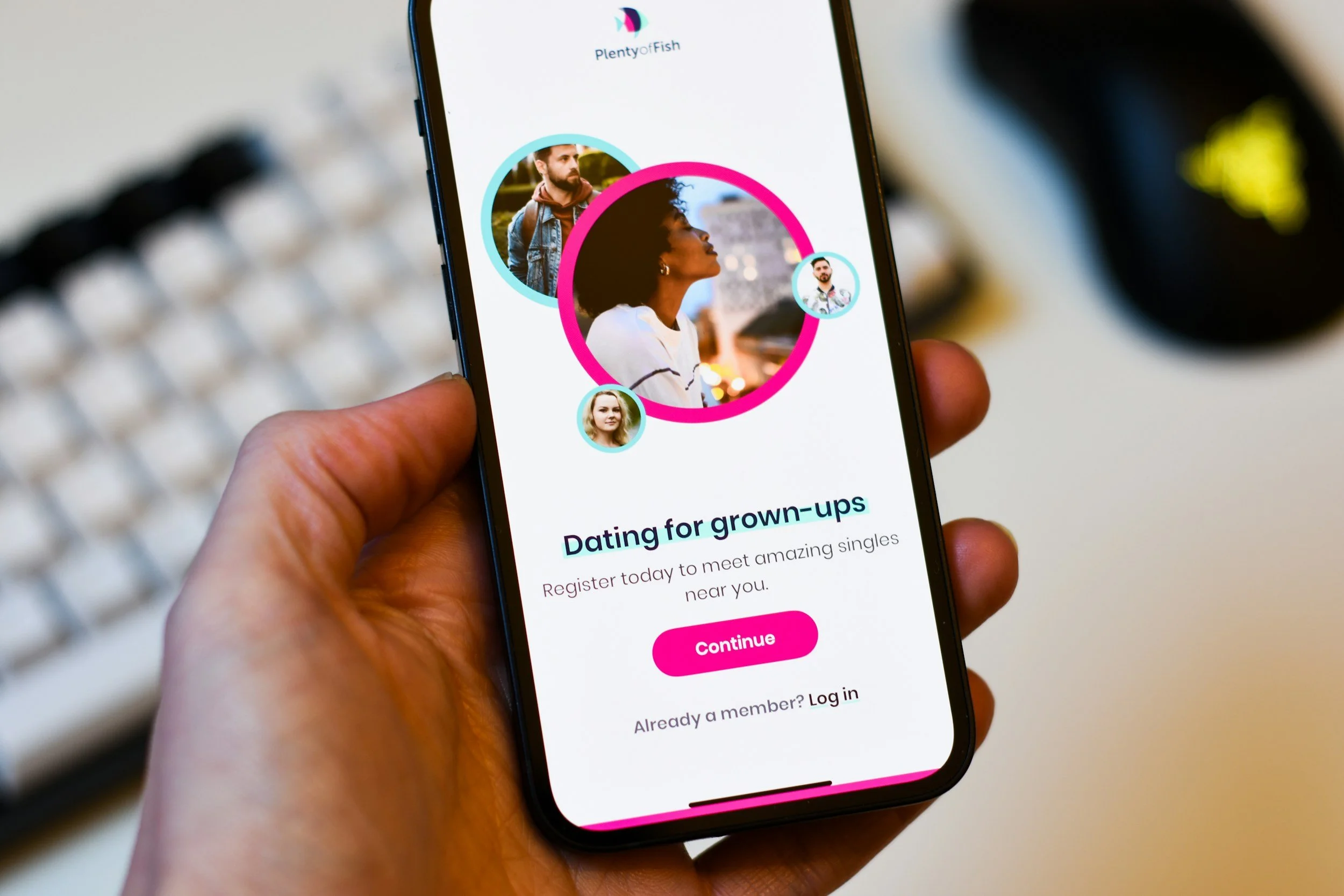
Algorithmic Attraction: How Dating App Algorithms Quietly Reshape Modern Love
Most people believe they choose their romantic partners.
Increasingly, software chooses the pool from which those choices are made.
For most of human history, attraction was a messy, inefficient process governed by geography and chance. People met through friends, neighborhoods, workplaces, churches, and the occasional bold acquaintance willing to say, “You two should meet.”
Romance depended on proximity.
Now it depends on ranking systems.
In my work with couples, I increasingly see relationships that began not through shared communities but through recommendation engines—software designed to predict who might interest us, who might respond, and who might keep us swiping.
If this sounds familiar, you are not alone. Millions of thoughtful people are beginning to notice that modern dating feels strangely different from the way relationships once formed.
Understanding why can change how we approach intimacy in a digital age.

Tattoos, Confidence, and the Psychology of the Witnessed Body
The modern body is curated with extraordinary care.
We decorate it.
We sculpt it.
We photograph it.
We modify it.
Tattoos, cosmetic procedures, fitness culture, skincare rituals, carefully chosen clothing—these have become ordinary tools in the project of shaping how we appear to the world.
And in many cases, these efforts genuinely improve how people feel about themselves.
But intimacy has a strange habit of ignoring all that work.
Because the body that appears in public is not the same body that appears in the bedroom.
A recent study published in Critical Public Health illustrates this paradox beautifully.

Why Some People Only Feel Attraction After Someone Likes Them First: The Psychology of Reciprosexual Attraction
Attraction is usually described as spontaneous.
Two people meet. Something sparks. Chemistry appears before anyone quite understands why.
But in my work with couples, I have repeatedly seen a quieter and more puzzling pattern.
Some people do not experience attraction first.
They experience being desired first.
If this sounds familiar, you are not unusual. Many thoughtful people quietly notice this pattern in themselves but struggle to explain it.
Psychologists have begun describing this experience using a term that is slowly circulating online:
reciprosexual attraction.
Before dismissing it as internet jargon, it turns out the idea touches something very real in relationship psychology.
Because for some people, attraction does not ignite in isolation.
It ignites in response.

Cognitive Infidelity: The New Kind of Affair Happening Inside Modern Relationships
Couples used to betray each other in motel rooms.
Now they do it while sitting on the same couch.
The modern affair often involves no secret hotel, no incriminating messages, and no mysterious credit-card charge. Instead, something quieter happens.
A person’s inner life—thoughts, worries, interpretations, little emotional discoveries—begins migrating somewhere else.
In my work with couples, I’ve begun to see a pattern that doesn’t quite fit the old categories of infidelity. Nothing sexual has occurred. Sometimes there isn’t even another person involved.
Yet one partner senses something unmistakable:
I’m no longer where their mind goes first.
If this sounds familiar, you’re not alone. Many thoughtful partners notice the shift long before they can name it.
I’ve started calling this phenomenon cognitive infidelity.

Emotional Defaulting: When One Partner Becomes the Relationship’s Emotional Regulator
Most couples believe emotional responsibility in a relationship is shared.
In practice, it rarely is.
In many long-term relationships, one partner quietly becomes the emotional stabilizer of the entire system.
In my work with couples, I see this pattern constantly.
If this sounds familiar, you are not alone. Many thoughtful partners slowly discover they have become something they never consciously agreed to be.
They have become the relationship’s emotional default.
It usually reveals itself in a small, almost forgettable moment.
A disagreement ends awkwardly.
Hours pass.
Eventually one partner returns to the conversation with a careful sentence.
“Can we talk about what happened earlier?”

What Is Narrative Infidelity? The Psychological Affair That Often Begins Long Before Cheating
Most folks believe infidelity begins with a decision.
A message sent.
A drink after work.
A hotel room.
In my work with couples, it almost never begins there.
Long before the texts.
Long before the secrecy.
Long before anything that would qualify as an affair in the traditional sense.
It begins as a story.
A story someone begins telling themselves about another person.
And once that story gains emotional momentum, the relationship at home has already begun to change.
This is what I call narrative infidelity.

What a Massive Global Study Found About Forgiveness and Well-Being
Researchers analyzing data from 207,919 participants across 23 countries examined whether people who generally forgive others experience better well-being over time.
The findings were published in npj Mental Health Research as part of the Global Flourishing Study.
The researchers measured dispositional forgivingness, meaning a person’s general tendency to forgive across situations.
Participants were surveyed twice, roughly one year apart. Researchers then examined 56 indicators of human flourishing, including:
• psychological well-being
• psychological distress
• social relationships
• social participation
• character and prosocial behavior
• physical health
• socioeconomic stability
The results showed a consistent pattern.

Relationship Fatalism: When Couples Begin to Believe the Ending Is Already Written
Most relationships do not collapse in dramatic explosions.
They fade.
Two people who once stayed up late talking begin speaking less.
Conversations shrink to logistics. Curiosity quietly disappears. A question that once would have been asked is replaced with an assumption.
Eventually someone says a sentence that reveals the deeper shift:
“Maybe this is just how things are going to be.”
In my work with couples, I’ve learned that the most dangerous moment in a relationship is not anger.
It is resignation.
If this sounds familiar, you’re not alone. Many thoughtful partners notice this quiet shift long before they fully understand what it means.
Before many relationships end, they pass through a psychological stage that rarely gets named.
A stage where two people begin to believe—sometimes silently—that the ending has already been written.
This shift can be called: relationship fatalism.
Relationship fatalism describes the psychological moment when partners begin believing the future of their relationship is largely predetermined, causing effort, curiosity, and repair attempts to gradually decline.
And once that belief settles in, it begins shaping everything that follows.

The Apocalypse Gap: Why Some Folks Fight Global Catastrophe While Others Just Watch
Human beings have always believed they were living near the end of history.
Medieval Europeans feared divine judgment.
Cold War Americans watched the Doomsday Clock tick toward midnight.
Today the cast of existential threats includes climate collapse, runaway artificial intelligence, pandemics, and nuclear escalation distracting us from a cabal of child rapists.
Different centuries produce different villains.
But the underlying psychology appears remarkably consistent.
In my work with couples, I’ve learned that when uncertainty rises, the human mind starts telling stories about endings.
Sometimes those stories concern the end of a relationship. Sometimes the end of a career. And sometimes the end of the world.

The Inner Critic: Why Some Minds Develop Harsh Internal Voices (And Why They Often Sound Familiar)
Some people carry a quiet companion through life.
It speaks fluently.
It rarely pauses.
And it is rarely kind.
The voice says things like:
“You should have done better.”
“That was embarrassing.”
“They probably think you’re incompetent.”
Psychologists use the term inner critic to describe a persistent internal voice that evaluates, judges, and often harshly criticizes a person’s thoughts or behavior.
But the name can be misleading.
Because the inner critic is not simply negative thinking.

Why Empathetic People End Up With Toxic Partners: The Psychology of the Selectivity Gap
True crime has become a strange form of cultural anthropology.
Millions of people now spend their evenings watching investigators reconstruct relationships that ended badly.
The stories almost always begin the same way: someone remembers a partner who seemed charming, attentive, perfectly normal.
Only later does the timeline rewind and reveal the small warning signs that were hiding in plain sight.
For a couples therapist, that pattern is not especially surprising.
Because modern relationship research suggests something quietly important:
Toxic relationships rarely begin with obvious toxicity.
They begin with kindness encountering someone who knows how to use it.

When the Mind Speaks Back: What New Brain Research Reveals About Hearing Voices in Borderline Personality Disorder
Psychiatry once treated hallucinations as diagnostic property.
If someone heard voices, the assumption was schizophrenia.
Case closed.
But the brain, inconveniently, does not respect diagnostic borders.
In my work with couples and individuals, I have occasionally sat across from someone who lowers their voice slightly and says something like:
“Sometimes I hear someone talking.”
They usually add the same sentence immediately afterward.
“I know that sounds crazy.”
It usually isn’t.