
Why Other Marriages Look Happier Online
Other marriages don’t look happier online because they are happier.
They look happier because they are not being asked to be honest.
What you are seeing is not happiness. It is selection.
A chosen minute. Cropped from a longer, less cooperative week. Lit properly. Edited gently. Paired with music that suggests meaning where there is mostly timing.
Gratitude, in this setting, is not a feeling—it is a formatting choice.
Your marriage, meanwhile, is happening in real time. It has dishes. It has silence.
It has conversations that begin with logistics and end with something unnamed sitting between you. It contains affection that must survive fatigue and desire that does not arrive on schedule.
Real marriages are stubbornly uncinematic.
They refuse to perform.
Weekly Therapy vs. Intensive Therapy: Same Goal, Different Physics
Most arguments about therapy models confuse preference with mechanics.
This isn’t about which approach is “better.”
It’s about what kind of change the container can physically support.
Weekly therapy and intensive therapy aim at the same outcome—relational reorganization—but they operate under different constraints.
When couples stall, it’s rarely because they lack insight. It’s because the format can’t hold the problem they’re actually having.

Why Understanding Your Relationship Hasn’t Changed It
Most couples who find their way here are not confused.
They can describe their dynamic with unsettling accuracy.
They know who withdraws, who pursues, who escalates, who goes quiet.
They’ve read the books. They’ve listened to the podcasts. They can say things like “this is my attachment style” without irony.
And yet—nothing has changed.
The arguments still land in the same places.
The distance still returns.
The same conversations keep reopening, like a door that never quite closes.
This is not because you “aren’t trying hard enough.”
It’s because understanding a system does not reorganize it.

Attention Windows: The Invisible Moments That Decide the Fate of Relationships
There is a narrow period in every emotionally meaningful interaction when attention still counts.
Miss it—and no amount of later insight, empathy, or explanation fully repairs the damage.
An attention window is a brief, time-limited period during which emotional responsiveness still alters how a moment is encoded in a relationship.
These windows are not dramatic.
They are not announced.
They rarely feel important while they are open.
And yet, over time, they quietly determine whether a relationship feels nourishing or lonely, alive or strangely vacant.
What Is an Attention Window?

The Husband Who Thought Everything Was Fine
He is not a villain.
This matters.
He works. He shows up. He pays attention to the visible parts of life. He believes—sincerely—that his marriage is intact. Functional. Stable.
When the divorce arrives, it feels unprovoked. He will say the sentence men have been saying for decades, with genuine confusion:
“I had no idea it was that bad.”
And the unsettling truth is that he is probably telling the truth.

The Walkaway Wife Didn’t Leave the Marriage. She Left the Translation Booth.
The walkaway wife does not disappear.
She resigns.
She resigns from explaining why something hurt.
From softening sentences so they can be received.
From translating her interior life into a language that never quite lands.
What gets called sudden is usually just late.
By the time she leaves, she has already run the numbers—carefully, quietly, over years.
She has tested whether effort produces change. The conclusion is empirical.

Why Masculine Traits Predict Drinking After Romantic Fights
Masculine personality orientation predicts drinking after romantic conflict because it concentrates negative emotion while restricting acceptable pathways for expression.
That sentence explains more than most relationship advice ever will.
People do not drink after fights because they are reckless or emotionally unavailable.
They drink because the argument ends before their nervous system does, and the emotional load has nowhere else to go.
A study published in the Journal of Social and Personal Relationships shows that masculine traits—not biological sex—predict post-conflict drinking through heightened negative affect.
Once emotion is accounted for, masculinity itself disappears as a predictor.
The drink is not the problem.
It is the solution the system reached for.

Feminine Traits, Internalized Distress, and Drinking After Romantic Fights
Feminine personality orientation predicts post-conflict drinking indirectly, by amplifying internalized distress—especially anxiety, guilt, fear, and jealousy—which alcohol temporarily contains.
Not all drinking after a fight looks dramatic.
Some of it happens loudly—doors closing, engines starting, glasses poured with intention. But another version happens quietly. Later. Alone. With far less theater and far more rumination.
That version is easier to miss and easier to misread.
A study published in the Journal of Social and Personal Relationships found that feminine personality orientation does not directly predict drinking after romantic conflict. Instead, it predicts a particular emotional landscape—one that makes alcohol useful in a specific way.
This is not the drinking of release.
It is the drinking of containment.

Why Partners Drink After Romantic Fights: (Masculinity, Emotion, and the Regulation Problem)
Drinking after romantic conflict is best explained by emotional regulation failure, not gender, impulse control, or alcohol preference.
People like tidy explanations for messy behavior. Drinking after a fight gets filed under poor communication, bad boundaries, or immaturity. Sometimes it gets moralized. More often, it gets minimized.
None of that explains the pattern.
People drink after romantic conflict because the argument ends before their nervous system does. The feeling stays awake. The body stays activated. Alcohol arrives as a substitute for regulation that never happened.
A recent study published in the Journal of Social and Personal Relationships clarifies this pattern by moving beyond biological sex and focusing instead on personality orientation, specifically masculine and feminine traits.
What emerges is not a gender story. It is an emotional one.
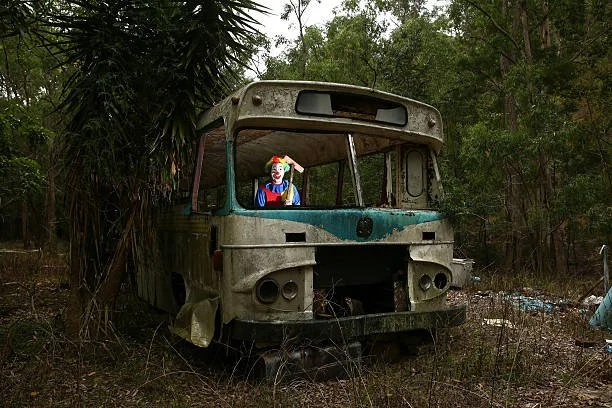
We’re All Bozos on this Bus
There is a fantasy most of us quietly carry that other people are doing life on purpose.
That they selected their temperament, their childhood, their nervous system, their coping style.
That somewhere, at the beginning, there was a menu.
There wasn’t.
We didn’t choose the bus.
We didn’t choose the route.
We didn’t choose who sat next to us, or who taught us how to sit at all.
We just boarded—crying, confused, half-asleep—and have been squirming in our seats ever since, waiting for the ride to end.
This is not pessimism.
This is realism with its sleeves rolled up.

Estrangement Isn’t a Boundary. It’s What Happens When Love Outpaces Language
Estrangement Is not a moral position. It’s a systems failure.
The Wall Street Journal recently published a piece about mothers who say they are “done being doormats” for their estranged adult children.
The article did what mainstream media often does well: it surfaced a silenced grief. Where it stumbled was scale.
Family estrangement is still being framed as a personal ethics problem—who’s right, who’s toxic, who finally set a boundary—when it is far more accurately understood as a systems breakdown.
Families do not usually fracture because someone is evil.
They fracture because the relationship lost its shared operating language.
Estrangement is not a victory.
It is a ceasefire declared when conversation becomes physiologically unsafe.
Problematic Emotional Latency: When Feelings Arrive Too Late to Save the Moment
Some people feel immediately.
Others feel accurately.
A smaller, quieter group feels eventually.
By the time the feeling shows up, the moment has passed, the partner has moved on, and the repair window has closed. The relationship damage doesn’t come from indifference. It comes from timing.
This delay has a name: emotional latency.
Emotional latency isn’t emotional unavailability. It isn’t avoidance. It isn’t a lack of empathy.
What Is Emotional Latency?