
When a State Taxes Condoms: China, Fertility, and the Error of Confusing Compliance With Desire
China has decided that condoms and contraceptive pills should now cost more.
As of January 1, a three-decade-old tax exemption on contraceptive drugs and devices has been removed.
Condoms and oral contraceptives are now subject to a 13% value-added tax—the standard rate applied to shampoo, socks, and kitchen appliances.
This is not a technical adjustment. It is a philosophical one.
The policy rests on a familiar and stubborn error: confusing fertility with compliance.
The assumption is that if pregnancy becomes harder to avoid, births will follow.
But fertility has never worked that way—not in Europe, not in East Asia, not anywhere modern life has made adulthood fragile.
People do not have children because they are cornered. They have children because life feels survivable.

Emotional Neglect Without Abuse: Why Some Modern Marriages Feel Empty but Stable
There is a particular kind of marital pain that doesn’t announce itself.
There is no yelling.
No infidelity.
No cruelty dramatic enough to justify a decisive sentence.
From the outside, the marriage looks solid—often impressive. Inside, it feels oddly vacant. Polite. Functional. Like a household optimized for survival rather than connection.
This is emotional neglect without abuse, and it may be the most common relationship pattern of modern marriage.

My Marriage Feels Like a Meeting
If your marriage feels like a meeting, it is probably functioning very well.
Ironically, that is probably your biggest problem.
Many couples arrive at this realization without drama. There is no betrayal, no major conflict, no obvious unhappiness.
Just a slow recognition that time together feels procedural. Agenda-driven. Strangely professional.
You don’t argue.
You coordinate.
You don’t wonder about each other.
You update each other.
You leave conversations informed—but not nourished.

Is It Normal for Married Couples Not to Talk About Feelings?
Short answer: yes, it’s common.
Long answer: it’s common for reasons that quietly tend to hollow marriages out over time.
Some married couples do not talk about feelings in any sustained or reflective way.
They talk about logistics. They coordinate schedules. They solve problems. They exchange information efficiently and politely. They may even be kind.
But emotional language—the naming of fear, desire, disappointment, longing—slowly disappears.
This is not a personal failure. It is a social outcome of modern marriage.
And it is not neutral.

Why Advice Fails in Marriage (And What Motivational Interviewing Got Right)
I learned motivational interviewing in my marriage and family therapy program, which is to say I learned it at the precise moment I still believed that insight naturally produced change.
Graduate school is very good at curing you of that belief.
Motivational interviewing—developed by William R. Miller and Stephen Rollnick—was the first framework that calmly dismantled the most cherished assumption in helping professions, marriages, and advice culture alike:
People do not change because you explain things well.
They change because something shifts inside them—and that shift cannot be forced.
That single idea has more implications for modern marriage than most couples therapy manuals combined.

Why Monks Walk—to the Desert, to Washington, and Back Into the Heart of Marriage
A group of Buddhist monks is walking across the United States toward Washington, D.C., to promote peace. They started in Texas in late October.
They are now moving through the Southeast. Two of them were injured when a truck struck their escort vehicle. They kept walking.
This detail matters. Not because it’s dramatic—but because it clarifies intent.
If this were a stunt, it would have ended at the hospital. If it were branding, it would have paused for optics. Instead, the walk continued.
That’s the point.

Emotional Over-Optimization in Modern Marriage: Why Talking About Your Feelings Isn’t Working Anymore
Modern couples are not emotionally avoidant.
They are emotionally over-regulated.
They identify feelings quickly, name them accurately, and share them promptly. They speak fluently in the language of insight—activation, triggers, needs, repair.
They do not withhold. They do not stonewall. They do not pretend not to know what is happening inside them.
And yet, many of these couples report the same quiet outcome:
clarity without closeness, communication without vitality, intimacy without heat.
When emotional regulation replaces emotional integration, intimacy becomes stable—and lifeless.
The problem is not a lack of emotional language.
It is the loss of emotional latency.

The Intimacy Problem No One Is Naming: Emotional Over-Optimization in Modern Marriage
Modern couples do not avoid feelings.
They manage them.
They track them.
They narrate them.
They surface them early and often, in the name of health, honesty, and relational hygiene.
And yet—many of the marriages that land in therapy today are not emotionally frozen. They are emotionally over-processed.
The problem is not emotional avoidance.
It’s emotional over-optimization.
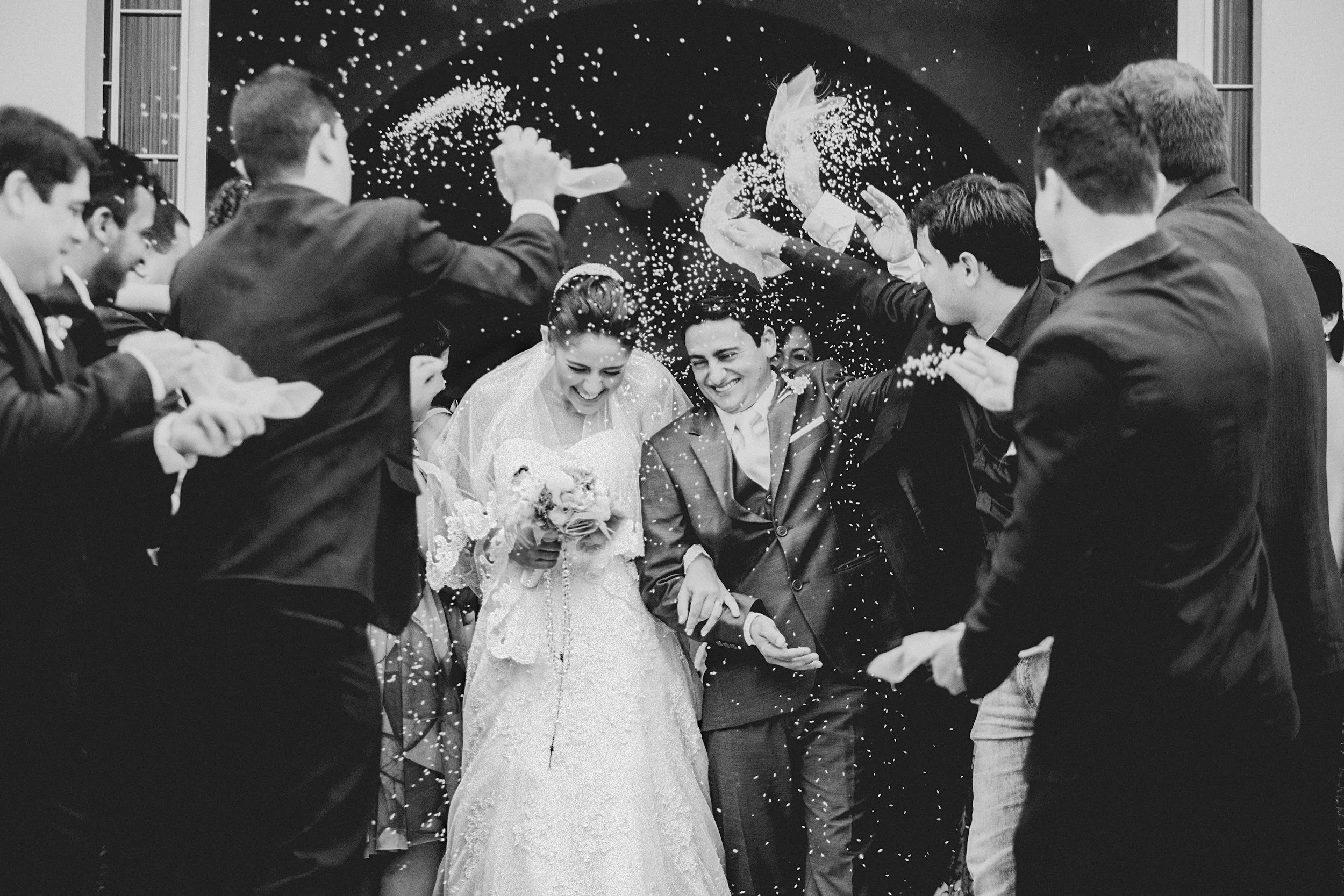
The Modern Marriage Problem
What Marriage Is Now Asking of Couples—and Why So Many Are Quietly Breaking Inside It
Modern marriage is not failing.
It is being asked to do more than it was ever designed to do—and then blamed when people collapse inside it.
For most of human history, marriage was not expected to provide self-actualization, erotic fulfillment, emotional regulation, trauma repair, identity validation, and lifelong meaning.
It was a social structure. A practical alliance. A stabilizing container within a larger web of kin, labor, ritual, and community.
Today, marriage has absorbed nearly all of that work.
Two people are now expected to carry what once belonged to many.

Why Marriages Are Happier When Nobody Helped You Meet
There is a persistent fantasy, usually held by parents, algorithms, and well-meaning acquaintances with too much time, that love works better with supervision.
The data, inconveniently, disagrees.
A recent analysis drawing on a decade of national survey data suggests something both obvious and oddly difficult to say out loud: marriages tend to be happier when the people in them found each other without intermediaries.
The study does not suggest that autonomy guarantees marital happiness; it suggests that autonomy reliably correlates with it.
That distinction matters.
This is not a romance novel masquerading as social science.
It is a sober finding about how relationships that begin without management, orchestration, or prior approval tend to fare once the novelty wears off.

The MD’s Quick Guide to Relational Neurodivergence: 5 Signs a Patient’s Marriage Might Be Driving Their Symptoms
Folks like to think of a diagnosis as a solid object—a rock you can drop on a table.
It isn’t. More often, it’s a description of how a nervous system is failing to adapt to its surroundings.
Physicians are trained to look at labs and imaging, waiting for the body to whisper its secrets. I’ve found that if you want the body to talk, you stop looking only at the patient and start looking at the person they live with.
Many patients labeled treatment-resistant aren’t broken. They’re being held in a container that doesn’t fit.
They aren’t biologically refractory.
They are relationship-maintained.
Here are five signs the marriage is doing more diagnostic work than the ICD code.

The Weight of "Maybe Next Year"
It’s January 1st. The air is sharp, the calendar is empty, and if you’re anything like the people I sit across from every week, you’re humming with equal parts ambition and low-grade panic.
Americans love a Fresh Start.
We love the fantasy that the version of us who didn’t exercise, didn’t save, didn’t speak up, or didn’t leave can be quietly deleted at midnight and replaced with someone sleeker and more disciplined by morning.
But here’s the clinical reality:
Change is not a light switch.
It’s a nervous system negotiation.