Welcome to my Blog
Thank you for stopping by. This space is where I share research, reflections, and practical tools drawn from my experience as a marriage and family therapist with an international practice.
I write about what happens to desire, attachment, and meaning once the early myths stop working.
Are you a couple looking for clarity? A professional curious about the science of relationships? Or simply someone interested in how love and resilience work? I'm glad you've found your way here. I can help with that. I'm accepting new clients, and this blog is for the benefit of all my gentle readers.
Each post is written with one goal in mind: to help you better understand yourself, your partner, and the hidden dynamics that shape human connection
Grab a coffee (or a notebook), explore what speaks to you, and take what's useful back into your life and relationships.
And if a post sparks a question, or makes you realize you could use more support, l'd love to hear from you. Let's explore the scope of work you'd like to do together.
Be Well, Stay Kind, and Godspeed.
~ Daniel
P.S.
Feel free to explore the categories below to find past blog posts on the topics that matter most to you. If you're curious about attachment, navigating conflict, or strengthening intimacy, these archives are a great way to dive deeper into the research and insights that l've been sharing for years.
- Attachment Issues
- Coronavirus
- Couples Therapy
- Extramarital Affairs
- Family Life and Parenting
- How to Fight Fair
- Inlaws and Extended Families
- Intercultural Relationships
- Marriage and Mental Health
- Married Life & Intimate Relationships
- Neurodiverse Couples
- Separation & Divorce
- Signs of Trouble
- Social Media and Relationships
- What Happy Couples Know

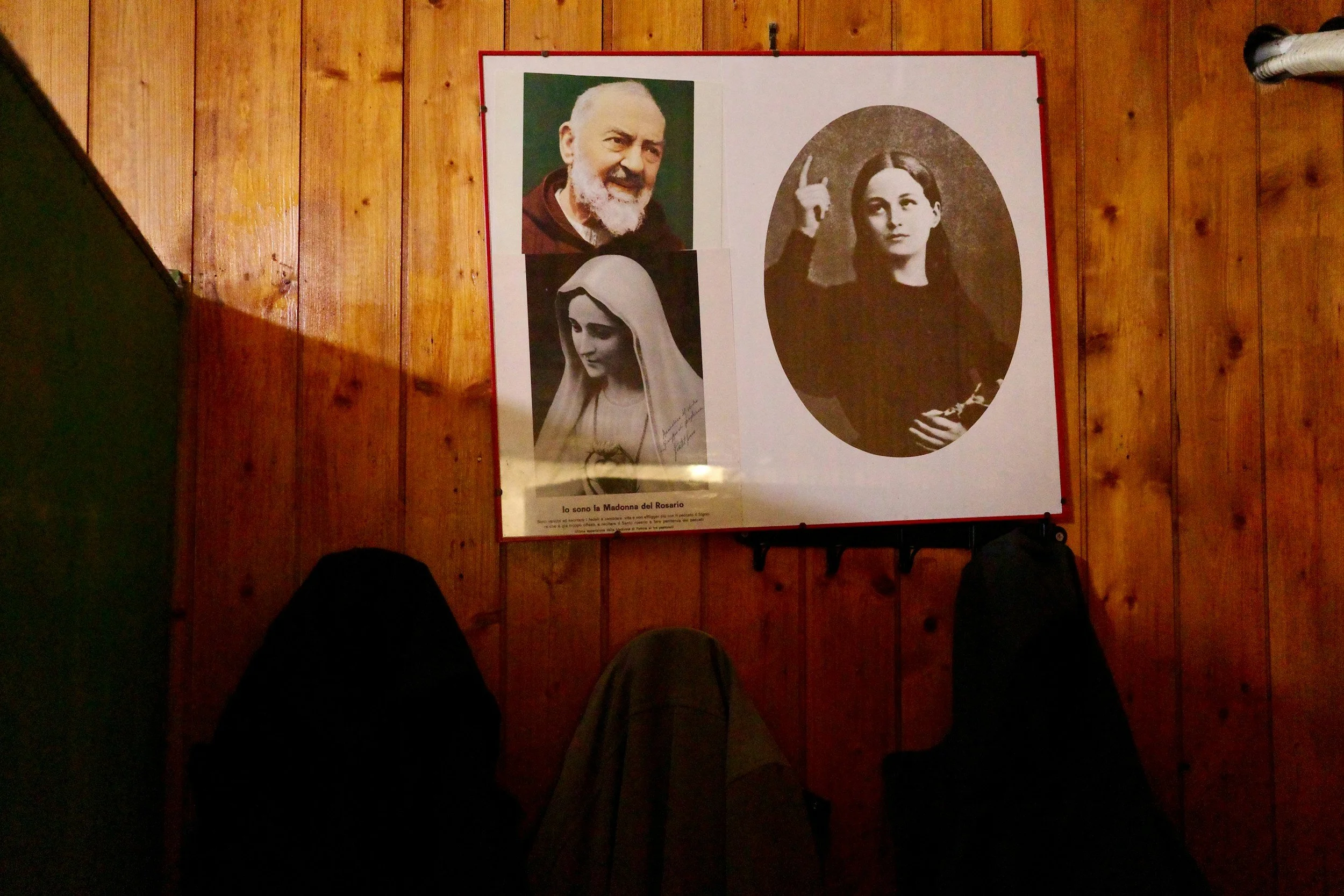
Padre Pio and the Collapse of Reverence: What Modern Relationships Keep Forgetting
Couples now fall apart while technically remaining in constant contact.
They text all day.
Share calendars.
Exchange Instagram reels from opposite ends of the same sectional sofa.
React to each other’s messages with tiny digital hieroglyphics while quietly losing access to one another’s interior worlds.
The modern relationship is exhausted.
Not always dramatic. Worse.
Administratively depleted.
Which is how Padre Pio suddenly becomes relevant again.
Not because he performed miracles. Not because of the stigmata.
Not because modern life secretly longs for supernatural spectacle, though it clearly does.
Every few years the culture becomes briefly obsessed with exorcisms, near-death experiences,
Marian apparitions, psychedelics, “energy work,” or billionaires explaining consciousness on podcasts while wearing sneakers that cost more than a dishwasher.
No. Padre Pio matters because he understood something modern culture keeps forgetting:
Human beings deteriorate when reverence collapses.
Not productivity.
Not communication.
Not optimization.
Reverence.

Don Dolindo Ruotolo and the Modern Crisis of Surrender
There is something deeply revealing about the sudden popularity of Don Dolindo Ruotolo in the age of algorithmic panic.
Not because modern people have become more spiritual. Let us not become hysterical.
But because modern people have become exhausted.
Exhausted by prediction.
Exhausted by optimization.
Exhausted by carrying twelve imaginary futures around in their nervous systems like overpacked grocery bags cutting off circulation to the fingers.
And into this trembling little civilization wanders an obscure priest from Naples saying:
“Jesus, I surrender myself to You, take care of everything.”
Which sounds comforting until you realize he actually meant it.
Not metaphorically.
Not aesthetically.
Not as a decorative quote floating over beige Instagram backgrounds featuring driftwood and cappuccinos.
He meant surrender in the terrifying sense.
The irreversible sense.
The kind that requires relinquishing the fantasy that anxiety itself is a form of control.
That is why Don Dolindo has become catnip for the spiritually overclocked.

Sister Agnes Sasagawa and the Problem of Belief
There are certain religious stories that modern educated people react to with immediate, involuntary facial expressions.
Not thoughts.
Not arguments.
Facial expressions.
A tightening around the mouth.
A tiny retreat of the eyes.
The expression people make when someone at dinner calmly explains that crystals cured their thyroid condition or that their golden retriever understands Swedish.
The Akita story produces this expression in otherwise civilized people.
Partly because it involves Marian apparitions.
Partly because it involves a statue allegedly weeping blood.
But mostly because the central figure in the story—Sister Agnes Katsuko Sasagawa—does not behave the way modern people expect someone connected to extraordinary religious claims to behave.
She was not charismatic.
Not theatrical.
Not evangelical.
Not interested in fame.
This is psychologically inconvenient.
Why Intelligent People Become Obsessed With True Crime Podcasts
There is something almost absurdly modern about listening to a podcast about homicide while standing in line for cold brew.
Not because violence is funny.
Because the setting is.
Human beings once gathered around fires to hear cautionary stories about betrayal, disappearance, dangerous strangers, and the hidden nature of evil.
Now we hear them through noise-canceling headphones while buying oat milk and pretending we are “mostly interested in the psychology.”
Which, to be fair, many people genuinely are.
A recent study published in Psychology of Popular Media found that most true crime podcast listeners are motivated less by gore or cruelty than by curiosity, information-seeking, and a desire to understand human behavior.
When Love Became a Nervous System: How Attachment Culture Changed Modern Relationships
A woman in yoga pants is whispering into her phone in the parking lot outside Target.
“I just think he’s emotionally avoidant.”
Twenty years ago she would have just said:
“He never talks.”
That is the shift.
The language of therapy escaped the therapist’s office and entered ordinary life.
Now everyone appears to possess a partial graduate education in Attachment Theory acquired through social media, heartbreak, podcasts, and twelve hours on Reddit at two in the morning.
“He’s avoidant.”
“She’s anxious.”
“That’s disorganized attachment.”
“My nervous system no longer feels safe.”
Attachment Theory is no longer functioning merely as developmental psychology.
It is now:
dating shorthand.
identity language.
moral language.
status language.
emotional explanation.
social sorting.
Couples increasingly understand love psychologically instead of morally.
Many life partners slowly become experts in each other’s attachment injuries, while losing the ability to make each other feel loved.
That is one of the quiet tragedies of modern intimacy.
Why Wellness Culture Is Becoming A Replacement Religion
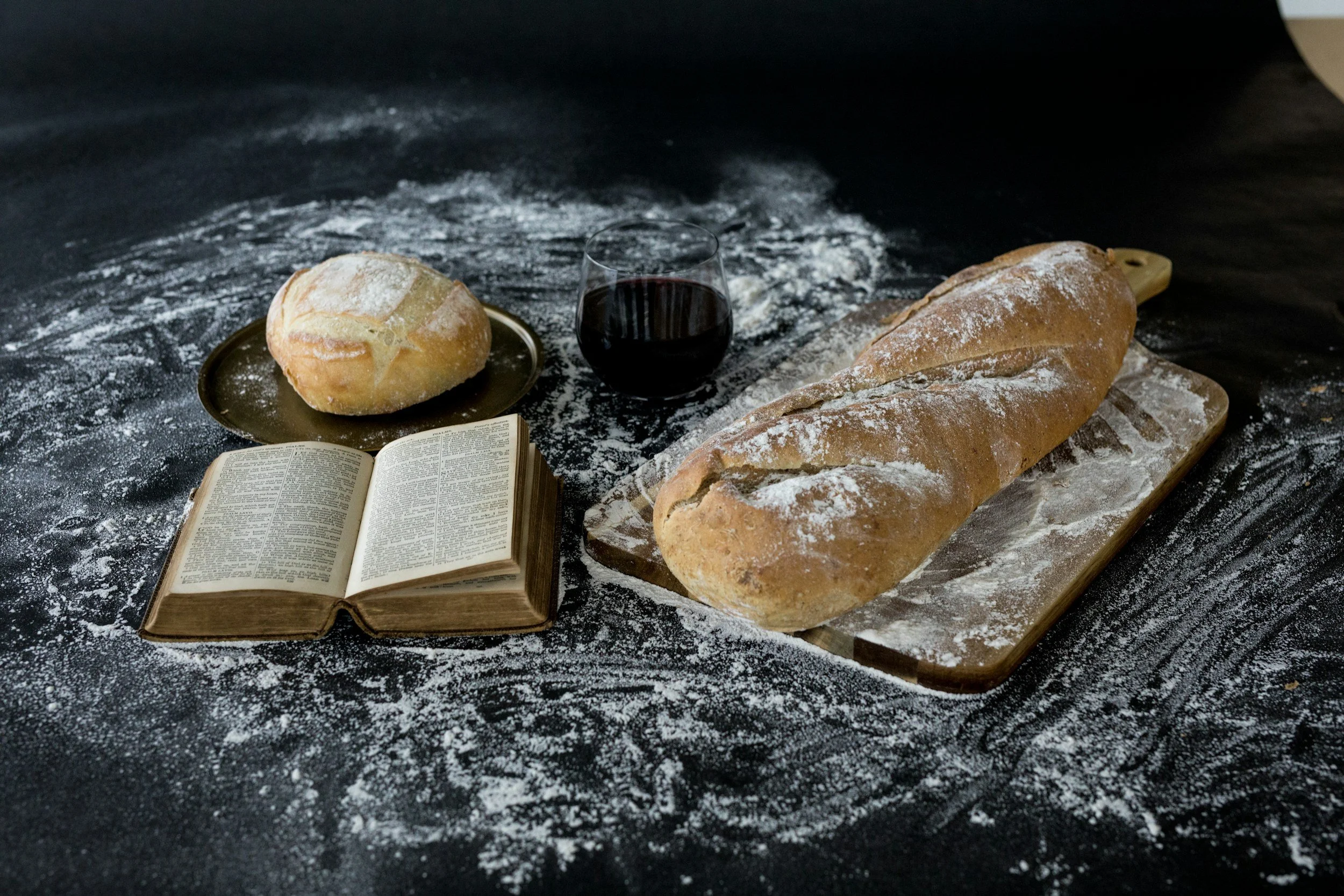
Modern Americans increasingly use food the way earlier civilizations used liturgy.
Not entirely consciously, of course.
Nobody stands in Whole Foods holding artisanal bone broth whispering, “At last, a coherent metaphysical framework.” People still think they are discussing inflammation.
But underneath the endless conversations about seed oils, raw milk, gut health, fasting windows, sourdough fermentation, protein optimization, ancestral diets, carnivore protocols, liver capsules, glucose spikes, adaptogens, “toxins,” and biblical eating plans, something much larger is unfolding.
Folks are just trying to reconstruct meaning.
A recent piece in The New York Times explored the rise of “biblical eating,” an online movement centered around consuming foods mentioned in scripture — fish, minimally processed foods, raw dairy, homemade breads, locally sourced ingredients, fasting practices, and forms of dietary simplicity presented as spiritually aligned living.
At first glance, it looks like just another wellness trend.
It is not.
It is a significant cultural signal.

The Body as Dashboard: When Optimization Culture Entered Intimacy
There was a time when folks went to the doctor because something hurt.
Now women sit in bed at 11:43 PM refreshing microbiome dashboards to see whether their Lactobacillus percentages changed after brunch, menstruation, stress, oral sex, kombucha, antibiotics, a magnesium supplement, or what increasingly appears to be the emotional weather system of late capitalism itself.
Civilization has entered an interesting phase.
Lately I’ve noticed something subtle but increasingly unmistakable: the couples I see are beginning to experience their bodies less as places they live and more as systems they manage.
Sleep is scored. Recovery is scored. Fertility is scored. Mood is tracked. Cortisol is inferred.
Attention is fragmented into metrics. The nervous system has become a public relations department.
And , of course, eventually, inevitably, optimization culture arrived at the vagina.

The Family Becomes What It Repeatedly Interrupts: How Modern Families Quietly Lose Emotional Connection
More and more couples and families are experiencing each other primarily through interruption.
Not cruelty.
Not betrayal.
Interruption.
A strange thing has happened to modern intimacy.
Life partners now routinely tell each other:
“I’m listening,”
while simultaneously glancing at a glowing rectangle containing Ukrainian drone footage, celebrity divorce rumors, protein powder advertisements, weather anxiety, a former classmate’s suspiciously photogenic vacation in Mallorca, and a man explaining dopamine fasting from inside what appears to be an aggressively beige podcast bunker.
And somehow this counts as presence.

The Bra as Border Control: What Going Braless Reveals About Anxiety, Attraction, and the Surveillance of Women
Somewhere this morning, a woman stood in front of a mirror holding two versions of herself.
One shirt meant comfort.
The other meant fewer interpretations.
She chose accordingly.
Not because she is weak.
Not because she is vain.
Not because she is confused about feminism.
But because women understand something many men still insist on treating as theoretical:
Visibility has consequences.
Did BetterHelp Share Your Data? The Real Problem With Digital Therapy Privacy
There is a particular tone companies use when they want you to feel safe.
It’s upholstered.
It’s well-lit.
It speaks in sentences like, “your privacy is our top priority.”
And then—so gently you almost admire the choreography—it installs a tracking pixel and asks how you’re feeling today.
I’ve noticed something subtle in my couples work: life partners hesitate not only with each other, but increasingly with systems.
They occasionally pause before answering my intake questions. Not because they lack insight—but because they’re not entirely sure who, or what, is listening.
Why “Perfect” AI Might Be a Terrible Idea: The Case for Artificial Neurodivergence
There is a quiet fantasy running through much of artificial intelligence research. It goes something like this:
We will build a machine that is perfectly aligned with human values.
It will be rational. Obedient. Predictable. Safe.
It will, in other words, behave better than we do.
Now pause there for a moment.
Because if you’ve ever spent ten minutes observing actual humans—at dinner, in traffic, or in a long-term relationship—you may notice something awkward:
We are not aligned. Not internally. Not relationally. Not culturally. Not even across breakfast preferences.
And yet, somehow, we persist.
The research you’ve just handed me—summarized in —leans into that uncomfortable truth with a kind of intellectual shrug and says: maybe the problem isn’t that AI lacks alignment.
Maybe the problem is that we’ve misunderstood what safety looks like.

Song Sung Blue Explained: Love, Virtue, Mortality, and the Work of Staying Alive Together
The film Song Sung Blue begins small—so small it’s easy to miss what it’s doing.
A man tries on a voice and discovers it steadies him.
A woman watches, then steps in beside him—not out of conviction, exactly, but because something about it brings them into alignment.
It gives them a place to meet that feels clearer than the rest of their life.
At first, it’s light. A shared experiment.
Then, almost without announcement, it becomes a place they can return to.
That shift—quiet, incremental—is the film.
My vocation has taught me that relationships don’t just struggle with conflict or communication. They also struggle with something more fundamental:
how to keep something alive over time.