Why Wellness Culture Is Becoming A Replacement Religion
Wednesday, May 13, 2026.
Why biblical eating, ritualized wellness, and moralized consumption reveal a growing hunger for coherence, ritual, and meaning in modern life
Modern Americans increasingly use food the way earlier civilizations used liturgy.
Not entirely consciously, of course.
Nobody stands in Whole Foods holding artisanal bone broth whispering, “At last, a coherent metaphysical framework.” Folks still think they are discussing remedies for inflammation.
But underneath the endless conversations about seed oils, raw milk, gut health, fasting windows, sourdough fermentation, protein optimization, ancestral diets, carnivore protocols, liver capsules, glucose spikes, adaptogens, “toxins,” and biblical eating plans, something much larger is unfolding.
Folks are trying to reconstruct meaning.
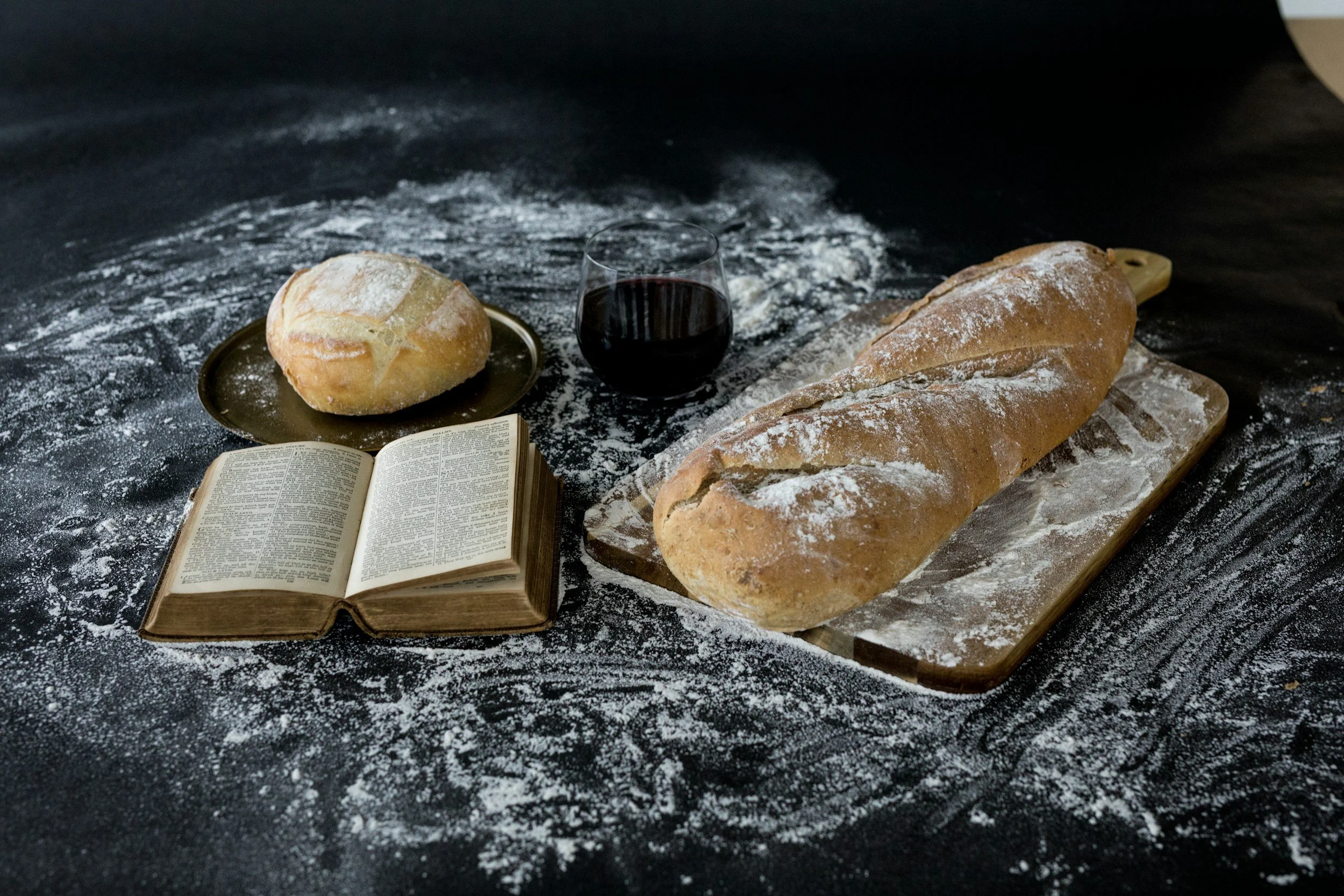
A recent piece in The New York Times explored the rise of “biblical eating,” an online movement centered around consuming foods mentioned in scripture — fish, minimally processed foods, raw dairy, homemade breads, locally sourced ingredients, fasting practices, and forms of dietary simplicity presented as spiritually aligned living.
At first glance, it looks like just another wellness trend.
It is not.
I think it’s a significant cultural signal.
Because when traditional meaning systems weaken, humans rarely stop seeking transcendence. Instead, they relocate transcendence into consumption, identity, optimization, and ritualized self-management.
The modern wellness movement is increasingly functioning as a replacement meaning system for emotionally disenchanted societies.
And the people inside these movements are not irrational.
They are responding to something real.
Ritual Hunger In An Attention-Fractured World
I am meeting with more folks these days who cannot explain why they feel emotionally unmoored despite objectively functional lives.
They are employed.
Connected.
Educated.
Therapized.
Informed.
Optimized.
And yet many quietly describe a strange feeling of psychological drift.
Life feels fragmented.
Attention feels continuously interrupted.
Ordinary routines feel emotionally thin.
Modern life increasingly operates as a sustained assault on attentional continuity.
Notifications.
Feeds.
Algorithms.
Infinite commentary.
Streaming platforms.
Workplace messaging.
Digital performance.
Advertising systems engineered to destabilize focus.
Human attention is now under continuous extraction.
And under those conditions, something ancient begins reasserting itself:
Ritual hunger.
By ritual hunger, I mean the psychological longing for structured, repeated, symbolically meaningful practices that stabilize emotional experience and create a sense of coherence.
This is one reason practices like:
fasting.
bread making.
gardening.
cooking from scratch.
Sabbath observance.
prayer before meals.
long family dinners.
tea rituals.
fermentation.
“slow living.”
and ancestral food practices.
feel disproportionately emotionally meaningful right now.
These practices are not merely nutritional or aesthetic.
They are attempts at existential stabilization.
The appeal of biblical eating is not fundamentally dietary. It is actually cosmological.
Folks want to feel that ordinary life still participates in something sacred, ordered, ancient, and morally intelligible.
Food has become a portal into coherence.
Wellness Culture Has Become Moral Theater
One of the most revealing observations in the article comes from nutrition scholar Marion Nestle, who notes:
“People are desperate for meaning in their lives.”
That sentence explains far more than biblical eating.
It explains the emotional architecture of modern wellness culture itself.
Because wellness culture increasingly behaves like religion structurally, even when it avoids explicitly religious language.
It has:
purity systems.
forbidden substances.
rituals.
moral hierarchies.
conversion narratives.
testimonies.
dietary saints.
cleansing rituals.
evangelists.
and algorithmic heretics.
The old language of sin quietly reappears disguised as inflammation.
Processed foods become moral contamination.
Discipline becomes virtue.
Optimization becomes salvation.
Clean eating becomes purity.
Food is no longer merely nutritional.
It has become moral theater.
Or perhaps more precisely:
Modern consumption increasingly functions as identity confession.
We do not merely eat anymore.
We signal.
Declare.
Perform.
Confess.
Belong.
Some now discuss gut flora with the intensity medieval theologians once reserved for eternal salvation.
And social media intensifies all of it because algorithms reward certainty, revelation, extremity, and identity performance.
Nobody goes viral by calmly announcing:
“I consumed a reasonably balanced diet while maintaining psychologically flexible beliefs about health.”
The internet rewards dietary revelation.
Especially revelation wrapped in moral certainty.
We Have Actually Done This Before
Here’s the thing. None of this is historically new.
American culture has long moralized food during periods of instability and social anxiety.
In the 19th century, Sylvester Graham promoted dietary restraint, whole grains, and bodily discipline as protections against moral corruption and excessive sexuality.
Graham crackers were originally designed not as treats, but as instruments of virtue.
Later, John Harvey Kellogg advanced similarly moralized ideas linking food, purity, self-control, and spiritual discipline through the early health reform movement.
The details evolve.
The psychological structure remains remarkably consistent.
Humans repeatedly moralize consumption during periods of uncertainty because food offers something emotionally seductive:
Control.
And control becomes psychologically intoxicating when larger systems feel unstable.
The Selfication Paradox
This movement also reveals a fascinating paradox about modern individualism.
Many participants in wellness culture are implicitly rebelling against:
hyper-digitized life.
institutional distrust.
ultra-processed modernity.
consumer excess.
artificiality.
algorithmic overload.
and emotional fragmentation.
They want:
ancient wisdom.
natural rhythms.
embodied practices.
slower routines.
spiritual grounding.
and forms of life that feel symbolically dense again.
And yet the search itself still unfolds inside highly individualized branding ecosystems.
This is the paradox at the center of what I have elsewhere calledselfication:
the cultural process through which nearly every aspect of life becomes reorganized around identity construction and personal optimization.
Even rebellion against modernity becomes a personalized performance.
Spiritual hunger gets routed through influencer culture.
Ancient wisdom becomes an aesthetic curation.
Transcendence becomes another content strategy.
The modern self increasingly assembles itself the way some folks acquire standing desks:
expensively, anxiously, and through twelve browser tabs.
Attention Fragmentation Is Driving Ritual Cravings
One of the least discussed psychological realities of modern life is attentional exhaustion.
Many people are not merely trying to become healthier.
They are trying to feel less psychologically dispersed.
This matters because rituals stabilize attention.
Research across psychology, sociology, and anthropology has repeatedly suggested that ritualized repetitive practices reduce uncertainty, regulate anxiety, and strengthen social cohesion.
Émile Durkheim argued that rituals help societies generate collective meaning and emotional solidarity. Ernest Becker explored how symbolic systems help human beings metabolize existential anxiety and mortality awareness.
As I’ve mentioned recently, contemporary thinkers like Byung-Chul Han have argued that modern societies increasingly produce exhaustion, fragmentation, and psychological burnout through relentless performance demands and overstimulation.
Under these conditions, rituals become neurologically soothing because rituals restore sequence, continuity, symbolism, and attentional coherence.
Modern life is not merely overwhelmed informationally.
It is also overwhelmed ritually.
And ritual hunger creates psychological vulnerability.
The Collision Between Spiritual Hunger And Limbic Capitalism
Of course, because this is modern America, transcendence almost immediately becomes monetized.
The NYT article notes influencers selling biblical eating guides, meal systems, coaching sessions, and wellness products.
Which reveals one of the defining tensions of contemporary life:
Nowadays, folks are trying to escape consumer culture through highly branded forms of consumer culture.
Modern capitalism no longer merely sells products.
It increasingly sells:
moral identity.
emotional orientation.
symbolic belonging.
and pseudo-transcendence.
This is why so much wellness media feels simultaneously sincere and faintly theatrical.
Some influencers genuinely believe they are helping people reclaim health and spiritual grounding.
Others are building businesses.
But most are doing both.
And this ambiguity matters less than critics sometimes assume.
Because underneath much of this sits something deeply human:
Folks crave orientation.
They want someone to tell them:
what matters.
what is harmful.
what is sacred.
what is corrupting.
and how to live without feeling psychologically scattered all the time.
Historically, religions, communities, and stable cultural traditions performed much of this function.
Now TikTok wellness creators increasingly do.
Which is, admittedly, not entirely reassuring.
Meaningful Suffering Always Feels Different
This movement also intersects deeply with something I have written about recently: meaningful suffering.
Human beings tolerate hardship far better when hardship feels attached to transcendence.
Fasting for spiritual clarity feels psychologically different than fasting for social approval.
Making bread as an act of ritualized care feels different than obsessively managing dietary purity while rage-listening to productivity podcasts at 1:00 a.m.
Meaning metabolizes difficulty.
Random suffering exhausts people.
Meaningful suffering organizes them.
This may partially explain why highly ritualized wellness movements gain traction during periods of social fragmentation, institutional distrust, technological overload, and economic instability.
We are searching for practices that convert anxiety into structure.
Even Couples Are Beginning To Moralize Consumption
In clinical work, I increasingly see couples fighting not only about politics, money, or parenting, but about:
food purity.
supplementation.
toxins.
fasting protocols.
“clean” living.
screen use.
and whose version of health represents moral responsibility to them.
In some relationships, wellness quietly becomes a moral hierarchy.
One partner becomes “disciplined.”
The other becomes “careless.”
One becomes “awake.”
The other becomes “toxic.”
Underneath these conflicts often sits something much deeper than nutrition:
A struggle over meaning, order, fear, control, mortality, identity, and psychological safety.
Food becomes emotionally symbolic because people themselves increasingly feel destabilized.
FAQ
Is wellness culture replacing religion?
In some psychological and sociological ways, yes. Many wellness communities increasingly function like meaning systems by offering rituals, moral frameworks, purity standards, identity formation, and shared beliefs about how to live “correctly.”
What is “ritual hunger”?
Ritual hunger refers to the psychological longing for repeated, symbolically meaningful practices that create emotional stability, coherence, and existential orientation in fragmented environments.
Why do we become emotionally attached to diets?
Food often becomes symbolic during periods of uncertainty. Diets can offer structure, control, identity, belonging, and moral clarity — especially when people feel overwhelmed by modern life.
What is “moralized consumption”?
Moralized consumption occurs when purchasing or eating behaviors become associated with virtue, purity, intelligence, spirituality, or personal worth rather than remaining purely practical decisions.
Why are younger folks drawn to ancestral or “traditional” lifestyles?
Many younger adults appear increasingly exhausted by digital overload, instability, and hyper-individualized modern culture. Traditional rituals, slower rhythms, and embodied practices can feel psychologically grounding.
What is “selfication”?
Selfication refers to the cultural process through which nearly every aspect of life becomes reorganized around identity construction, personal branding, optimization, and self-management.
Why does ritual reduce anxiety?
Research suggests that repetitive structured behaviors can reduce uncertainty and increase feelings of control, predictability, and emotional regulation.
Can wellness culture become psychologically unhealthy?
Yes. Wellness practices can become rigid, obsessive, morally perfectionistic, or anxiety-driven, especially when health behaviors become tied to identity, purity, or fear.
It Is Easy To Mock This. And Harder To Understand It.
Some of these wellness movements absolutely deserve critique.
Some drift into pseudoscience.
Some become rigid and obsessive.
Some become financially exploitative.
Some generate anxiety rather than health.
But it is still important to understand the emotional reality underneath them.
Many people are not merely trying to become healthier.
They are trying to feel less spiritually scattered.
Modernity solved many material problems while quietly generating existential ones.
We increasingly feel exhausted by:
speed.
abstraction.
fragmentation.
digitization.
institutional distrust.
synthetic environments.
and the constant pressure of performative identity construction.
It is easy to mock people seeking transcendence through bone broth.
Harder to admit how emotionally hungry many of us have become for rituals that make ordinary life feel symbolically alive again.
The Real Story Is Not The Sardines
The real story underneath biblical eating is not nutritional.
It is civilizational.
We increasingly feel emotionally homeless inside modern life.
So we are reconstructing islands of meaning from whatever materials remain available:
food rituals.
domestic practices.
spiritual fragments.
embodied routines.
attention discipline.
ancient symbols.
and communities of shared belief.
Human beings can tolerate suffering, ambiguity, limitation, and even hardship more easily than they can tolerate meaninglessness.
And when societies stop offering coherent rituals of meaning, we rarely become less religious psychologically.
Instead, we become religious about increasingly smaller things.
Food.
Fitness.
Productivity.
Purity.
Politics.
Optimization.
Identity.
Wellness.
The sacred impulse never truly disappears.
It migrates.
The hunger underneath many modern wellness movements may not ultimately be nutritional at all.
It may be the ancient human desire to feel that ordinary life still participates in something sacred.
Be Well, Stay Kind, and Godspeed
REFERENCES:
Becker, E. (1973). The denial of death. Free Press.
Durkheim, É. (1995). The elementary forms of religious life (K. E. Fields, Trans.). Free Press. (Original work published 1912)
Han, B.-C. (2015). The burnout society. Stanford University Press.
Haidt, J. (2012). The righteous mind: Why good people are divided by politics and religion. Pantheon Books.
Nestle, M. (2007). Food politics: How the food industry influences nutrition and health (Rev. ed.). University of California Press.
Rosa, H. (2013). Social acceleration: A new theory of modernity. Columbia University Press.
Vohs, K. D., Wang, Y., Gino, F., & Norton, M. I. (2013). Rituals enhance consumption. Psychological Science, 24(9), 1714–1721. https://doi.org/10.1177/0956797613478949
Xygalatas, D., Mitkidis, P., Fischer, R., Reddish, P., Skewes, J., Geertz, A. W., Roepstorff, A., & Bulbulia, J. (2013). Extreme rituals promote prosociality. Psychological Science, 24(8), 1602–1605. https://doi.org/10.1177/0956797612472910