Tuesday, November 17, 2026.
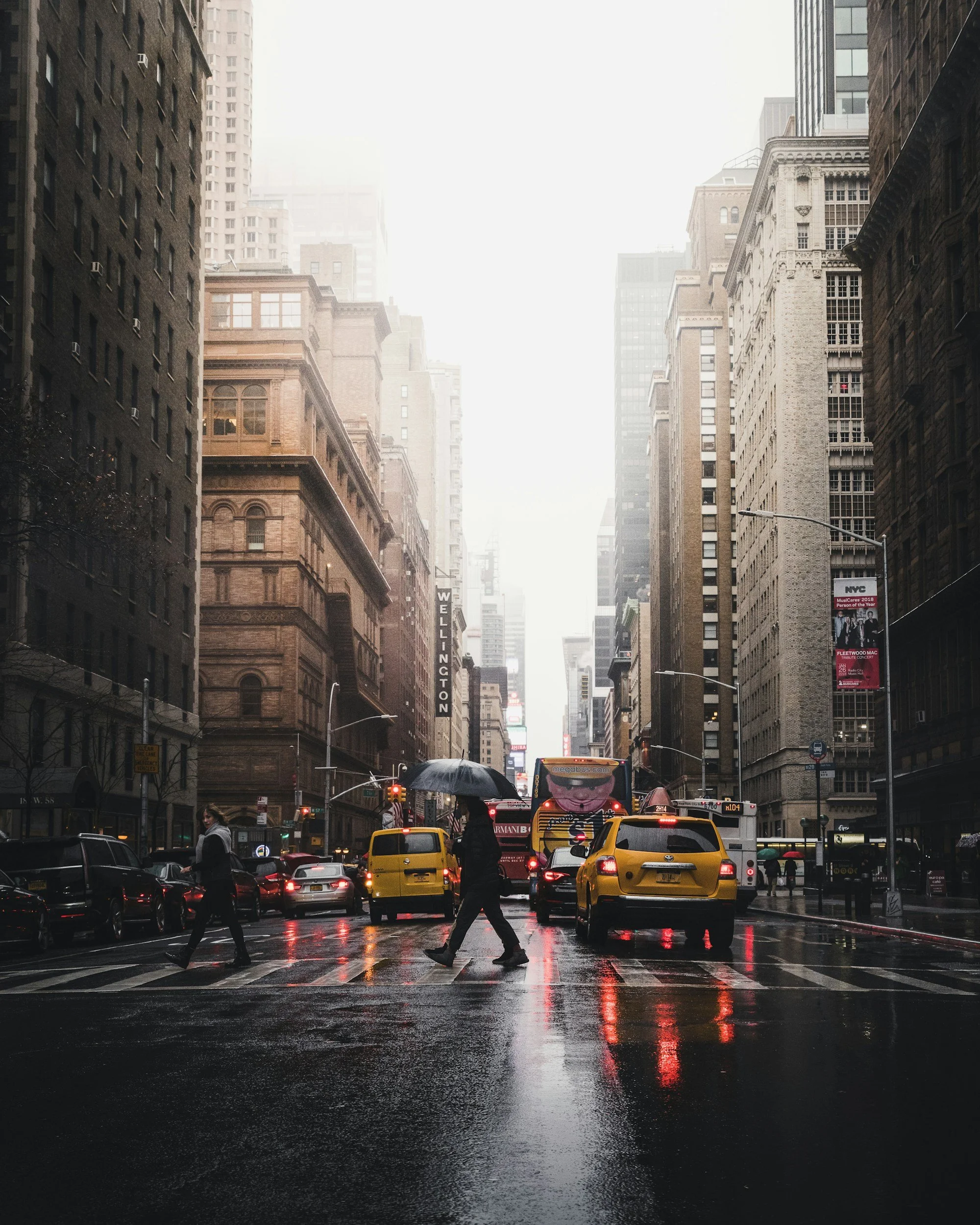
In New York, the apocalypse has to negotiate with the lease.
There is no spare barn. There may not be a spare drawer.
The bed already shelters winter clothes, an abandoned exercise program, and the suitcase that requires moving three pieces of furniture to retrieve.
Now someone wants to put drinking water there.
This is where an argument about the future becomes an argument about the apartment.
I watch unfolding events with apprehension from nine acres in the deep woods.
I also know the world south of Boston.
New York is the gorilla next door in my regional imagination: larger, louder, and difficult to ignore. That makes it a compelling place to examine what fear asks of a household.
It does not make a Manhattan apartment a forecast for my woods.
My own setting gives me room to consider gardens and storage.
It does not supply certainty.
A rural household and an urban household can ask the same uneasy question: How much preparation will let us return to living?
A real practice, an uncertain label
The people are real.
A recent New York Post profile describes Manhattan firefighter Jason Charles using shelves, closets, and rented storage for emergency provisions, including food, water, and backup power (Weiss, 2026). A Vox interview with sociologist Anna Maria Bounds discusses storing supplies beneath beds and couches (Hill, 2026).
Bounds’s ethnography of the NYC prepper subculture examines how class, social expectations, and the city itself shape preparation (Bounds, 2021).
An urban prepper may be deciding how to manage dependence on a building, a transit system, and nearby people. The fantasy of complete independence has trouble getting past the lobby.
What these accounts cannot tell us is how many New Yorkers are doing this, or whether they constitute a new demographic movement. A vivid apartment tour is evidence of that apartment. It is not a census.
Nor did urban preparedness arrive this autumn.
Bounds's 2020 study of New York preppers already examined an organized preparedness subculture. “Doomer” describes one possible attitude within this world; keeping emergency water does not require believing civilization is finished.
The fear between Tuesday and the end of everything
There is a kind of unease that deserves a better description than panic. Call it mid-term angst.
It concerns the next several months or years: the feeling that ordinary life may become less dependable while remaining recognizably ordinary.
You still have work tomorrow. You are less certain what that work, the grocery bill, or the neighborhood will look like next spring.
The worry is about continuity. Can we keep caring for the people who depend on us if the systems we use become unreliable?
Water is appealing because it supplies a concrete answer to a small part of that question. A person cannot put political stability under the bed. They can put six bottles there.
That modest act may be sensible. It may also acquire more emotional responsibility than six bottles can carry.
There is something revealing about a society in which ordinary people increasingly feel obliged to make private arrangements for public uncertainty.
We are not necessarily expecting the world to end. We are wondering whether the institutions that made tomorrow seem predictable will continue to keep their appointments.
The supermarket still opens at eight. The lights still come on. Yet the household has begun making contingency plans for promises it once took for granted.
Two people, one limited room
Imagine one partner looking at the supplies and seeing care. The other sees a home gradually reorganized around danger.
“I want us to be ready.”
“I want to feel that we still live here.”
Both statements deserve a hearing.
The first partner may remember an outage, an empty shelf, or a childhood when adults failed to provide. The second may remember living with someone whose fear governed everybody's day.
Neither history tells us who is right about the next emergency. Both help explain why the conversation has become so tender.
In a small apartment, purchases occupy shared space immediately. A preparation that is barely visible in a suburban basement can become the first thing a spouse sees upon waking.
Enough for what?
NYC Emergency Management recommends supplies for up to seven days of sheltering in place, including one gallon of drinking water per person per day and ready-to-eat food (NYC Emergency Management, n.d.). Following that recommendation is ordinary preparedness, not evidence of pathology.
The couple's task is to turn concern into an agreement: what disruption they are preparing for, what they can afford, where supplies can go, and when they will review the plan.
They also need a way to say that a plan is sufficient for now.
Otherwise, every container becomes an invitation to the next one.
The water under the bed can be an expression of love. Love still has to ask where the other person will put their shoes.
Frequently asked questions
What is the difference between urban prepping and “doomer” thinking?
Urban prepping describes practical preparation in a city: limited storage, shared buildings, transport, and dependence on services. “Doomer” describes an outlook about the future. They overlap for some people, but neither term establishes a diagnosis. Ask what someone is preparing for, what they have agreed to do, and whether the preparation leaves room for ordinary life.
How much water is a reasonable starting point in a small apartment?
The CDC recommends at least one gallon per person per day for three days and, if possible, a two-week supply (Centers for Disease Control and Prevention, 2025). Two adults would need six gallons for the three-day starting point. NYC’s home-kit guidance extends to seven days. Build toward a usable target rather than treating limited space as a moral failure.
Where can we keep supplies without taking over the apartment?
Choose locations together before shopping. Consider a designated cupboard and suitable low storage that everyone can reach. Keep exits and daily-use areas clear. Do not assume a shelf, bed frame, or balcony can support a concentrated heavy load. Water storage should fit the actual home and the people who must handle it.
Do I have to buy expensive survival food?
Start by considering shelf-stable foods your household already eats, including options that need no cooking. A manual can opener can matter more than another unfamiliar bucket. Count dietary needs and the water or cooking a food requires. The best pantry on paper is disappointing if nobody can use its contents.
Which urban preparedness sites are useful?
City Prepping is a useful place to explore practical preparedness topics. Apt Prepper focuses on apartment life, and Modern Survival Blog’s apartment article discusses space constraints.
Use them to generate questions and ideas; confirm health, water, fire, and incident instructions through the appropriate official source.
Does NYC’s experience apply to readers south of Boston?
It can illuminate household tradeoffs, but your local plan should follow your building, address, and local hazards.
Begin with Massachusetts preparedness resources.
New York is a valuable comparison; it does not determine what your town needs. Nor’easter planning is a concrete regional starting point, rather than a requirement to accept an apocalypse forecast.
Useful urban preparedness links:
City Prepping: Practical preparedness topics and a starting point for further reading.
Apt Prepper: Apartment and renter constraints.
CDC emergency water guidance: Water quantities, containers, and rotation.
Massachusetts emergency preparedness: Local planning resources for my gentle readers south of Boston.
The unnamed examples in this essay are illustrative.
The clinical interpretations, and suggested household agreements offered here are my own ideas.
They are not offered as evidence of a validated treatment approach for prepper families.
Be Well, Stay Kind, and Godspeed.
REFERENCES:
Bounds, A. M. (2020). New Yorkers’ street smarts and survival smarts during the pandemic: Preppers, community resilience and local citizenship. Urbana: Urban Affairs & Public Policy, 21, 65–86. https://doi.org/10.47785/urbana.5.2020
Bounds, A. M. (2021). Bracing for the apocalypse: An ethnographic study of New York’s ‘prepper’ subculture. Routledge. https://doi.org/10.4324/9781315225258
Centers for Disease Control and Prevention. (2025, June 27). How to create an emergency water supply. https://www.cdc.gov/water-emergency/about/how-to-create-and-store-an-emergency-water-supply.html
Hill, J. (2026, May 17). How to prepare for a huge disaster when you live in a tiny apartment. Vox. https://www.vox.com/explain-it-to-me/488519/how-to-prep-natural-disaster-pandemic-small-apartment-city
NYC Emergency Management. (n.d.). Gather supplies. Retrieved October 8, 2026, from https://www.nyc.gov/site/em/ready/gather-supplies.page
Weiss, A. (2026, October 7). Inside the secret world of the AI apocalypse doomsday preppers. New York Post. https://nypost.com/2026/10/07/lifestyle/inside-the-secret-world-of-doomsday-preppers/
Why Work with Daniel?
When a practical preparation becomes a recurring argument about money, space, or trust, I help couples identify what each person is protecting and make agreements they can both use. The work makes room for compassion, forbearance, humor, and accountability.
Related reading