
Welcome to my Blog
Thank you for stopping by. This space is where I share research, reflections, and practical tools drawn from my experience as a marriage and family therapist with an international practice.
I write about what happens to desire, attachment, and meaning once the early myths stop working.
Are you a couple looking for clarity? A professional curious about the science of relationships? Or simply someone interested in how love and resilience work? I'm glad you've found your way here. I can help with that. I'm accepting new clients, and this blog is for the benefit of all my gentle readers.
Each post is written with one goal in mind: to help you better understand yourself, your partner, and the hidden dynamics that shape human connection
Grab a coffee (or a notebook), explore what speaks to you, and take what's useful back into your life and relationships.
And if a post sparks a question, or makes you realize you could use more support, l'd love to hear from you. Let's explore the scope of work you'd like to do together.
Be Well, Stay Kind, and Godspeed.
~ Daniel
P.S.
Feel free to explore the categories below to find past blog posts on the topics that matter most to you. If you're curious about attachment, navigating conflict, or strengthening intimacy, these archives are a great way to dive deeper into the research and insights that l've been sharing for years.
- Attachment Issues
- Coronavirus
- Couples Therapy
- Extramarital Affairs
- Family Life and Parenting
- How to Fight Fair
- Inlaws and Extended Families
- Intercultural Relationships
- Marriage and Mental Health
- Married Life & Intimate Relationships
- Neurodiverse Couples
- Separation & Divorce
- Signs of Trouble
- Social Media and Relationships
- What Happy Couples Know

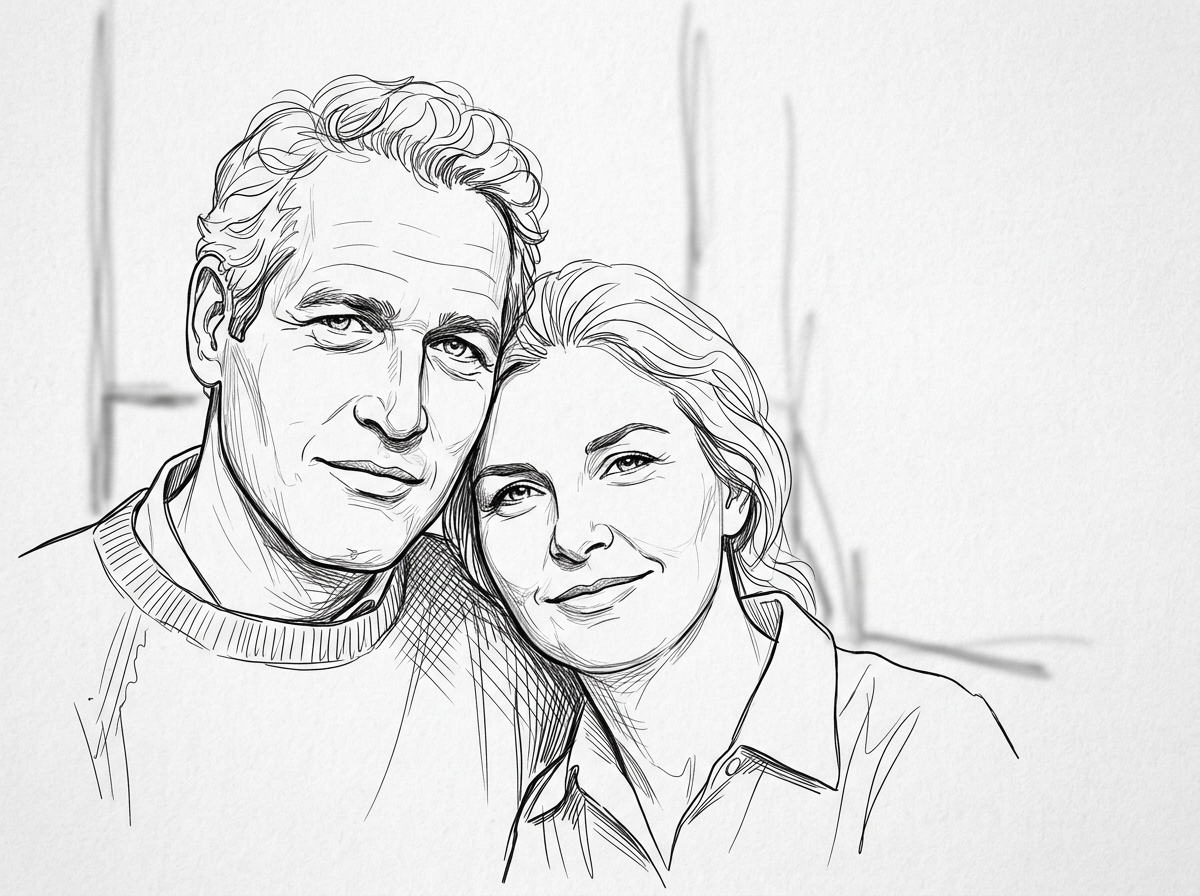
Paul Newman and Joanne Woodward: The Love Letters Behind a 50-Year Marriage
There are worse things to find in your parents’ attic than their love letters.
Tax returns.
A NordicTrack.
Thirty-seven years of National Geographic preserved under the assumption that somebody, someday, will urgently require the April 1986 issue.
Melissa Newman found something considerably more dangerous.
Her parents’ desire.
Years after her father, Paul Newman, died in 2008, Melissa Newman discovered early letters her father had written to Joanne Woodward.
She later described encountering correspondence that could be sweet, romantic, and sufficiently intimate that not everything belonged in a book assembled by their daughter.
Which may be the strongest endorsement of a love letter ever offered.
We already knew Paul Newman was beautiful. There is an extensive photographic record.
What the letters reveal is more interesting.
He was besotted.
And decades later, after the beautiful young man was gone, the evidence remained.
The marriage had lasted fifty years before ending in the only way a lifelong marriage ultimately can.
One of them died.
And among the family papers, the young Paul Newman was still trying to tell Joanne Woodward something lovers have been trying to say since we first figured out how to write things down:
Of all the people in the world, I choose you.
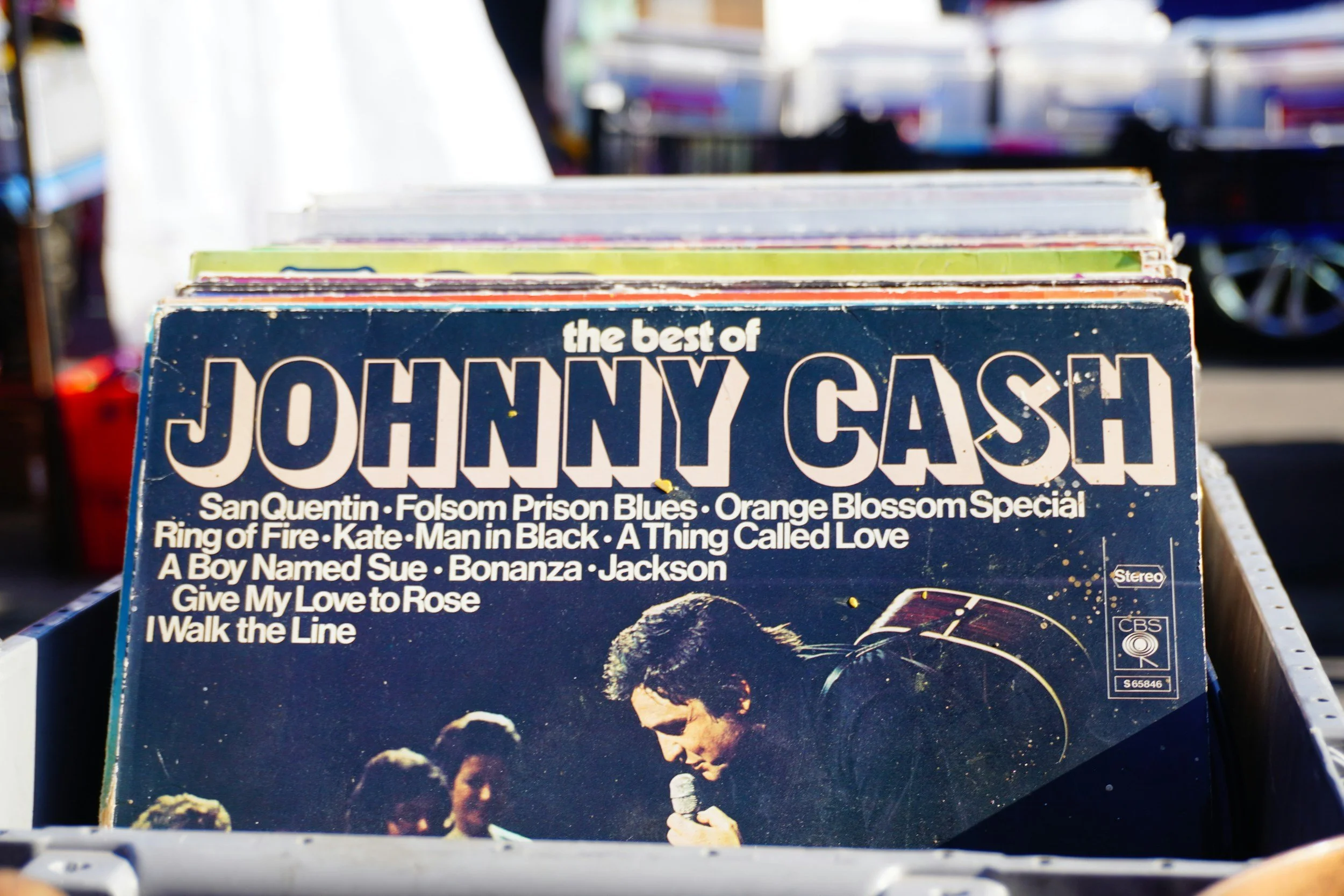
Johnny Cash, Vivian Liberto, and June Carter: The Love Triangle America Turned Into a Love Song
There is a photograph of Johnny Cash and Vivian Liberto taken before the mythology hardened.
They are young, dark-haired, almost absurdly beautiful.
Johnny has not yet become the Man in Black. Vivian has not yet been demoted to “the first wife.”
June Carter is not yet standing at the center of an American redemption story, holding a fistful of amphetamines she has supposedly rescued from Johnny’s pocket.
Nobody in the photograph knows what the culture will eventually do with them.
Johnny and June will become one of popular music’s great love stories: the wounded outlaw and the woman who walked with him through the ring of fire.
Vivian, meanwhile, will be assigned the less glamorous role of the wife who could not understand him.
It is a marvelous arrangement for everyone except the woman who was actually married to him.
The Vivian–Johnny–June triangle was real. But it was never symmetrical.
And the more carefully we examine it, the less it resembles a simple story about finding one’s soulmate.
It becomes a story about celebrity, addiction, divided identity, marital betrayal, and the remarkable ability of a good soundtrack to make collateral damage disappear.

Southern Cross: Stephen Stills, Divorce, and the Ocean After Love
There are divorces that end at the courthouse, and divorces that require a sextant.
Stephen Stills’s marriage to French singer-songwriter Véronique Sanson belonged rather decisively to the second category.
After the marriage broke apart, Stills went sailing through the South Pacific.
Somewhere between California, Tahiti and the Marquesas, heartbreak acquired celestial navigation.
The result was “Southern Cross,” one of the loveliest songs ever written about discovering that changing your latitude does not immediately change your emotional address.
Stills met Sanson while touring France with Manassas. They married in 1973 and had a son, Christopher, the following year.
This was not simply a marriage between musicians.
It joined two substantial artistic identities from different worlds.
Stills belonged to the sprawling American republic of electric guitars, touring bands, Colorado ranches and spectacular male improvisation.

The Biggest Problem With Masturbation Research Has Nothing to Do With Sex
Sex Researchers, bless their hearts, have spent decades asking millions of folks one simple question.
"Do you masturbate?"
Which sounds perfectly reasonable.
Until you realize it's about as scientifically rigorous as asking,
"Do you exercise?"
One person counts chasing a toddler through Target.
Another trains for an Ironman.
A third considers aggressively opening a pickle jar "upper body."
Congratulations.
You haven't measured exercise.
You've measured everyone's private relationship with the English language.
Sex researchers have been wrestling with exactly this problem for generations.

Was Esther Perel Writing About More Than Just Sex?
She was writing about what happens when a civilization becomes afraid of surprise.
Some books become famous for what they say.
Others become famous for what people think they say.
For nearly twenty years, Esther Perel's Mating in Captivity has been shelved beside books promising better marriages, better communication, and better sex.
That was always too small.
Much too small.
Perel certainly wrote about erotic desire. She challenged the comforting assumption that emotional intimacy naturally produces erotic intimacy.
Instead, she argued that desire depends upon something love constantly threatens to erase:
mystery, distance, uncertainty, and the thrilling realization that another human being will never become completely knowable.
Most readers assumed the book was about bedrooms.
I think it was about civilization.
Because underneath every page lies a far more unsettling question.
What happens to a culture that slowly loses its tolerance for surprise?

Why Do Some Men Care So Much About Women's Beauty?
Walk into any pharmacy and you'll find an entire civilization devoted to female self-improvement.
There are creams for the face, creams for the neck, creams for the hands, creams specifically formulated for the alarming possibility that your elbows may someday become visible.
There are serums that promise radiance, masks that promise renewal, and devices that appear capable of communicating with low-orbit satellites but are, in fact, designed to tighten your jawline.
The modern beauty industry is worth hundreds of billions of dollars.
I
t employs chemists, dermatologists, influencers, photographers, plastic surgeons, advertisers, and algorithms that somehow know you've glanced at your forehead exactly once.
The usual explanation is straightforward.
Women like looking beautiful.
Many do.
There is nothing remotely irrational about wanting to feel attractive, expressive, stylish, or confident.
Human beings have decorated themselves for thousands of years. Ancient Egyptians wore eye makeup. Romans experimented with cosmetics.
Victorian women suffered through corsets that made breathing feel slightly optional. Beauty has always been part of culture.

We Don't Have an Eroticism Problem. We Have a Curiosity Problem.
Every generation develops its own explanation for why relationships lose their vitality.
We blame stress.
Children.
Technology.
Work.
Pornography.
Social media.
Now, increasingly, we blame certainty.
In a thoughtful recent profile in The Atlantic, Faith Hill revisits Esther Perel's influential argument that modern couples often sacrifice desire in their pursuit of security.
We seek predictability, transparency, and emotional safety, even though eroticism has always depended on uncertainty, playfulness, and the recognition that another person can never be fully known.
Hill suggests that America's declining sexual interest may be part of something larger—an "eroticism shortage" rooted in a broader discomfort with ambiguity.
I think that's an intriguing observation.
I also think it points toward a deeper problem.
Not an eroticism shortage.
A curiosity shortage.

Mind Reading Is Terrible. Mentalization Is Sexy.
There is an old piece of dating advice that refuses to die.
"Just assume they like you."
Walk into the room with confidence.
Smile.
Relax.
Act as though attraction is already underway.
Like many clichés, it survives because it contains just enough truth to be dangerous.
A new study suggests that believing someone likes you really does change your experience of dating.
It just doesn't change dating in the way most people think.
The researchers discovered something much more interesting than another argument for confidence. They uncovered the difference between confidence and accuracy—and those two qualities don't always travel together.
Confidence made people more romantically interested.
Accuracy made people more romantically attractive.
Those are very different psychological skills.

The Hidden Marketplace Inside Love: Why We Compare Ourselves
There are two invisible mirrors in every long-term relationship.
One reflects how desirable you believe your partner is.
The other reflects how desirable you believe you are.
The remarkable thing is that neither mirror is especially accurate.
Both are warped by childhood, attachment history, previous heartbreaks, aging, culture, social media, and the peculiar human habit of comparing ourselves to everyone except our actual partner.
Yet entire relationships are quietly organized around these reflections.
A new study published in the Archives of Sexual Behavior offers an intriguing glimpse into this hidden economy.
Researchers studying 562 women in committed heterosexual relationships in Poland found that women who perceived their partners as having higher "mate value" than themselves reported greater motivation to satisfy those partners sexually.
That increased motivation, in turn, was associated with somewhat more frequent sexual initiation, oral sex, and faking orgasms.
Importantly, the relationship was indirect, the effects were small, and the study cannot establish cause and effect.
That restraint is important.
Because this is not really a story about oral sex.
Nor is it a story about women trying to keep men from wandering.
It is a story about something far older.
It is the story of what happens when love collides with self-doubt.

Stable Marriage and Happiness: New Research Shows Why Long-Term Marriages Predict Well-Being in Old Age
There is a peculiar habit in modern culture.
We treat relationships as though they were restaurant reviews.
How was dinner?
Would you recommend it?
Only good, or outstanding?
Five stars or three?
Scientists, fortunately, are far less interested in whether your marriage had a good Friday. They want to know something much more difficult.
What happens if we follow an entire lifetime?
That is exactly what a remarkable new study published in the European Journal of Populationset out to answer.
Instead of asking the familiar question—"Are married people happier?"—the researchers asked a far more ambitious one:
How does the story of your relationships shape your happiness after age sixty?
It's a better question.
And it produced a better answer.
Marriage Isn't a Moment. It's a Biography.

The Gravity of Excellence: Why One Extraordinary Trait Can Blind Us to Everything Else
There is a moment near the beginning of almost every romance when someone performs a magic trick.
It is usually so subtle that we mistake it for chemistry.
Perhaps they tell a story that leaves an entire dinner table laughing.
Perhaps they ask one unexpected question that makes you feel more understood than you have in years.
Perhaps they carry themselves with such quiet confidence that everyone else seems slightly out of focus.
Sometimes it is extraordinary beauty.
Sometimes uncommon intelligence. Sometimes breathtaking competence.
Occasionally it is simply kindness offered without calculation.
Whatever the quality, something peculiar happens.
The room becomes smaller.
Everything else about that person retreats into the background while one remarkable characteristic expands until it occupies nearly the entire landscape of your attention.

Attention Fidelity: What Long-Distance Relationships Reveal About Love in the Age of Distraction
Most discussions about masturbation are secretly discussions about loneliness.
They simply don't know it yet.
A partner leaves for medical school. A deployment. A work assignment. A continent. A season of life that neither partner would have chosen but both agree to endure.
Suddenly two nervous systems that have grown accustomed to regulating each other are forced to improvise.
The morning coffee disappears.
The hand on the shoulder disappears.
The familiar laugh from the next room disappears.
The body notices.
The attachment system notices.
The imagination notices.
What follows is not merely a sexual story.
It is a story about absence.
And absence has become one of the defining psychological experiences of modern life.