
Welcome to my Blog
Thank you for stopping by. This space is where I share research, reflections, and practical tools drawn from my experience as a marriage and family therapist with an international practice.
I write about what happens to desire, attachment, and meaning once the early myths stop working.
Are you a couple looking for clarity? A professional curious about the science of relationships? Or simply someone interested in how love and resilience work? I'm glad you've found your way here. I can help with that. I'm accepting new clients, and this blog is for the benefit of all my gentle readers.
Each post is written with one goal in mind: to help you better understand yourself, your partner, and the hidden dynamics that shape human connection
Grab a coffee (or a notebook), explore what speaks to you, and take what's useful back into your life and relationships.
And if a post sparks a question, or makes you realize you could use more support, l'd love to hear from you. Let's explore the scope of work you'd like to do together.
Be Well, Stay Kind, and Godspeed.
~ Daniel
P.S.
Feel free to explore the categories below to find past blog posts on the topics that matter most to you. If you're curious about attachment, navigating conflict, or strengthening intimacy, these archives are a great way to dive deeper into the research and insights that l've been sharing for years.
- Attachment Issues
- Coronavirus
- Couples Therapy
- Extramarital Affairs
- Family Life and Parenting
- How to Fight Fair
- Inlaws and Extended Families
- Intercultural Relationships
- Marriage and Mental Health
- Married Life & Intimate Relationships
- Neurodiverse Couples
- Separation & Divorce
- Signs of Trouble
- Social Media and Relationships
- What Happy Couples Know


When Insight Arrives Too Late
Some relationships don’t break.
They tip.
No shouting. No affair. No obvious villain.
Just a moment—often in a therapist’s office, sometimes alone at night—when a sentence lands and everything subtly rearranges.
Oh.
That’s what that was.
And instead of relief, there’s vertigo.
We are very good at celebrating insight. We are less good at admitting what it costs.
Late-arriving insight doesn’t drift into a relationship like a helpful clarification.
It shows up like a zoning change. Suddenly, structures that once made sense look provisional. Temporary. Slightly exposed.
The marriage that worked—worked—now feels oddly undocumented. No shared language. No permits. Just decades of improvisation that somehow held.

Why Insight Doesn’t Change Relationships
Let’s offer up some Definitions:
Insight helps people understand why they behave the way they do.
Relational change requires people to behave differently under emotional pressure inside an ongoing relationship.Insight explains patterns.
It does not reliably interrupt them.
This distinction—between understanding and change—explains a surprising amount of modern relationship failure.
American couples have never been more psychologically informed.
They have also never been more quietly exhausted.
Those two facts are not unrelated.

Couples Therapy Intensives: When Insight Isn’t the Problem—Endurance Is
Most couples who end up considering an intensive are not in crisis.
They are in relational administrative burnout.
They are managing the relationship the way you manage a neglected inbox: skimming, flagging, reopening the same message with slightly better intentions, and promising yourself you’ll deal with it properly when things calm down.
Things do not calm down.
This post is for couples who are not dramatic enough to leave and not optimistic enough to relax—and who are quietly wondering whether a couples therapy intensive would actually work right now.
What Actually Changes in Couples Therapy (And What Doesn’t)
Most couples don’t come to therapy confused.
They come informed—and exhausted.
They know their attachment styles.
They can explain the origin story of their conflict.
They’ve read the books, learned the language, and stopped blaming each other.
And yet, nothing has changed.
That’s not because therapy failed.
It’s because many people misunderstand what couples therapy is actually designed to change.
The Central Misunderstanding

Does Couples Therapy Actually Work?
You may have seen this statistic circulating online:
About 38% of couples who receive marriage counseling divorce within four years.
Nearly 70% of couples with similar problems who do not seek counseling divorce within four years.
Some people point to this and conclude that couples therapy “doesn’t work.”
That conclusion misunderstands what the numbers are actually telling us.

Why Insight Didn’t Save Your Relationship
Most modern couples don’t avoid therapy because they’re defensive, hostile, or in denial.
They avoid it because they already understand what’s happening.
They’ve read the books.
They’ve absorbed the language.
They can explain their attachment styles at dinner parties with unsettling fluency.
And for a while, that understanding worked.
It removed blame.
It softened the story.
It helped them stop casting each other as villains.
Which is exactly why they stopped there.
Why is Insight Emotionally Analgesic?

Relational Load Fatigue: Why Your Relationship Isn’t Broken—It’s Overworked
Most people come to couples therapy believing something essential has gone missing.
Love. Desire. Attunement. Communication.
Sometimes character.
This belief is emotionally efficient. It provides a culprit. It suggests a fix. It keeps the relationship story dramatic.
It is also increasingly inaccurate.
A large proportion of modern relationship distress is not caused by a failure of attachment, effort, or emotional intelligence. It is caused by system overload.
We are living in a remarkable inflection point in history when our relationships are being asked to do more than they can sustainably hold.
This is the humble premise of Relational Load Theory.

Four Ways of Seeing a Relationship And the One Relationship They Are All Describing
Modern couples therapy is often described as a field divided by competing models.
In practice, it looks less like disagreement and more like a group of people standing at different windows, describing the same house.
Each major contemporary thinker—John Gottman, Sue Johnson, Esther Perel, Stan Tatkin—noticed something true about intimate life and followed it carefully. None of them were wrong.
Each simply stayed with the layer that kept proving itself.
The trouble begins when couples are asked to live inside all of those layers at once.

Why Science-Based Couples Therapy Matters: The Dark History of Marriage Counseling
Folks sometimes ask me why science-based couples therapy is important.
They ask it casually, the way you might ask whether you really need car insurance or whether the smoke alarm is just being dramatic.
Let me be as clear as mid-century America was not:
Because the field began as a polite, televised disaster.
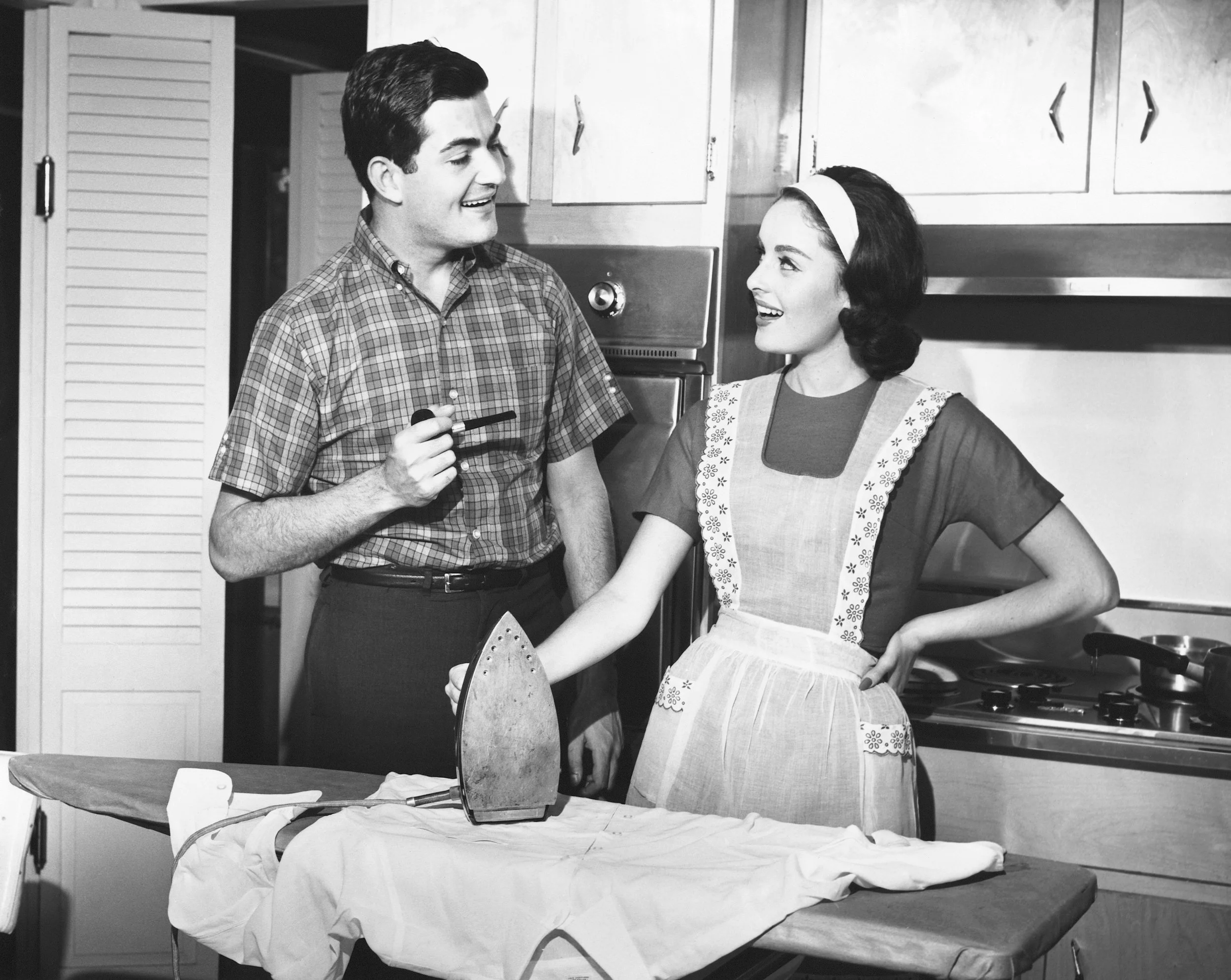
The 1950s were not the golden age of marriage; they were the golden age of men with clipboards and no credentials issuing decrees about women’s lives.
It was a decade that successfully turned gender ideology into therapeutic doctrine—an impressive feat, if you ignore the human cost.
To understand why evidence matters, you have to see what filled the vacuum before evidence existed.

Shu-Ha-Ri: The Japanese Path to Mastery—and What It Teaches Us About Couples Therapy
There’s a Japanese phrase that sounds like a meditation bell if you say it slowly: Shu-Ha-Ri (守 破 離) — Obey, Break, Transcend.
It began as a martial arts concept, a way to describe the disciplined path from imitation to mastery.
But it’s really about human development — how we learn, how we grow, and how we finally let go.
Every art has its version of this arc. The calligrapher who spends years copying her teacher’s brushstrokes until her wrist remembers what her mind forgets.
The Aikido student who repeats the same throw until the body starts thinking for itself.
The therapist who learns to listen so precisely that theory dissolves into intuition.
The couple who practices communication skills long enough that kindness becomes reflex.

America’s New Relationship with Marriage and Family Therapy
How preventive care, sibling therapy, and digital access are redefining the American family.
Once, therapy meant you’d failed at love.
Now, it’s how Americans learn to do it better.
Marriage and Family Therapy (MFT) used to be where you went after the damage was done.
Today it’s where you go before you make a mess.
Emotional triage has turned into emotional maintenance — the oil change for the human heart.
A couple told me recently they weren’t fighting; they were just tired of talking past each other. That’s the new American condition: not rage, not betrayal — just exhaustion.
We used to think love was self-cleaning. Now, we bring it in for service.

Is Intensive Couples Therapy Worth the Money?
Marriage retreats aren’t cheap, but studies suggest they may deliver faster, longer-lasting results than months of weekly sessions — if you’re brave enough to show up.
So you’re wondering if intensive couples therapy is worth the money. Fair question.
Spending thousands of dollars on a marriage retreat can feel like betting your relationship on a long weekend with a stranger in a cardigan.
Yet the truth is, weekly therapy often feels like driving with the parking brake on — steady progress, sure, but painfully slow.
Intensives, by contrast, promise a fast track: a weekend or week where you and your partner are locked in a room long enough to either rediscover your love… or your lawyer’s number.
And yes, the research suggests that these compressed sessions can work — sometimes spectacularly so.