
Welcome to my Blog
Thank you for stopping by. This space is where I share research, reflections, and practical tools drawn from my experience as a marriage and family therapist with an international practice.
I write about what happens to desire, attachment, and meaning once the early myths stop working.
Are you a couple looking for clarity? A professional curious about the science of relationships? Or simply someone interested in how love and resilience work? I'm glad you've found your way here. I can help with that. I'm accepting new clients, and this blog is for the benefit of all my gentle readers.
Each post is written with one goal in mind: to help you better understand yourself, your partner, and the hidden dynamics that shape human connection
Grab a coffee (or a notebook), explore what speaks to you, and take what's useful back into your life and relationships.
And if a post sparks a question, or makes you realize you could use more support, l'd love to hear from you. Let's explore the scope of work you'd like to do together.
Be Well, Stay Kind, and Godspeed.
~ Daniel
P.S.
Feel free to explore the categories below to find past blog posts on the topics that matter most to you. If you're curious about attachment, navigating conflict, or strengthening intimacy, these archives are a great way to dive deeper into the research and insights that l've been sharing for years.
- Attachment Issues
- Coronavirus
- Couples Therapy
- Extramarital Affairs
- Family Life and Parenting
- How to Fight Fair
- Inlaws and Extended Families
- Intercultural Relationships
- Marriage and Mental Health
- Married Life & Intimate Relationships
- Neurodiverse Couples
- Separation & Divorce
- Signs of Trouble
- Social Media and Relationships
- What Happy Couples Know


What Do We Do About Andrew? Prince Andrew, Andrew Tate, and Male Entitlement
There are two famous British men named Andrew whom polite society does not quite know what to do with.
One was born in Buckingham Palace.
The other built a digital palace from sports cars, cigar smoke, grievance, and apparently inexhaustible Wi-Fi.
Prince Andrew inherited status. Andrew Tate manufactured it.
One represents the exhausted final chapter of aristocratic male privilege.
The other represents its energetic reinvention for the algorithmic age.
They are not equivalent men.
The allegations against them differ, their legal situations differ, and those distinctions matter.
Prince Andrew denied Virginia Giuffre’s allegations and settled her civil lawsuit without admitting liability.
Tate denies the criminal allegations against him, which remain subject to legal proceedings across several jurisdictions.
But culturally, they belong in the same room.
Both became symbols of a masculine fantasy that has survived every apparent modernization of sexual life:
A sufficiently important man should not have to experience women as fully separate people.
The costume changed.
But the proposition did not.

Twilight Was Never About Vampires. It Was About Bestowed Attention.
There are two kinds of people in the world: people who regard Twilight as a swooning romantic epic, and people who have spent fifteen years explaining why Edward Cullen is a restraining order with excellent cheekbones.
Both groups have a point.
The Twilight films are not especially subtle.
Everyone looks deprived of sunlight, iron, and an ordinary conversation.
Entire relationships are conducted through prolonged staring.
A seventeen-year-old girl moves to a damp logging town and discovers that the most desirable boy in school is a 104-year-old vampire who watches her sleep.
Naturally, she falls in love.
But the success of Twilight cannot be explained by vampires, abstinence, or Robert Pattinson’s hair.
Beneath the supernatural upholstery, the series tells a familiar psychological story: the fantasy of being selected so completely that ordinary life can no longer compete.
Bella Swan does not merely receive attention.
She receives bestowed attention.
Edward sees her, chooses her, studies her, protects her, and reorganizes his immortal existence around her.
Bella may feel ordinary, but the most extraordinary creature in the room cannot look away.
That is the central seduction of Twilight.
Not sex.
Significance.
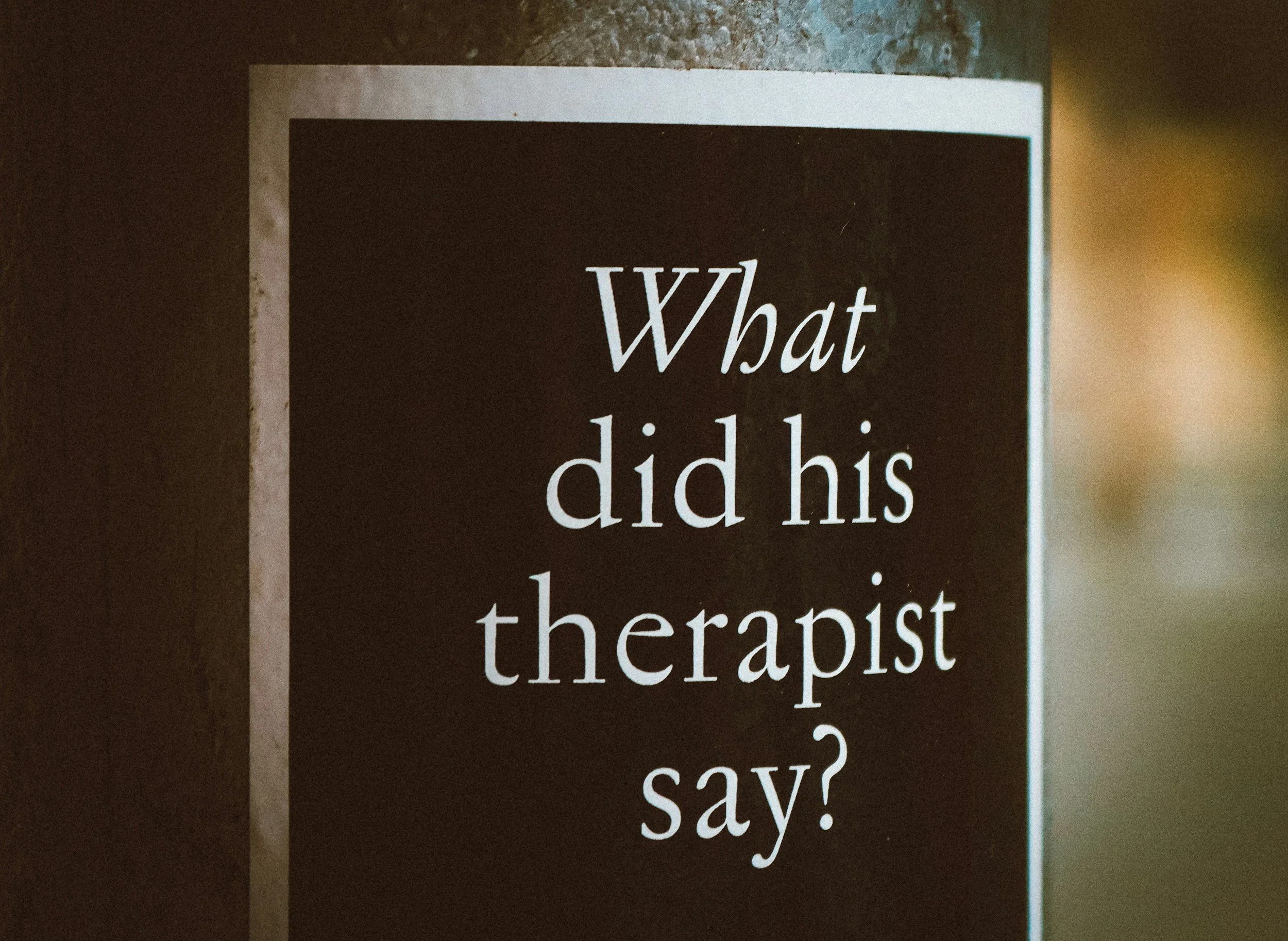
AI Can Sound Like a Therapist. That Does Not Mean It Can Do Therapy.
Artificial intelligence has already learned the manners of psychotherapy.
It can reflect your feelings. It can summarize your predicament.
It can ask whether a thought is helping you.
It never glances at the clock, forgets your anniversary, interrupts with a story about itself, or appears faintly bored by the fourth retelling of the same workplace grievance.
In certain respects, this makes AI unusually well suited to the performance of therapeutic attentiveness.
A new study suggests that this performance is becoming remarkably convincing.
An AI chatbot conducting brief cognitive behavioral therapy sessions displayed general therapeutic skills—including warmth, empathy, validation, and collaboration—that compared favorably with those of human therapists.
Then the researchers looked more closely.
The chatbot struggled with the work beneath the manners:
identifying pivotal beliefs, choosing the right intervention, helping clients discover something rather than merely telling them something, and adapting treatment to the particular human being in front of it.
That distinction is the entire story.
AI may already be learning how therapists sound. It has not yet demonstrated that it can reliably understand what a therapist is looking at.

Dating Apps Changed the Marketplace. They Did Not Change the Human Heart
We have been told that dating is broken.
The evidence is presented with the solemnity of a congressional inquiry: ghosting, breadcrumbing, situationships, swiping fatigue, commitment anxiety, and an apparently bottomless supply of people who are “not looking for anything serious” but would still like to come upstairs.
The vocabulary is new. The confusion is not.
A study of college students suggests that beneath the apps, abbreviations, and endlessly revised relationship statuses, young people still imagine romance developing along a familiar path.
They notice someone. They test the interest. They spend more time together.
They decide whether to become a couple. Eventually, the relationship either deepens or comes apart.
The technology changed the marketplace.
It did not change the human heart.

The Attachment Tax: Why Some Women Learn to Make Themselves Smaller
A woman receives a compliment.
“You were the best person in the room.”
There are several ways she might answer.
She can agree, which risks sounding insufferable.
She can say thank you, which is perfectly reasonable but may leave her feeling strangely exposed.
She can dismiss the compliment, protecting herself from appearing vain while quietly telling the giver that her judgment was mistaken.
Or she can return some of the light.
“Thank you. That means a lot coming from you.”
This last response is not exactly modesty.
It is something more socially accomplished. She accepts the praise while reassuring the other person that the relationship remains intact.
She has been elevated, but she has not abandoned the person standing beside her.
New research suggests that women are particularly alert to this delicate negotiation. They anticipate that conspicuous self-promotion may provoke resentment from other women, and they adjust their behavior accordingly.
We might call that insecurity. Sometimes it is.
But sometimes it is social intelligence acquired in a world where female ambition remains welcome only when it arrives properly housebroken.

When Listening Becomes Believing: Aphrodite Clamar and the Power of Therapeutic Suggestion
ychotherapy begins with an unusual moral arrangement.
One person is permitted to say almost anything. The other agrees not to laugh, recoil, change the subject, or quietly begin checking the clock.
This is one of therapy’s great civilizing achievements. Experiences too shameful, contradictory, disloyal, or strange for ordinary conversation can finally be spoken aloud.
But listening carries its own danger.
A therapist can become so determined not to dismiss a client that she stops distinguishing between honoring an experience and confirming its explanation.
Few psychologists occupied that border more intriguingly than Dr. Aphrodite Clamar.
Clamar is not remembered as the founder of a therapeutic school. She left no branded method behind. Her published work moved across feminism, psychoanalysis, religious conflict, donor insemination, female achievement—and, unexpectedly, alleged alien abduction.
It looks like an eccentric collection until one notices the thread.
Again and again, Clamar turned toward people attempting to describe experiences for which their culture had not yet provided acceptable words.

Who Knew Edward Teach?
There are places in the Outer Banks where Blackbeard is difficult to avoid.
He is on flags and T-shirts. He appears on signs, mugs, restaurant walls, and the assorted merchandise through which Americans convert dangerous men into charming local economic activity.
Three centuries have been good to Blackbeard.
They have been less good to Edward Teach.
Teach—or Thatch, or one of several spellings that appear in the historical record—was the man generally believed to have become Blackbeard.
We know surprisingly little about him.
There is no known diary in which he explains himself.
No collection of intimate letters.
No memoir.
No reliable account of what frightened him, whom he loved, what embarrassed him, whether he regretted anything, or what he thought about when nobody was watching.
We know the beard.
We know the guns.
We know the smoke.
We have almost completely lost the man.
Perhaps that is simply what three hundred years does to a life.

The Executives Who Paid $4,000 and Imagined Quitting
At an estate in New York’s Hudson Valley, seven successful professionals gathered to discuss what success had done to them.
They came from banking, marketing, healthcare, consulting, and technology.
They had titles.
They had money.
They had arrived.
The difficulty was that arrival felt surprisingly similar to being trapped.
The retreat, described by Lauren Weber in The Wall Street Journal, cost $4,000.
It was organized by Punks & Pinstripes for leaders seeking change.
The participants ranged from their mid-30s to their late 50s. They talked, meditated, and lay on the floor for a sound bath.
Corporate America had apparently become so exhausting that accomplished people were now paying four figures to lie down together and consider hardware stores.
A bank vice president said that a person can acquire the title and the money only to discover that the achievement feels hollow.
A marketing director said she was tired of waiting every day for the day to end.
A hospital executive whose position had been eliminated imagined opening a hardware store or becoming a science teacher.
When he pictured that life, he said, his nervous system relaxed.
This was not a gathering of people who had failed.
Failure might have made the problem easier to name.
These were people who had succeeded long enough to wonder whether success had been the problem.

The Workers Who Would Give Anything to Get Back In
The American job market is improving.
The economy added jobs for four consecutive months.
The unemployment rate declined to 4.2%.
The large numbers were behaving themselves.
Nearly two million Americans remained outside the celebration.
According to a recent report by Harriet Torry in The Wall Street Journal, these workers had been unemployed for at least 27 weeks.
In June 2026, the long-term unemployed represented 27.3% of all unemployed Americans—four percentage points higher than a year earlier and near the highest level since the labor market was recovering from the pandemic in 2021.
The labor market can improve without improving for you.
This is one of the cruelties of economic statistics.
The chart rises.
The applicant remains seated at the kitchen table, adjusting a résumé for a position that will receive hundreds of applications.

The 300 Words We’re No Longer Saying
There are many ways to watch a society become quieter.
The cashier becomes a screen. The menu becomes a QR code.
Directions come from a pleasant disembodied woman who never becomes irritated when we miss the turn.
Coffee is ordered before we enter the shop. Groceries arrive on the porch without requiring anybody to put on proper trousers.
Each innovation saves a little time. It also removes a small human exchange.
Now researchers have attempted to measure what may be disappearing.
A 2026 paper published in Perspectives on Psychological Sciencereported that we appear to be speaking substantially fewer words than we did at the beginning of this century.
Not writing fewer words. Not texting fewer words.
Speaking fewer words aloud.
We have become highly communicative and increasingly silent.

The Burned Haystack Dating Method: What If Your Standards Burn Down the Field?
Online dating has traditionally been compared to finding a needle in a haystack.
The usual advice is to search patiently.
Keep an open mind. Give people a chance.
Perhaps the man holding a dead fish has hidden depths.
Perhaps “fluent in sarcasm” is merely covering a tender heart.
Perhaps the profile consisting entirely of gym photographs and complaints about women will reveal itself, over coffee, to be an early draft of Middlemarch.
The Burned Haystack Dating Method proposes a more efficient solution.
Burn the haystack.
The method was created by Jennie Young, a professor of rhetoric and women’s and gender studies at the University of Wisconsin–Green Bay.
Instead of endlessly swiping past unsuitable profiles, users learn to identify troubling language patterns and block decisively.
Metal does not burn.
When the hay is gone, theoretically, the needle remains.

Everyone Wants Love. Nobody Wants to Be Embarrassed.
There was a time when looking foolish was considered part of falling in love.
You called too soon. You laughed too loudly. You sent a note whose emotional temperature now seems medically concerning.
You stood outside someone’s apartment holding flowers and the fragile remains of your dignity.
Sometimes it worked.
Sometimes you went home alone and spent three days listening to music specifically engineered to worsen the situation.
Either way, you survived.
Modern dating has improved many things. We have more choice, more freedom, more language for boundaries, and far less obligation to marry whoever happened to live near our father’s hardware store.
But we may have lost one essential romantic capacity along the way:
The willingness to look a little ridiculous.
According to the 2026 State of Our Unions report, only 28% of the young adults surveyed said they could remain positive after a bad date or romantic setback.
More than half said previous breakups had made them reluctant to begin another relationship.
The numbers deserve some caution.
The report comes from the Institute for Family Studies, an organization with a distinct perspective on marriage and family life. But the pattern it describes is recognizable far beyond any single survey.
Humans still want love.
They simply do not want to be observed wanting it.