
Welcome to my Blog
Thank you for stopping by. This space is where I share research, reflections, and practical tools drawn from my experience as a marriage and family therapist with an international practice.
I write about what happens to desire, attachment, and meaning once the early myths stop working.
Are you a couple looking for clarity? A professional curious about the science of relationships? Or simply someone interested in how love and resilience work? I'm glad you've found your way here. I can help with that. I'm accepting new clients, and this blog is for the benefit of all my gentle readers.
Each post is written with one goal in mind: to help you better understand yourself, your partner, and the hidden dynamics that shape human connection
Grab a coffee (or a notebook), explore what speaks to you, and take what's useful back into your life and relationships.
And if a post sparks a question, or makes you realize you could use more support, l'd love to hear from you. Let's explore the scope of work you'd like to do together.
Be Well, Stay Kind, and Godspeed.
~ Daniel
P.S.
Feel free to explore the categories below to find past blog posts on the topics that matter most to you. If you're curious about attachment, navigating conflict, or strengthening intimacy, these archives are a great way to dive deeper into the research and insights that l've been sharing for years.
- Attachment Issues
- Coronavirus
- Couples Therapy
- Extramarital Affairs
- Family Life and Parenting
- How to Fight Fair
- Inlaws and Extended Families
- Intercultural Relationships
- Marriage and Mental Health
- Married Life & Intimate Relationships
- Neurodiverse Couples
- Separation & Divorce
- Signs of Trouble
- Social Media and Relationships
- What Happy Couples Know


The Noonday Devil in Marriage: Why Midlife Restlessness Can Quietly Destroy Intimacy
By noon the desert monks began losing confidence in reality.
Their prayers flattened. Time thickened. Their vocation appeared fraudulent.
They stared out windows, counted the hours, fantasized about departure, and became suddenly convinced that fulfillment existed somewhere else.
The early theologians called this condition acedia. Later writers called it the “noonday devil.”
A marvelous phrase.
Medieval people named psychological states with unnerving precision.
Today we call the same condition something like “persistent motivational dysregulation” and then wonder why nobody feels spiritually fortified afterward.
Acedia was not simple sadness. Nor laziness. Nor ordinary boredom.
It was a collapse of meaningful participation in one’s own life.
The inability to remain spiritually present inside ordinary existence. A restless suspicion that one had chosen incorrectly.
The monks imagined another monastery.
Modern people imagine another self.
And nowhere does this become more psychologically dangerous than inside marriage and family life.

Men Who Resent Consent: The Psychology Behind Stealthing and Sexual Entitlement
She notices halfway through.
Not immediately.
Just enough of a shift in sensation for the nervous system to begin quietly assembling concern.
Then comes the strange modern ritual of self-doubt:
Maybe I’m imagining it.
Because one of the defining features of coercive people is that they often leave confusion behind them before they leave evidence.
Some partners do not initially describe coercive relationships as frightening.
They describe them as disorienting.
The partner who violated the boundary often appears calm, persuasive, affectionate, even wounded by the accusation itself. Which means the injured person begins managing not only the violation, but the emotional atmosphere surrounding the violation.
And that is where things become psychologically dangerous.

Wildfire Smoke and Children’s Mental Health: Modern Childhood Is Becoming Biologically Loud
The sky turns orange at three in the afternoon.
Your child becomes strangely irritable.
Everyone sleeps badly.
The house smells faintly like a campfire and low-grade dread.
Parents tell themselves it is temporary.
Modern life is always temporary now.
A few years ago, wildfire smoke belonged mostly to distant news footage and climate documentaries narrated by soothing British people standing near melting glaciers.
Now it drifts through neighborhoods, settles over playgrounds, slips through window frames, and quietly enters the lungs of children already trying to develop nervous systems inside one of the most overstimulating eras in human history.
And according to new research published in Nature Mental Health, wildfire smoke may be associated with measurable increases in pediatric psychiatric emergencies, including anxiety, depression, and schizophrenia-related crises.
This is where modern mental health research becomes deeply unsettling.
Because the study suggests that emotional distress in children may not simply be psychological anymore. It may also be atmospheric.
On occasion, I see parents assuming emotional dysregulation appears out of nowhere.

The Daughters Who Become Emotional Air Traffic Controllers: Why Some Girls Grow Up Managing Everyone Else’s Feelings
One of the most socially rewarded forms of emotional damage is female over-accommodation.
The culture rarely calls it trauma.
It calls it:
maturity,
emotional intelligence,
being “easygoing,”
being “low drama,”
being “the stable one.”
Meanwhile therapists often look at the same woman and think:
This person has been managing the emotional atmosphere since childhood.
A new study published in Frontiers in Psychology examined how daughters who perceive their mothers as narcissistic may struggle with emotional balance in early adulthood.
And the study becomes much more interesting once you understand what many daughters in narcissistic family systems are quietly trained to become:
Emotional air traffic controllers.

The People Who Expect Less From Love: What Dark Triad Research Reveals About Intimacy
There are people who enter relationships hoping to be deeply known.
Then there are people who enter relationships hoping things remain emotionally manageable, strategically calm, and preferably free from unnecessary vulnerability.
A new study suggests those differences are not random personality quirks. They may reflect fundamentally different expectations about intimacy itself.
The research, published in the journal Personality and Individual Differences, examined how Dark Triad personality traits, attachment styles, and romantic beliefs shape what people expect from emotional closeness in relationships.
And honestly, it explains a surprising amount about modern dating.
Some people are searching for emotional connection.
Others are essentially trying to run intimacy through Risk Management.

The Attention Economy Finally Entered the Car: What Sex in Moving Vehicles Reveals About Modern Relationships
The modern couple increasingly attempts intimacy the way Americans now attempt everything else: distracted, overstimulated, mildly performative, and while looking at a screen.
Which brings us, inevitably, to a peer-reviewed study on sex in moving vehicles.
Not parked cars. That was another civilization entirely.
That was the era of milkshakes, cigarette jackets, and teenagers pretending a drive-in theater existed primarily for cinema appreciation.
America once approached automotive romance with at least the ceremonial dignity of a Sinatra song.
Now we are discussing oral sex at highway speed while someone checks notifications and tries not to sideswipe a Subaru.
Progress is complicated.
A recent study published in The Journal of Sex Research found that nearly one-third of surveyed college students reported engaging in sexual activity while riding in or driving a moving vehicle.
And beneath the comic absurdity sits a surprisingly important psychological truth:
This is not really a study about sex in cars.
It is a study about the collapse of sustained attention in modern intimacy.
That is the real subject hiding underneath the steering wheel.
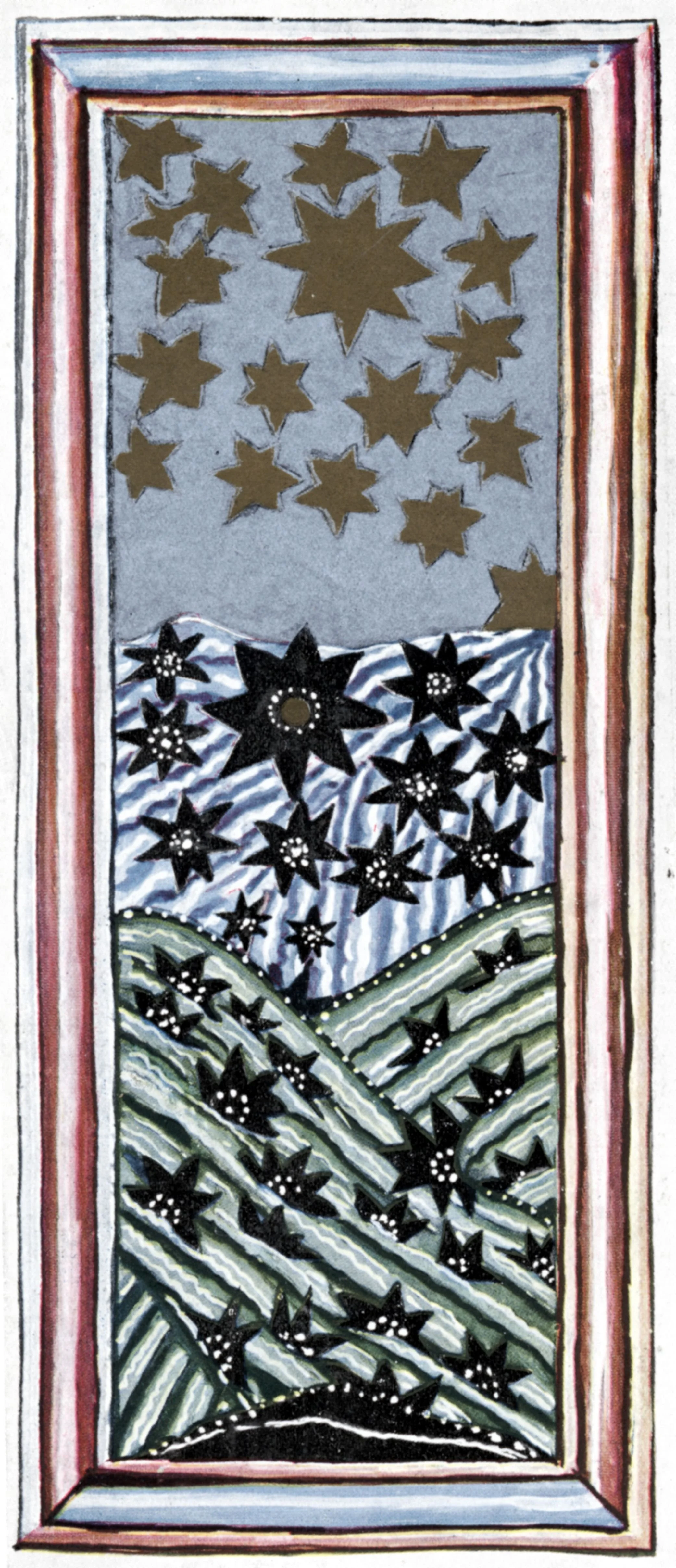
Saint Hildegard and the Prophecy of a Spiritually Exhausted Civilization
There are certain historical figures who remain safely in the past.
And then there are figures who continue wandering forward through history like unresolved psychological material.
Hildegard of Bingen belongs firmly in the second category.
Every few years modern culture rediscovers her with fresh astonishment:
the medieval abbess who seemed to understand ecological imbalance, nervous-system exhaustion, institutional corruption, spiritual numbness, attentional fragmentation, and the peculiar emptiness that emerges when a civilization becomes materially sophisticated but psychologically disordered.
Which is unsettling.
Because Hildegard was writing in the twelfth century.
Long before smartphones.
Long before mass media.
Long before industrial capitalism.
Long before social platforms engineered explicitly to fracture human attention into profitable shards.
And yet her writing often feels less like medieval mysticism than cultural diagnosis.
Partly because Hildegard understood something modern civilization keeps trying very hard not to understand:
Human beings can become spiritually exhausted while remaining highly functional.
In fact, advanced civilizations may become especially vulnerable to this condition.

America’s Private Revenge Theater: Why Millions of Americans Have Imagined Shooting Someone
America now contains millions of people carrying around tiny private revenge films in their heads.
Not plans, necessarily.
Not manifestos.
Often just flashes.
A face.
A humiliation.
A fantasy of force arriving where helplessness used to be.
Researchers recently found that 7.3% of adults in the United States have seriously thought about shooting another person at some point in their lives.
That translates to roughly 19.4 million people. More than 8 million reported having these thoughts within the last year alone.
Violent intrusive thoughts themselves are not rare, and most people who experience them are not dangerous. The researchers explicitly note that most people never act on these fantasies.
But the scale still matters.
When Confidence Stops Negotiating With Reality: Bipolar Grandiosity Explained
At first, everyone thinks their loved one is finally getting better.
They are awake earlier. Talking more. Laughing again.
Cleaning the kitchen at midnight with the concentration of a Renaissance sculptor restoring the Sistine Chapel.
They suddenly have plans, visions, momentum.
They are calling old friends. Starting ambitious projects. Explaining cryptocurrency with the emotional intensity of a medieval monk describing divine revelation.
The family feels relief.
After months of depression, exhaustion, withdrawal, or hopelessness, the sudden energy can feel miraculous.
Then the spending begins.
Or the rage.
Or the affair.
Or the 3:12 a.m. manifesto about destiny.
Or the terrifying certainty.
And this is where families often realize they are no longer dealing with ordinary confidence or recovery.
They are dealing with acceleration.

When Narcissists Think God Owes Them Special Favors
There are those who approach religion with humility, uncertainty, gratitude, and the uncomfortable awareness that they are not the center of existence.
And then there are some folks who approach religion like they are negotiating upgraded seating with the universe.
The distinction matters.
Because one of the more interesting findings emerging from personality psychology is that narcissism does not necessarily make people less religious.
In some cases, it may simply reorganize religion around the needs of the self.
A recent study published in Personality and Individual Differences found that narcissistic traits were associated less with deeply internalized faith, and more with forms of religious engagement driven by emotional regulation, status, entitlement, and external rewards.
That finding clarifies something many people have observed privately for years.
Some people use religion to become less self-centered.
Others use it to become spiritually decorated versions of exactly who they already are.

The Body Keeps the Score — But Maybe Not the Way We Thought
Some psychology books become more than books.
They become emotional operating systems.
Folks do not simply read them.
They begin interpreting their marriages, panic attacks, insomnia, emotional triggers, digestive systems, dating patterns, and nervous system reactions through them.
Therapists quote them.
Friends recommend them quietly after divorces.
Strangers discuss them in coffee shops with the gravity usually reserved for war memoirs and religious conversion.
The Body Keeps the Score became one of those books.
And its author, Bessel van der Kolk, became one of the most influential figures in modern trauma psychology.

The Narcissistic Empath Vampire: How the Internet Turned Breakups Into Psychological Mythology
There was a brief and beautiful moment in American life when your ex could simply be disappointing.
Not abusive.
Not spiritually parasitic.
Not “a dark triad avoidant energy harvester with anxious-preoccupied supply dynamics.”
Just disappointing.
Maybe selfish. Maybe immature. Maybe emotionally unreliable in the way certain men become emotionally unreliable after discovering crypto, intermittent fasting, or a podcast involving “high value masculinity.”
Maybe a little grandiose. Maybe constitutionally allergic to accountability.
Maybe somebody who could discuss your attachment wounds in exquisite detail while simultaneously forgetting your birthday.
Ordinary heartbreak once had the dignity of ambiguity.
The internet has corrected this problem.
Now people emerge from six-week relationships speaking as though they survived a hostage negotiation conducted by a spiritually carnivorous attachment wizard.
Your former boyfriend is no longer emotionally immature.
He is now:
“a narcissistic empath vampire.”