Tuesday, September 29, 2026. Claire and Mark are a composite couple.
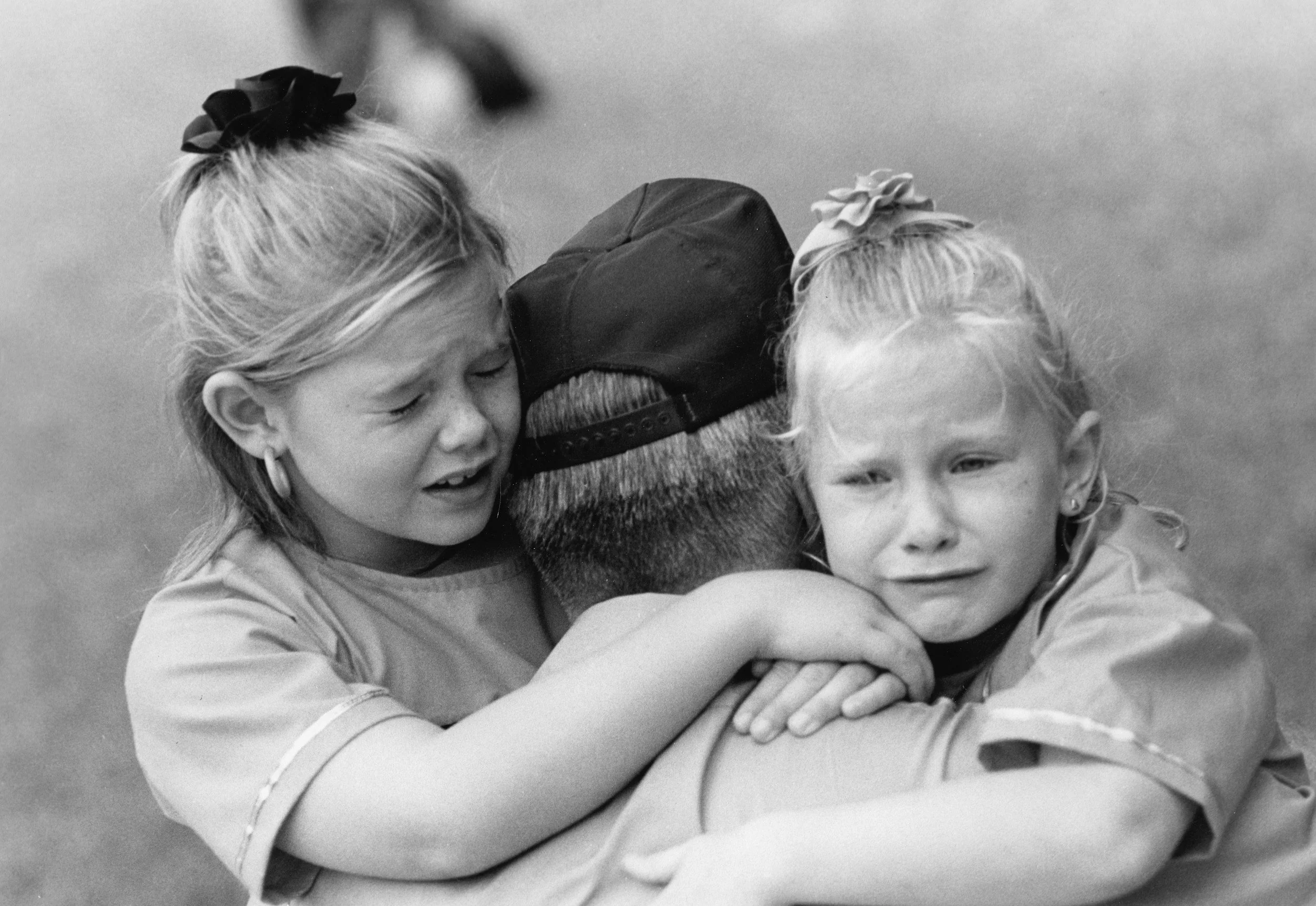
The first time their youngest daughter asked where they would go if the roads closed, Claire knew she had heard more than Mark intended.
She was nine. She had a flashlight beside her bed and knew where the extra batteries were.
This was sensible.
She also wanted to know whether she should leave school if the power went out, whether the Creamery would still have food, and whether Grandma would be allowed in their house if there wasn't enough for everyone.
Mark had not told her to worry about Grandma.
He had talked about supplies at dinner.
He had watched a video about a prolonged grid failure while their daughter was in the room.
Once, while explaining the family plan, he said that people might become desperate.
Children are excellent at hearing the sentence adults wish they had phrased differently.
Claire wanted the videos off and the emergency talk kept between them.
Mark wanted their daughter to know what to do.
They had each found a way to say, “I'm protecting her,” and each was beginning to wonder whether the other was.
What the children hear
In the argument over Mark's generator, the machine worked. It kept the refrigerator cold during an outage. It had also been bought with joint money and hidden from Claire. A useful object had entered the marriage as a secret.
Their daughter did not know the details of the credit card bill. She knew the lights had stayed on.
She also knew her parents became unusually careful with each other whenever they walked past the garage.
Children rarely need an explanation of the entire dispute to sense that one is underway. They notice which subjects make a parent go quiet.
They hear a joke about the basement shelves that lands badly. They learn that a question about the weather can become a question about whether their family will survive.
A family should have a plan for an outage, a storm, or a sudden need to leave home. A child can know whom to call and where to meet.
The American Academy of Pediatrics advises beginning with what children already know and what they are asking, then giving them room to talk about their feelings.
That guidance is quite different from asking a child to absorb an adult's running assessment of everything that might go wrong.
The distinction is not between telling the truth and keeping a child ignorant. It is between giving the child something she can do and giving her something she must carry.
The parent who prepares
Online, parents who prepare often speak with the urgency of folks who expect to be judged only after something goes wrong.
In one discussion of a proposed family homestead, a father describes the savings, pantry, garden, and solar equipment he has assembled.
He wants his wife to help him prepare their children for a difficult future. She becomes overwhelmed when he raises the subject.
To him, her refusal means he must bear the responsibility alone.
To her, his plans may feel like an ever-growing demand on the family's time, work, and emotional life.
We cannot know their marriage from a post. But the conflict is recognizable.
The preparing parent asks, “What if I am right?” The other asks, “What is this doing to us now?”
Children raise the stakes because either question can be made to sound like a moral accusation.
If you resist the purchase, are you gambling with your child's safety?
If you make every dinner an emergency briefing, are you teaching your child to fear the world?
A couple can spend months debating which parent is more responsible while the child learns to read both faces before asking a question.
I have no interest in making preparedness itself the villain.
The parent who knows where the medicine is and how to get home when the phones fail has given the family something valuable.
The trouble begins when there is no point at which that parent can say, “We have a workable plan. Tonight we can talk about something else.”
Kathy's two kinds of preparation
My friend Kathy Harrison wrote Just in Case, a practical book about helping a family manage an emergency.
She also wrote Prepping 101. Her work on preparedness deals in the things a household can actually arrange: food, supplies, communication, and a plan for getting through a disruption.
Kathy wrote another book, Another Place at the Table, about welcoming foster children into her home.
She was the person who got me into foster parenting. I was a full-time foster parent from 2010 to 2012.
I think about those two parts of her life when I hear adults say they are doing everything for the children.
A child can have a bed, a meal, a flashlight, and an adult who has thought ahead. The child also has to live in the atmosphere that adult creates.
Especially when a child has already known uncertainty, the adult's calm is part of the provision.
Kathy's books and the example that drew me into foster parenting make this subject personal to me. We can admire foresight without asking children to become custodians of our existential dread.
A plan is different from an atmosphere
Suppose a family sets aside water, checks the smoke alarms, writes down two phone numbers, and agrees on where to meet if school closes unexpectedly.
They practice once. Their child asks a question; the parents answer it plainly. Then the family goes back to homework, dinner, and the small grievances of an ordinary Tuesday.
Now suppose the supplies are never enough.
A new video brings a new scenario. The parents argue over whether the child should be told about it.
The child's questions receive more detail than she asked for, and every reassurance comes with a warning.
No single conversation may seem alarming. Taken together, they teach her that normal life is a fragile pause between threats.
The less worried parent can contribute to that atmosphere too.
If Claire mocks every reasonable precaution, their daughter may hear that worries must be hidden or that Mark cannot be trusted.
If Mark tells their daughter things Claire would rather discuss together first, the child becomes the audience for a disagreement between adults.
Both parents can make her responsible for deciding whose account of safety is true.
That is a burden a nine-year-old cannot settle. She should not have to decide whether Dad is the only one who understands the danger or Mom is the only one keeping the family sane.
The couple can instead make agreements the child can rely on.
Which risks are they planning for?
What may either parent spend without consulting the other?
What does the child need to know at her age?
Who will answer her questions, and how will they respond when they disagree?
Most of all, what is their stopping point for now?
A plan makes room for those answers. An atmosphere resists them. There is always another headline.
When she asks again
The next time their daughter asked about Grandma, Mark wanted to explain why he had thought about additional people coming to the house. Claire wanted to promise that Grandma would always be welcome. Neither could honestly promise to control every future circumstance.
They could answer the question she was asking.
“Grandma is part of our family,” Claire said. “If there were an emergency, the adults would work out how to help each other.”
Mark added, “You don't have to solve that. We have supplies for an outage, and we know how to reach Grandma.”
Their daughter asked whether she could keep the flashlight by her bed. Of course she could. Then she asked if they were still going to the lake on Saturday.
They were.
There is nothing wrong with a child knowing where the flashlight is. There is something wrong if she has to keep it on because the adults cannot put down the future long enough to take her to the lake.
Related Reading
Why Work with Daniel?
Money, safety, and parenting can turn a difference in risk tolerance into a fight over who loves the children more.
I help couples make practical agreements while attending to the fear and hurt that keep undoing them.
If preparedness has become a recurring conflict in your family, Schedule a Free Intro Call.
Be Well, Stay Kind, and Godspeed.