Tuesday, September 29, 2026.
The generator worked.
That was part of the problem.
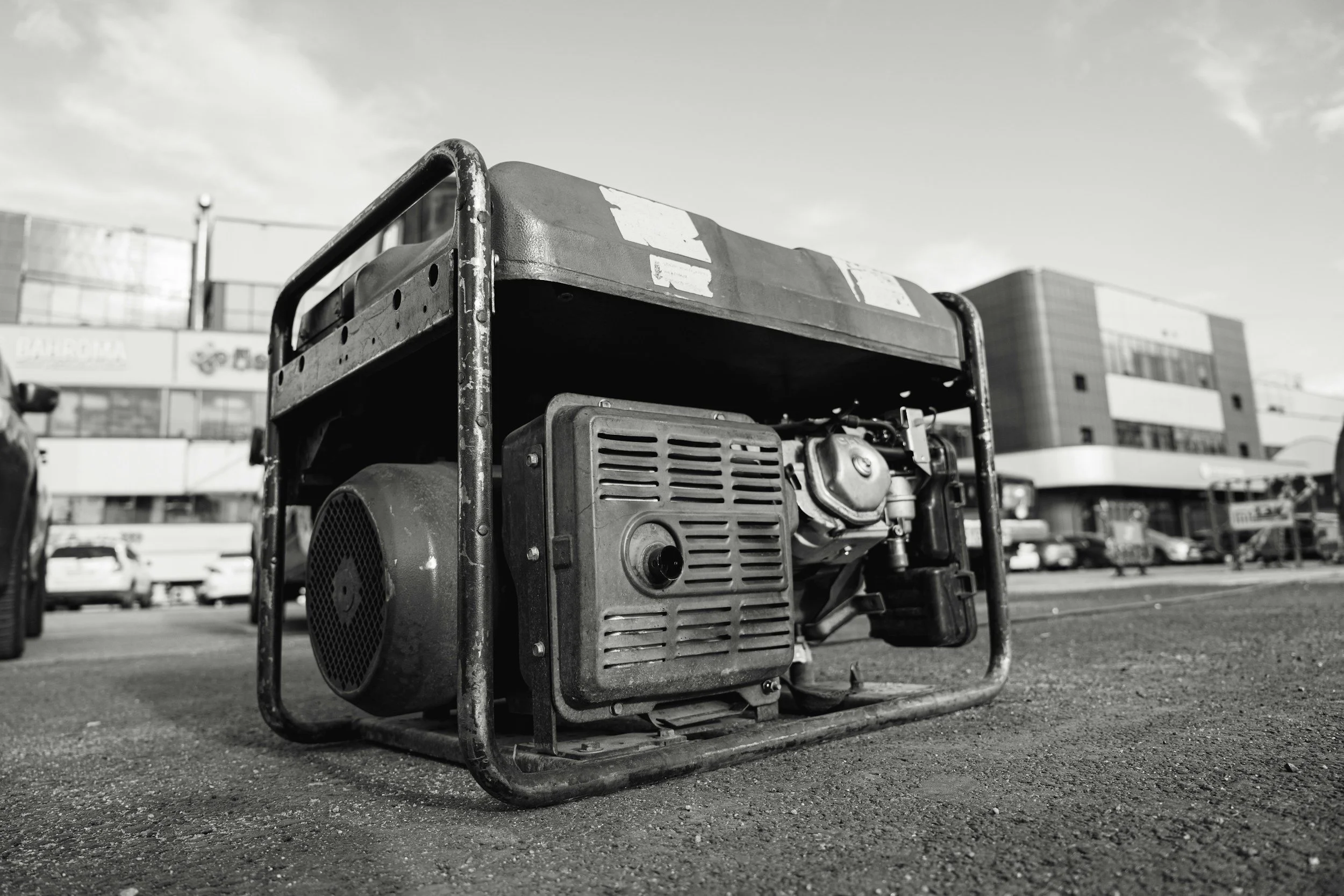
When the power went out, Mark rolled it into the driveway, ran an extension cord through the garage, and kept the refrigerator cold.
Their daughter charged her phone.
By morning, the neighbors had come over for coffee.
Mark had spent months telling his wife, Claire, that they needed a backup. For once, an argument in their marriage had been settled by an appliance.
Or so he thought.
Claire thanked him for getting the lights on. Then she asked whether he had paid for the generator with their joint credit card. He had.
It cost nearly three thousand dollars. He had bought it six weeks earlier and kept it at his brother’s house because he knew she would object.
“But we needed it,” he said, gesturing toward the humming machine.
She looked at him. “You knew I would object.”
Both statements were true. The refrigerator stayed cold. But their trust took a hit.
A useful machine, an expensive secret
Prepping can be difficult for a couple to discuss because the first question appears to be whether the danger is real.
It usually is. Power fails. Storms interrupt roads.
Supply chains have weak points. A household with water, medicine, flashlights, and a way to communicate is better positioned to handle an ordinary emergency.
That does not settle every argument about what to buy, how much to store, or how much of the family’s present life should be organized around the next disruption. A working generator proves that a generator can be useful.
It does not prove that concealing a major purchase was wise, or that every warning Mark has offered will come true.
As I have written about financial infidelity and financial intimacy, a money secret can wound a marriage even when the expenditure has an explanation.
Claire’s anger does not make her indifferent to their daughter’s safety.
Mark’s secrecy does not make his concern imaginary.
The marriage becomes more interesting, and more workable, when neither life partner is reduced to a type: the paranoid prepper and the oblivious spouse.
Mark had once been the person Claire called when something broke.
He liked that about himself, and so did she. Over the past few years, however, fixing things had become entangled with anticipating things. He checked the forecast twice before they left the house. He kept extra gasoline.
The shelves in the basement filled with rice, water, batteries, and supplies whose purpose Claire had to ask about.
A winter outage had been the original concern; now Mark followed people online who treated an outage as a rehearsal for economic collapse, a broken food system, or war. Claire could no longer tell whether his preparations gave him peace or kept him looking for the next threat.
She also knew she had made some of these conversations harder.
Once, when he suggested storing water, she had asked if he planned to build a bunker next.
A week later the town issued a boil-water advisory, and he did not mention it. She remembered the silence more clearly than the joke.
Their positions had not formed in a single afternoon.
Each had learned to expect a particular response from the other.
Mark expected ridicule; Claire expected escalation. The generator arrived inside a marriage already practicing that argument.
Who sets the threat level?
Most couples have some version of this argument.
One wants a larger emergency fund; the other wants to repair the house while they still enjoy living in it.
One reads every new warning about food and water.
The other begins to dread the expression on their face when they put down the phone.
When the world is shaking, its uncertainty comes home in the voices a family uses at dinner.
The life partner who worries more often acquires a peculiar authority.
If they are right, everyone benefits from their foresight.
If they are wrong, the family still pays for the response—in money, space, time, and peace of mind. It is easy to say, “Better safe than sorry,” when sorry is imagined as a catastrophe and safe is imagined as a purchase.
The actual costs of getting ready rarely fit so neatly into that sentence.
But the less worried partner has power too.
They can dismiss an ordinary, sensible precaution because they dislike the emotional atmosphere surrounding it.
Claire may have been right about the secret and still have made it hard for Mark to raise the subject openly.
If every discussion ended with an eye roll, he had reason to feel unheard.
He did not thereby acquire permission to use their joint money in secret.
The central question is not who has the superior prediction. It is who gets to decide how the household responds while the future remains unknown.
Marriage does not require identical risk tolerance. It does require a way of making consequential decisions together.
“I’m protecting you” is never a substitute for “We agreed.”
The infinite list
Preparedness can be a finite project.
A family makes a plan for a power outage, keeps supplies it actually uses, learns where to go, and checks the plan once in a while.
The point is to be able to return to ordinary life.
It can also become a way of living in which ordinary life is perpetually on hold.
The planned outage lasts three days, then three weeks, then a year in which the stores never reopen.
There is always another scenario, another piece of equipment, another person who has failed to grasp the danger.
Doomscrolling supplies an inexhaustible series of reasons that this week is the week to act. No purchase can bring relief for long because relief was never the product being sold.
This is where a spouse may become alarmed for reasons that have little to do with canned food.
The basement fills. The savings diminish. Dinner becomes a briefing. A child’s birthday is interrupted by an argument about evacuation routes. The person preparing may feel more responsible than ever; the family may feel less free.
There is a related trap for Claire.
If she treats every preparation as evidence that Mark is losing perspective, he will have to choose between accepting her account of him and trusting his own judgment. She can object to the secrecy and insist on shared limits while acknowledging that some of his work has protected them.
The refrigerator is, after all, still running.
Their task is to distinguish a plan from an atmosphere.
A plan has a purpose, a budget, a division of labor, and a point at which the couple can say, “For now, this is enough.”
An atmosphere recruits every new headline into the marriage. A household needs enough slack to absorb a shock; it also needs room to live between shocks.
After the lights come back
The power returned that afternoon. Mark switched off the generator and waited for Claire to say she was glad he had bought it.
She was. During the outage, she had felt safer because of the very decision that made her trust him less.
She hated that there was no honest way to divide those feelings into a grateful half and an angry half.
When she finally told him, he looked relieved at the first part and wounded by the second.
They did not settle it beside the credit card statement that night.
Mark said he had hidden the purchase because he could not face another argument.
Claire said that he had spared himself the argument by giving it to her later, with interest.
He wanted her to admit that he had been right.
She wanted him to understand that being right about an outage did not give him the right to decide for both of them.
Eventually they talked about what a plan would need to include besides equipment.
How much could either of them spend without asking?
Which disruptions were they actually preparing for?
How would they know when they had done enough to close the browser and go somewhere for the weekend?
Claire would have to stop treating each suggestion as evidence that Mark was losing his mind. Mark would have to stop treating every refusal as evidence that she did not care what happened to them.
They had no answer to all of those questions. That was the point of asking them together.
A couple can live with different fears.
They have a harder time living with one partner’s fear becoming the household’s government. Nor can they build a shared life if the less frightened life partner holds a permanent veto over what may be discussed.
The generator stood in the garage after the outage, an ungainly and useful object. It had kept the refrigerator cold.
Claire would want it started again if the lights went out tomorrow. She also wanted to be able to walk into that garage without wondering what else Mark had bought and hidden.
He could not promise there would be no next emergency. He could promise that preparing for one would no longer require a secret.
Why Work with Daniel?
Disagreements about money, safety, and the future often carry older experiences of being dismissed or controlled.
Using science-based couples therapy, I help life partners take real risks seriously while making decisions that both can live with.
If preparedness has become a recurring fight in your relationship, schedule a Free Intro Call.
Related Reading