
Welcome to my Blog
Thank you for stopping by. This space is where I share research, reflections, and practical tools drawn from my experience as a marriage and family therapist with an international practice.
I write about what happens to desire, attachment, and meaning once the early myths stop working.
Are you a couple looking for clarity? A professional curious about the science of relationships? Or simply someone interested in how love and resilience work? I'm glad you've found your way here. I can help with that. I'm accepting new clients, and this blog is for the benefit of all my gentle readers.
Each post is written with one goal in mind: to help you better understand yourself, your partner, and the hidden dynamics that shape human connection
Grab a coffee (or a notebook), explore what speaks to you, and take what's useful back into your life and relationships.
And if a post sparks a question, or makes you realize you could use more support, l'd love to hear from you. Let's explore the scope of work you'd like to do together.
Be Well, Stay Kind, and Godspeed.
~ Daniel
P.S.
Feel free to explore the categories below to find past blog posts on the topics that matter most to you. If you're curious about attachment, navigating conflict, or strengthening intimacy, these archives are a great way to dive deeper into the research and insights that l've been sharing for years.
- Attachment Issues
- Coronavirus
- Couples Therapy
- Extramarital Affairs
- Family Life and Parenting
- How to Fight Fair
- Inlaws and Extended Families
- Intercultural Relationships
- Marriage and Mental Health
- Married Life & Intimate Relationships
- Neurodiverse Couples
- Separation & Divorce
- Signs of Trouble
- Social Media and Relationships
- What Happy Couples Know


When Love Feels Scarce: The Psychology Behind "Simping"
Every generation invents a new insult for an old psychological problem.
In 2026, the insult is: Simp.
The word is usually aimed at a man who gives too much, waits too long, spends too freely, apologizes too quickly, and remains devoted to someone who has not earned—or perhaps never intended to earn—that devotion.
The internet laughs.
But researchers asked a different question:
What problem is this behavior trying to solve?
That is almost always the more interesting question.
A recent study published in the Journal of Personality suggests that the strongest predictor of these excessive and obsessive courtship behaviors isn't low attractiveness, poor social status, or even a man's own perception of his "mate value."
Instead, the best predictor was remarkably simple.
A fear of being single.
At first glance, that sounds almost disappointingly obvious.

There Are Apparently Three Kinds of Liars. The Problem Is That Most of Us Think We're Involved with the Fourth.
Human beings have always lied to the people they love.
This is one of the less attractive features of our species, ranking somewhere between pretending we'll leave in five minutes and insisting that buying another storage container will finally organize the garage.
The surprise isn't that life partners lie.
The surprise is that social science researchers have now managed to organize the lies.
A new study published in the Journal of Social and Personal Relationships suggests that souls who deceive their romantic partners generally fall into three distinct patterns.
Some are remarkably honest.
Some lie to preserve harmony.
A much smaller group lies as part of a broader strategy of manipulation and control.
That sounds wonderfully orderly.
Marriage rarely is.
Still, the findings reveal something therapists have suspected for years.
The most important question is not:
"Did your partner lie?"
It's:
"What was the lie trying to accomplish?"
That single question changes almost everything.

Can Remote Work Hurt Your Marriage? New Research Says Yes
Remote work was supposed to improve life.
It would eliminate commutes, reduce office politics, give parents more time with their children, and finally allow work to fit around life instead of the other way around.
Much of that happened.
Yet another, quieter revolution occurred behind closed doors.
Millions of couples suddenly found themselves spending more hours together than at any point in modern history.
And many became lonelier.
At first glance, this makes no sense.
For generations, psychologists and marriage researchers worried about couples separated by long workdays, business travel, military deployment, or opposing shifts. The assumption was almost mathematical: more shared time should produce greater intimacy.
Instead, many couples discovered something unsettling.
Presence and connection are not the same thing.
You can spend an entire day in the same house with someone and feel as though you never actually met.
That paradox sits at the center of an elegant new study published in the Journal of Organizational Behavior. The research asks what appears to be a straightforward question: What happens to romantic relationships when work moves into the home?
The answer turns out to have remarkably little to do with geography.
It has everything to do with attention.

Why Toxic Bosses Exhaust Some Employees More Than Others: New Psychology Research Explained
By 9:17 Monday morning, the meeting has already gone sideways.
Someone has been corrected for a mistake they didn't make.
Someone else's idea has quietly changed ownership.
The manager has announced a new priority that directly contradicts last week's priority, apparently without noticing.
No one says much.
Everyone updates their résumé a little in their head.
There is an old saying that people do not quit jobs—they quit managers. Like most clichés, it has survived because it contains enough truth to be irritatingly durable.
For decades, organizational psychologists have demonstrated that toxic supervisors increase stress, erode trust, damage morale, and eventually send employees toward the exit.
Some managers humiliate people publicly.
Others quietly claim credit for work that was never theirs.
Still others create workplaces where expectations change without explanation and success depends less on doing good work than on correctly interpreting the boss's latest mood.

When Your Partner Stops Enjoying People: What a New Study Reveals About the Quiet Disappearance of Delight in Marriage
There is a peculiar kind of loneliness that almost never makes it into marriage books.
It is not the loneliness of sleeping alone.
It is not the loneliness that follows betrayal.
It is not even the loneliness of constant fighting.
It is the loneliness of living beside someone who still loves you, still keeps their promises, still pays the bills, still asks whether you need anything from the grocery store—but who no longer seems genuinely pleased by your existence.
You walk into the room.
They look up.
They smile politely.
Then they return to whatever they were doing.
Nothing terrible has happened.
And yet something important has quietly disappeared.

Why Some People Need to Be the Best Person in the Room
There is an old saying that the loudest person in the room is usually the least secure.
I'm not sure that's true.
Sometimes the loudest person never raises their voice.
Sometimes they simply become the most compassionate.
Or the most patient.
Or the most selfless.
Or the most understanding.
Every family has someone who seems to possess an inexhaustible supply of virtue.
They remember every sacrifice they've made.
They forgive with remarkable consistency, although not so quietly that anyone misses it.
They volunteer first. They stay late.
They carry the emotional weight of everyone else, and—almost as an afterthought—they make certain you know it.
If you question them, the conversation changes.
You're no longer debating what happened.
You're debating whether you're capable of recognizing goodness when you see it.
That is a very different argument.
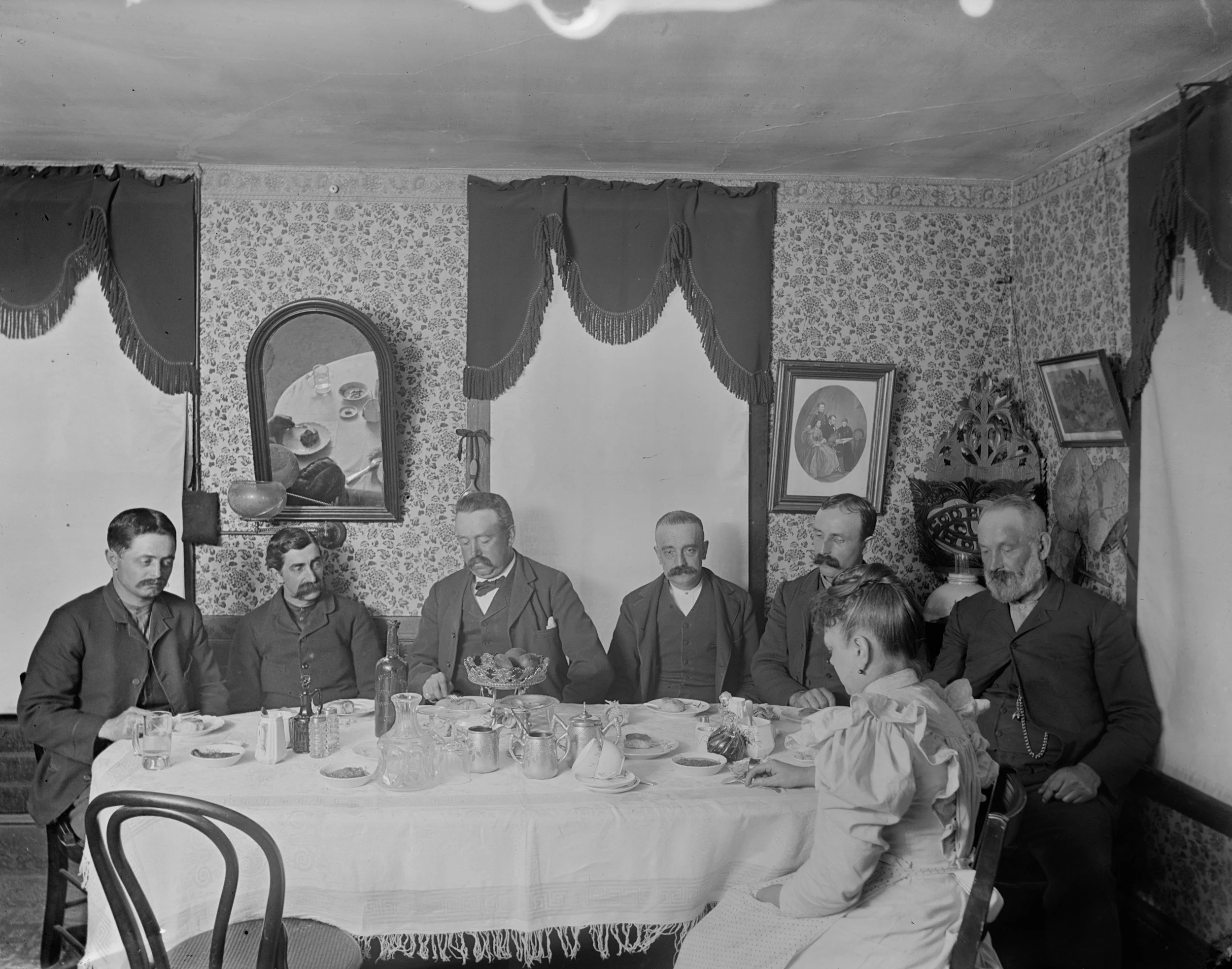
The Return of Scarcity: Doomer Psychology, Peak Oil Blues, and Why Modern Souls Are Suddenly Afraid of Running Out.
The first sign was not inflation.
The first sign was that people started talking about eggs the way previous generations talked about comets.
Not practically.
Symbolically.
A carton of eggs became a forecast about civilization.
A referendum on competence.
A mood.
Folks stood in grocery store aisles staring at price tags as if they contained encrypted messages about the future. Nobody was really looking at the eggs.
They were looking through the eggs. Beyond the eggs. Into a future that suddenly seemed less cooperative than it once had.
The eggs were innocent.
The future was on trial.
That distinction matters because the emotional atmosphere of 2026 is not really about groceries.
Or housing.
Or artificial intelligence.
Or war.
Or climate change.
Or even famine.
Those are the actors.
The story underneath them is scarcity.
Not scarcity itself.
The fear of scarcity.

The Loneliness of Being Misread: Why Accurate Recognition Matters More Than Attention
"That's not why I did it."
He said it quietly.
Not because he was angry.
Because he was tired.
Tired of explaining the same thing for what felt like the hundredth time.
His wife had interpreted a decision one way.
He had experienced it another.
Neither was trying to deceive the other.
Neither was particularly unreasonable.
Yet both felt unseen.
If you've been in a long relationship, you probably recognize the feeling.
The exhausting realization that the person sitting across from you is responding not to you, but to a version of you.
A version assembled from history.
Interpretation.
Fear.
Disappointment.
Hope.
Old arguments.
Old wounds.
Old stories.
And once that version takes hold, it becomes surprisingly difficult to escape.

Why Smart Couples Keep Misdiagnosing Their Relationship Problems
One partner says:
"We've been disconnected for years."
The other replies:
"What are you talking about? Things were fine until last month."
Neither is lying.
They are simply reading different weather reports.
There is a peculiar modern belief that if two reasonably evolved adults simply communicate clearly enough, intimacy will sort itself out.
Use "I" statements.
Reflect what you hear.
Validate feelings.
Schedule check-ins.
Buy the card deck game.
Listen to the podcast.
Learn each other's love language.
The assumption beneath all of this is charming.
It is also wrong.

Why Smart Couples Misdiagnose Narcissism
Every era develops its favorite explanation for why relationships fail.
The Victorians blamed morality. Mid-century Americans blamed mothers. The 1990s blamed communication. Today, we blame narcissism.
It is, in many ways, the perfect modern diagnosis.
It sounds psychologically sophisticated. It carries moral clarity. It offers the relief of explanation.
Most importantly, it locates the problem safely inside someone else's personality.
There is comfort in believing we finally know what happened.
"My spouse isn't overwhelmed."
"My wife isn't emotionally avoidant."
"My husband isn't ashamed."
"They're just a narcissist."
Case closed.

The Folks Who Leave the Room Without Moving: What Literature Reveals About Maladaptive Daydreaming
For a species that prides itself on practicality, human beings spend an astonishing amount of time elsewhere.
We sit in traffic and replay arguments that never happened. We fold laundry while imagining alternate careers.
We mentally redecorate kitchens we cannot afford and rehearse conversations we are unlikely to have.
We envision reunions, rescues, revenge, vindication, and occasionally the perfect comeback to an insult delivered sometime during the George W. Bush administration.
The body remains present.
The mind catches a connecting flight.

The Secret Grief of the Life We Imagined
No one tells you that adulthood involves mourning people who never existed.
Not lovers.
Not parents.
Not children.
Not friends.
Versions of yourself.
The woman who thought she would write the novel.
The man who imagined he would be more patient.
The parent who assumed family dinners would be warm and uninterrupted instead of featuring negotiations over vegetables and someone crying because the pasta touched the peas.
The ambitious twenty-five-year-old who envisioned becoming decisive, sophisticated, and somehow immune to lower back pain.
The self who believed that by now you would have arrived.
Instead, many of us discover that adulthood feels less like arrival and more like revision.