Monday, May 18, 2026.
Prayer, Blood Pressure, and the Strange Failure of Modern Calm
Modern Americans have become extremely committed to wellness while simultaneously developing nervous systems that behave like raccoons trapped inside HVAC systems.
This is difficult to ignore.
We now monitor sleep with military precision while sleeping terribly.
We purchase meditation apps to manage the stress created by checking meditation apps.
We discuss cortisol the way medieval peasants discussed demonic possession.
Entire conversations now occur in a dialect composed almost entirely of the phrases “regulate your nervous system,” “hold space,” and “dopamine depletion.”
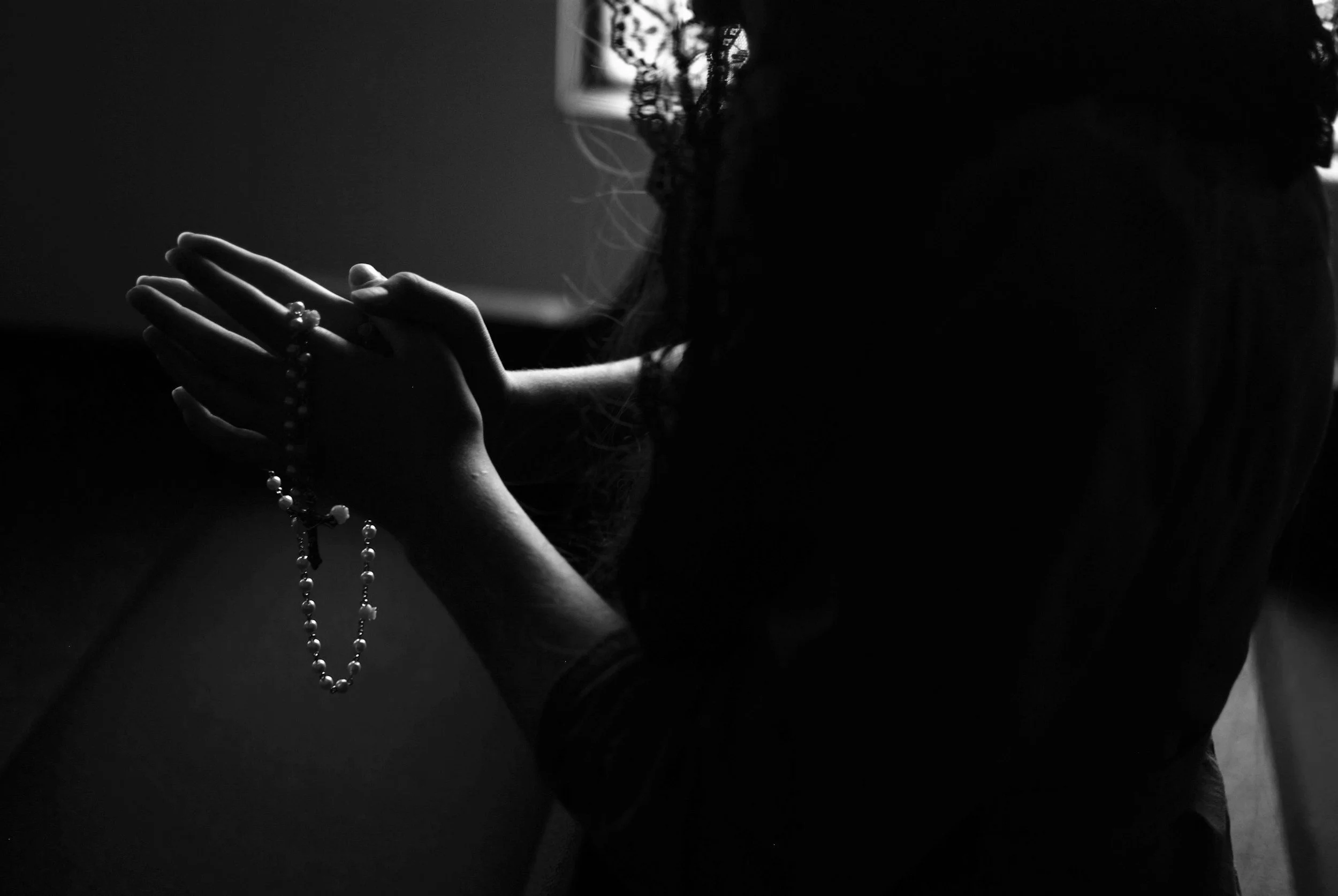
Meanwhile, somewhere in rural Sicily, an elderly woman is quietly saying the rosary before sunrise and apparently producing a more stable physiological stress response than half the professional class.
This is the sort of thing modern culture dislikes on sight.
A recent study discussed by science writer Eric Dolan on private religious practices and stress physiology found that folks engaging in private religious practices experienced smaller spikes in systolic blood pressure during acute stress tasks.
Not metaphorically calmer.
Actually calmer.
Their nervous systems simply did not escalate as dramatically under pressure.
And immediately you can feel the modern mind trying to negotiate with the implication.
Surely the answer cannot involve kneeling. Surely salvation cannot arrive through repetitive prayer said slowly in dim lighting.
Surely the nervous system prefers optimization dashboards and Scandinavian mushroom tinctures administered by attractive folks named Freja.
But the study points toward something ancient and deeply unfashionable:
Ritual.
Repetition.
Structure.
Predictability.
Silence.
Private prayer.
The very things contemporary culture tends to treat like quaint psychological antiques right before developing chest pain.
The Nervous System Is Older Than Modern Culture
One of the strangest assumptions of contemporary life is the belief that human beings can flourish indefinitely inside permanent improvisation.
Modern adults are now expected to construct:
identity.
meaning.
morality.
spirituality.
purpose.
aesthetics.
emotional resilience.
political philosophy.
community.
almost entirely from scratch while simultaneously answering emails, monitoring headlines, pretending to enjoy networking events, and opening forty-seven browser tabs about magnesium glycinate.
This is not civilization.
This is a neurological improv exercise.
Joan Didion understood something essential long before nervous-system regulation became an industry: human beings require symbolic continuity.
They require repeated forms sturdy enough to absorb fear.
The nervous system is not modern.
Which is why the most fascinating aspect of the study may not be that religion appeared physiologically helpful.
It is that generalized spirituality did not.
That distinction matters enormously.
Participants reporting broad spiritual feelings—inner peace, awe, connection to the universe—did not show the same reduction in cardiovascular stress reactivity.
But folks engaging in private religious practices did.
The nervous system, apparently, notices the difference between structure and vibes.
“Spiritual but Not Religious” Is Sometimes Just Exhaustion With Better Branding
Modern affluent culture prefers spirituality because spirituality often asks almost nothing concrete of anyone.
You may assemble your own personalized cosmology from candles, astrology, intermittent fasting, breathwork, Icelandic moss water, moon ceremonies, and a podcast hosted by a former venture capitalist who now speaks exclusively about masculine energy fields.
Nobody can tell you you’re wrong because nobody can fully explain what you’re saying.
Religion, meanwhile, tends to involve obligations.
You kneel here.
You repeat this.
You return next week.
You pray whether you feel transcendent or not.
You participate even when emotionally inconvenient.
This predictability may matter physiologically more than modern culture wishes to admit.
Because the nervous system likes rhythm more than novelty.
And modern life is now composed almost entirely of novelty.
Notifications.
Feeds.
Alerts.
Infinite scroll environments.
Political panic.
Algorithmic outrage.
Productivity culture.
Digital vigilance masquerading as engagement.
Folks no longer rest psychologically. They merely switch applications.
A Woman Standing Alone in a Dark Kitchen
Imagine a woman standing barefoot in a dark kitchen at 5:12 in the morning.
The coffee brews softly beside her. The house remains silent. Outside, the sky has not fully decided whether to become day.
No optimization tracker.
No cortisol monitor.
No productivity podcast.
No “biohacking protocol.”
No aggressively cheerful mindfulness instructor named Brielle.
Just memorized prayers repeated quietly before the world wakes up.
That woman may possess a more regulated nervous system than the executive monitoring his REM cycles with military-grade biometric equipment while answering Slack messages at midnight and describing himself as “high-performance.”
One of these folks is practicing ritualized surrender.
The other is conducting surveillance against his own exhaustion.
History occasionally becomes so ironic it feels personally hostile.
Repetition Is One of Humanity’s Oldest Regulatory Technologies
Modern culture worships novelty because novelty is profitable.
Biology, however, tends to prefer repetition.
Infants calm through repetition.
Trauma survivors stabilize through repetition.
Entire civilizations survive through repetition.
This is why rituals appear everywhere humans appear.
Anthropologists have spent decades observing that rituals become especially important during periods of grief, uncertainty, danger, transition, illness, and death.
Humans ritualize instability because ritual creates containment.
Stephen Porges’s work on Polyvagal Theory and autonomic nervous-system regulation helped popularize the idea that rhythm, predictability, social safety cues, and repeated behaviors influence physiological states.
Religion figured this out before neuroscience owned office furniture.
Candles.
Kneeling.
Sacred music.
Incense.
Prayer beads.
Repeated liturgies.
Ancient words spoken slowly in low light.
These may function partly as regulatory technologies for overwhelmed human beings.
Which suddenly makes a great deal of modern life look psychologically absurd.
Attention Is the Whole Story
One thing becomes obvious quickly: attention is never neutral.
The currency of intimacy is bestowed attention.
What life partners repeatedly attend to shapes emotional tone, physiology, attachment security, memory, and threat perception. Distressed relationships are almost always distressed attentional systems.
And modern attention is shattered.
The nervous system is now expected to metabolize continuous interruption while remaining emotionally stable. This is roughly equivalent to asking a smoke detector to enjoy fireworks.
Prayer may function partly as an attentional enclosure—a temporary refusal of fragmentation.
The praying mind repeatedly directs attention toward something singular, rhythmic, predictable, and symbolically coherent.
That matters because stress escalates through rehearsal.
The anxious mind practices catastrophe.
The fearful mind loops uncertainty endlessly.
The overwhelmed mind rehearses danger before danger even arrives.
Private prayer may interrupt recursive amplification.
And when the loop interrupts, the body itself may change course.
Why the “Private” Part Matters
One subtle but fascinating aspect of the findings is that the physiological effect appeared linked specifically to private religious practice.
Not public religiosity.
Not spiritual branding.
Not posting inspirational quotations online beside photographs of expensive coffee and eucalyptus branches.
Private devotion.
That distinction feels psychologically enormous.
A person quietly praying before sunrise is engaged in a radically different nervous-system activity than someone curating a spiritual identity online between political arguments and vacation photos.
One regulates the self.
The other markets the self.
Modern culture increasingly confuses these activities.
The nervous system does not.
Before Everyone Starts Purchasing Emergency Rosaries
The study was correlational.
It cannot definitively prove that prayer itself caused lower blood-pressure reactivity.
The sample was also predominantly white and Christian, limiting broader generalization.
And the findings primarily involved systolic blood pressure rather than every cardiovascular measure tested.
So no, prayer is not a replacement for therapy, cardiology, psychiatry, medication, sleep, nutrition, or basic psychological care.
But the study does suggest something culturally important:
Human physiology may respond powerfully to structured forms of meaning, repeated contemplative behaviors, ritualized attention, and symbolic stability.
Which sounds suspiciously like something religious traditions have been trying to explain for several thousand years.
Awkward.
FAQ
Does prayer really reduce stress?
This study found that individuals engaging in private religious practices experienced smaller increases in systolic blood pressure during stressful tasks. However, because the study was correlational, it cannot definitively prove causation.
Why might prayer affect the nervous system?
Prayer often combines repetition, rhythmic breathing, attentional focus, symbolic meaning, emotional containment, and ritual structure—all factors believed to influence physiological regulation.
Why didn’t spirituality alone produce the same effect?
The study found that generalized spiritual feelings were not significantly associated with reduced cardiovascular stress reactivity. Structured ritual practices may affect physiology differently than abstract spiritual identification.
Can prayer replace therapy or medical treatment?
No. Anxiety disorders, trauma, depression, hypertension, and cardiovascular illness require appropriate professional care. Contemplative practices may support regulation alongside evidence-based medical and psychological treatment.
Why does repetition calm human beings?
Because repetition reduces uncertainty. Predictability is generally easier for the nervous system to metabolize than continuous novelty and interruption.
Final Thoughts
The modern world keeps offering human beings stimulation and calling it meaning.
But increasingly, modern life itself seems to be pushing people back toward older forms of containment—not because they are quaint, but because the nervous system eventually rebels against permanent interruption.
At a certain point, candles begin to look less eccentric than endless notifications.
Silence begins to look less primitive than algorithmic panic.
And a woman whispering prayers alone in a dark kitchen before sunrise begins to look less like the past and more like someone who understood something the rest of the culture forgot.
Be Well, Stay Kind, and Godspeed.
REFERENCES
Dempsey, A., Howard, S., & Gallagher, S. (2026). Examining the associations between private religious practices, daily spiritual experiences, and cardiovascular stress reactivity. Religion, Brain & Behavior. Advance online publication.
The MIDUS (Midlife in the United States) Study through the University of Wisconsin Institute on Aging provided the dataset used in the research.
Norton, M. I., & Gino, F. (2014). Rituals alleviate grieving for loved ones, lovers, and lotteries. Journal of Experimental Psychology: General, 143(1), 266–272.