What Hurling, Gaelic Football, and Australian Footy Reveal About Marriage, Masculinity, and Belonging
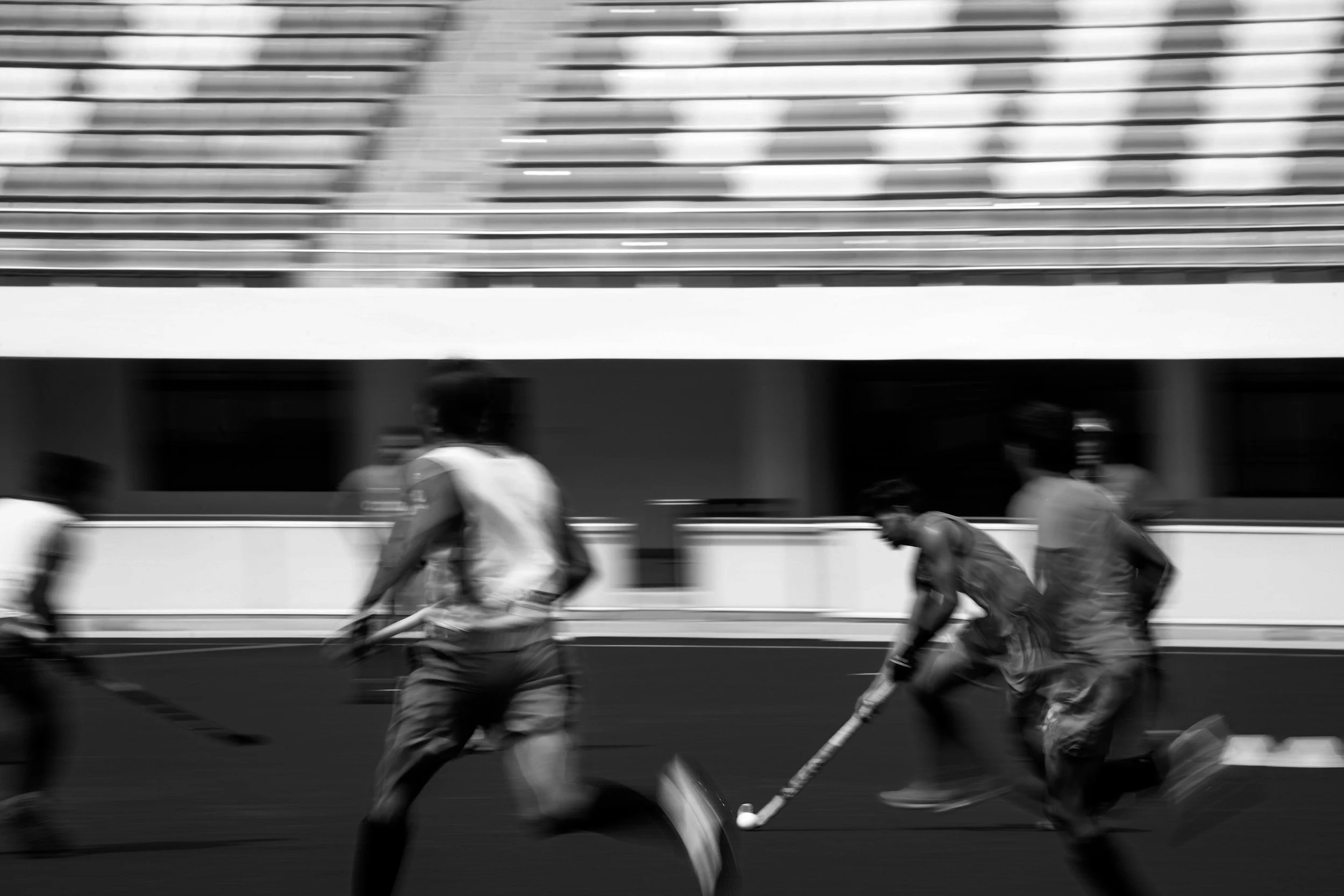
Friday, May 15, 2026. This is for Nick, my 10 am on Fridays.
Most modern people underestimate how much of emotional life is organized through ritual.
I have become increasingly convinced that relationships rarely collapse all at once. More often, they erode through the slow disappearance of shared emotional worlds.
The rituals vanish first. The recurring points of connection disappear.
Folks stop gathering around the same symbolic fire.
And oddly enough, sports often reveal this more clearly than therapy books do.
There are countries that build identity through armies.
There are countries that build identity through markets.
And then there are countries that build identity by inventing sports so unusual, so elegant, and so faintly dangerous that outsiders watch them briefly and conclude the entire population may have collectively survived some kind of glorious historical concussion.
This is roughly what happens when Americans first encounter hurling.
A man catches a ball traveling at the approximate speed of unresolved childhood shame, balances it on a wooden stick while sprinting full speed across a field, and then launches it skyward with the confidence of someone attempting to settle an argument directly with God.
Australian Rules Football produces a related sensation.
Someone hand-passes an oval ball while another man climbs onto a third man’s shoulders like a theater major escaping from a fire.
Gaelic football, meanwhile, appears to many outsiders as though soccer and rugby spent a long weekend together in County Kerry and made several impulsive decisions.
But these sports matter for reasons far deeper than athletic spectacle.
They are not merely games.
They are systems for preserving identity under the pressure of modernity.
They teach folks how to belong.
How to admire.
How to grieve.
How to remain attached to place.
How to return emotionally to one another again and again across generations.
They are cultural memory systems.
They are rituals of belonging.
They are emotional archives.
And they reveal something profound about how communities stabilize identity across generations.
In marriage and family therapy we often talk about systems.
Families become systems.
Couples become systems.
Communities become systems too.
And systems survive through ritual.
Shared meals.
Shared holidays.
Shared stories.
Shared traditions.
Shared emotional attention.
Sports often become one of the last remaining communal rituals powerful enough to organize identity across class, age, and generation.
That is one reason these games still matter so deeply.
Not because they entertain.
Because they bind.
Hurling and the Ancient Irish Nervous System
Imagine a freezing afternoon somewhere in County Clare.
Children wrapped in oversized coats.
Steam rising from tea in paper cups.
An older man leaning against a barrier muttering about referees with the emotional seriousness of someone discussing maritime law during wartime.
The field wet enough to qualify as an ecological event.
And then suddenly the sliotar rises into the gray Irish sky.
The crowd sharpens collectively.
Everybody attends.
For a brief moment hundreds or thousands of nervous systems synchronize around the same symbolic drama.
This is not incidental.
This is communal regulation.
This is identity becoming embodied in real time.
Hurling may be the most emotionally revealing sport ever invented.
It is ancient.
Fast.
Violent.
Graceful.
Regional.
Technically absurd.
And emotionally volcanic.
The game dates back thousands of years and occupies a semi-mythic place in Irish cultural imagination.
Irish legend associates the hero Cú Chulainn with hurling traditions.
The game itself is played with a wooden stick called a hurley and a small leather ball called a sliotar.
The speed can become surreal.
Elite players strike the sliotar at astonishing velocity while navigating collisions, catches, tactical positioning, and airborne chaos with minimal protective gear.
But the deeper significance of hurling lies in the emotional values it celebrates.
The game rewards improvisation under pressure.
Courage without theatrics.
Skill under chaos.
Regional loyalty.
Endurance.
Controlled aggression.
There is something distinctly Irish about this combination of beauty and toughness.
The game itself feels almost literary.
Wildness governed by precision.
Passion constrained by form.
Fury expressed elegantly.
Hurling’s deepest psychological importance may be its connection to locality.
The sport remains profoundly tied to county identity.
This matters more than modern people sometimes realize.
The contemporary world increasingly dissolves local belonging into generalized consumer identity. People once belonged to neighborhoods, churches, unions, clubs, and towns.
Now many belong primarily to algorithms.
This has psychological consequences.
Human beings require stable identity structures.
We regulate emotion collectively more than modern individualistic culture acknowledges.
Hurling preserves collective belonging.
County rivalries become inherited emotional ecosystems.
Families transmit allegiance across generations.
Grandparents teach children not merely the rules of the game but the emotional geography of identity itself.
You belong here.
These are your people.
This is your history.
Family therapists understand that emotional security often emerges from recurring rituals enacted over time.
The same principle applies culturally.
A surprising number of couples are not suffering from a lack of love.
They are suffering from ritual collapse.
No recurring emotional structures.
No traditions.
No sacred routines.
No collective experiences powerful enough to interrupt distraction.
The emotional system becomes entirely logistical.
Who is buying groceries.
Who forgot the dentist appointment.
Who is late again.
Meanwhile the shared symbolic life quietly dies in the background.
A major hurling final can feel almost liturgical.
A gathering of shared symbolic emotion.
A collective reenactment of belonging.
Sociologist Émile Durkheim described communal rituals as generators of “collective effervescence,” the emotional electricity people experience when participating in shared symbolic life.
Hurling produces precisely this effect.
The game becomes a living emotional bridge between generations.
FAQ
What is hurling?
Hurling is an ancient Irish field sport played with a wooden stick called a hurley and a small ball called a sliotar. Known for its speed and skill, it is considered one of the oldest and fastest field sports in the world.
Why are Gaelic sports important in Irish culture?
Gaelic sports became symbols of Irish identity, local belonging, and cultural continuity, especially during periods of British colonial influence. Organizations like the Gaelic Athletic Association helped preserve indigenous Irish traditions through sport.
What does Australian Rules Football symbolize culturally?
Australian Rules Football reflects themes deeply associated with Australian identity, including resilience, toughness, improvisation, mateship, and anti-elitism. The sport also functions as a major communal ritual across generations.
How do sports strengthen family relationships?
Sports often create recurring family rituals, shared emotional experiences, intergenerational bonding, and collective identity. Marriage and family therapists frequently observe that recurring rituals strengthen emotional attachment and cohesion.
What is collective effervescence?
“Collective effervescence” is a term developed by Émile Durkheim describing the emotional energy people experience during shared communal rituals, gatherings, or symbolic events.
Why are communal rituals psychologically important?
Communal rituals help stabilize identity, regulate emotion, reduce loneliness, and create continuity across generations. Shared rituals strengthen both families and communities.
How are sports connected to attachment and belonging?
Sports often function as attachment systems at the community level. Families pass down loyalties, traditions, and emotional meaning through repeated participation in games, clubs, and communal gatherings.
Why do many men express attachment through sports?
In many cultures, men historically learned to communicate affection indirectly through loyalty, mentorship, consistency, and shared activities. Sports often become one of the socially accepted languages of emotional connection.
Gaelic Football and Community as Emotional Infrastructure
Unlike many hyper-commercialized global sports systems, Gaelic football remains deeply tied to local amateur structures through the Gaelic Athletic Association.
The local star may still be your teacher.
Your electrician.
Your cousin.
This creates an entirely different emotional atmosphere than modern celebrity sports culture.
The athletes remain embedded within communal life.
And this embeddedness matters psychologically.
As a result, the local club often functions as far more than recreation.
It becomes emotional infrastructure.
Children find belonging there.
Teenagers acquire mentorship there.
Parents develop social networks there.
Loneliness gets interrupted there.
Communal continuity survives there.
Marriage and family therapists increasingly encounter couples who are not merely distressed relationally.
They are socially isolated.
Their lives contain very little communal participation outside work and screens.
No neighborhood rituals.
No civic organizations.
No recurring shared experiences.
Families become psychologically overburdened when they are expected to provide every form of meaning, regulation, belonging, identity, and emotional fulfillment.
Communities once distributed some of this emotional labor.
In some cultures, sports clubs still can.
Family systems theory has long emphasized the importance of ritualized participation in maintaining cohesion.
Families deteriorate when rituals disappear.
Communities collapse similarly.
The local Gaelic football club therefore performs psychological functions modern societies desperately underestimate.
It creates interdependence.
Recognition.
Embodied participation.
Continuity.
Shared emotional attention.
And shared attention is one of the fundamental currencies of human attachment.
Colonialism, Resistance, and Sporting Identity
The deeper history of Gaelic sports cannot be separated from colonialism.
The preservation of indigenous Irish sports was not merely recreational.
It became political.
Under British rule, Irish language, customs, and national identity all experienced pressure toward anglicization.
The founding of the Gaelic Athletic Association in 1884 represented, in part, an effort to preserve specifically Irish cultural practices at a time when British cultural dominance threatened to dissolve local traditions.
This mattered enormously.
Language can disappear.
Customs can disappear.
But games are stubborn.
Games survive because people reenact them physically.
The body remembers what institutions sometimes forget.
The GAA therefore became more than an athletic organization.
It became a cultural preservation system.
An emotional archive disguised as sport.
Sport became identity defense.
Colonized populations often preserve identity through ritualized practices:
language.
music.
religion.
food.
athletics.
Because culture survives through repetition.
And sports are repetition machines.
Every match silently declares:
We are still here.
Every local club says:
We have not disappeared.
This matters psychologically because collective identity erosion produces anxiety.
Human beings require continuity narratives.
Without them societies become emotionally fragmented.
The field becomes symbolic territory.
A place where continuity gets reenacted.
Where culture remembers itself publicly.
Families similarly survive through repeated symbolic participation.
Shared holidays.
Shared narratives.
Shared memories.
Shared rituals.
When those disappear, families often experience a kind of emotional amnesia.
Couples stop remembering who they are together.
Children lose continuity.
Relationships flatten into logistics.
Australian Rules Football and the Invention of Australianness
If Irish sporting culture often feels ancient and tribal, Australian footy feels improvisational and frontier-shaped.
The emotional atmosphere is different.
Harder in some ways.
More anti-pretentious.
More suspicious of fragility.
Australian Rules Football emerged inside a culture shaped by distance, heat, labor, migration, colonial violence, and geographic isolation.
And the game reflects this psychologically.
The field itself is enormous.
Players cover astonishing distances.
Bodies collide continuously.
Play flows with very little stoppage.
The sport rewards adaptability under pressure.
Resilience under fatigue.
Fearlessness in public.
It is difficult to separate Australian footy from the national mythology of mateship.
The idea that loyalty, toughness, anti-elitism, and collective endurance matter more than individual glamour.
Even the atmosphere surrounding the AFL often feels less aristocratic than many European sporting cultures.
There is a distinctly working-class emotional texture to it.
Suburbs.
Family loyalties.
Inherited clubs.
Multi-generational allegiance.
Folks belonging to teams before they fully understand why.
Australian Rules Football is one of the strangest and most compelling cultural inventions in the English-speaking world.
It resembles several sports and no sport.
There are elements of rugby.
Soccer.
Basketball.
Aerial combat.
Interpretive violence.
The game emerged during the nineteenth century and gradually became central to Australian identity.
What is fascinating psychologically is how clearly Australian footy expresses Australian cultural values.
The field is enormous.
The game is fluid.
Play rarely stops.
Athletes must improvise constantly.
This is a frontier sport.
A game reflecting a culture shaped by harsh geography, migration, colonial displacement, labor systems, distance, and isolation.
Australian Rules Football celebrates resilience.
Fearlessness.
Anti-pretension.
Mobility.
Endurance.
And a peculiar form of theatrical courage.
The famous aerial “mark,” where players leap dramatically onto opponents’ shoulders to catch the ball, dramatizes a national ideal:
Throw yourself fully into the contest.
Cultures teach emotional norms through admiration.
What a society cheers for reveals what it wants people to become.
Australian sporting culture historically celebrated emotional toughness and stoicism.
These traits contain both strengths and costs.
The same toughness that produces resilience can also inhibit vulnerability.
This is where the conversation intersects directly with marriage and family therapy.
Many couples arrive in therapy trapped inside emotional translation failures.
One partner values verbal disclosure.
The other expresses care behaviorally.
One wants emotional articulation.
The other communicates through loyalty, ritual participation, practical support, and consistency.
Sports cultures often become hidden languages of attachment.
This is particularly important when thinking about men.
Many men raised in emotionally restrained cultures learned to express attachment sideways rather than directly.
Through mentorship.
Through loyalty.
Through showing up repeatedly.
Through standing shoulder to shoulder rather than face to face.
A father teaching hurling technique may be saying things emotionally he cannot yet verbalize.
The grandfather explaining county rivalries may be transmitting identity, memory, and belonging simultaneously.
The Australian father who never says “I love you” but never misses a match may still be expressing devotion through consistency.
Therapy sometimes misses these quieter attachment dialects because contemporary culture often privileges verbal fluency over enacted loyalty.
The father attending every footy practice may not verbally express tenderness frequently.
But he may be communicating devotion through recurring participation.
The same dynamic appears in Irish sporting culture.
The father teaching hurling technique.
The mother driving children across counties for matches.
The grandfather attending every local final.
These are not merely recreational activities.
They are attachment rituals.
Not all intimacy is articulated.
Some intimacy is enacted.
Shared activity.
Shared attention.
Shared ritual.
Sports as Emotional Regulation Systems
Human beings regulate nervous systems collectively.
We calm each other.
Excite each other.
Stabilize each other.
Families do this internally.
Communities do it externally.
Stadiums therefore become collective emotional regulation environments.
Watch supporters during a major hurling final.
Watch Australian fans during the AFL Grand Final.
Observe the intensity.
The grief after losses.
The joy after victories.
The synchronized emotional experience.
Modern secular societies often lack communal rituals intense enough to produce these emotional states.
Sports fill part of that vacuum.
They provide socially acceptable containers for emotional expression.
This is especially important in cultures where men historically experienced pressure toward emotional restraint.
In many families, sports became one of the few emotionally legitimate spaces for emotional intensity.
Men who struggled to verbalize tenderness could still express devotion through loyalty, ritual attendance, mentorship, coaching, and shared participation.
The local club became a socially acceptable mechanism for attachment.
A father waking before dawn to drive his child to training.
A grandmother attending every county final.
An Australian family gathering around the television every weekend for footy.
These repetitive actions create emotional continuity.
The nervous system experiences them as stability.
Family therapists understand that stable rituals increase cohesion and identity coherence.
Sports traditions often function similarly.
This becomes especially visible during grief.
Families continue attending matches after deaths.
People preserve season tickets.
Wear inherited scarves.
Continue old rituals.
Why?
Because rituals preserve attachment continuity.
The emotional system remembers.
Ritual Collapse and Modern Loneliness
One of the defining psychological struggles of modern life is fragmentation.
Attention fragmentation.
Community fragmentation.
Identity fragmentation.
The contemporary world increasingly organizes human beings around individualized consumption rather than shared participation.
People move frequently.
Families scatter geographically.
Technology captures attention continuously.
Algorithms personalize experience until many people inhabit entirely separate emotional realities despite sharing the same home.
Marriage and family therapists increasingly encounter couples who no longer possess shared rituals.
Few shared meals.
No regularly recurring traditions.
No common symbolic life.
Only logistics.
Schedules.
Exhaustion.
Screens. Always screens.
Relationships require recurring shared attention.
Without it, emotional distance slowly expands.
Sports cultures surrounding hurling, Gaelic football, and Australian Rules Football quietly resist this fragmentation.
They remain embodied.
Intergenerational.
Geographically rooted.
Communal.
They require people to gather physically around shared meaning.
And human beings need shared meaning more than modern culture comfortably admits.
For a few hours, attention converges.
Everyone watches the same symbolic drama.
Everyone experiences the same emotional weather.
This shared attention has extraordinary psychological power.
The currency of intimacy is attention.
The currency of community is shared attention.
Perhaps that is why communal sports remain emotionally potent even in increasingly secular societies.
They recreate collective emotional experiences once supplied by religious or civic ritual.
What These Sports Teach Us About Marriage and Family Life
Strong marriages and strong communities operate similarly.
They require recurring symbolic participation.
Shared rituals.
Shared narratives.
Shared emotional attention.
The couples who remain emotionally connected over decades often possess stable rituals:
morning coffee together.
annual vacations.
shared meals.
inside jokes.
recurring traditions.
ways of returning to one another repeatedly over time.
The same principle applies culturally.
Hurling.
Gaelic football.
Australian footy.
These sports create recurring opportunities for collective return.
Families gather again.
Communities gather again.
Identity gets reenacted again.
The ritual itself becomes regulatory.
Attachment security is often the confidence that emotional connection can be restored after separation or stress.
Communal rituals perform a similar function culturally.
They reassure people that continuity still exists.
That belonging remains available.
That memory has not dissolved entirely.
Sports, Marriage, and the Human Need for Shared Worlds
One of the quiet tragedies of modern adulthood is that many people no longer participate in anything collectively ecstatic.
No civic life.
No communal rituals.
No embodied traditions.
Only individualized entertainment streamed separately into separate nervous systems.
Couples increasingly inhabit parallel psychological universes.
One partner watches TikTok in the bedroom.
The other scrolls headlines in the kitchen.
Children retreat into personalized algorithmic realities.
Everyone is technically together.
Nobody is emotionally synchronized.
Communal sports interrupt this fragmentation.
For a few hours, attention converges.
Bodies gather.
Voices merge.
Memory becomes collective.
Emotion becomes public again.
This may partially explain why people defend local sports traditions with such astonishing emotional ferocity.
The games are carrying more than entertainment.
They are carrying continuity itself.
And continuity is psychologically stabilizing.
Marriage works similarly.
Long-term couples survive not merely because they communicate well, but because they maintain recurring rituals of emotional return.
Shared breakfasts.
Shared jokes.
Annual vacations.
Sunday routines.
The same restaurant.
The same songs.
The same stories told repeatedly until they become marital folklore.
Love survives through repetition more than modern culture admits.
That is one of the deepest lessons hidden inside hurling, Gaelic football, and Australian footy.
These sports are really about return.
Return to place.
Return to tribe.
Return to memory.
Return to one another.
The Crowd as an Antidote to Modern Fragmentation
One of the reasons these sports still matter so much is that modern life has become psychologically disembodied.
People increasingly live inside personalized media ecosystems.
Attention fragments continuously.
Families occupy the same house while inhabiting entirely different realities.
One person scrolls TikTok.
Another watches Netflix.
Another disappears into gaming.
Another answers work emails.
The modern household can begin to resemble four people surviving separate weather systems under the same roof.
Communal sports interrupt this.
They force synchronization.
Bodies gather physically.
Attention converges collectively.
Emotion becomes shared again.
This is psychologically stabilizing.
In family therapy we often see that relationships deteriorate when people lose shared rituals of attention.
No meals together.
No recurring traditions.
No emotional return points.
No collective experiences large enough to interrupt distraction.
This is partly why sports rituals matter.
The annual final.
The weekend match.
The county rivalry.
The family trip to the stadium.
The same seats.
The same songs.
The same emotional choreography repeated over decades.
Love itself often survives through repetition.
And communities do too.
Perhaps the deepest insight hidden inside hurling, Gaelic football, and Australian footy is this:
Communal rituals are attachment structures at scale.
They stabilize identity.
Transmit belonging.
Create emotional continuity.
And protect people from the terrifying psychological drift of becoming socially unmoored.
Which means these sports are not merely entertainment.
They are collective emotional regulation systems.
They are memory enacted physically.
They are belonging performed publicly.
And in a fragmented age, they may be carrying far more of human emotional life than we fully understand.
Final Thoughts
There is something deeply moving about cultures that preserve games nobody else would have invented.
Hurling.
Gaelic football.
Australian Rules Football.
These are not merely sports.
They are emotional ecosystems.
Expressions of migration.
Colonial resistance.
Masculinity.
Land.
Memory.
Attachment.
Community.
And continuity.
They remind us that human beings do not survive psychologically through efficiency alone.
We survive through shared symbolic life.
Through rituals enacted repeatedly across generations.
Through collective participation in something larger than ourselves.
In marriage and family therapy, one eventually learns that relationships deteriorate when people stop participating in shared emotional worlds.
Sports, at their best, help create those worlds.
The father teaching the child to strike a sliotar.
The Australian grandfather explaining old rivalries.
The family gathering around a television every weekend.
The county colors folded carefully in drawers year after year.
The stadium roaring as strangers briefly become emotionally synchronized.
All of this matters.
Because human beings do not survive psychologically through information alone.
We survive through participation.
Through ritual.
Through shared attention.
Through recurring experiences that reassure us we still belong somewhere.
And perhaps that is why these strange tribal games continue to endure despite globalization, algorithms, and modern distraction.
Not because people merely enjoy them.
But because somewhere deep in the nervous system, human beings still ache for collective life.
Not because games solve existential loneliness.
But because they interrupt it.
And sometimes interruption is where healing begins.
Be Well, Stay Kind, and Godspeed.
REFERENCES:
Durkheim, É. (1995). The elementary forms of religious life (K. E. Fields, Trans.). Free Press. (Original work published 1912)
Putnam, R. D. (2000). Bowling alone: The collapse and revival of American community. Simon & Schuster.
Fiese, B. H., Tomcho, T. J., Douglas, M., Josephs, K., Poltrock, S., & Baker, T. (2002). A review of 50 years of research on naturally occurring family routines and rituals. Journal of Family Psychology, 16(4), 381–390. https://doi.org/10.1037/0893-3200.16.4.381
Bowen, M. (1978). Family therapy in clinical practice. Jason Aronson.
Ainsworth, M. D. S., Blehar, M. C., Waters, E., & Wall, S. N. (1978). Patterns of attachment: A psychological study of the Strange Situation. Lawrence Erlbaum.
Eliade, M. (1959). The sacred and the profane: The nature of religion (W. R. Trask, Trans.). Harcourt.
Putnam, R. D., & Feldstein, L. M. (2003). Better together: Restoring the American community. Simon & Schuster.
Bairner, A. (2001). Sport, nationalism, and globalization: European and North American perspectives. State University of New York Press.
Cronin, M. (1999). Sport and nationalism in Ireland: Gaelic games, soccer and Irish identity since 1884. Four Courts Press.
Cashman, R. I. (1995). Paradise of sport: The rise of organised sport in Australia. Oxford University Press.