
Welcome to my Blog
Thank you for stopping by. This space is where I share research, reflections, and practical tools drawn from my experience as a marriage and family therapist with an international practice.
I write about what happens to desire, attachment, and meaning once the early myths stop working.
Are you a couple looking for clarity? A professional curious about the science of relationships? Or simply someone interested in how love and resilience work? I'm glad you've found your way here. I can help with that. I'm accepting new clients, and this blog is for the benefit of all my gentle readers.
Each post is written with one goal in mind: to help you better understand yourself, your partner, and the hidden dynamics that shape human connection
Grab a coffee (or a notebook), explore what speaks to you, and take what's useful back into your life and relationships.
And if a post sparks a question, or makes you realize you could use more support, l'd love to hear from you. Let's explore the scope of work you'd like to do together.
Be Well, Stay Kind, and Godspeed.
~ Daniel
P.S.
Feel free to explore the categories below to find past blog posts on the topics that matter most to you. If you're curious about attachment, navigating conflict, or strengthening intimacy, these archives are a great way to dive deeper into the research and insights that l've been sharing for years.
- Attachment Issues
- Coronavirus
- Couples Therapy
- Extramarital Affairs
- Family Life and Parenting
- How to Fight Fair
- Inlaws and Extended Families
- Intercultural Relationships
- Marriage and Mental Health
- Married Life & Intimate Relationships
- Neurodiverse Couples
- Separation & Divorce
- Signs of Trouble
- Social Media and Relationships
- What Happy Couples Know


Why Your Nervous System Thinks Your Partner Is Leaving
The most powerful rival to your marriage may not be another person.
It may be a machine.
Not because the machine is lovable.
Not because the machine is attractive.
But because the machine is very, very good at capturing attention.
And attention has quietly become the most valuable emotional currency in modern relationships.
A fascinating 2026 study published in the Journal of Personality found that anxiously attached partners experienced higher depressed mood, lower self-esteem, more resentment, and greater urges to retaliate when they felt ignored by a romantic partner using a smartphone—a behavior researchers call phubbing (phone + snubbing).
Surprisingly, relationship satisfaction itself remained largely unchanged.
At first glance, this appears to be a study about phones.
It isn't.
It is a study about what happens when the human attachment system collides with the attention economy.

The Vanishing Hangover: GLP-1 Drugs, Dating Apps, and the Pharmacology of Modern Desire
There was a period in American life when casual sex carried a certain cinematic glamour.
City lights.
Cocktails.
Taxi rides.
Rumpled sheets.
Texts sent at 1:12 a.m. containing phrases like:
“You up?”
followed shortly afterward by:
“This is probably a bad idea,”
which historically has functioned less as a warning than as an accelerant.
Modern dating culture became organized around managed impulsivity.
Alcohol lowered inhibition.
Apps increased access.
Urban anonymity reduced consequences.
Therapy culture reframed experimentation as self-discovery.
And loneliness quietly flooded the entire system with urgency.
Then something strange began happening.

Economic Panic Is Becoming Romantic Panic
There is a peculiar sentence appearing all over Reddit lately:
“We’re doing everything right and it still feels impossible.”
That sentence matters.
Because it captures something larger than financial stress.
It captures the collapse of a cultural promise.
For decades, Americans were sold a particular emotional narrative about adulthood:
study hard,
work hard,
find love,
build a life,
buy a house,
raise children,
be tired sometimes but fundamentally stable.
Increasingly, modern couples experience something very different.
They experience adulthood as continuous economic vigilance.

The Fear of Becoming the “Default Human”
There is a particular kind of exhaustion emerging inside modern marriage that older relationship language does not fully capture. It is not exactly resentment.
Not exactly burnout. Not exactly emotional labor, though it overlaps with all three.
It is the sensation of becoming the life partner who must permanently remember reality for everyone else.
The pediatric appointment.
The gluten-free snack requirement.
The teacher email.
The birthday gift.
The soccer registration deadline.
The dog medication.
The emotional temperature of the house.
The location of the extra batteries.
The family calendar.
in other words, the invisible architecture of ordinary life.

The Anxiety That Attention Has Left the Family
One of the strangest developments in modern marriage is that many couples are no longer primarily fighting about cruelty.
They are fighting about disappearance.
Not physical disappearance.
Attentional disappearance.
A husband sitting six feet away scrolling sports clips for three hours while vaguely murmuring “wow” at intervals that suggest either agreement or the onset of a mild neurological event.
A wife lying in bed beside her partner while simultaneously conducting a second emotional life through Instagram messages, parenting forums, TikTok, work Slack, and seventeen open browser tabs concerning magnesium glycinate.
Teenagers eating dinner with AirPods in while entire emotional universes unfold elsewhere.
Families physically together yet psychologically exported into separate algorithmic ecosystems.
This is becoming one of the defining emotional anxieties of modern family life.

Interview with the Exorcist
The exorcist arrived twenty-three minutes late carrying a paper cup of coffee and the exhausted patience of a man accustomed to hearing modern people confuse spirituality with branding.
Outside, October leaves scraped across the church parking lot in nervous little spirals. The sky had gone the color of old bruises.
Across the street, a pharmacy glowed with the soft fluorescent despair unique to suburban America, where entire civilizations now appear to operate beneath the emotional atmosphere of a waiting room.
“You’re late,” I said.
“I was blessing a woman’s house.”
“Demonic infestation?”
“Squirrels.”

The Factory and the Feed: Why the Vatican Thinks AI Is the New Industrial Revolution
At 11:43 p.m., a husband and wife lie beside one another in bed staring into separate algorithmic realities.
He is watching videos that quietly intensify his grievances.
She is scrolling through therapeutic language teaching her how to reinterpret every disappointment diagnostically.
Neither person is technically alone.
Neither person is fully together.
An artificial intelligence somewhere is refining behavioral predictions about both of them in real time while the marriage itself competes with infinite novelty, frictionless distraction, personalized stimulation, and systems specifically engineered to hold attention longer than ordinary human conversation can.
And yet modern people still speak about technology as though it were merely a tool.
This is one reason the relationship between “Magnifica Humanitas” and “Rerum Novarum” matters so much.
The Catholic Church appears to believe we are living through another Industrial Revolution.
Not economically.
Anthropologically.
That distinction changes everything.
Admiration Inequality: The Hidden Imbalance Quietly Destabilizing Modern Relationships
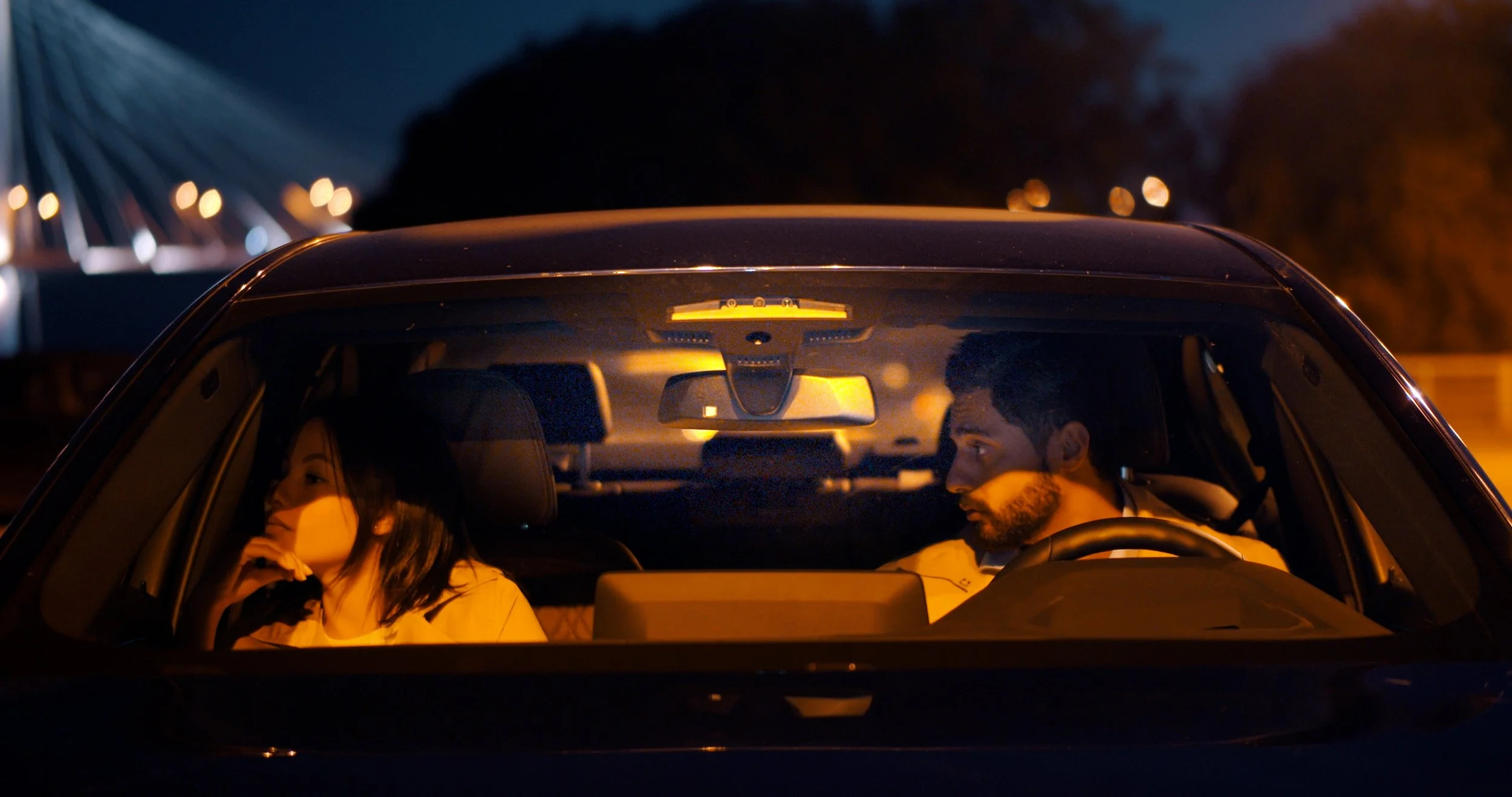
They are sitting in the parking lot outside Home Depot arguing about mulch.
Which is how many long marriages eventually begin discussing mortality.
She is staring forward through the windshield. He is pretending to reorganize receipts in the center console because middle-aged men will perform almost any administrative task before admitting heartbreak directly.
The argument itself barely matters anymore.
It began with landscaping supplies and somehow migrated — as these things often do — into emotional territory involving appreciation, exhaustion, and the increasingly hostile psychological meaning of the phrase “fine, whatever.”
Finally he says quietly:
“I think you love me. I just don’t think you admire me anymore.”
And suddenly the entire atmosphere changes.
Because both of them know he has accidentally said the real thing.
Not sex.
Not communication.
Not conflict resolution.
Admiration.

Emotional Performance Culture: When Therapy Language Replaces Intimacy
A woman says, very calmly, “I don’t feel emotionally safe right now.”
Her husband freezes because he genuinely has no idea what offense he has committed in the last ninety seconds.
They are standing in the kitchen beside an open dishwasher.
One of them is holding a salad bowl with the emotional posture of a hostage negotiator.
Eventually it emerges that he looked at his phone while she was describing a conversation with her sister. He insists he heard every word. She insists that is not the point.
What follows is not technically an argument.
It is a symposium.

Relationship Background Radiation: The Ambient Noise Quietly Destroying Modern Love
Most couples assume relationships end through dramatic events.
An affair.
A betrayal.
A catastrophic fight involving tears, packed luggage, and someone saying, “I just need space,” which in modern America can mean anything from “I need to rethink my life” to “I’m sitting in the Target parking lot eating trail mix alone.”
But in my work with couples, I have increasingly seen relationships deteriorate in a quieter, stranger way.
Not through explosion.
Through atmospheric erosion.
A thousand tiny attentional withdrawals.
A slow migration of emotional focus away from the relationship and toward devices, feeds, work identities, parasocial attachments, algorithmic stimulation, and perpetual distraction. Many modern couples are not suffering from acute relational trauma so much as chronic attentional malnutrition.
The internet has entered the marriage like cigarette smoke.
The Strange Psychology of Manifesting: Why Believers Feel Successful Even When They’re Not
There are few things more modern than watching somebody explain quantum mechanics incorrectly while sitting inside a leased white SUV.
This, more or less, is the internet economy now.
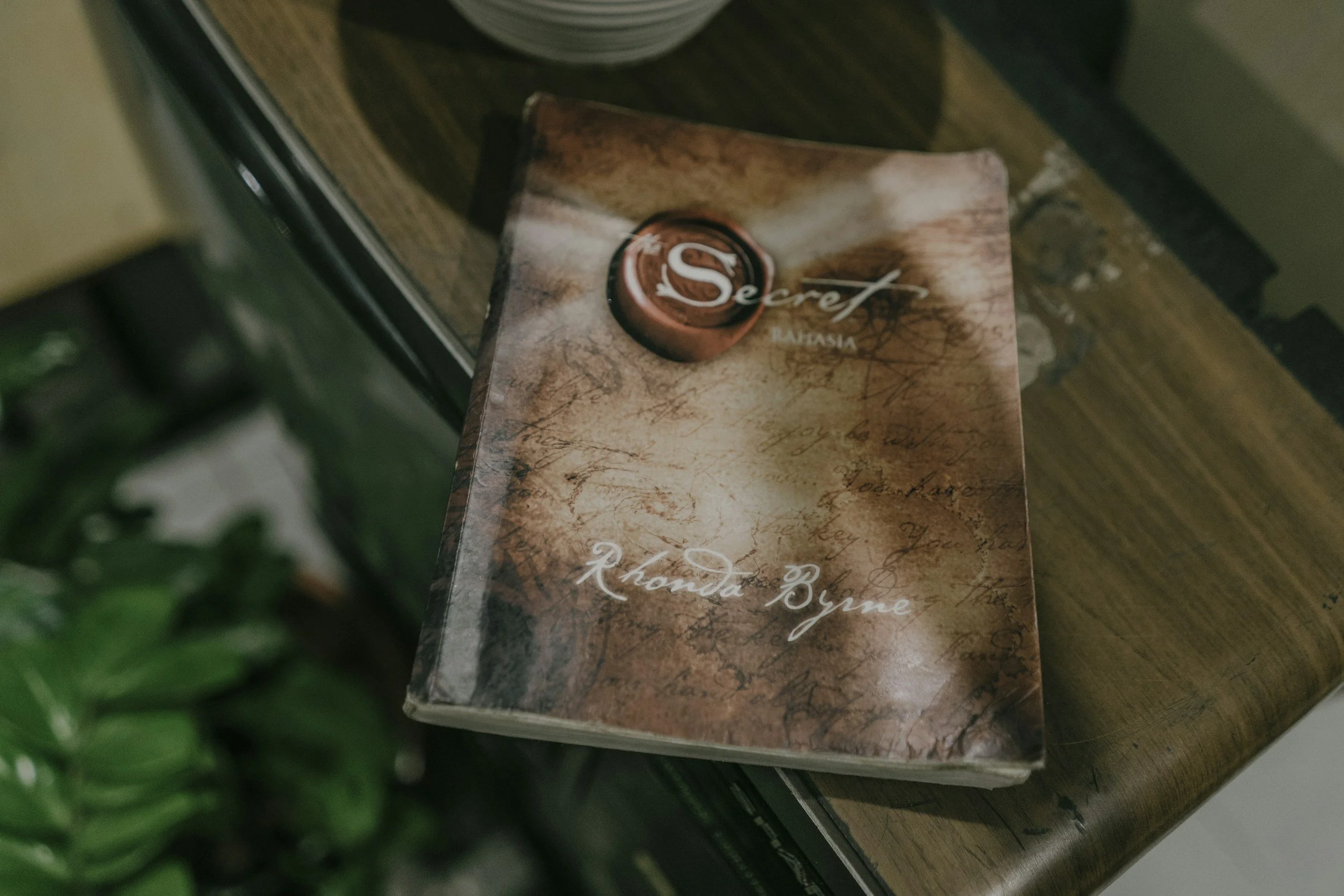
A woman named Skylar—or possibly Ashlynn—speaks directly into the camera while burning ethically sourced sage and explaining that abundance entered her life immediately after she began “aligning with wealth frequency.”
Somewhere in the background sits a ring light glowing with the intensity of a minor religious apparition.
And because we are living through the great collapse of institutional trust, millions of people think:
“You know… she may be onto something.”
A fascinating new set of studies published in Personality and Social Psychology Bulletin attempted to examine the psychology of manifestation belief itself. Not whether manifestation “works,” exactly, but what kind of thinking tends to accompany it.
The results are extraordinary in the most American way imaginable.

Emotional Prestige: How Therapy Language Became a New Form of Social Status
There was a time when emotional dysfunction had the decency to remain mysterious.
A spouse disappeared emotionally for six months, and nobody announced, “He is displaying dismissive-avoidant deactivation strategies rooted in unmet attachment needs.” They simply said, “Frank has become impossible since buying that boat.”
Cleaner era. Fewer syllables.
Now everyone speaks fluent therapy dialect. Entire relationships unfold in the language of psychological interpretation.
Couples no longer merely fight. They “activate each other’s nervous systems.”
A disagreement about holiday plans becomes “an attachment rupture.”
Someone asks for fifteen minutes alone and suddenly there is discussion of boundaries, emotional labor, co-regulation, trauma responses, and whether the dishwasher represents patriarchal oppression.
The internet has accomplished something extraordinary:
it has turned therapy language into social currency.
And like all currencies, it now functions partly as status.