Tuesday, September 15, 2026.
When folks cannot confront the institutions governing their lives, they often turn on the people standing beside them.
That is the deeper argument waiting inside George Packer’s Atlantic essay, “The College-Educated Working Class.”
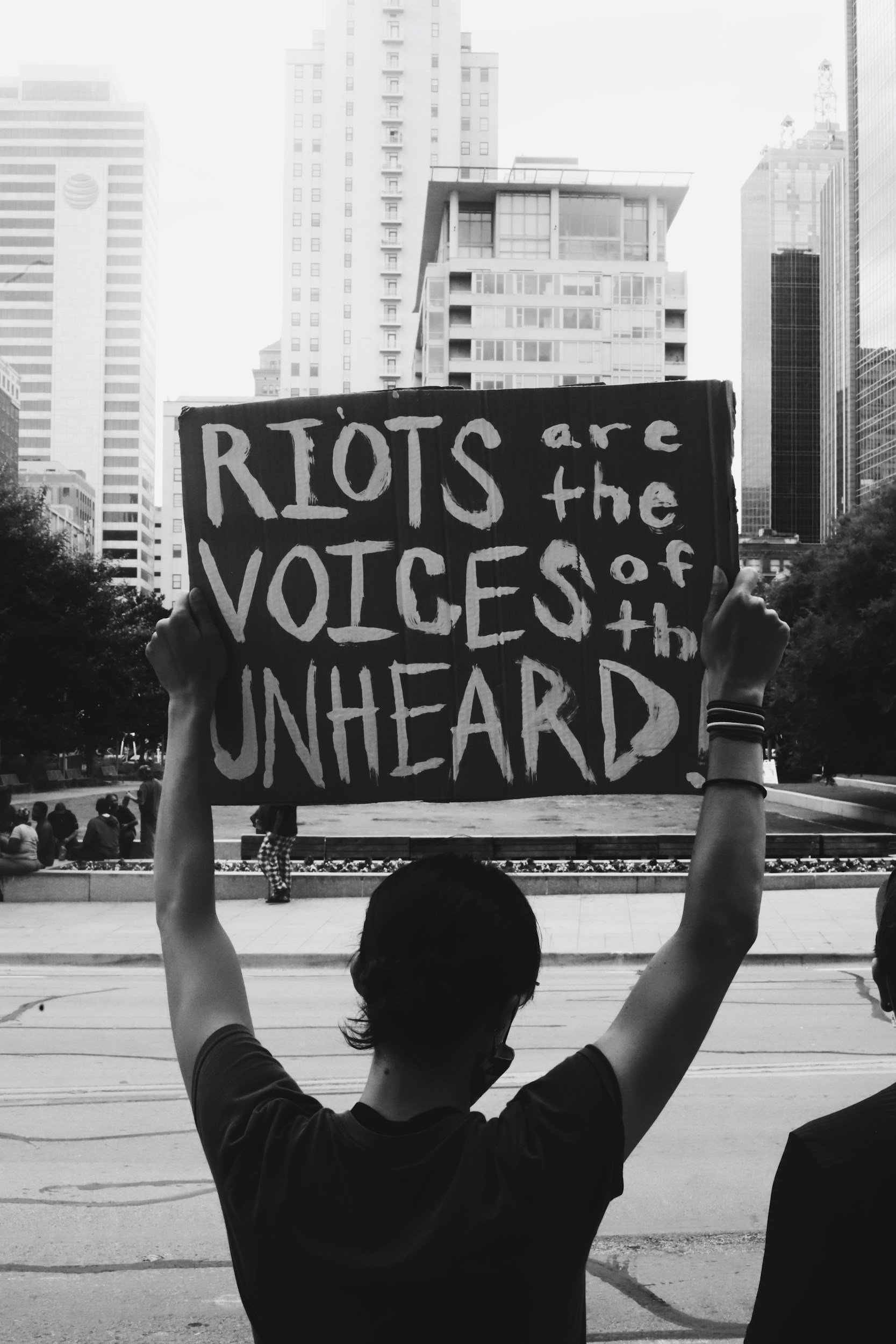
Packer calls this “an age of mutinies.”
The Tea Party, Occupy Wall Street, Black Lives Matter, the anti-lockdown protests, January 6, anti-ICE demonstrations, and MAGA itself have all presented themselves as rebellions against a corrupt establishment.
These movements differ enormously in their aims, methods, and moral claims.
But they share a conviction that legitimate authority has failed and ordinary people are being governed by institutions they can neither trust nor control.
Packer considers the decade before the Civil War as one possible precedent.
But his deeper historical comparison is with the beginning of the 20th century: another period of concentrated wealth, mass immigration, technological upheaval, political paralysis, and labor unrest.
His most important observation is that the fundamental conflict may not be between red and blue.
It may be between power and powerlessness.
I earned a Master’s degree in Labor Studies before becoming a marriage and family therapist. The two fields are not as far apart as they might first appear.
Labor studies teaches us to look upward at structures of power.
Family therapy teaches us to notice what folks do when they cannot.
When Anger Cannot Travel Upward
Power in a workplace generally runs vertically.
Owners govern executives. Executives govern managers. Managers govern workers. Increasingly, investment firms govern the owners, and algorithms quietly govern everyone while insisting that they are merely improving efficiency.
But anger does not always travel upward toward the people who possess power.
That direction can be dangerous. Workers who confront power may be fired, disciplined, humiliated, or ignored.
As my colleague Yael Schonbrun points out, while we might recognize our pain, we rarely recognize our meanness.
So anger often travels sideways.
Workers blame immigrants. Men blame women. Women blame men. Some college graduates regard folks without degrees as ignorant, and easily manipulated.
Not surprisingly, some folks without degrees regard graduates as pampered, condescending frauds.
White workers and workers of color argue over who is more entitled to call themselves working class. A barista earning $19 an hour and a warehouse worker earning $21 are carefully supplied with reasons to despise one another.
This is familiar territory to a family therapist.
When a couple cannot speak directly about the central injury—money, dependency, sex, power, disappointment, betrayal—they often begin fighting about something safer. Dishes. Screen time. Parenting styles. Somebody’s tone of voice at breakfast.
The argument is real. But it is not the whole argument.
The American culture war is increasingly becoming our national fight about the dishes.
The Broken Bargain
For decades, America offered young people a fairly explicit bargain.
Go to college. Work hard. Delay gratification. Acquire the right credentials.
You will enter the professional class and enjoy a life more secure than the one your parents had.
Millions kept their side of the bargain.
The economy did not.
They graduated with debt into a world of temporary contracts, gig work, adjunct professorships, impossible housing costs, disappearing career ladders, and jobs that offered the vocabulary of self-actualization without the wages of adulthood.
Starbucks employees became “partners.” Apple retail workers became “creatives” and “geniuses.” Amazon warehouse workers became “associates.”
The modern corporation gave the employee an elevated identity in place of actual power.
They were promised autonomy.
They received branding.
This is more than economic disappointment. It is a relational betrayal.
The institution said: Trust me. Invest in me. Organize your life around the future I have promised you.
Then the institution changed the terms.
Americans are not simply mourning lost income. They are mourning an adulthood they believed they had earned: the home, the family, the useful work, the competent social identity, and the reassuring sense of moving forward.
The injury is financial.
However, the humiliation is existential.
Class Is the Ability to Say No
The phrase “college-educated working class” sounds contradictory only if class is defined by cultural taste.
A person may drink expensive coffee, use fashionable political language, watch prestige television, and possess a graduate degree while having almost no control over the conditions of their labor.
The real class question is not whether you carry an NPR tote bag.
Can you refuse an unsafe workload?
Can you challenge your supervisor?
Can you leave an abusive employer?
Can you survive three months without income?
If the answer is no, the degree hanging on the wall may be less a passport into the professional class than an expensively framed receipt.
Packer’s college-educated workers are discovering what traditional workers have always known: prestige does not compensate for powerlessness.
A flattering title does not protect you from an arbitrary schedule, an indifferent manager, or a company that can reorganize your life from several time zones away.
Mutiny Is Not Solidarity
There is political possibility in the unionization of baristas, warehouse employees, physicians, screenwriters, graduate students, and retail workers.
But shared exploitation does not automatically produce solidarity.
Americans can occupy similar economic positions while remaining divided by education, race, religion, region, immigration, gender, manners, and moral vocabulary. These differences cannot simply be declared superficial. They are not superficial to the folks living them.
Nor can every cultural conviction be reduced to economics.
Religious belief is not merely displaced wage anxiety. Racial conflict is not simply class conflict in costume. Immigration produces moral and practical questions that remain difficult even in a fairer economy.
But economic insecurity provides the heat in which these differences become combustible.
A marriage offers a useful comparison.
Two spouses may share children, a mortgage, 20 years of history, and a sincere desire to remain married. None of that guarantees that they experience themselves as being on the same side.
“We have common interests” is an observation.
“We belong to one another” is an achievement.
Solidarity must be constructed through repeated experiences of mutual usefulness.
You took a risk for me. I defended you. We solved something together. Gradually, your problem becomes our problem.
Labor movements once built that identity through union halls, grievance meetings, picket lines, shared meals, and shared victories.
Social media does nearly the opposite.
It rewards ideological purity, public denunciation, emotional escalation, and the discovery of increasingly minor differences among potential allies.
The algorithm may be the most efficient union-busting device ever invented.
It persuades workers to spend the evening prosecuting one another instead.
Where Packer Undermines Himself
Packer wants readers to look beneath the red-blue conflict and recognize a common experience of powerlessness. But his opening description of the two Americas is not remotely symmetrical.
He describes multicultural America as inclusive, outward-looking, and oriented toward the future. Heritage America is described as exclusive, inward-looking, nostalgic, and willing to destroy constitutional traditions to recover an imaginary past.
That may be his honest political judgment. But rhetorically, it recreates the problem he later asks the labor movement to overcome.
You cannot begin by declaring one group morally evolved and the other morally defective, then invite them to brunch to discuss their common economic fate.
This does not require pretending that every movement is morally equivalent. January 6, union organizing, racial protest, political violence, and a student demonstration are not interchangeable because someone calls each of them a rebellion.
But moral judgment and useful diagnosis are different tasks.
If we want to understand why folks enter a political movement, contempt offers the writer a moment of satisfaction at the expense of understanding.
Family therapists learn this quickly.
If the therapist privately regards one spouse as enlightened and the other as the family troglodyte, the troglodyte will soon notice.
Therapy then becomes another courtroom in which the verdict was written before the defendant arrived.
The Economy Comes Home
Packer stops just short of the most intimate implication of his argument.
Economic powerlessness does not remain at work.
It comes home.
It appears as delayed marriage, postponed parenthood, adult children unable to leave home, arguments about spending, sexual withdrawal, resentment between earners, status anxiety, and the quiet humiliation of needing money from aging parents.
It appears when two exhausted life partners interpret structural scarcity as evidence that their counterpart is selfish, lazy, insufficiently ambitious, or bad with money.
The economy creates the pressure.
The spouse supplies the face.
A husband cannot yell at the private-equity firm that reorganized his workplace, so he becomes furious when his wife orders takeout.
A wife cannot renegotiate the housing market, so she accuses her husband of lacking drive.
A young couple cannot create affordable child care, so they fight over whose career must absorb the loss.
Each partner may be describing something real. Neither fully understands the size of the third party already living in the marriage.
That third party is economic insecurity.
Family therapists often treat the emotional consequences of labor arrangements without naming them. We discuss communication, attachment, differentiation, boundaries, and emotional regulation—as we should.
But sometimes a couple is not merely communicating poorly.
Sometimes they are trying to conduct a marriage inside an economy that has made ordinary adulthood an expensive luxury.
Therapy can help partners stop converting structural pressure into personal indictment. It cannot make the structure disappear.
The People Above Deck
Packer is ultimately describing what happens when a society produces educated expectations without providing adult agency.
The labor-studies version is that concentrated power fragments the workers who might otherwise oppose it.
The family-systems version is that anxiety which cannot be addressed at its source becomes displaced, triangulated, and carried into safer relationships.
Put them together, and the principle is painfully simple:
When people cannot fight up, they fight sideways—and eventually they fight at home.
Red and blue are real.
Race, religion, immigration, gender, and cultural inheritance are real.
But these divisions have also become containers for injuries originating elsewhere: blocked adulthood, loss of control, status humiliation, institutional betrayal, and the suspicion that the future has been quietly canceled.
America may indeed be living through an age of mutinies.
The trouble is that the passengers keep mutinying against one another while the owners remain comfortably above deck.
Be Well, Stay Kind, and Godspeed.
REFERENCES:
Packer, G. (2026, March 16). The college-educated working class. The Atlantic.