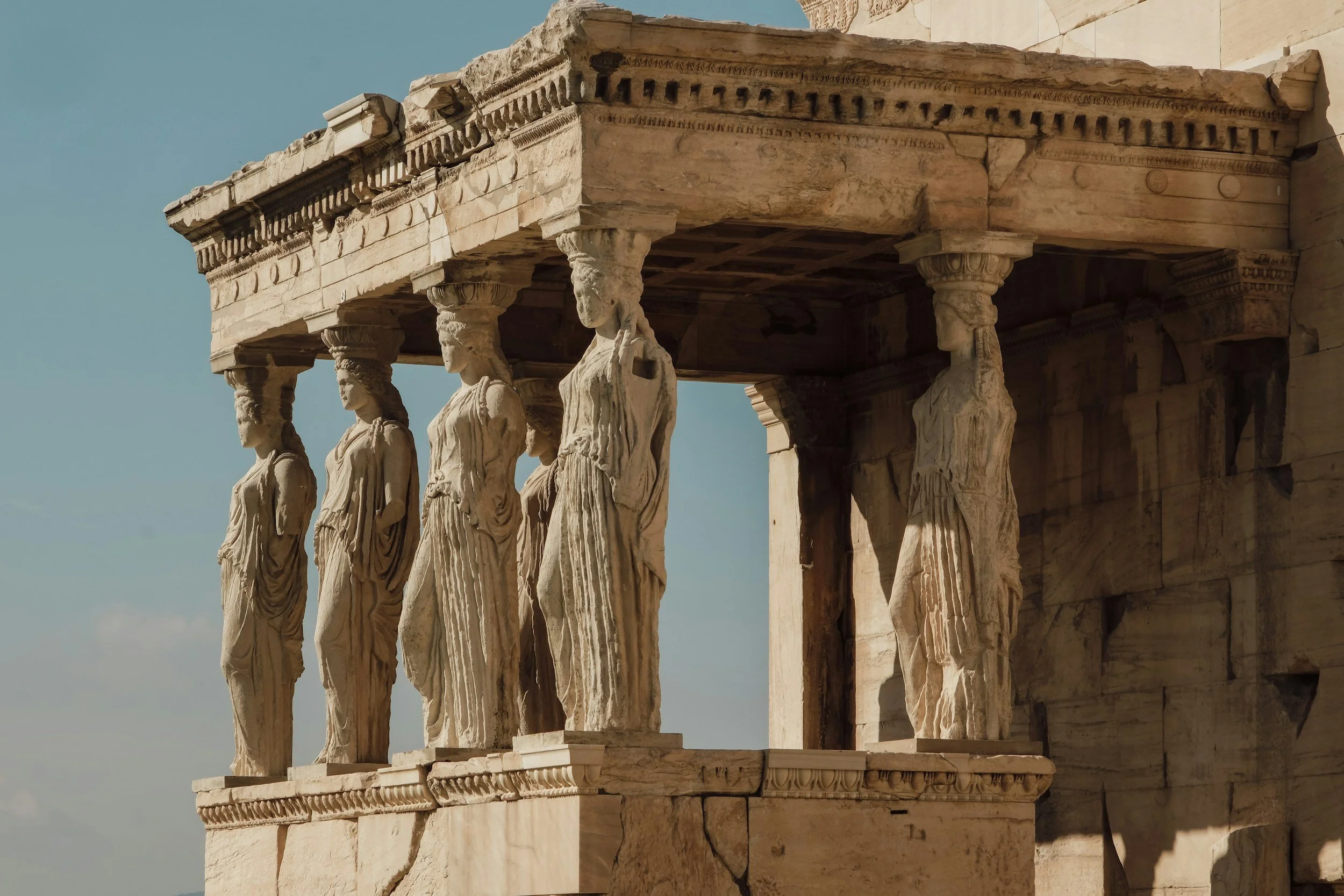
Friday, June 5, 2026. This is for erudite children everywhere.
Most of us discover the fragility of goodness on an ordinary Friday.
Not during a war.
Not during a financial collapse.
Not during some cinematic catastrophe that later becomes a documentary.
An ordinary Friday.
The phone rings.
The doctor clears his throat.
A spouse says, "We need to talk."
A child leaves home.
A parent falls.
A friend dies.
A diagnosis arrives.
And suddenly life divides itself into two categories:
Before.
After.
Long before modern psychology, long before self-help, long before social media transformed every setback into a personal branding opportunity, the ancient Greeks wrestled with a difficult question:
Can a good life be broken by forces beyond our control?
The philosopher Martha Nussbaum devoted one of the most important works of modern philosophy to that question in The Fragility of Goodness.
Her answer was both ancient and unsettling.
Yes.
A good life can break.
Not because you failed.
Not because you lacked insight.
Not because you forgot to communicate properly, regulate your nervous system, establish healthy boundaries, optimize your morning routine, or purchase the correct productivity planner.
A good life can break because every human life is built from things that can be lost.
The Greeks understood this instinctively.
Modern Americans often resist it.
We are a nation of engineers, managers, optimizers, and problem-solvers. We secretly believe that enough information eventually becomes control.
Track your sleep.
Monitor your calories.
Count your steps.
Analyze your attachment style.
Measure your productivity.
Audit your emotions.
Review your communication patterns.
The promise underneath all of this is rarely stated outright, but it hovers in the background:
If I become sufficiently self-aware, life will become manageable.
Perhaps even safe.
The Greeks would have recognized that promise immediately.
And they would have rejected it.
Not because they were pessimists.
Because they were bestowing attention.
They noticed that admirable women and men suffered all the time.
Plagues arrived.
Ships sank.
Cities burned.
Children died.
Harvests failed.
Wars erupted.
Fortune behaved like fortune.
Human beings could influence events, but they could never completely govern them.
Nussbaum saw something profound in these ancient stories.
The tragedy was not simply that bad things happened.
The tragedy was that good things happened to vulnerable creatures.
Love existed.
Friendship existed.
Children existed.
Communities existed.
And because they existed, loss became possible.
The fragility of goodness is not the fragility of virtue.
It is the fragility of everything worth loving.
That distinction matters.
Because many of us quietly carry a belief that suffering must somehow be evidence of failure.
When something terrible happens, we immediately begin looking for the mistake.
What warning sign was missed?
What lesson wasn't learned?
What boundary wasn't established?
What trauma wasn't healed?
What flaw produced this outcome?
The search is understandable.
Explanations feel safer than uncertainty.
If every tragedy is caused by error, then perhaps error can be eliminated.
And if error can be eliminated, perhaps suffering can be eliminated too.
But life stubbornly refuses to cooperate.
Sometimes a loving marriage encounters heartbreak.
Sometimes a faithful partner is betrayed.
Sometimes a healthy body becomes ill.
Sometimes a careful investor loses everything.
Sometimes a devoted parent experiences devastating, aching loss.
Not every wound is a verdict.
Not every loss is a lesson.
Not every tragedy arrives carrying a moral.
Sometimes life simply reminds us that we are creatures rather than gods.
The therapeutic age has complicated this problem.
We have developed a remarkable vocabulary for understanding ourselves.
We know our attachment styles.
Our trauma histories.
Our nervous system responses.
Our communication patterns.
Our family systems.
Our personality structures.
This knowledge is often useful.
Sometimes enormously useful.
But a strange thing happens when self-understanding becomes a substitute for wisdom.
We begin imagining that awareness itself can protect us.
It cannot.
Grief does not consult your attachment style before arriving.
Your son’s cancer does not upgrade your communication skills.
A layoff does not pause to admire your emotional intelligence.
The fragility of goodness remains.
No amount of insight abolishes it.
This may sound like bad news.
I think it is the beginning of maturity.
Especially in marriage.
Many partners enter marriage with an unspoken hope that love will finally provide safety.
Not physical safety.
Existential safety.
The feeling that uncertainty has ended.
The feeling that loneliness has ended.
The feeling that loss has been defeated.
Marriage does not provide that.
No relationship can.
A marriage does not eliminate vulnerability.
It deepens it.
The strongest marriages are not the ones that conquer uncertainty.
They are the ones that learn how to stand together inside it.
That realization becomes easier to understand with age.
When we are young, life feels expandable.
There will always be another summer.
Another Christmas.
Another opportunity.
Another conversation.
Another chance.
Then one day you notice that entire worlds have quietly disappeared.
Restaurants that once seemed permanent are gone.
Teachers are gone.
Parents are gone.
Neighbors are gone.
The dog that greeted you at the door is gone.
The voice on the answering machine is gone.
The songs remain, but the person who introduced them to you no longer does.
The older we become, the more life resembles a series of vanishing acts.
This can make a person bitter.
Or it can make a person attentive.
I increasingly suspect attentiveness is one of the highest forms of wisdom.
Because once we stop demanding permanence, gratitude becomes possible.
The morning coffee changes.
The walk changes.
The conversation changes.
The ordinary Thursday changes.
We stop asking whether the moment will last forever.
We begin appreciating that it exists at all.
This may also explain something curious happening in our culture.
After decades of worshiping efficiency, many souls seem to be rediscovering the sacred.
Not always religion.
Something older.
Something deeper.
Partners create rituals.
Families preserve recipes.
Grandchildren interview grandparents.
Old churches fill again.
Candles are lit.
Photographs are printed.
Pilgrimages are taken.
Hospital rooms become places of prayer.
Funerals become places of revelation.
The sacred often enters precisely where control ends.
A newborn child.
A deathbed.
A marriage.
A sunset.
A final conversation.
The moments that feel most sacred are often the moments that remind us how little authority we actually possess.
Perhaps that is why love itself feels sacred.
Because love is the most fragile good of all.
The beloved can leave.
The beloved can disappoint us.
The beloved can change.
The beloved can die.
And yet we love anyway.
That is the miracle.
The modern imagination dreams of invulnerability.
The ancient imagination sought something better.
Not protection.
Courage.
The courage to love what cannot be guaranteed.
The courage to build despite uncertainty.
The courage to trust despite risk.
The courage to care despite inevitable loss.
The Greeks understood this.
Martha Nussbaum understands this.
Most grandparents understand this.
Most widows understand this.
Most loving parents understand this.
Eventually, if life is generous enough to teach us, most of us understand it too.
A strange thing happens when we finally accept the fragility of goodness.
We stop demanding guarantees.
We become easier to astonish.
The grandchildren seem miraculous.
The summer evening grows larger.
The shared meal becomes richer.
The ordinary Thursday becomes holy.
The possibility of loss does not cheapen love.
It intensifies it.
The fact that summer ends is what makes June beautiful.
The fact that children leave is what makes childhood precious.
The fact that life is temporary is what makes this morning worth noticing.
A world without fragility would certainly be safer.
It would also be flatter.
Less tender.
Less urgent.
Less alive.
The secret is not learning how to protect goodness forever.
The secret is learning how to recognize it while it is sitting quietly beside you.
Before the phone rings.
Before the season changes.
Before the chair at the table becomes empty.
Before the light moves across the room and disappears.
The opposite of fragility is not strength.
The opposite of fragility is indifference.
And indifference has never produced a great marriage.
Or a great friendship.
Or a great faith.
Or a great life.
Every worthwhile thing remains vulnerable.
That vulnerability is not evidence that something is wrong.
It is evidence that something matters.
FAQ
What is the fragility of goodness in simple terms?
The fragility of goodness is the idea that even a life built on virtue, wisdom, and good intentions can be damaged by events beyond a person's control.
Character matters, but character alone cannot eliminate tragedy, illness, loss, or bad luck.
Who developed the idea of the fragility of goodness?
The concept is most closely associated with philosopher Martha Nussbaum, whose book The Fragility of Goodness examined how ancient Greek thinkers understood the relationship between virtue and fortune.
What is moral luck?
Moral luck describes the uncomfortable reality that outcomes often influence how we judge ourselves and others, even when those outcomes depend partly on chance.
Two partners may make identical decisions and experience dramatically different results because of circumstances neither controlled.
Does the fragility of goodness mean virtue is pointless?
No. The argument is almost the opposite. Virtue remains essential, but it is not omnipotent. Courage, wisdom, love, and integrity help us navigate uncertainty, yet they cannot guarantee protection from suffering.
Why do bad things happen to good people?
The fragility of goodness suggests that this question may have no fully satisfying answer. Human life unfolds within conditions we cannot completely control.
Goodness improves how we meet life's challenges, but it does not exempt us from them.
How does this idea apply to marriage?
Every healthy marriage contains vulnerability. To love deeply is to risk disappointment, grief, betrayal, illness, separation, and loss. The same openness that allows intimacy also creates the possibility of heartbreak.
What did the ancient Greeks teach about happiness?
Many Greek thinkers believed happiness depended on both character and fortune. A flourishing life required virtue, but also a measure of stability, health, community, and good fortune.
Is resilience the answer to the fragility of goodness?
Resilience helps, but resilience is not invulnerability. The goal is not becoming impossible to hurt. The goal is developing the capacity to remain human, compassionate, and morally grounded when life inevitably and eventually hurts.
What is the difference between stoicism and the fragility of goodness?
Classical Stoicism argues that virtue alone is sufficient for a good life. The fragility-of-goodness tradition argues that external events genuinely matter.
Losing a spouse, a child, a home, or one's health is not merely a mistaken judgment. Some losses are real losses.
Why is this idea suddenly relevant today?
Because modern culture often promises total control.
We are told that enough optimization, discipline, productivity, therapy, mindfulness, supplements, and life hacks can protect us from suffering.
The fragility of goodness reminds us that vulnerability is not a personal failure. It is part of being human.
And perhaps that is the deepest insight Martha Nussbaum recovered from the Greeks:
Goodness was never fragile because it was weak.
Goodness is fragile because it is alive.
Be Well, Stay Kind, and Godspeed.
REFERENCES:
Nussbaum, M. C. (2001). The fragility of goodness: Luck and ethics in Greek tragedy and philosophy (Rev. ed.). Cambridge University Press.
Aristotle. (2000). Nicomachean ethics (R. Crisp, Trans.). Cambridge University Press. (Original work published ca. 350 BCE)
Sophocles. (2018). Oedipus the King (D. Grene, Trans.). University of Chicago Press. (Original work performed ca. 429 BCE)