Monday, June 8, 2026. This is for Jess and Phil, with affection.
New research suggests that most of us dramatically overestimate how dishonest other folks are.
The consequences reach from marriage and friendship to social media, politics, and the very fabric of trust itself.
There is a peculiar superstition circulating among modern adults.
The superstition is not that human beings are good.
The superstition is that human beings are terrible.
Mention marriage and someone will tell you about divorce.
Mention religion and someone will tell you about hypocrisy.
Mention politics and someone will tell you about corruption.
Mention social media and someone will tell you about narcissists.
Mention trust and someone will look at you as if you have just proposed investing your retirement savings in a pyramid scheme operated by ferrets.
The hopeful person is considered naïve.
The trusting person is considered gullible.
The cynic, meanwhile, is treated like the adult in the room.
Suspicion has become a form of sophistication.
Pessimism has become a personality.
And distrust increasingly passes for wisdom.
A fascinating new study suggests we may be getting the math wrong.
Researchers recently found that we humans consistently overestimate how dishonest other folks actually are. The study participants assumed far more strangers would lie and cheat than really did.
Even managers responsible for workplace policy dramatically exaggerated how common dishonesty was. When researchers corrected these mistaken assumptions, trust increased and support for surveillance decreased.¹
At first glance, this appears to be a study about lying.
It is not.
It is a study about attention.
More specifically, it is a study about what human beings fail to notice.
And that may be one of the defining problems of modern life.
The Prestige of Cynicism
One of the oddest developments of the last several decades is that cynicism has acquired social status.
Trust requires explanation.
Distrust requires none.
Tell someone that most spouses are trying their best and they may roll their eyes.
Tell them that most parents genuinely love their children and they will send you an article about childhood trauma.
Tell them that most citizens are reasonably decent and they will immediately produce a documentary about cult leaders, fraudsters, and politicians.
Somewhere along the way, we began confusing darkness with depth.
The assumption became simple:
The more disappointed you are in humanity, the more intelligent you must be.
G. K. Chesterton spent much of his life arguing against exactly this mistake.
Chesterton believed that sophisticated adults often become blind to ordinary miracles.
They learn to notice corruption but forget to notice integrity.
They learn to identify hypocrisy but lose the ability to recognize sincerity.
They become experts in failure and amateurs in success.
The result is a distorted picture of reality.
Not because reality is perfect.
But because reality contains more goodness than we bother to count.
We Have Become Collectors of Human Malfunctions
Modern culture knows an astonishing amount about pathology.
We know about narcissism.
We know about Machiavellianism.
We know about psychopathy.
We know about gaslighting.
We know about cult dynamics.
We know about manipulation.
We know about trauma.
We know about dark personality traits. Lord knows I’ve covered this ad nauseam.
At this point there is probably a podcast explaining why your golden retriever is exhibiting covert narcissistic tendencies due to unresolved attachment wounds.
Pathology is fascinating.
Pathology sells.
Pathology generates clicks.
Nobody binge-watches a six-part documentary called:
The Accountant Who Behaved Appropriately for Forty Consecutive Years.
Nobody creates a true-crime podcast titled:
Neighbor Returns Ladder. Community Stable.
Nobody stays up until midnight streaming:
Woman Remains Loyal During Moderately Difficult Marriage.
Failure is dramatic.
Goodness is repetitive.
One becomes a story.
The other becomes an infrastructure.
The Brain Was Built for Bad News
Part of the explanation is biological.
Human beings evolved in environments where threats mattered more than comforts.
A hunter who missed a berry patch lost lunch.
A hunter who missed a tiger lost tomorrow.
Our nervous systems therefore became exquisitely tuned toward danger.
Psychologists call this our negativity bias.
Bad news receives premium placement in memory.
Good news is treated like background music.
The result is predictable.
We remember betrayals more vividly than loyalty.
Criticism more vividly than praise and admiration.
Scandals more vividly than devotion.
One affair can overshadow twenty years of faithfulness.
One lie can outweigh hundreds of honest conversations.
One public scandal can color our perception of an entire institution.
The study suggests this bias does not merely shape memory.
It shapes expectations.
We are not simply remembering the worst.
We are also bracing for the worst.
The Lost Wallet Problem
One of my favorite findings in social science involved lost wallets.
Researchers deliberately dropped wallets in cities around the world.
Some contained money.
Some contained substantial amounts of money.
Conventional wisdom predicted theft.
Reality had other ideas.
Many wallets were returned.
In some places, wallets containing more money were actually more likely to be returned.
The researchers were surprised.
The public was surprised.
Chesterton would not have been surprised.
He spent much of his career pointing out that ordinary virtue is so common that we stop noticing it.
The real mystery is not why some folks steal.
The real mystery is why so many do not.
Why does the cashier hand back too much change?
Why does the mechanic fix the brakes correctly?
Why does the spouse come home?
Why does the friend keep the confidence?
Why does the nurse stay late?
Why does the teacher show up every morning?
Civilization rests on millions of opportunities for dishonesty that are quietly refused.
We rarely notice them because they happen every day.
Social Media: The Museum of Pathology
Imagine trying to understand dogs by studying only dogs that bite.
Imagine trying to understand aviation by studying only crashes.
Imagine trying to understand marriage by interviewing only divorce attorneys.
That is remarkably close to what social media does to our understanding of human nature.
The algorithms are not designed to show normality.
Normality is boring.
Nobody posts:
"My spouse remained faithful today."
"My coworker behaved ethically."
"My teenager made a sensible decision."
"My neighbor acted appropriately."
Instead we encounter a nonstop parade of exceptions.
The affair.
The fraud.
The narcissist.
The scammer.
The cult leader.
The influencer meltdown.
The executive embezzling millions.
The politician caught lying.
The feed becomes a museum of pathology.
Then we make a statistical error.
We mistake visibility for prevalence.
We assume that what captures attention must also dominate reality.
But reality and attention have never been the same thing.
The Marriage Surveillance State
The most interesting part of the study may not have involved dishonesty at all.
It involved surveillance.
Managers who overestimated dishonesty were more likely to support monitoring and restrictive policies.¹
The same pattern appears inside struggling relationships.
Suspicion has a predictable life cycle.
First comes uncertainty.
Then monitoring.
Then interpretation.
Then misinterpretation.
Soon one partner is conducting a counterintelligence operation because the other stopped for coffee on the way home.
The relationship becomes organized around detection.
And relationships organized around detection rarely thrive.
Trust is oxygen.
Surveillance is carbon monoxide.
One sustains intimacy.
The other slowly suffocates it.
Many distressed couples are not suffering from a lack of information.
They are suffering from a collapse of trust.
The Cynic's Mistake
The reason cynicism survives is because it contains a kernel of truth.
Human beings are capable of betrayal.
Human beings are capable of cruelty.
Human beings are capable of selfishness.
The cynic sees these realities.
Then commits a subtle error.
The cynic mistakes part of the evidence for all of the evidence.
This is where Chesterton remains surprisingly relevant.
He believed that pessimists and optimists suffered from the same problem.
Both were looking at only half the world.
The optimist notices goodness and overlooks corruption.
The pessimist notices corruption and overlooks goodness.
Wisdom requires seeing both.
The study suggests exactly that.
Participants were not wrong that dishonesty exists.
They were wrong about how much dishonesty exists.¹
That distinction changes everything.
A world where 30% cheat is very different from a world where 70% cheat.
One requires caution.
The other requires panic.
Many of us are emotionally living in the second world while actually inhabiting the first.
Kurt Vonnegut's Advice
Late in life, Kurt Vonnegut developed a habit.
Whenever he found himself enjoying a pleasant moment, he would stop and say:
"If this isn't nice, what is?"
It sounds simple.
But it is actually profound.
Vonnegut understood something that modern culture frequently forgets:
Attention determines experience.
What we notice becomes our reality.
Social media trains us to notice collapse.
Vonnegut trained himself to notice picnics and puppies.
Social media trains us to notice scandals.
Vonnegut trained himself to notice friendships.
Social media trains us to notice disasters.
Vonnegut, who fought depression for much of adult life, trained himself to notice ordinary happiness while it was happening.
Perhaps we need a similar discipline when thinking about human nature.
Not blind optimism.
Not sentimentality.
Simply attention.
Attention to what is actually there.
The Return of Ordinary Goodness
Chesterton once wrote:
"The most extraordinary thing in the world is an ordinary man and an ordinary woman and their ordinary children."
That sentence feels almost rebellious today.
We live in an age obsessed with extremes.
Extreme politics.
Extreme personalities.
Extreme diagnoses.
Extreme scandals.
Extreme outcomes.
Meanwhile ordinary goodness continues quietly in the background.
A spouse keeps a promise.
A neighbor returns a wallet.
A friend answers the phone.
A teacher encourages a student.
A nurse stays late.
A citizen obeys the law despite having every opportunity not to.
These acts are so common that we stop seeing them.
Which is precisely why they matter.
Civilization is not sustained by extraordinary heroism.
Civilization is sustained by ordinary decency repeated millions of times.
The study does not tell us that human beings are saints.
It tells us something more interesting.
Human beings are better than we think they are.
That is a smaller claim.
A humbler claim.
A more scientific claim.
And perhaps a more hopeful one.
Because the deepest finding hidden inside this research may be this:
We have become remarkably skilled at noticing what threatens civilization while overlooking what sustains it.
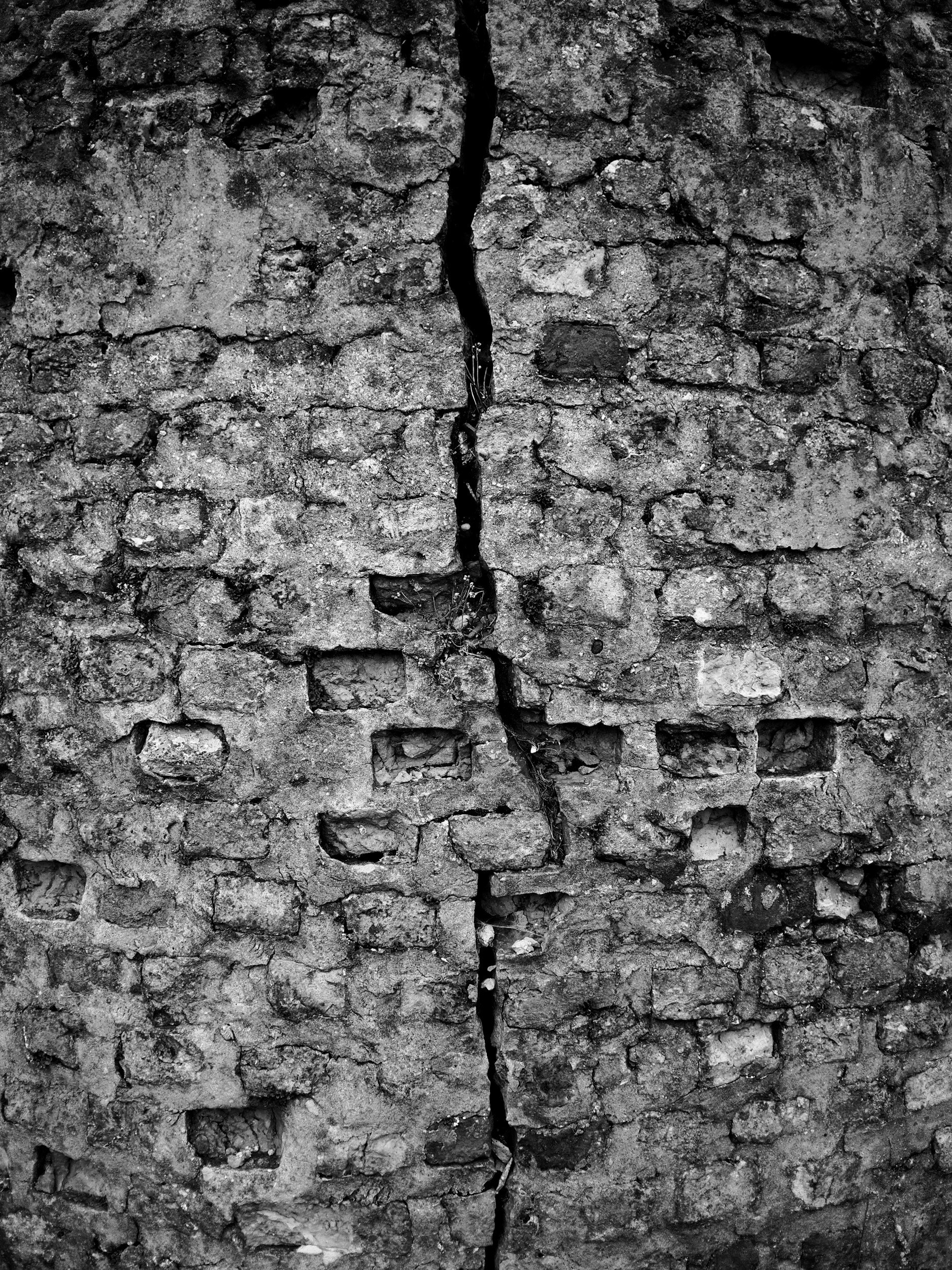
The cynic sees every crack in the foundation.
The wise person remembers to look at the building.
Be Well, Stay Kind. and Godspeed.
REFERENCES:
Martuza, J., Thorbjørnsen, H., & Sjåstad, H. (2026). Beliefs versus reality: People overestimate the actual dishonesty of others. Journal of Experimental Social Psychology.