Friday, June 5, 2026. This is for Karl & Jenny.
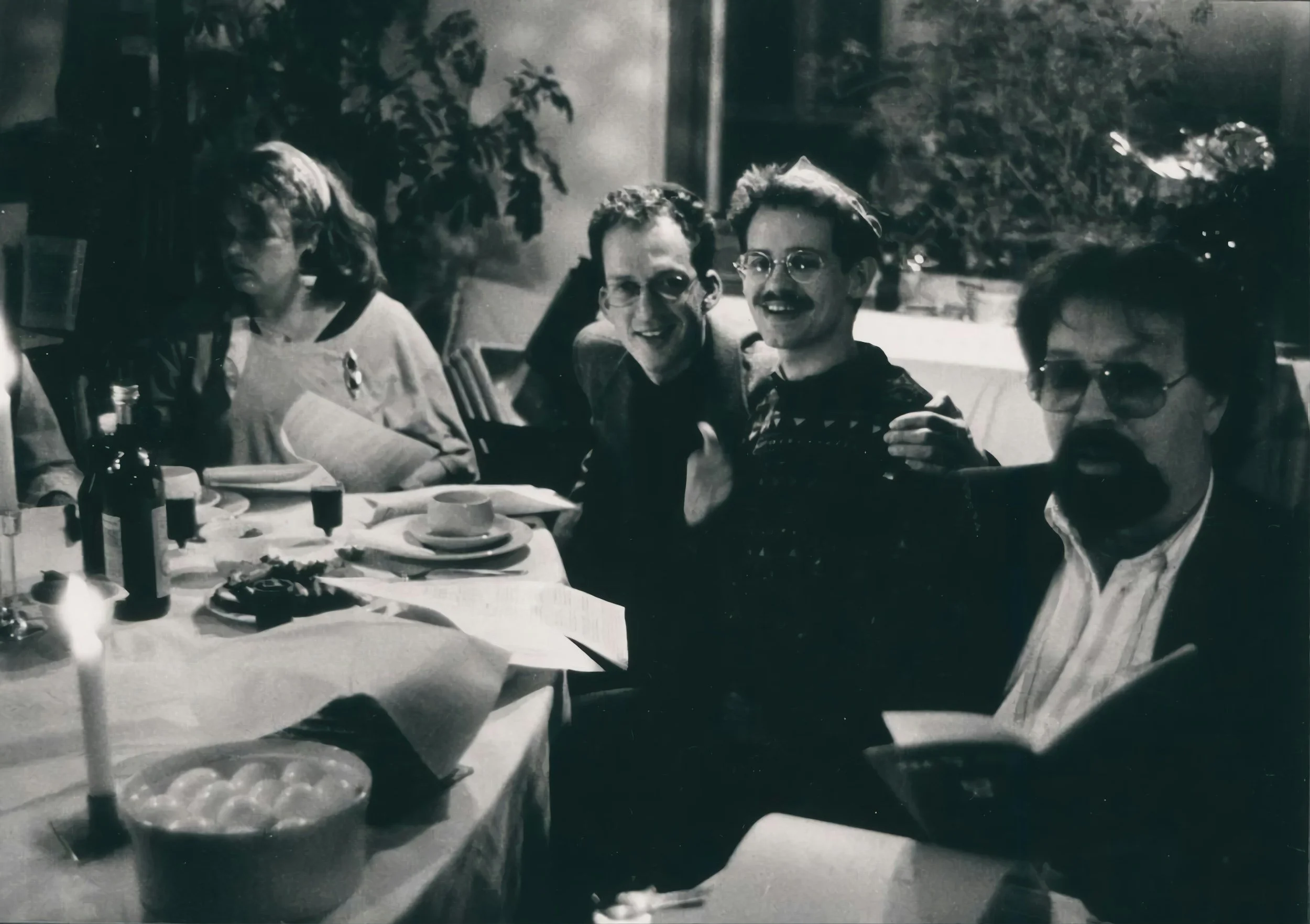
Nobody intended to stop having dinner together.
There was no family meeting.
Nobody stood up and announced:
"Beginning immediately, we will gradually weaken the bonds that hold this family together."
It happened the way most important things happen.
Quietly.
Soccer practice.
Late meetings.
Traffic.
Exhaustion.
Phones.
Streaming.
Convenience.
Tuesday disappeared.
Then Wednesday.
Then Thursday.
Before long everyone was eating.
Nobody was gathering.
That distinction turns out to matter more than we thought.
Because one of the strangest discoveries of modern life is that human beings can remain in contact while slowly losing connection.
A husband and wife can exchange dozens of texts and not truly meet.
Parents and children can live under the same roof and inhabit different worlds.
Friends can follow one another online while gradually disappearing from one another's actual lives.
The modern world solved communication.
It accidentally created drift.
And I am increasingly convinced that drift—not conflict, not politics, not technology itself—is one of the hidden problems of our age.
Drift is what happens when recurring encounters disappear.
Drift is what happens when nobody leaves but nobody returns either.
Drift is what happens when relationships become logistical instead of relational.
And drift is remarkably difficult to notice while it is occurring.
Because drift never arrives dramatically.
It arrives disguised as convenience.
One skipped dinner.
One canceled walk.
One postponed phone call.
One abandoned tradition.
One more evening spent in separate rooms.
Nothing looks serious.
Until years later when everybody feels disconnected and nobody can quite explain why.
The explanation is often hidden inside a thousand small absences.
For decades, we have been told a story about freedom.
More choices.
More flexibility.
More customization.
More mobility.
More independence.
And much of that has been genuinely good.
The modern world has expanded possibilities in ways previous generations could scarcely imagine.
But every cultural gain comes with a cost.
The hidden cost of flexibility is that eventually everything becomes optional.
Meals become optional.
Neighborhood gatherings become optional.
Religious participation becomes optional.
Family traditions become optional.
Friendships become optional.
Even belonging begins to feel optional.
At first this feels liberating.
Then it starts to feel lonely.
Not the loneliness of physical isolation.
A stranger kind.
The loneliness of being connected to hundreds of people and deeply known by very few.
The loneliness of crowded calendars and empty hearts.
The loneliness of communication without communion.
The loneliness of being everywhere except fully present anywhere.
This is where ritual enters the story.
Not because rituals are quaint.
Not because they are nostalgic.
Not because they remind us of some imaginary golden age that never actually existed.
Rituals matter because they create recurring encounters.
The weekly dinner.
The annual vacation.
The holiday gathering.
The morning coffee.
The evening walk.
The Sunday phone call.
The standing invitation.
The family recipe.
The birthday tradition.
The places where life repeatedly gathers itself.
We often confuse rituals with routines.
But they perform very different jobs.
A routine helps you accomplish something.
A ritual helps you remember something.
Brushing your teeth is a routine.
Lighting birthday candles is a ritual.
Checking your calendar is a routine.
Gathering around the Thanksgiving table is a ritual.
One helps life function.
The other helps life matter.
Children understand this instinctively.
Ask a child to choose a bedtime story and they will often choose the same one they chose yesterday.
And the day before.
And the week before.
Adults find this mildly baffling.
The child does not.
The child is learning something profound.
Some things return.
The same story.
The same voice.
The same ending.
The same parent.
The same ritual.
Security is often nothing more than predictable love.
Adults are not so different.
We pretend we crave novelty.
Then we spend our lives recreating rituals.
The same vacation spot.
The same holiday traditions.
The same birthday cake.
The same songs.
The same stories.
The same table.
What we call tradition is often belonging made visible.
This becomes especially important in marriage.
Many couples believe intimacy survives through feelings.
Feelings matter.
But feelings are notoriously unreliable.
Rhythm is dependable.
The healthiest relationships often contain recurring places where connection happens.
Not because the couple always feels inspired.
Not because they possess extraordinary communication skills.
Because they keep returning.
Morning coffee.
Shared meals.
Evening walks.
Date nights.
Annual trips.
Tiny recurring encounters that protect the relationship from drift.
Families are not held together by love alone.
They are held together by recurring encounters.
That may be one of the least appreciated truths in modern family life.
Love matters.
Commitment matters.
Good intentions matter.
But relationships are built in the ordinary spaces where lives repeatedly overlap.
A marriage can survive conflict.
It struggles to survive the disappearance of all shared rhythms.
A family can survive stress.
It struggles to survive the disappearance of recurring gatherings.
A friendship can survive distance.
It struggles to survive the disappearance of return.
The tragedy is that drift rarely announces itself.
Nobody wakes up one morning and decides to become emotionally distant from the people they love.
It happens through omission.
The dinner skipped.
The walk postponed.
The tradition abandoned.
The call delayed.
The gathering canceled.
Then one day the relationship feels thinner than it once did, and nobody can remember exactly when the change occurred.
The answer is usually hidden inside a thousand moments that never happened.
Which is why the return of ritual feels so important.
Not because society is becoming nostalgic.
Not because younger adults secretly wish it were 1955.
Because human beings are rediscovering something that previous generations understood intuitively.
Belonging does not emerge from intensity.
Belonging emerges from return.
Return to the same people.
Return to the same stories.
Return to the same table.
Return to the same walk.
Return to the same promises.
Again.
And again.
And again.
For years we were told that meaning would arrive through novelty.
The next platform.
The next experience.
The next breakthrough.
The next reinvention.
The next upgrade.
Instead, many of us seem to be discovering something older and wiser.
Meaning rarely arrives through acceleration.
More often, it arrives through return.
The sacred, after all, is not necessarily what we worship.
The sacred is what we refuse to interrupt.
A family dinner.
A holiday tradition.
A weekly walk.
A standing phone call.
A promise kept.
A place reserved for one another.
In a culture increasingly organized around distraction, those small acts of return may be among the most radical things we do.
Not because they preserve the past.
Because they preserve the pathways back to one another.
A Thought Before You Go
If life has begun to feel rushed, fragmented, or oddly weightless, the answer may not be another system.
It may be a ritual.
A weekly dinner.
A morning coffee.
A Sunday phone call.
A walk after work.
A recurring moment that quietly says:
"No matter what else changes, this remains."
Understanding the pattern is not the same thing as interrupting the pattern.
Some relationships are not suffering from a lack of love.
They are suffering from drift.
And drift is rarely solved by insight alone.
It is interrupted by return.
Be Well, Stay Kind, and Godspeed.