Inclusive Gymnastics for Neurodivergent Kids: What SpectrAbilities-Style Programs Actually Offer
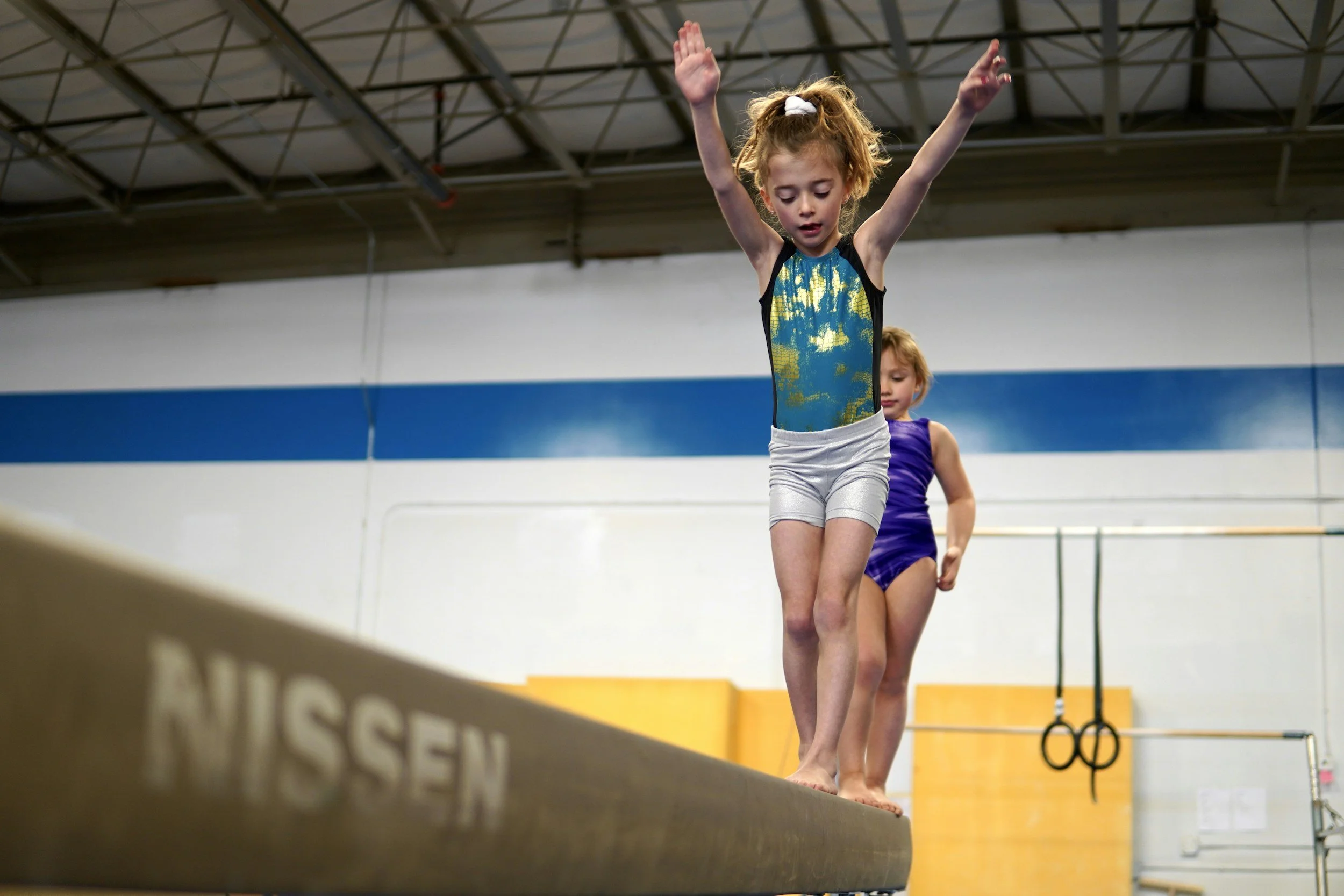
Thursday, February 12, 2026. This is for Vera and Vinny.
There is something quietly subversive about a gym that says, without fanfare:
“We will adjust.”
Not adjust the child.
Adjust the room.
Programs often described as SpectrAbilities adaptive gymnastics are built around that premise.
They are designed for children who experience the world a little differently — children with autism spectrum profiles, ADHD, sensory processing differences, motor delays, social anxiety, or simply a nervous system that does not thrive in loud, fast, comparison-heavy environments.
These programs are not competitive pipelines. They are not performance factories.
They are structured movement environments built around access.
Let’s talk plainly about what that means.
Movement, But With Different Assumptions
Traditional gymnastics moves children through standardized skill progressions: rolls, cartwheels, bars, beams, routines. There is a sequence. There is a pace. There are benchmarks.
Adaptive programs still build strength, balance, coordination, and body awareness. But they remove the assumption that every child must move at the same speed or master the same skills in the same order.
A child might spend weeks practicing one balance transition.
That is not failure. It is integration.
The emphasis shifts from “Can you perform this?” to:
“Can you experience your body as capable and safe?”
That difference is not cosmetic. It changes the nervous system’s relationship to effort.
Sensory Regulation — Not Just Exercise
Many neurodivergent children process sensory input in amplified or inconsistent ways.
Noise may overwhelm. Touch may irritate. Movement may either soothe or destabilize.
Adaptive programs typically design around this reality. Smaller class sizes. Predictable routines. Visual schedules. Built-in breaks. Intentional use of proprioceptive input — pushing, pulling, climbing, deep pressure.
Movement becomes structured sensory exposure inside a contained environment.
For some children, this serves as rehearsal. Rehearsal for school transitions. Rehearsal for birthday parties. Rehearsal for waiting their turn in spaces that are not designed around them.
It is not therapy in the clinical sense. But it is nervous system practice.
Confidence Built Through Achievable Friction
Confidence does not come from applause.
It comes from surviving challenge.
Adaptive programs tend to scaffold difficulty carefully. The goal is not public performance. It is repeated experiences of, “I tried. I stayed. I managed.”
That experience builds self-efficacy — the internal belief that effort leads to growth.
For children who have previously withdrawn, melted down, or been quietly overwhelmed in traditional classes, this shift can be profound. Not because the equipment is different. But because the expectations are calibrated.
Social Skills as Structured Practice
Traditional gyms often assume children will absorb social behavior implicitly. Wait your turn. Share space. Monitor others. Regulate frustration.
Adaptive programs tend to make those skills explicit.
Turn-taking is coached. Transitions are cued. Cooperative obstacle courses are structured. Group attention is practiced in small doses.
For a child who struggles with reciprocity or impulse control, this becomes guided rehearsal rather than silent judgment.
The social climate shifts from “keep up” to “let’s practice.”
Emotional Regulation Is Built Into the Room
One of the least discussed benefits of adaptive programming is predictability.
Clear beginnings. Clear endings. Visual markers. Limited class sizes. Slower pacing.
When the environment is structured to reduce uncertainty, anxiety decreases. Dysregulation spikes often reduce with it.
Traditional gyms, by contrast, can be louder, faster, and more comparison-driven. For some children, that energy is exhilarating. For others, it is destabilizing.
Neither model is inherently superior. They simply serve different nervous systems.
How This Differs From Traditional Gymnastics
Traditional gymnastics is designed around skill acquisition. The curriculum is standardized. The pacing is group-based. Success is measured by visible milestones.
Adaptive programs are designed around participation and regulation. The pacing is individualized.
Success may look like sustained engagement, reduced anxiety, or willingness to try again.
Traditional classes ask, “Can you meet the program?”
Adaptive classes ask, “How can the program meet you?”
That philosophical distinction shapes everything downstream.
Who Tends to Benefit Most
Children who are especially helped by inclusive programs often include:
– Kids with autism spectrum characteristics.
– Children with ADHD who struggle with impulse control or sustained attention.
– Those with sensory sensitivities.
– Children with motor coordination delays.
– Kids who have withdrawn or shut down in traditional group activities.
Families who are less interested in competition and more interested in developmental support often find adaptive programs to be a better fit.
But there are also children who thrive in structured, fast-paced, performance-oriented settings.
Those children may be well served by traditional gymnastics.
The decision is not ideological.
It is observational. The good news is that these programs are widely available in the Greater Boston area.
What These Programs Are Not
They are not miracle interventions.
They are not substitutes for individualized therapy when clinical needs are significant.
They are not guarantees against meltdowns or social difficulty.
They are thoughtfully structured environments where movement, regulation, and participation are intentionally supported.
That is a meaningful offering. It is also a modest one.
For My Gentle Readers on Cape Cod
I’ll be letting my colleagues at my public mental health clinic about a Spectrabilities program I just learned about being offered by Xtreme Athletics in conjunction with the Sandwich Foundation in Sandwich, Masssachusetts.
This program starts in March, 2026. For more information contact: xtremecheerallstar@gmail.com
Final Thoughts
Movement is one of the oldest regulatory tools the human nervous system possesses.
For some children, a gym is a proving ground.
For others, it has been a battlefield.
Adaptive programs represent a quiet redesign. They reduce unnecessary battles. They allow development to occur in the presence of safety.
If you are evaluating options for your child, watch how instructors respond to dysregulation. Notice whether the room feels flexible or rigid. Observe whether effort is praised more than performance.
The right program will not feel dazzling.
It will feel attuned.
And for many children, attunement is where growth finally begins.
Be Well. Stay Kind. Godspeed.