Friday, April 24, 2026
Regret is often spoken of as though it arrives after catastrophe.
But catastrophe is usually late to the story.
It begins earlier.
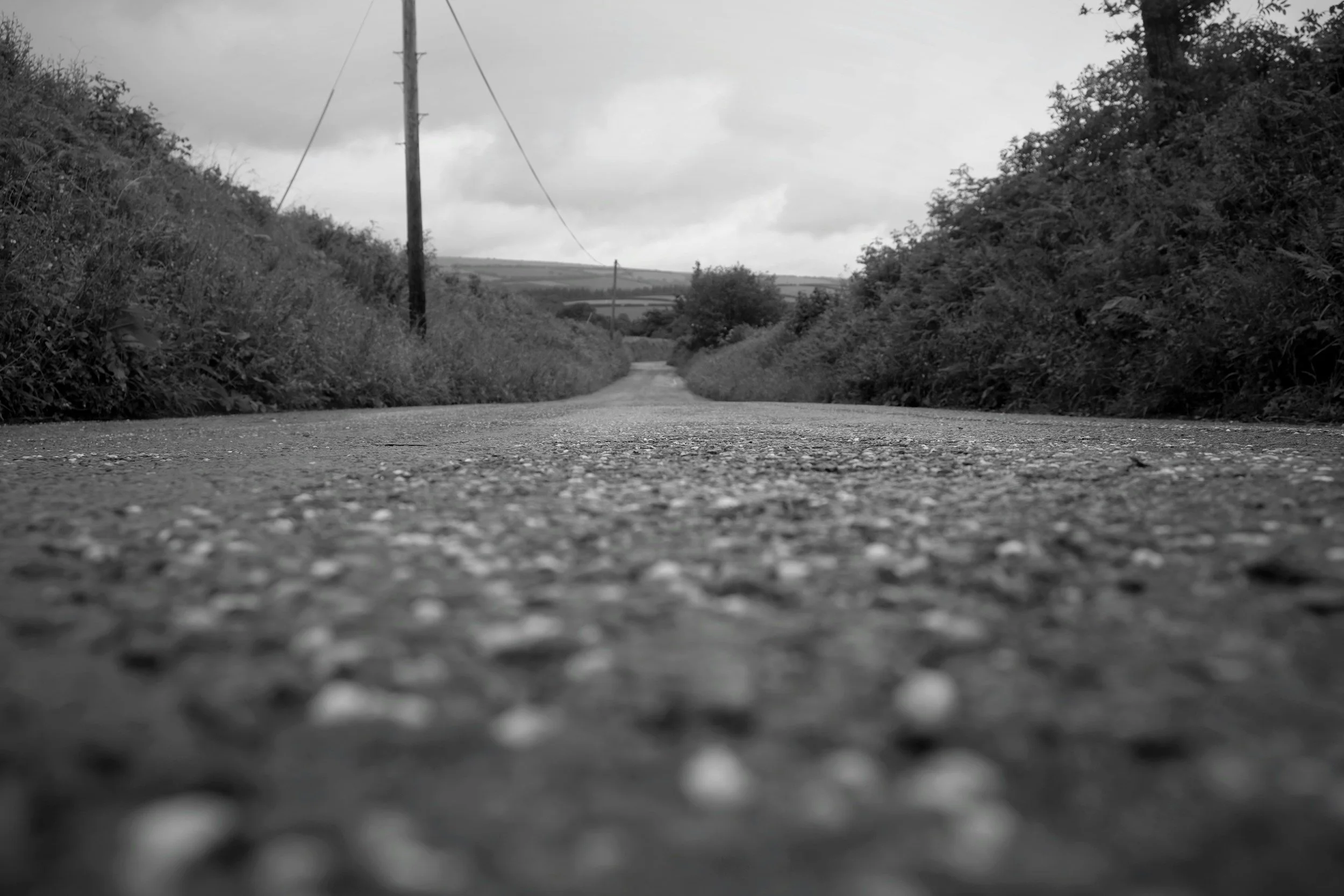
With the road glanced at twice. With the apartment not taken. With the man not married. With the life that remained possible just long enough to acquire glamour.
Folks imagine regret is about loss.
Often it is about comparison.
And comparison, in late modern life, has become nearly liturgical.
A recent study in Social Cognitive and Affective Neuroscience suggests the urge to inspect unrealized alternatives may recruit portions of the same reward architecture of the brain involved in wanting.
Not happiness.
Wanting.
That distinction can save a human years.
Because much suffering in love comes from confusing what glitters with what nourishes.
The Science, More Carefully Than the Headlines Told It
Most summaries I read about this study made this sound simpler than it is.
It is not simple.
This study did not show there is some melodramatic “regret center” in the brain pulsing whenever we think about old lovers.
It showed something more subtle.
Here’s what happened. Participants performed a modified Balloon Analogue Risk Task while undergoing an fMRI.
They made decisions under uncertainty. They could then pay a small time cost to discover how much better they might have done.
The information could not improve future performance. That is critical.
It was non-instrumental. Useless, in a practical sense. Emotionally consequential, in another.
And these folks sought it anyway.
About half the time.
That is not pathology. That is ordinary human architecture.
The caudate and SN/VTA showed elevated activity during decisions to seek the information. The nucleus accumbens and caudate tracked the magnitude of missed opportunity once feedback appeared.
This does not prove regret is pleasurable. It suggests moving toward counterfactual knowledge may recruit motivational circuitry associated with incentive salience.
Which is another way of saying:
Humans may sometimes crave painful information before they suffer from it.
That is a remarkable proposition. And disturbingly recognizable.
There is something almost bleakly elegant in the caudate lighting when people move toward information likely to injure them.
Not because the brain prefers pain.
Because uncertainty can itself become intolerable.
That is a different tragedy.
The older moral language for this might have been temptation. Behavioral neuroscience calls it incentive salience. Marriage therapists often call it ambivalence.
Perhaps these are partly the same weather system.
Ambivalence is intelligence under load.
The Remembering Self, the Experiencing Self, and Why Regret Distorts Reality
Because Daniel Kahneman’s distinction between the experiencing self and the remembering self changes how one understands counterfactual suffering.
The experiencing self lives events. The remembering self edits them.
And, notoriously, edits badly.
It privileges peaks. It privileges endings. It compresses years into emblematic scenes.
It turns whole marriages into one betrayal, whole childhoods into one wound, whole careers into one wrong turn.
This matters because much regret may arise not from reality as lived but from reality as later narratively arranged.
That is a different problem.
And a more literary one.
The mind does not merely compare present reality with unrealized alternatives.
It compares an edited memory of reality with an idealized fantasy of the unlived.
Which is not comparison.
It is often fraud.
And this may explain why alternatively imagined lives can feel so narcotic.
They are not competing against lived life in its complexity.
They are competing against memory’s abridged, selectively wounded version of it.
No real marriage can win against a hypothetically more ideal spouse. No actual career can defeat the glamour of a path whose disappointments were never incurred.
This is why counterfactual longing so often carries a dreamlike disproportion.
It has been rigged.
And once you notice that, much romantic ambivalence begins to lose some of its metaphysical grandeur.
It starts to look, at least partly, like a bias problem.
There is another connection.
Behavioral economics repeatedly finds losses weigh more heavily than gains.
Now imagine what happens when the “loss” is the “insight” of an imagined better life one believes one forfeited.
That perceived loss may acquire absurd psychological weight.
Not because the alternative was truly superior.
Because the mind prices imagined losses extravagantly.
This helps explain the inflationary psychology of roads not taken.
They appreciate in absentia.
Reality rarely gets such generous treatment.
And in love this can become catastrophic.
A partner may be judged not against ordinary human limitations, but also against a phantom assembled from memory distortion, novelty bias, and counterfactual reward seeking.
One does not need attachment theory alone to explain that.
Sometimes cognitive psychology is already scandalous enough.
A Brief Word About Narrative Gravity
I have sometimes thought what draws life partners toward emotional affairs is not always unmet need, but narrative gravity.
A possible self gathers story around it. An alternate life begins to feel authored.
Meaningful. Fated. Shared, perhaps consequentially.
But often what is felt as destiny is merely counterfactual elaboration with excellent marketing.
This paper, oddly, helps expose that.
The Earlier Science Matters Too
This imaging work builds on earlier behavioral research showing humans will incur costs—time, effort, even money—to obtain counterfactual information likely to generate regret.
That matters because good science accumulates.
First the phenomenon. Then the mechanism. Or as a monk might put it, first the appearance, then the interpretation.
And in neighboring literatures—morbid curiosity, uncertainty research, reward prediction—one sees related patterns.
Folks do not only seek pleasant information.
They often seek emotionally charged information.
Sometimes because not knowing feels worse.
That may explain half the internet.
Love Is Full of Counterfactuals
In couples work, life partners often confuse alternate possibilities with revelations.
What if I had married differently? What if the affair partner represented a truer self? What if boredom is evidence of an erroneous destiny?
Perhaps.
Or maybe the mind is doing what minds do under dissatisfaction: idealizing roads not taken.
This study does not reduce romantic ambivalence to dopamine. That would be vulgar.
But it does complicate the fantasy that every alternate life shimmering in consciousness deserves reverence.
Some are merely reward bait.
That is a hard sentence. And I believe it is often true.
What This Research Quietly Defends
Oddly, commitment.
Because once you realize imagined alternatives may carry their own motivational glamour, you become slower to interpret every restless comparison as destiny speaking.
Sometimes it is simply comparison performing its ancient trick.
Which is to make the absent ideal and the present ordinary.
Borges and the Seduction of Forking Paths
Long before neuroscience scanners lit up the caudate, Jorge Luis Borges understood something unnerving about human consciousness:
it does not merely choose.
It proliferates possibilities.
In The Garden of Forking Paths, Borges imagines time not as a single road but as endlessly branching alternatives, each unrealized possibility persisting somewhere as a ghost structure of thought.
It reads, unexpectedly, like a metaphysics of counterfactual curiosity.
And what Borges grasped—long before behavioral economics or dopamine models—is that alternate realities possess erotic force.
Not sexual exactly.
But seductive.
They shimmer because they remain unspoiled by consequence.
The unlived life never has to do dishes.
It never disappoints.
It never gets old, or bored, or defensive during an argument about money.
It remains immaculate because reality never had the chance to touch it.
This matters because much romantic ambivalence borrows its glamour from this Borges problem.
A possible life can feel profound partly because it is unfinished.
Its incompletion masquerades as transcendence.
And people make serious mistakes under that spell.
I sometimes think many crises of commitment are not crises of love at all.
They are crises of multiplicity.
Too many imagined selves pressing against one actual life.
And here Borges meets Kahneman in a rather beautiful way.
The remembering self edits the past.
Counterfactual curiosity idealizes the unlived.
And Borges reminds us the mind can become enchanted by branching possibilities simply because they branch.
That is not always insight.
Sometimes it is just vertigo.
Which suggests to me a radical thought:
maturity may consist not in exploring every fork in the path—
but in relinquishing reverence for the forks.
There is a difference.
And perhaps devotion has always depended on knowing it.
FAQ
Is counterfactual thinking always unhealthy?
No. It becomes corrosive when it shifts from learning to compulsive comparison.
What is new in this study?
Its contribution is linking counterfactual information seeking to reward-related neural systems, especially the caudate and dopaminergic midbrain regions.
Does this prove the brain likes regret?
No. It suggests the seeking of information may involve wanting-related circuitry. That is very different.
Is this related to relationship ambivalence?
Deeply. research has shown us that most ambivalence is structured around idealized alternatives.
Final Thoughts
One does not outgrow alternate lives.
One learns not to kneel before them.
Could it possibly be that may be all maturity is?
Not finding the perfect road. But rather refusing to romanticize every road refused.
The mind will continue manufacturing ghost lives.
It was built, apparently, with some appetite for that.
But character may consist in returning—again and again—to the chosen life, and furnishing it.
Which is a harder art than fantasizing.
And maybe a more sacred one.
When Reading About Relationships Isn’t Enough
Reading about rupture can clarify a pattern. It does not, by itself, repair one.
If something in this essay stirred recognition—if you saw your relationship in the push-pull between withdrawal and repair, distance and dignity, leaving and staying—do not assume insight alone will change the pattern.
Many couples wait until estrangement has hardened into character judgments before seeking serious help. That is often much later than necessary.
If your relationship is caught in cycles of shutdown, threat, chronic disconnection, or quiet emotional exile, focused couples intensives can sometimes accomplish in a few days what months of weekly therapy struggles to reach.
My work is built for couples who do not want superficial communication tips, but a deeper reckoning with trust, attention, injury, and repair.
Sometimes what looks like a decision about whether to leave is actually a conversation the relationship has not yet had.
If that possibility speaks to you, you can learn more about working with me through private couples therapy and marriage intensives.
Because not every relationship in distress is asking to end. Some are asking to be understood.
Be Well, Stay Kind, and Godspeed.
REFERENCES:
Lau, J. K. L., Sakaki, M., FitzGibbon, L., Raw, J. A. L., & Murayama, K. (2026). Role of the striatum in counterfactual information seeking.Social Cognitive and Affective Neuroscience.
FitzGibbon, L., Komiya, A., & Murayama, K. (2021). Counterfactual curiosity: Information seeking about what might have been.Cognition and Emotion, 35(8), 1572–1585.
Roese, N. J. (1997). Counterfactual thinking.Psychological Bulletin, 121(1), 133–148. DOI: 10.1037/0033-2909.121.1.133.
Epstude, K., & Roese, N. J. (2008). The functional theory of counterfactual thinking.Personality and Social Psychology Review, 12(2), 168–192.
Berridge, K. C., & Robinson, T. E. (1998). What is the role of dopamine in reward: Hedonic impact, reward learning, or incentive salience?Brain Research Reviews, 28(3), 309–369.
Berridge, K. C. (2012). From prediction error to incentive salience: Mesolimbic computation of reward motivation.European Journal of Neuroscience, 35(7), 1124–1143.
Kahneman, D., Wakker, P. P., & Sarin, R. (1997). Back to Bentham? Explorations of experienced utility.Quarterly Journal of Economics, 112(2), 375–405.
Kahneman, D. (2011). Thinking, Fast and Slow. New York: Farrar, Straus and Giroux.
Kahneman, D., & Miller, D. T. (1986). Norm theory: Comparing reality to its alternatives.Psychological Review, 93(2), 136–153.
Scrivner, C. (2021). The psychology of morbid curiosity: Development and validation of the Morbid Curiosity Scale.Personality and Individual Differences, 183, 111139.
Oosterwijk, S. (2017). Choosing the negative: A behavioral demonstration of morbid curiosity.PLoS ONE, 12(7), e0178399.
Borges, J. L. (1962/1941). Ficciones (A. Kerrigan, Trans.). New York: Grove Press.
Borges, J. L. (1941/1962). The Garden of Forking Paths. In Ficciones.