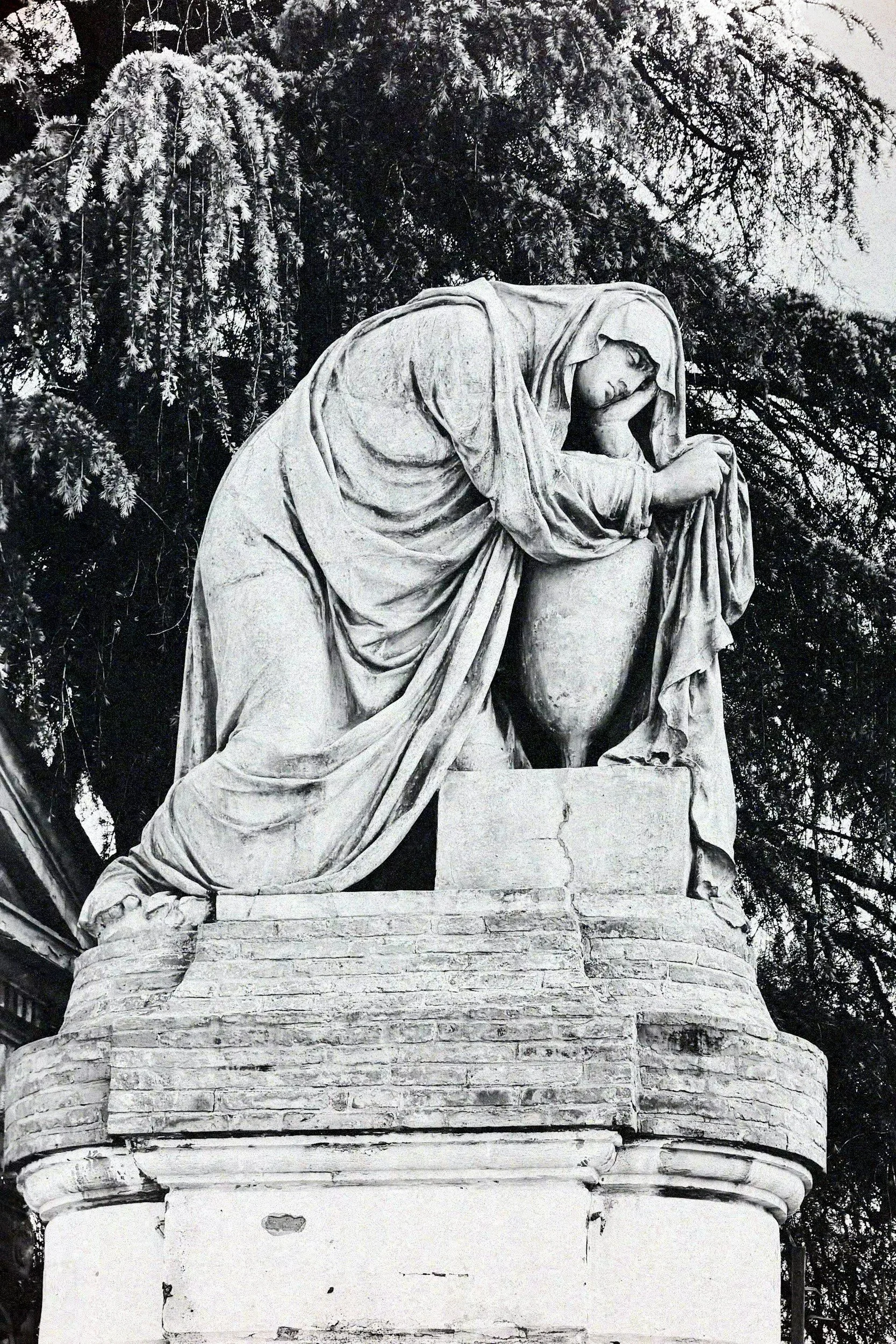
Tuesday, May 12, 2026. This is for my son, Daniel Gordon Hamilton, (1973-2025) who taught me how to suffer with grace.
There is a sentence modern culture keeps repeating to itself with increasing desperation:
You should not have to suffer.
At first glance this sounds compassionate, enlightened, humane. And to some extent it is.
Modern medicine has relieved staggering amounts of human misery. Antibiotics matter. Anesthesia matters. Trauma therapy matters.
Nobody sane wants to return to the era where people died from infected teeth while someone quoted The Book of Psalms beside a candle.
But something psychologically strange has happened alongside our increasing ability to reduce suffering.
We have become less capable of interpreting suffering.
Not tolerating it.
Not surviving it.
Interpreting it.
And that distinction matters enormously.
Because human beings can survive extraordinary pain when they experience it as meaningful.
But suffering that feels random, humiliating, isolating, pointless, or absurd often becomes psychologically annihilating.
This was one of the great insights of Viktor Frankl, whose work emerged from surviving Nazi concentration camps and later developing logotherapy, a meaning-centered form of psychotherapy.
Frankl argued that human beings are not fundamentally driven by pleasure or power but by what he called the “will to meaning.”
Modern culture, by contrast, increasingly treats suffering as evidence that life has malfunctioned.
And that shift is quietly reshaping the human nervous system.
If this sounds familiar in your own life, notice and sit with that feeling.
Many souls are not merely exhausted from suffering itself. They are exhausted from trying to experience suffering without any meaningful framework for understanding it.
The Modern War Against Suffering
There are now entire industries devoted to minimizing discomfort:
wellness culture.
anti-aging culture.
productivity culture.
biohacking culture.
nervous-system regulation culture.
algorithmic distraction culture.
The modern self increasingly resembles someone sprinting through late capitalism with a regulated nervous system and an uninhabited inner life.
Even emotional pain is now described in managerial language:
dysregulation.
maladaptive response.
symptom burden.
emotional processing deficits.
cortisol overload.
The contemporary imagination is deeply therapeutic but also deeply administrative.
And to be clear, much of this language is useful.
Severe depression is real. PTSD is real. Panic disorders are real. Neuroscience matters. Psychopharmacology matters.
But modern culture often makes a second, quieter claim beneath the medical one:
that suffering itself is fundamentally illegitimate.
This is where things become psychologically unstable.
Because suffering keeps arriving anyway.
It arrives through illness.
Through heartbreak.
Through betrayal.
Through infertility.
Through aging parents.
Through frightened children.
Through marriages slowly hardening into emotional winter.
It arrives in ordinary rooms.
A woman answering emails from the oncology waiting room because life absurdly continues while terror quietly enters the bloodstream.
A husband spoon-feeding oatmeal to his wife at 7:13 in the morning after dementia has erased his name but not his tenderness.
A recovering alcoholic sitting in a grocery store parking lot gripping the steering wheel hard enough to hurt his hand because sobriety still feels like grief some Thursdays.
A mother folding tiny hospital socks into a drawer after the funeral because the nervous system cannot metabolize catastrophic loss all at once.
This is one reason suffering feels so disorienting.
The world does not stop.
The coffee still brews.
The dog still needs to be walked.
Someone still has to answer the phone.
This was always one of the quiet genius elements in Joan Didion’s writing. I admire Joan as an American master of meaningful suffering.
Didion warns us that catastrophe rarely announces itself with cinematic dignity. Most suffering unfolds beside ordinary objects.
The grocery store.
The kitchen table and chairs.
The airport terminal.
The untouched side of the bed.
And when a culture loses the ability to interpret suffering meaningfully, pain begins to feel not merely painful but absurd.
Because, as Camus reminds us, absurd suffering is among the hardest forms of suffering to endure.
Ernest Becker and the Terror Beneath Modern Life
Few thinkers understood modern anxiety more clearly than Ernest Becker.
In The Denial of Death, Becker argued that much of human behavior is organized around avoiding awareness of mortality. Culture itself, he believed, functions partly as a defense system against existential terror.
People pursue:
achievement.
status.
productivity.
romance.
ideology.
fame.
self-improvement.
partly to escape the unbearable reality that human life is finite.
And modern optimization culture increasingly resembles exactly the kind of immortality project Becker warned about.
Nowadays folks now attempt to:
outrun aging.
engineer perfect health.
eliminate uncertainty.
optimize cognition.
monitor sleep.
track biomarkers.
control fertility.
regulate mood.
biohack mortality itself.
The body becomes a project under permanent revision.
But mortality keeps returning anyway.
Through illness.
Through grief.
Through the face of a life partner suddenly looking old in fluorescent hospital lighting.
Becker understood something modern culture resists:
human beings are fragile creatures attempting to survive the psychological knowledge of death.
And suffering often tears open precisely the existential realities modern life spends enormous energy trying to avoid.
The Difference Between Destructive Suffering and Meaningful Suffering
Not all suffering is meaningful.
This must be said immediately and clearly or the conversation collapses into sentimentality.
Some suffering is simply destructive:
abuse.
torture.
neglect.
humiliation.
preventable poverty.
severe trauma.
violence.
dehumanization.
Human beings should absolutely attempt to reduce unnecessary suffering wherever possible.
But there is another category of suffering modern culture increasingly struggles even to recognize:
meaningful suffering.
Meaningful suffering is suffering that enlarges, clarifies, disciplines, deepens, or morally forms a person.
Not because pain itself is holy.
But because certain forms of voluntary endurance organize the self around meaning rather than impulse.
A father working a second job for fifteen years so his daughter graduates without debt.
A nurse returning for another overnight shift after losing a patient she genuinely loved.
A spouse remaining emotionally present during years of illness without converting exhaustion into resentment.
A grieving person resisting the temptation to become cynical because bitterness would feel emotionally easier.
None of this feels remotely pleasant.
But many folks eventually describe these experiences as formative, anyway.
This distinction matters psychologically because modern culture increasingly interprets all forms of friction as pathology.
Waiting becomes pathology.
Loneliness becomes pathology.
Disappointment becomes pathology.
Endurance becomes pathology.
And when endurance itself becomes suspicious, ordinary human existence starts feeling like personal failure.
A civilization terrified of suffering eventually produces people terrified of adulthood.
Viktor Frankl and the Human Need for a “Why”
Frankl’s work remains psychologically important because he directly confronted the relationship between suffering and meaning under conditions of almost unimaginable horror.
While imprisoned in concentration camps, Frankl observed something that profoundly shaped his later theories: people who maintained some sense of future meaning often demonstrated greater psychological resilience.
This did not mean optimism magically erased suffering.
Frankl distrusted shallow positivity.
He spoke instead of what he called “tragic optimism”: the capacity to preserve dignity, responsibility, and psychological coherence despite pain, guilt, and mortality.
His insight was deceptively simple:
human beings can survive immense suffering when they know why they are enduring it.
Friedrich Nietzsche expressed something similar decades earlier:
“He who has a why to live can bear almost any how.”
Frankl believed meaning could emerge through:
love.
work.
responsibility.
moral courage.
one’s response to unavoidable suffering.
And importantly, he never claimed suffering was automatically meaningful.
Only that suffering could become meaningful depending on how one responded to it.
That distinction changes everything.
George Bonanno and the Myth of Permanent Fragility
Modern culture often assumes suffering permanently damages people.
But resilience researcher George Bonanno has spent decades demonstrating something more complicated.
Human beings are often more resilient than they believe.
Bonanno’s grief research challenged the assumption that all severe loss inevitably produces long-term psychological breakdown.
Many souls, while deeply wounded by grief, eventually adapt without losing the ability to function, connect, work, or love.
This does not minimize suffering.
It reframes human beings.
Modern therapeutic culture sometimes unintentionally teaches people to interpret themselves as permanently fragile.
Bonanno’s work suggests resilience is not rare heroism. That is a comforting cultural lie, occasionally gifting therapists with clinical utility.
It is more often a fairly ordinary human adaptation. Turns our existential courage is a far more common human experience than we culturally expect.
This matters because the opportunity for meaningful suffering frequently emerges not from avoiding pain, but from discovering that one can survive more reality than previously imagined.
The Neuroscience of Meaning
Modern neuroscience increasingly supports aspects of what Frankl intuited philosophically.
The brain is not merely a threat-detection machine. It is also a meaning-making machine.
Research in stress appraisal theory suggests that how we interpret suffering significantly shapes physiological and psychological outcomes.
Our nervous system responds differently to pain experienced as purposeless compared to pain experienced as meaningful, chosen, or connected to identity and values.
This matters enormously.
A firefighter running into a burning building experiences extreme stress. So does a hostage.
Physiologically, both may exhibit elevated cortisol, sympathetic activation, and fear responses.
Psychologically, however, meaning radically alters the experience of suffering.
Meaning changes endurance thresholds.
Meaning changes despair.
Meaning changes whether suffering fragments identity or organizes it.
This may partly explain why human beings across cultures repeatedly construct:
rituals.
philosophies.
values.
religions.
stories.
communal mourning practices.
initiation ceremonies.
Human beings appear psychologically wired to seek coherence inside adversity.
Without coherence, suffering often becomes psychologically chaotic.
The Loss of Initiation
Traditional cultures often possessed rituals that helped people metabolize suffering meaningfully.
Rites of passage.
Periods of mourning.
Pilgrimage.
Communal fasting.
Initiation ceremonies.
Elders guiding younger people through hardship.
Modernity increasingly privatizes suffering.
Souls now often suffer:
alone.
algorithmically distracted.
without symbolic frameworks.
without communal rituals.
without elders.
without initiation.
This creates enormous psychological isolation.
Modern folks frequently experience suffering not only painfully but also anonymously.
There is no transition ritual for:
divorce.
infertility.
burnout.
caregiving exhaustion.
addiction recovery.
middle-aged loneliness.
existential disappointment.
Souls simply continue answering emails while internally collapsing.
And because modern culture often lacks meaningful initiation structures, suffering frequently feels less like transformation and more like disintegration.
Older traditions understood something psychologically sophisticated:
people often need symbolic containers for pain.
Otherwise suffering feels random.
Byung-Chul Han and the Burnout Society
South Korean philosopher Byung-Chul Han argues that modern families and life partners increasingly suffer not through external oppression but through internalized performance pressure.
In other words, we’ve become self-exploiting creatures.
Many folks are now simultaneously inhabiting complex roles:
employee.
manager.
optimizer.
brand strategist.
therapist.
productivity consultant.
nervous-system technician.
Han describes contemporary life as an “achievement society,” where people collapse not from prohibition but from endless self-management.
This creates a peculiar kind of suffering:
exhaustion without meaning.
Burnout often feels spiritually empty because it is frequently disconnected from sacrifice, devotion, service, or love. People become depleted while chasing metrics rather than meaning.
That distinction matters enormously.
Meaningful suffering exhausts people too.
But it often leaves behind coherence.
Burnout leaves behind depletion without narrative.
Grief: The Price the Nervous System Pays for Love
Grief may be the purest example of meaningful suffering because grief exists precisely where attachment once existed.
Grief is the price the nervous system pays for love.
And this is why grief feels so disorienting in a culture obsessed with optimization.
Grief cannot be efficiently solved.
It unfolds unevenly.
Irrationally.
Physically.
A soul loses someone they love and suddenly cannot remember how to buy cereal without crying beside the produce section.
This is not dysfunction.
This is evidence of attachment continuing after absence.
And yet modern culture increasingly pressures people to:
move on.
heal quickly.
return to productivity.
be resilient.
optimize recovery.
But grief does not operate according to corporate timelines.
Meaningful suffering often refuses efficiency.
St. Thérèse and the Discipline of Ordinary Life
This is one reason Thérèse of Lisieux remains psychologically fascinating even to secular readers.
Thérèse’s “Little Way” proposed something radically countercultural:
most meaningful suffering is not the slightest bit dramatic.
It is ordinary.
Tiny frustrations.
Tiny humiliations.
Tiny acts of restraint.
Tiny disappointments quietly endured without bitterness.
This was the genius of her worldview.
She shifted attention away from heroic suffering and toward hidden moral labor.
A parent remaining gentle while exhausted.
A spouse remaining loyal during difficult years.
A grieving person resisting cynicism.
A lonely person continuing to love people despite disappointment.
Thérèse understood something modern culture forgets:
character is usually formed incrementally.
Not theatrically.
Most adult life consists of little ways.
Recovery is little ways.
Marriage is little ways.
Forgiveness is little ways.
Caregiving is little ways.
Parenthood is little ways.
Tiny moments where people absorb friction without transmitting unnecessary suffering outward.
That is not weakness.
That is civilization.
Meaningful Suffering Versus Performative Suffering
Modern culture creates another complication:
performative suffering.
Social media increasingly transforms pain into identity theater.
People now curate:
trauma narratives.
healing journeys.
nervous-system discourse.
therapeutic vocabulary.
emotional suffering.
personal struggles.
And while some of this reflects genuine vulnerability, some becomes self-conscious performance.
Meaningful suffering usually looks very different.
It is often quiet.
Invisible.
Unglamorous.
Hospital rooms.
Recovery meetings.
Long marriages.
Caregiving.
Financial sacrifice.
Late-night apologies.
Remaining kind while exhausted.
Doing the next right thing without applause.
Meaningful suffering is usually less interested in display than transformation.
This may explain why deeply mature people often feel emotionally different from merely optimized people.
Optimized people often become efficient.
People who have suffered meaningfully often become gentle.
Jonathan Haidt and the Problem of Anti-Fragility
Social psychologist Jonathan Haidt has argued that many modern institutions increasingly attempt to eliminate discomfort altogether, particularly for younger generations.
But systems protected from all stressors often become weaker rather than stronger.
Muscles require resistance.
Immune systems require exposure.
Psychological resilience often requires manageable adversity.
This does not mean trauma is beneficial.
But it does suggest that overprotection may inadvertently undermine resilience.
A culture that pathologizes all discomfort eventually struggles to produce psychologically durable adults.
Again:
not because suffering is inherently noble.
But because endurance, responsibility, and sacrifice are inseparable from maturity.
FAQ
What is meaningful suffering?
Meaningful suffering refers to suffering that becomes connected to purpose, love, responsibility, sacrifice, growth, or moral transformation rather than remaining experienced as random or pointless.
Is meaningful suffering the same as glorifying pain?
No. Meaningful suffering does not mean seeking pain unnecessarily or romanticizing trauma. Some suffering is destructive and should absolutely be reduced medically, psychologically, and socially whenever possible.
What did Viktor Frankl believe about suffering?
Viktor Frankl believed unavoidable suffering could become psychologically survivable when integrated into a larger framework of meaning and purpose.
What is post-traumatic growth?
Post-traumatic growth refers to positive psychological changes that sometimes emerge after adversity, including greater appreciation for life, stronger relationships, deeper spirituality, and increased personal strength.
Why does modern culture struggle with suffering?
Many modern societies increasingly prioritize comfort, optimization, emotional regulation, and productivity while offering fewer communal rituals, philosophical frameworks, or existential narratives for interpreting unavoidable pain.
What is the difference between trauma and meaningful suffering?
Trauma can psychologically overwhelm and fragment a person. Meaningful suffering refers to suffering that becomes integrated into identity, growth, love, sacrifice, or moral development rather than remaining chaotic or meaningless.
Can suffering deepen relationships?
Yes. Research on attachment, caregiving, resilience, and post-traumatic growth suggests that enduring hardship together can sometimes deepen intimacy, compassion, trust, and emotional maturity.
Final Thoughts
Modernity increasingly promises:
optimization.
comfort.
efficiency.
control.
emotional management.
friction reduction.
And yet many remain lonely, exhausted, distracted, fragmented, anxious, and psychologically untethered.
This is one of the great contradictions of the modern age:
a civilization organized around reducing suffering often produces people less prepared to endure it.
Perhaps this is why modern life partners swing so violently between optimization and despair.
They have inherited extraordinary tools for comfort, while losing many of the older structures that once helped human beings transform suffering into meaning.
But vulnerability keeps returning.
It returns through illness.
Through grief.
Through caregiving.
Through aging.
Through disappointment.
Through mortality.
Through love itself.
And perhaps the deepest psychological task is not eliminating suffering altogether but learning how to suffer meaningfully when suffering inevitably arrives.
This does not mean glorifying pain.
It means refusing to let pain become meaningless.
Because human beings can survive extraordinary hardship when suffering becomes connected to:
love.
responsibility.
sacrifice.
purpose.
moral courage.
connection.
service.
Frankl understood this.
Becker understood this.
Bonanno understood this.
Han understood this.
Thérèse understood this.
And perhaps somewhere beneath all the optimization culture, nervous-system discourse, wellness rituals, productivity systems, and therapeutic jargon, modern people understand it too.
Which may explain why, despite everything, we humans still instinctively search for meaning whenever life breaks our hearts.
Be Well, Stay Kind, and Godspeed.
REFERENCES:
Becker, E. (1973). The denial of death. Free Press.
Bonanno, G. A. (2004). Loss, trauma, and human resilience. American Psychologist, 59(1), 20–28.
Calhoun, L. G., & Tedeschi, R. G. (2006). Handbook of posttraumatic growth: Research and practice. Lawrence Erlbaum Associates.
Frankl, V. E. (2006). Man’s search for meaning. Beacon Press.
Haidt, J., & Lukianoff, G. (2018). The coddling of the American mind. Penguin Press.
Han, B.-C. (2017). The burnout society. Stanford University Press.
Park, C. L. (2010). Making sense of the meaning literature: An integrative review of meaning-making and its effects on adjustment to stressful life events. Psychological Bulletin, 136(2), 257–301.
Steger, M. F. (2012). Making meaning in life. Psychological Inquiry, 23(4), 381–385.
Tedeschi, R. G., & Calhoun, L. G. (2004). Posttraumatic growth: Conceptual foundations and empirical evidence. Psychological Inquiry, 15(1), 1–18.
Wong, P. T. P. (2010). Meaning therapy: An integrative and positive existential psychotherapy. Journal of Contemporary Psychotherapy, 40(2), 85–93.