Monday, April 20, 2026.
Zugzwang: When the World Has No Good Moves—and Your Relationship Starts to Feel It
There is a particular kind of tension that does not begin in the relationship but ends there.
It arrives quietly. It does not knock.
It drones in the background while you’re making coffee, while your partner asks a simple question, while you answer with just a trace more irritation than the moment deserves.
You assume it belongs to the two of you.
Often, it doesn’t.
In my work, I’ve begun to notice something that feels less like a metaphor and more like a diagnosis:
Couples are absorbing the structure of the world around them.
And right now, the structure looks like zugzwang.
What Zugzwang Actually Means
Zugzwang is a chess position where any move you make worsens your situation. You are forced to act—but action guarantees loss.
It is not pressure.
It is structured inevitability.
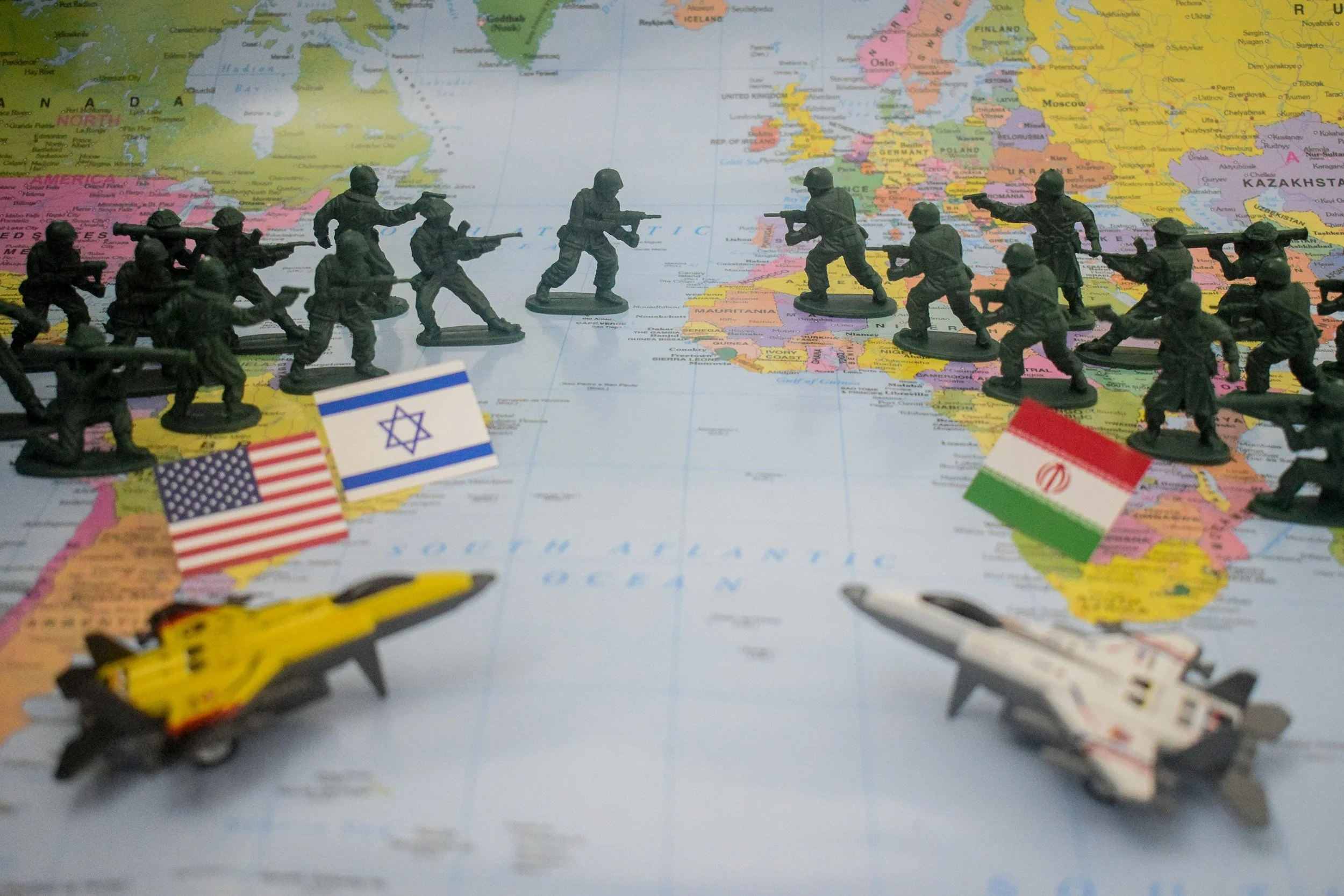
If you look at the current tensions surrounding the Iran conflict—instability around the Strait of Hormuz, fragile ceasefires, retaliatory posturing—you see a system where each move carries cascading consequences.
The Strait itself handles roughly a fifth of global oil supply, making every military decision simultaneously an economic one, as outlined in analyses from the U.S. Energy Information Administration.
Close it—markets destabilize.
Leave it open—strategic vulnerability remains.
That is zugzwang.
But war is only the visible layer.
The Layer Nobody Watches: Famine Moves More Quietly
War disrupts energy.
Energy disrupts fertilizer.
Fertilizer disrupts food.
Food disruption becomes famine—not immediately, but predictably.
Global food systems are tightly coupled to energy inputs, particularly natural gas used in fertilizer production, a relationship documented in reporting and data synthesis by the Food and Agriculture Organization and crisis monitoring by the World Food Programme.
Famine does not trend.
It does not arrive with spectacle.
It arrives as:
Gradual scarcity.
Rising irritability.
Political destabilization.
Migration pressure.
Famine is slow-motion zugzwang.
No good moves—just delayed consequences.
And here is the uncomfortable translation:
Couples are not just living with the idea of war
They are living downstream from systems that can quietly fail.
The Cognitive Problem: We No Longer Have the Attention for This
There is a second pressure, less visible and more corrosive.
We are trying to metabolize existential threats with collapsing attention spans.
Research on cognitive load and attention fragmentation suggests that modern digital environments train the brain toward rapid switching rather than sustained processing. Writers like Nicholas Carr have argued that this shift reduces our capacity for deep, continuous thought.
So now we have:
Slow-moving, high-impact global threats
paired with…Fast, fragmented attention systems.
The result is something I would call an:
Existential Perception Lag.
You feel that something is wrong.
But you cannot hold it in mind long enough to understand what.
A Definition Worth Keeping
Let me sharpen the concept in a way that actually fits the moment:
Modern zugzwang is not just having no good moves. It is losing the ability to see the board clearly enough to recognize what a good move would even look like.
That is our dubious upgrade.
That is where this becomes more than personal. It becomes existential.
How This Lands Inside a Relationship
Couples do not experience this as “geopolitical stress.”
They experience it as:
Shorter patience.
Doomscrolling.
Faster escalation.
Less curiosity.
A subtle drop in goodwill.
The fight about dishes is not about dishes.
It is a small, local attempt to regain control in a system that feels increasingly uncontrollable.
And here is the piece most couples miss:
Shortened attention spans degrade relationship repair.
Repair requires:
Holding context.
Remembering intention.
Tracking nuance over time.
All of which are weakened under attentional fragmentation.
So what happens?
You argue faster.
You repair less.
You carry more forward into the next interaction.
And the board tightens.
The Hidden Mechanism: Existential Load Without Narrative
You are carrying stress you cannot fully explain.
You do not say, “I am tense because global food systems are fragile and geopolitical escalation threatens energy supply chains.”
You say:
“Why are you talking to me like that?”
The mind prefers local explanations.
So it misattributes global pressure to relational failure.
The Illusion of Bad Choices
Zugzwang creates false binaries:
Speak or stay silent.
Stay or leave.
Push or withdraw.
These are not real choices.
They are the options available inside the constraint.
And most couples spend years trying to choose better among them.
What Actually Changes the Position
In chess, you do not solve zugzwang by making a clever move.
You solve it by changing the position of the board.
In relationships, that means something far less dramatic and far more difficult:
Restore Attention as a Shared Resource.
Attention is not just a personal trait. It is a relational asset.
Without sustained attention, admiration collapses.
Have Longer Conversations Than the Internet Trained You For.
Most couples now operate within attention windows shaped by digital media.
Real repair requires exceeding that window.
Not once. Repeatedly.
Name the Scale Mismatch.
Try this, exactly once, without defensiveness:
“I don’t think everything we’re feeling belongs entirely to us. I think some of it belongs to the moment we’re living in.”
That sentence alone can widen the board.
Reintroduce Admiration Deliberately.
Not as a feeling—as a practice.
Research by John Gottman consistently shows that stable relationships maintain a strong ratio of positive to negative interactions. Under stress, that ratio narrows.
Admiration must be reintroduced on purpose.
The Famine–Attention Problem (The Part Worth Sitting With)
Famine unfolds slowly.
Attention collapses quickly.
Which means:
We are least capable of responding to the threats that require the most sustained attention.
That is not just a geopolitical problem.
It is a relational one.
Because relationships require sustained attention to remain coherent.
FAQ
What is zugzwang in simple terms?
A position where any available action makes things worse, but doing nothing is not an option.
How does zugzwang apply to relationships?
It shows up when every choice—speaking, staying silent, pushing, withdrawing—feels like it leads to loss.
Can global stress really affect my relationship?
Yes. Chronic uncertainty increases baseline stress, which often gets expressed in close relationships as irritability, withdrawal, or conflict.
What role does famine or food insecurity play here?
Large-scale disruptions in energy and agriculture systems increase global instability, which contributes to background stress—even in people not directly affected.
Why does attention matter so much in relationships?
Attention allows partners to track nuance, repair conflict, and maintain admiration. Fragmented attention reduces all three.
How do couples get out of this pattern?
By changing the interaction itself—slowing down, increasing attention, naming pressure, and deliberately restoring positive connection.
Final Thoughts
The most dangerous form of zugzwang is not the one where every move fails.
It is the one where you stop looking carefully enough to notice that the board has changed.
Most relationships do not collapse because of a single bad decision.
They collapse because attention thins out over time—while the world grows louder, faster, and more demanding.
And sadly, sometimes two life partners stop seeing the same chess board.
Be Well, Stay Kind, and Godspeed.
REFERENCES:
Algoe, S. B. (2012). Find, remind, and bind: The functions of gratitude in everyday relationships. Social and Personality Psychology Compass, 6(6), 455–469.
Carr, N. (2010). The shallows: What the Internet is doing to our brains. W. W. Norton & Company.
Gottman, J. M., & Levenson, R. W. (1992). Marital processes predictive of later dissolution. Journal of Personality and Social Psychology, 63(2), 221–233.
Grupe, D. W., & Nitschke, J. B. (2013). Uncertainty and anticipation in anxiety. Nature Reviews Neuroscience, 14(7), 488–501.
Neff, L. A., & Karney, B. R. (2009). Stress and reactivity in marriage. Journal of Personality and Social Psychology, 97(5), 890–903.
U.S. Energy Information Administration. (2024). World oil transit chokepoints.
World Food Programme. (2024). Global food crisis reports.
Food and Agriculture Organization. (2024). The state of food security and nutrition in the world.