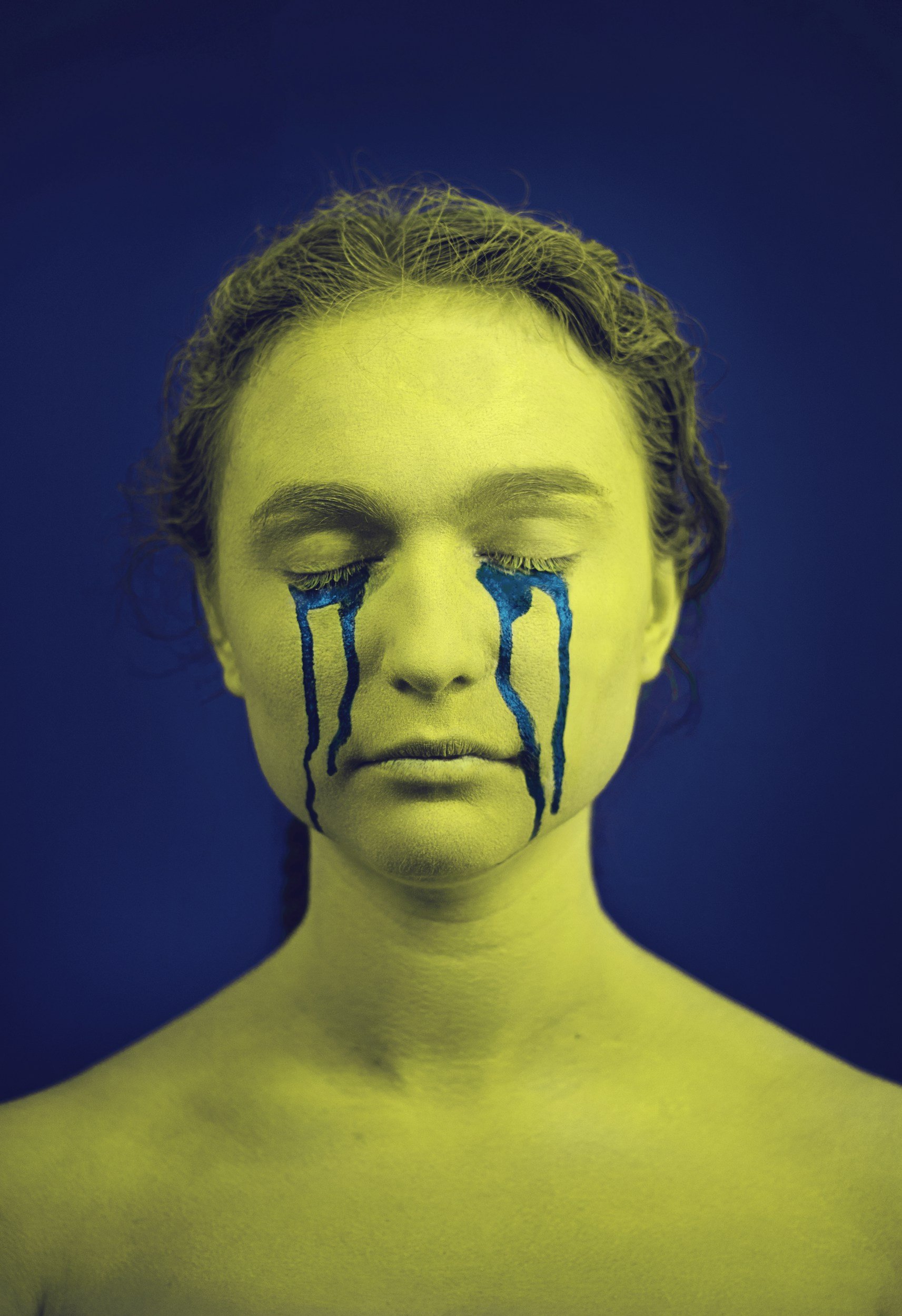
Saturday, April 11, 2026.
Most folks think emotional expression is about honesty.
You feel something. You show it.
That is the sentimental version.
The more accurate version is less flattering:
in conflict, emotional expression does not just reveal feeling. It redistributes responsibility.
And once you see that, you cannot really go back to pretending an argument is only about what happened.
The Trade Nobody Names
Recent research in Evolution and Human Behavior found a remarkably clean pattern.
In conflict, the calm partner is judged most favorably, the angry partner most negatively, and the crying partner as less competent than the calm one.
But tears do something neither anger nor stoicism does as effectively: they make the other person look worse.
Crying increases perceived blame toward the conflict partner even while costing the crier some status.
In other words, tears lower your own standing a bit while pulling the moral floor out from under the other person.
That is the part people miss.
crying does not just express pain. It changes who appears responsible for it.
Tears Are Not Just Feelings. They Are Social Signals.
Emotion researchers have been making this point for years in more academic language.
Emotions do social work. They organize interactions, communicate appraisals, and alter what other people do next. That broader framework goes back at least to Dacher Keltner and Jonathan Haidt’s work on the social functions of emotion.
Tears, specifically, have been studied as a potent interpersonal signal.
Oren Hasson argued that emotional tears likely operate as a signal of vulnerability, need, appeasement, or attachment, precisely because they visibly handicap the person crying and alter the behavior of others.
His point was not that every tear is calculated. It was that tears reliably change the social field around the person producing them.
Which means the relevant question in conflict is not:
“Are the tears sincere?”
The more useful question is:
“What do the tears make everyone else believe is happening?”
Why Tears Hit Harder Than Anger
Anger says: I object.
Tears say: I have been hurt.
Those are not the same social message.
The first introduces opposition. The second introduces harm.
And harm is morally heavier than disagreement.
Research on the social impact of emotional tears has repeatedly found that tearful people are perceived as more helpless, more in need of support, and more likely to elicit helping responses than people who show distress without tears.
That is part of why tears recruit guilt so efficiently: they do not merely signal emotion, they signal vulnerability that seems to demand a response.
Later work on the social effects of tears likewise found that tears intensify perceived sadness and shape prosocial reactions through that sadness. Tears do not just decorate emotion. They sharpen its meaning for observers.
So when someone cries in conflict, the other person is no longer just facing an argument.
They are suddenly standing next to what looks like evidence.
The Cost Is Real
None of this means crying is a free move.
It isn’t.
The crier also pays.
The new conflict research is clear that stoicism protects the expresser’s reputation better than crying does. Calmness makes you look more competent, more professional, more socially desirable. Tears can lower that standing. Anger lowers it even more.
So the trade looks like this:
Stoicism
protects your reputation.
leaves the other person relatively untouched.
Anger
damages your reputation.
does surprisingly little to theirs.
Crying
damages your reputation somewhat.
but imposes the steepest reputational cost on the other person.
That is not manipulation.
That is structure.
Why This Matters in Intimate Relationships
In long-term relationships, partners do not just argue. They learn.
They learn:
what gets a response.
what evokes guilt.
what ends the argument.
what keeps the argument going.
what makes the other person soften, shut down, pursue, repair, or retreat.
Over time, emotional expression becomes patterned. Not necessarily conscious. Not necessarily cynical. But patterned.
One partner grows more articulate and composed.
The other tears up.
Or one partner escalates and the other cries.
Or one partner cries and the other instantly moves into apology, caretaking, or shame.
At that point the conflict is no longer only about the original issue.
It is about how moral weight is being assigned in real time.
tears do not merely communicate distress. They change the burden of proof.
The Audience Arrives Even When Nobody Else Is There
One of the most interesting findings in the new paper is that tears create the sense of an audience even in private conflict.
Participants expected that if the other person cried, neutral observers would judge them more harshly.
That is psychologically important.
It means tears do not just affect the two people in the room; they evoke the imagined tribunal around the room.
This helps explain why tears often trigger guilt faster than yelling does.
Yelling feels like attack.
And testimony is much harder to brush off.
This Is Not a Cynical Theory of Crying
This is not an argument that crying in conflict is fake, strategic in a consciously manipulative way, or morally suspect.
It is an argument that crying has predictable social effects regardless of intent.
That matters because people routinely confuse two very different questions:
Is this person genuinely upset?
What does this display make everyone else conclude?
Both can be true at once.
A person can be sincerely overwhelmed and produce an emotional display that shifts blame, evokes guilt, and rearranges the moral story of the conflict.
That is not cynicism. That is adulthood.
The Real Problem for Couples
Most couples do not understand the trade they are making.
They think:
calmness is maturity.
tears are raw honesty.
anger is the only dangerous emotion in the room.
That is too simple.
The real issue is that each emotional display solves a different problem:
calmness protects the self.
anger amplifies force.
tears redistribute moral gravity.
And because couples usually repeat the display that “works,” these patterns harden into a conflict style.
Then one day both people are fighting about dishes, money, sex, tone, lateness, parenting, or loyalty—
and neither of them realizes they are actually inside a much older choreography.
These patterns are not random. They tend to unfold in a predictable sequence.
If This Feels Familiar
Pause for a moment.
If this is landing, it usually is not theoretical.
It usually means you have already seen some version of it:
tears that instantly changed the moral temperature of the room.
calmness that preserved dignity but solved nothing.
anger that scorched everyone and moved very little.
guilt arriving before understanding.
That is usually the point where couples tell themselves it is “just how we fight.”
It usually isn’t.
It is how the relationship has learned to organize blame.
FAQ
Does crying in an argument mean someone is being manipulative?
No. The strongest reading of the research is not that tears are inherently manipulative, but that they have reliable interpersonal effects. Tears tend to increase perceived harm, guilt, and blame toward the other person even when the crying is disingenuous..
Why do tears make the other person look worse?
Because tears signal vulnerability and harm more effectively than anger does. Observers and conflict partners tend to interpret tears as evidence that someone has been hurt, which shifts moral responsibility toward the other person.
Is staying calm always better?
Not always. Staying calm protects your own reputation best, but it often leaves the other person’s reputation and the deeper structure of the conflict relatively unchanged. It stabilizes the interaction more than it transforms it.
Why doesn’t anger work the same way as crying?
Because anger communicates objection or threat, not vulnerability. It often makes the expresser look less favorable without transferring comparable blame to the other person. Tears do the opposite more effectively: they cost the crier some status but load more blame onto the partner.
What does this mean for intimate relationships?
It means repeated emotional displays become part of the relationship’s conflict system. Over time, partners learn which display produces guilt, which preserves dignity, and which changes the moral balance of the room. Once that pattern stabilizes, the relationship starts recycling the same morally sad cuisine
This is an inference from the conflict findings and broader emotion-signaling research.
Final Thoughts
People like to believe conflict is about facts.
Usually it is about meaning.
More specifically, it is about who gets cast as:
the reasonable one.
the cruel one.
the unstable one.
the injured one.
Tears matter because they do not just show feeling.
They rewrite the casting.
And most people, most of the time, are choosing—without fully knowing it—which reputational cost they are willing to pay.
When Reading About Relationships Isn’t Enough
People often arrive here trying to understand something subtle that has already started repeating.
If this feels abstract, leave it there.
If it feels familiar—if conflict in your relationship seems to turn, again and again, on guilt, composure, escalation, or tears more than on the original issue—this is usually the point where couples wait too long.
If you are finding your relationship caught in one of these patterns, I work with couples in focused, science-based intensives designed to shift them directly, often compressing months of circular conflict into a few structured days of meaningful movement.
Be Well, Stay Kind, and Godspeed.
REFERENCES:
Hasson, O. (2009). Emotional tears as biological signals. Evolutionary Psychology, 7(3).
Keltner, D., & Haidt, J. (1999). Social functions of emotions at four levels of analysis. Cognition and Emotion, 13(5), 505–521.
Küster, D. (2018). Social effects of tears and small pupils are mediated by felt sadness: An evolutionary view. Evolutionary Psychology, 16(1).
Vingerhoets, A., van de Ven, N., & van der Velden, Y. (2016). The social impact of emotional tears. Motivation and Emotion, 40(3), 455–463.
Yang, Z., & Clark, C. J. (2026). Stoic displays have reputational benefits but fail to undermine adversaries. Evolution and Human Behavior, 47(4), Article 106858.
Source article summarizing the 2026 findings: Crying during a conflict damages your opponent’s reputation at a cost to your own.