Thrift Stores Are Becoming Our Moral Infrastructure
Monday, February 9, 2026.
There is something culturally diagnostic about the fact that Goodwill NYNJ is thriving right now.
Not booming in the language of disruption.
Not “reinventing retail.”
Just expanding quietly, moving into larger spaces, turning racks faster than the week can keep up.
This is not a retail story.
It’s a values story—told without speeches.
For decades, American consumption rested on a clean narrative: earn more, buy new, move on. Waste was outsourced. Status was frictionless. Ownership signaled arrival.
That narrative is over.
What replaces it is not deprivation, but circulation.
Where the Economy Actually Shows Itself
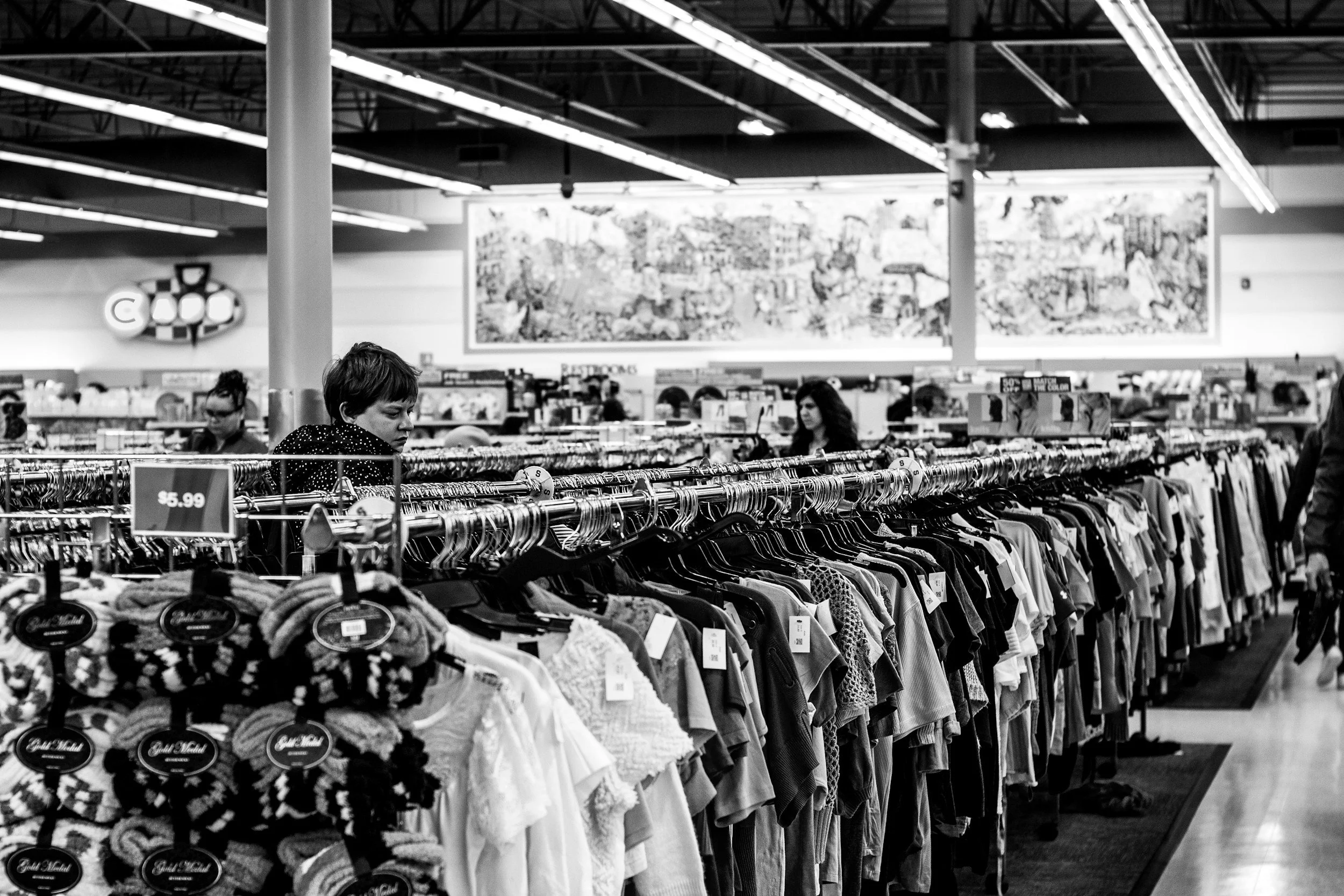
Thrift stores sit at the seam between abstraction and necessity. You don’t shop there because an app nudged you. You shop there because something real—rent, groceries, fatigue with novelty—has entered the room.
Goodwill’s rising revenue doesn’t reflect a single kind of shopper. It reflects a cultural convergence:
People stretching dollars.
Younger shoppers treating reuse as baseline ethics.
Resellers turning uncertainty into provisional income.
Affluent consumers no longer believe new equals better.
This is not the democratization of fashion.
It’s the erosion of a hierarchy that once told us where dignity lived.
Buying used used to read as failure.
Now it reads as fluency.
Sustainability Without Performance
What’s striking about this shift is how little drama accompanies it.
There is no manifesto. No aesthetic crusade. No public reckoning. People simply stop paying full price. They stop discarding usable things. They stop pretending novelty is neutral.
This is how cultures actually adapt: not through declarations, but through competent behavior.
Thrift shopping has become a form of economic literacy.
New York as a Closed System
New York produces excess—style, experimentation, churn—faster than most cities can metabolize it. Thrift stores function as a circulatory system, preventing that excess from turning toxic.
“Pre-loved” isn’t branding here; it’s literal. These objects carry previous lives, unrealized versions of selves, ambitions that didn’t stick. In an era where many people feel priced out of the future, secondhand goods offer continuity instead of fantasy.
They say: something can still be useful even if it’s already been lived in.
That matters.
Rent, the Constant Antagonist
The least surprising element is rent.
Even nonprofit virtue does not receive mercy from Manhattan square footage.
The fact that organizations like Goodwill must outperform simply to remain visible tells us what kind of city this is—and what kind of pressure its institutions are under.
Nonprofits are not outside the market.
They are often its most honest participants.
The Psychological Undercurrent
At a deeper level, thrift stores are doing emotional work.
They offer containment in an unstable economy: predictable turnover, clear rules, the reassurance that value can be recovered, repurposed, reassigned.
In therapeutic terms, this is adaptive realism—the moment when a system stops insisting on how things should work and reorganizes around how they actually do.
People are not shopping differently because they are worse off.
They are shopping differently because they are wiser about fragility.
What the Racks Are Telling Us
This isn’t nostalgia.
It isn’t virtue.
And it isn’t a trend.
It’s a system adjusting itself in real time.
Culture changes its behavior long before it changes its language.
The racks turn over first.
The meaning follows.
If you want to understand where things are going, don’t watch what people praise.
Watch what they quietly stop paying for.
Be Well, Stay Kind, and Godspeed.