The Wichita Lineman Is Still on the Line
Monday, September 21, 2026.
Bob Dylan reportedly called it the greatest song ever written.
Not the greatest country song.
Not the greatest song about work, loneliness, Kansas, or telephone poles.
The greatest song ever written. Period.
This is an extravagant verdict, even from Bob Dylan, who might reasonably be expected to have another candidate in mind.
But the more closely you listen to “Wichita Lineman,” the less preposterous the claim becomes.
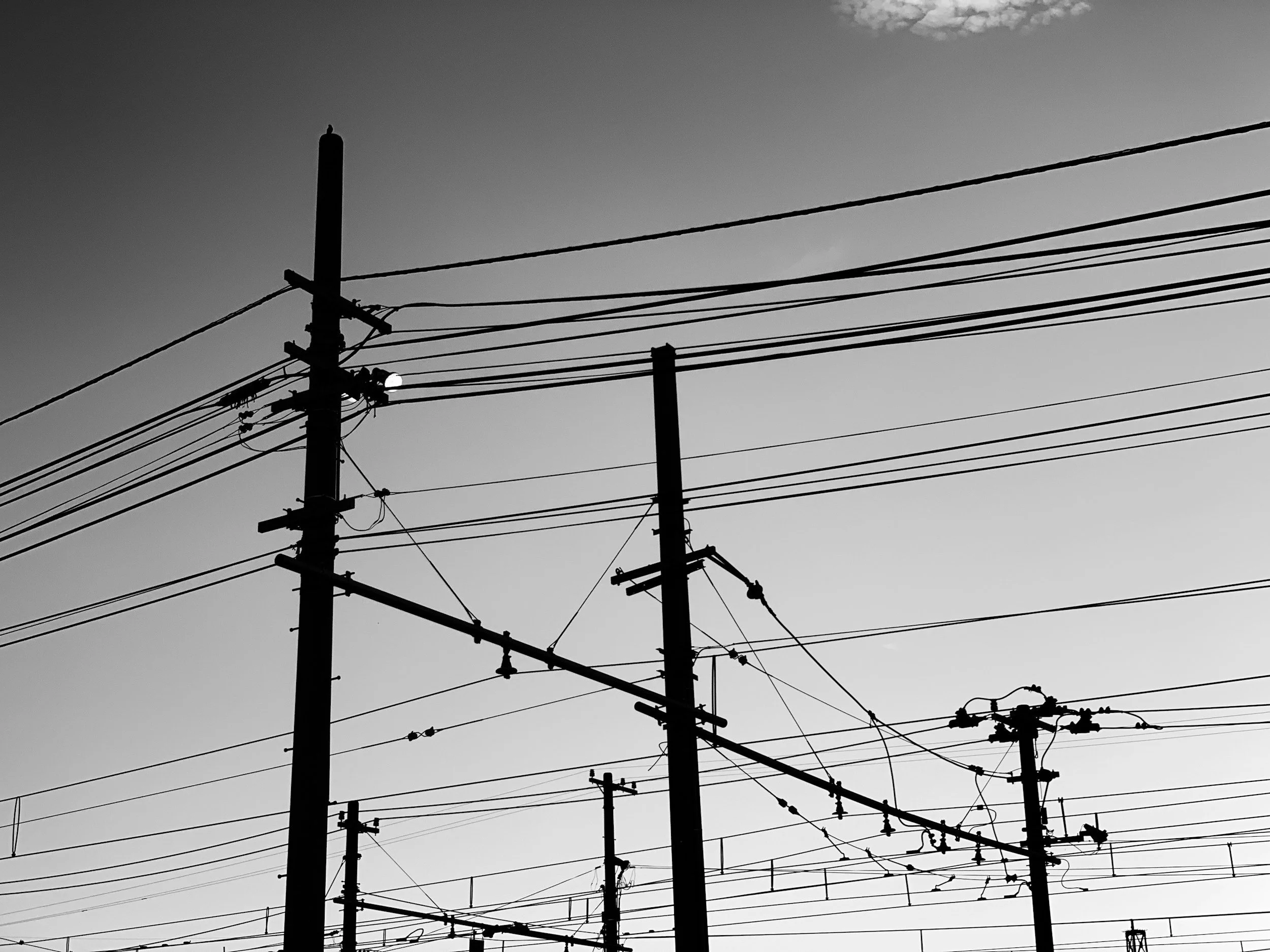
There was once a kind of American man who could be found alone beside a county road, halfway up a telephone pole, keeping other people connected.
He did not have a personal brand. He did not narrate his healing journey.
He did not announce that he was holding space.
He carried tools, watched the weather, listened for trouble in the wire, and did work most people noticed only when it stopped being done.
In 1968, Jimmy Webb turned that man into one of the strangest romantic heroes in American music.
“Wichita Lineman,” recorded by Glen Campbell, lasts barely three minutes. It has no conventional chorus, no completed story, and almost none of the usual machinery of a love song.
The lovers never meet. The woman never speaks. We do not know if she is alive or a memory.
We do not know whether she is a wife, a girlfriend, an ex, or someone the man has loved mostly in his own mind.
And yet the song has survived changing fashions better than many grander declarations of love.
It remains suspended in the culture like its own telephone wire: solitary, useful, faintly humming, carrying a the ardor of a human voice across an enormous distance.
This is how an unfinished song about infrastructure became an American masterpiece—and why it may be the great American song about maintenance: the invisible labor of keeping connection possible.
The View from the Road
Jimmy Webb grew up in Oklahoma, the son of a Baptist minister. The landscape that produced him was not decorative countryside. It was space—flat, severe, and so wide that human structures looked provisional against it.
Webb later described driving through the Oklahoma panhandle and seeing a lone lineman silhouetted against the sky, speaking into one of the old handsets workers used to test telephone circuits.
The poles continued toward the horizon.
To Webb, the plains had what he called an “oceanic” quality: apparently empty, but emotionally immense.
Glen Campbell had asked him for another geographically titled song after the success of “By the Time I Get to Phoenix.”
Webb gave him a place, but what he was really writing about was distance. The New Yorker preserved Webb’s account of the song’s origins.
That distinction matters.
“Wichita Lineman” is often treated as Americana because it contains a place name, a working man, open land, and weather. But the song is not a postcard from Kansas. It is a psychological landscape. The prairie is the size of the man’s loneliness.
Webb’s lineman is responsible for a system that connects everybody except, apparently, himself. That is the song’s central irony. He can maintain the line. He cannot close the distance.
America in 1968
The song arrived in one of the least tranquil years in modern American life. It is worth dwelling on this, because “Wichita Lineman” is now so tastefully sad that we can forget it was released into a country coming apart.
I remember 1968 vividly. I was 14 years old.
The Tet Offensive had altered the public understanding of Vietnam. Martin Luther King Jr. and Robert F. Kennedy had been assassinated. Cities burned.
Police and protesters fought outside the Democratic National Convention in Chicago. Apollo 8 would end the year by carrying human beings around the moon.
American culture was growing louder, angrier, more psychedelic, and more suspicious of inherited authority. Yet one of the year’s great hits was about a municipal employee doing his rounds.
That apparent contradiction is part of the song’s power. The lineman does not leave society. He keeps it functioning.
While the country fractures, he checks the wire. While public language becomes ideological, his private language remains almost painfully direct. He is not a cowboy, soldier, outlaw, or rock star. He is a maintenance man.
The song belongs to a vanished phase of American modernity in which infrastructure still carried a trace of wonder.
Telephone wires were ordinary, but they were also nearly magical. A voice could travel through weather, darkness, and hundreds of miles of emptiness. The network was physical enough to touch. Connection depended upon actual men climbing actual poles.
Today, most communication arrives invisibly.
We say our data lives in a cloud, which is a charming way of avoiding the thought of server farms, undersea cables, warehouse-sized cooling systems, and technicians working at three in the morning.
“Wichita Lineman” remembers when the machinery of connection was still visible—and when loneliness could plausibly be heard in the wire.
The Unfinished Song
Webb believed he had sent Campbell an unfinished composition. It had two verses and, in Webb’s mind, still needed another section. Campbell and producer Al De Lory heard something else: completion.
That decision made the record.
A third verse might have explained too much. It might have told us who the woman was, whether she loved him, or what happened when he came home. Instead, the song leaves its emotional circuit open. The instrumental passage occupies the place where conventional songwriting tells us what everything means.
Campbell plays the famous solo on a Danelectro baritone guitar, an instrument pitched between a standard guitar and a bass.
The sound is neither earthbound nor fully airborne.
Carol Kaye’s bass gives the record its quiet forward motion; Webb’s organ suggests the cold shimmer of signal and distance; De Lory’s arrangement brings in strings without turning the lineman into a man wearing a tuxedo in a wheat field.
Accounts of the session emphasize how the musicians built the record around space, restraint, and that uncanny electronic atmosphere. MusicRadar’s history of the recording is especially good on those studio choices.
The arrangement does something culturally important.
It refuses to decide whether the song is country, pop, orchestral music, or something approaching science fiction.
The rhythm section belongs to Los Angeles session culture. The strings suggest adult pop. Campbell’s voice carries Arkansas, television, church, and country radio.
The organ seems to come from the electrical grid itself.
It is rural modernism: loneliness with circuitry.
Glen Campbell and the Beautifully Contained Man
Another singer might have made the song pitiable. Campbell made it dignified.
Before he became a television star, he was one of the finest session guitarists in Los Angeles, part of the loose group of elite studio musicians later called the Wrecking Crew. He understood the working musician’s version of the lineman’s life: arrive, perform the task, do not make a speech about your interiority.
His vocal is emotionally open but behaviorally contained. That balance is the entire song.
The lineman misses someone with an almost bodily urgency. But he does not abandon his post, demand reassurance, or turn his longing into her emergency. He continues working. The weather is coming. The system requires attention.
This is why the song has often been heard as an anthem of masculine loneliness, but that description is incomplete. The man is not lonely because men are incapable of feeling. He is lonely because he feels deeply in a culture that has given him a task but not much language.
Campbell does not solve that problem by oversinging it. He gives the feeling exactly enough voice.
Love Before Constant Contact
“Wichita Lineman” comes from a world in which missing someone was not immediately actionable.
You could not text from the pole. You could not watch the beloved’s location move across a screen. You could not send a photograph to confirm that you remained attractive, alive, and appropriately miserable. Distance imposed itself as a fact.
That technological limit gave longing a different shape. Desire had time to accumulate without being converted into notification, surveillance, or content. The lineman’s love is not validated by a response. It exists while he works.
Modern couples have nearly eliminated physical unreachability while discovering new forms of emotional absence. We can contact one another from anywhere and still feel unanswered. We can see that a message was delivered, read, and ignored. The old telephone line carried uncertainty. The smartphone itemizes it.
This is one reason the song has not aged into quaintness. Its technology is obsolete, but its emotional problem has become more familiar. We maintain astonishing systems of connection while wondering whether anyone can actually reach us.
The Working-Class Sublime
American popular music has often romanticized labor, usually after removing most of the labor from it. The worker becomes an emblem: noble hands, honest sweat, perhaps a denim jacket selected by wardrobe.
“Wichita Lineman” does something far subtler.
The work is neither grievance nor moral decoration. It is simply the form of this man’s life.
He inspects, repairs, and endures. His responsibility is not presented as the enemy of love. It is where love finds him.
That was an unusually democratic artistic decision.
Webb placed a utility worker inside an arrangement of extraordinary harmonic sophistication and gave him the emotional gravity usually reserved for doomed aristocrats, soldiers departing at dawn, and young men with excellent cheekbones.
The result might be called the working-class sublime: an ordinary person briefly revealed against forces larger than himself—distance, weather, technology, duty, love.
The lineman is tiny against the plains and yet indispensable to everyone on them.
The Man Who Maintains the Line
The song’s deepest metaphor is so obvious that it can be missed. A relationship is also a line requiring maintenance.
Connection does not remain alive because two life partners once felt strongly.
Lines sag. Weather arrives. Signals fail. Somebody has to notice. Somebody has to go out and repair what carries the voice from one life into another.
The lineman does not manufacture intimacy. He tends the conditions that make intimacy possible.
This may be why the song feels more mature than thousands of songs built from promises. Promises are emotionally inexpensive at the moment they are made. Maintenance is repetitive, inconvenient, and largely invisible. It is also what permits anything to last.
In couples therapy, people often arrive arguing about the last dropped call. The unanswered text. The sharp remark at dinner. The sex that did not happen.
But the real trouble usually began earlier, when both partners quietly stopped maintaining the line and began treating deteriorating reception as evidence of defective character.
The great couples are not those who never lose the signal. They are the ones who learn to recognize static before silence becomes permanent.
From Hit Record to Standard
Released in 1968, Campbell’s recording crossed the boundaries the industry used to keep audiences sorted.
It became a major pop hit while also topping the country and easy-listening charts.
The album of the same name reached No. 1 on the American album chart, and Campbell’s success helped make him one of the defining crossover figures of the period.
The honors came later, after popularity had hardened into permanence.
The recording entered the Grammy Hall of Fame in 2000. In 2019, the Library of Congress added it to the National Recording Registry. Bureaucracy had finally caught up with Bob Dylan.
But chart success explains only the first life of a song. Standards acquire second, third, and fourth lives because other singers discover that the composition contains room for them.
“Wichita Lineman” has been recorded across country, pop, soul, jazz, folk, indie rock, and instrumental music.
Johnny Cash could make the worker heavier. James Taylor could emphasize tenderness. R.E.M. could uncover its alternative-rock loneliness. Each version changes the weather while leaving the pole standing.
The song also became a kind of musicians’ password. Songwriters admired its compression. Arrangers admired its refusal to settle harmonically. Singers admired the way Campbell carried immense feeling without spilling it.
Glen Campbell himself credited Webb’s songs as essential to his career; the Recording Academy recorded Campbell saying he probably would not have been there without Webb. Their partnership became one of the central songwriter-interpreter relationships in American popular music.
The song’s admirers routinely reach for extravagant verdicts. That is understandable. “Wichita Lineman” makes three minutes feel like a continent.
What Disappeared with the Lineman
The actual occupation has not vanished, of course. I researched their fight in Boston for fair wages and benefits in another life.
Utility and telecommunications workers still climb, splice, test, repair, and restore. Storms reveal them to us again.
The power fails, the network collapses, and suddenly modern life depends upon a person in a truck driving toward the weather everyone else has been told to avoid.
What has faded is the lineman’s cultural visibility.
Contemporary prestige tends to gather around disruption.
The celebrated person invents, scales, transforms, or replaces. Maintenance has lower status because its great achievement is that nothing dramatic happens.
The bridge holds. The water runs. The call goes through. The marriage continues.
We celebrate the founder and forget the custodian. We admire falling in love and grow strangely incurious about the people who remain there.
“Wichita Lineman” belongs to an older moral imagination in which keeping something working could be a complete form of heroism.
It does not claim the man is fulfilled by labor. It does not pretend duty cures loneliness.
It simply refuses to treat his reliability as evidence that he has no interior life.
This was radical in 1968. It may be even more radical now.
Why the Song Still Hurts
The song endures because it understands that longing is not always dramatic. Sometimes it accompanies competence.
A person can perform the job, answer politely, meet the obligation, and still carry an ache no one around him can see. The inner life does not always interrupt the outer one. Often it hums beneath it.
That is the lineman’s condition.
He is connected to the whole system and separated from the one person he wants.
He is useful to strangers. He is uncertain of his place in one particular heart. He works in the language of continuity while living inside the possibility of loss.
Perhaps that is why Dylan’s judgment does not feel ridiculous.
The song does what the greatest songs do: it makes one person’s private ache large enough to become public property without making it generic.
The man remains himself—working, weather-watching, geographically specific—and somehow becomes everyone who has ever performed competence while waiting for love to answer.
Webb saw a man on a pole and imagined the hidden life inside the silhouette. Campbell sang that life without humiliating it. The musicians built a landscape around it. America recognized itself.
More than half a century later, the poles are disappearing, the signals are invisible, and nearly everyone carries the network in a pocket.
We have never been easier to reach. We have rarely been less certain that love is traveling in the other direction.
But the Wichita lineman is still out there.
He is the one who keeps the line working.
Why Work with Daniel?
Couples rarely lose one another in a single dramatic moment.
More often, the signal weakens through small injuries, unanswered bids, defensive habits, and years of treating static as normal.
Daniel Dashnaw helps couples identify what has broken down, understand the pattern beneath the latest argument, and do the less glamorous work of restoring a connection that can carry weight again.
If your marriage is still on the line, schedule a free introductory call.
Be Well, Stay Kind, and Godspeed.