Wednesday, July 23, 2025.
In the sacred and solemn halls of couples therapy, a new hero has emerged. It’s not a fancy technique, a brilliant insight, or even a laminated worksheet.
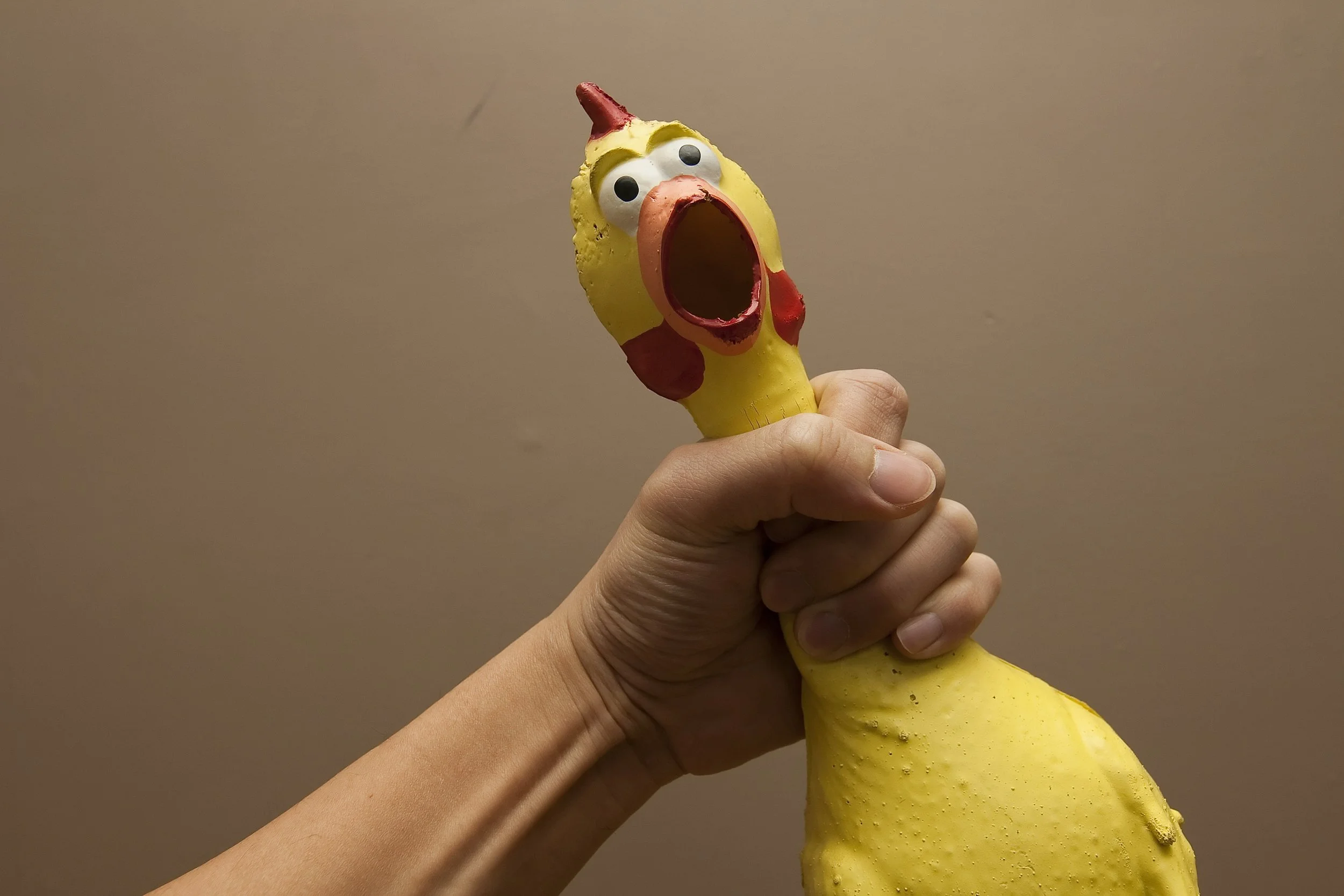
It’s a rubber chicken.
Yes. A rubber chicken. Maybe plush. Maybe crocheted. Maybe plastic with squeaky feet.
But always, undeniably, a Therapy Chicken.
And it just might be the next viral couples therapy meme—equal parts hilarious and helpful. The kind of thing that starts as a joke and ends with tears of relief.
Why a Chicken? Why Now?
Let’s be honest: therapy can get heavy.
Relationships are hard. Conflict is exhausting.
But somewhere between “You never listen to me” and “Fine, forget it,” there’s a little pocket of space where humor lives—a sacred disarming force.
The Therapy Chicken is not about mocking conflict. It’s about interrupting it.
It gives couples a way to break the emotional spiral without breaking each other. One squawk and the limbic system loosens its grip.
You laugh. You breathe. And suddenly you remember: oh right, we love each other.
The Research Behind the Ridiculous
As absurd as it sounds, there’s real science to back up the idea:
Positive emotions broaden perspective and facilitate recovery from stress, especially in close relationships (Fredrickson, 2001).
Humor in couples is linked to higher relationship satisfaction and conflict resolution skills (Hall, 2017).
For neurodivergent couples, introducing a physical, tangible object like the chicken can act as a co-regulation tool—a nonverbal signal that it’s time to slow down or switch modes (Gaus, 2019; Porges, 2011).
In Internal Family Systems therapy, speaking “through” a part or proxy (like a chicken) allows for reduced shame and increased insight (Schwartz, 2021).
Even old-school relational therapists have advocated for externalizing the problem—like placing it in a chair or speaking to it like an object. Why not make that object feathery and absurd? (Wile, 2002).
A New Kind of Ritual
Here’s what’s brilliant: the Therapy Chicken becomes ritualized.
It’s not just a gimmick. It’s a shared symbol—a private code for “let’s try again.”
Think of it as a talking stick for Millennials, or a puppet for the emotionally avoidant. It lowers the stakes while lifting the mood.
“We were arguing about the dishes again. I passed him the chicken and said, ‘Maybe it’s not about the forks.’ He actually listened.”
Clinical Use Case: Anna and James
Let’s say Anna and James (our archetypal therapy couple) are stuck in their usual loop:
Anna feels abandoned.
James feels criticized.
They both want closeness but can’t stop flinching.
Their therapist introduces the Therapy Chicken:
“When things feel stuck, one of you can pick it up and speak through it. Sometimes the chicken’s voice is kinder. Sometimes sillier. But always truer.”
At first, they roll their eyes. By week five, the chicken has a name.
By week eight, it’s defused a conflict about the in-laws. By week twelve, James whispers, “I’m sorry,” through the chicken and means it.
But Isn’t This Just Avoiding Real Work?
No. It’s avoiding retraumatization. It’s avoiding escalation.
It’s engaging emotional regulation through connection and playfulness—an ancient mammalian trick, not a TikTok stunt.
I’m not saying all you need is poultry. But sometimes the hardest things to say need a puppet.
Or a squeaky chicken from the Dollar Store.
Closing Thought: Therapy Is Allowed to Be Silly
Couples therapy can be grueling, sacred work.
But as any long-married couple knows, the real glue isn’t just deep talks and empathy breakthroughs.
It’s the moments you’re both crying—then laughing.
The Therapy Chicken isn’t a joke instead of intimacy. It’s a joke in service of it.
It’s your nervous system saying: “Let’s not destroy each other today.”
And sometimes, that’s more than enough.
Want to Try the Therapy Chicken?
You don’t need a therapist’s permission.
You only need:
A rubber chicken. Or stuffed bird. Or sock with googly eyes.
A shared agreement: If someone brings it out, we listen.
Start simple:
“The chicken would like to ask… can we try again?”
Be Well, Stay Kind, and Godspeed.
REFERENCES:
Fredrickson, B. L. (2001). The role of positive emotions in positive psychology. American Psychologist, 56(3), 218–226. https://doi.org/10.1037/0003-066X.56.3.218
Gaus, V. L. (2019). Cognitive-behavioral therapy for adults with autism spectrum disorder. Routledge.
Hall, J. A. (2017). Humor in romantic relationships: A meta-analysis. Personal Relationships, 24(2), 306–322. https://doi.org/10.1111/pere.12183
Porges, S. W. (2011). The polyvagal theory: Neurophysiological foundations of emotions, attachment, communication, and self-regulation. W. W. Norton.
Schwartz, R. C. (2021). No Bad Parts: Healing Trauma and Restoring Wholeness with the Internal Family Systems Model. Sounds True.
Wile, D. B. (2002). After the honeymoon: How conflict can improve your relationship. Wiley.