Tuesday, August 12, 2025.
When Yard Signs Cancel Each Other Out, But the Seed Packets Still Arrive
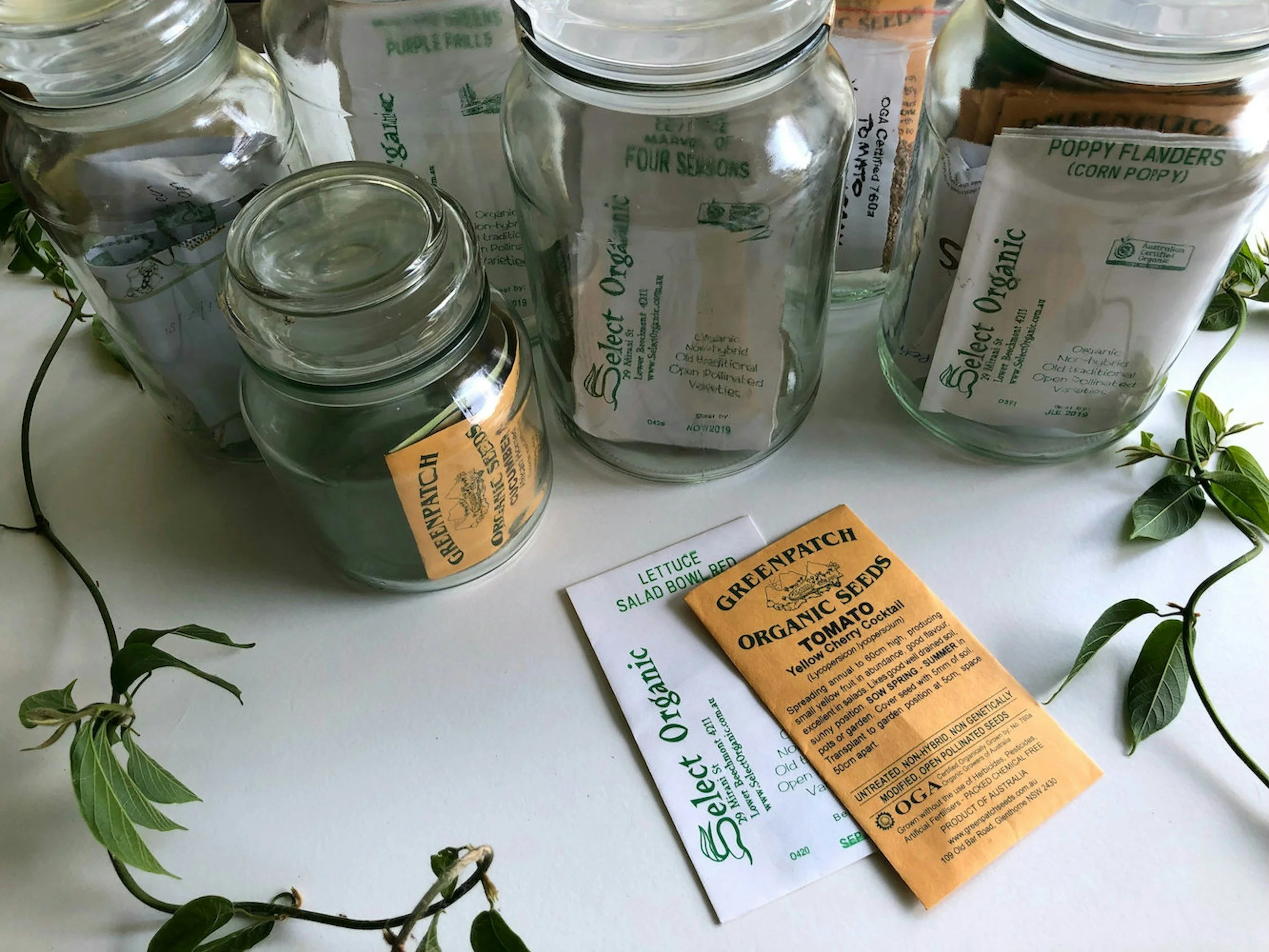
Somewhere in America, a man in rural Missouri is mailing heirloom tomato seeds to a woman in Brooklyn. On paper, they should hate each other.
His yard has a flagpole; hers has a climate march poster. Their political bumper stickers, if parked side by side, could ignite a small brush fire.
And yet, they’ve been swapping seeds for three years.
Every spring, she sends him a sourdough starter; he sends her rare zinnia seeds in return. Neither has mentioned politics once. That’s probably why they still like each other.
This is the quiet revolution — the growth of rural conservatives and urban progressives finding each other in unlikely online spaces, building small, durable friendships around passions that have nothing to do with ballots, yard signs, or cable news.
Where Political Opposites Meet Over Knitting Needles
Knitting forums. Orchid swaps. Facebook groups for vintage tractor repair. These are the accidental meeting points where America’s rural-urban divide softens just enough for a conversation.
In these spaces, usernames like QuiltQueen_89 or MushroomMike reveal nothing about voting history — and everything about shared enthusiasm. Politics becomes the unspoken third rail: everybody knows it’s there, nobody grabs it.
Why Hobby Spaces Work When Political Forums Don’t
Social scientists have a name for this: contact theory — the idea that cooperative interaction between opposing groups can reduce prejudice, especially when it happens in a low-stakes, shared-goal environment (Pettigrew & Tropp, 2006).
Hobby forums and swap groups unintentionally create the perfect conditions:
Equal Status — A new knitter is a new knitter, whether in Brooklyn or rural Iowa.
Common Goals — Grow the perfect heirloom tomato. Identify that weird mushroom. Finish the sweater before winter.
Cooperative Interdependence — If you want the rare thread or the best fertilizer, you need to be on good terms with the people who have them.
The Rural-Urban Connection Pipeline
This quiet boom is the result of three forces:
Algorithmic Serendipity — The same algorithms accused of fueling polarization also occasionally drop people into a Facebook group for antique butter churns.
Rural Broadband Expansion — Faster internet in rural communities has opened the door to online spaces once dominated by urban users (Whitacre et al., 2014).
Political Burnout — After years of constant outrage, people are retreating to safe, nonpolitical corners of the internet for connection (Mutz, 2015).
The Fragility of No-Politics Pacts
These friendships are real — but delicate. One all-caps post about climate policy or gun rights can undo years of goodwill.
Still, the groups that last tend to have unwritten rules:
Keep politics out of the main discussion.
Create “off-topic” threads for gentle, well-moderated political talk.
Let moderators redirect conversations with a cheerful “Let’s get back to the rhubarb pie recipe.”
Why It Matters in a Polarized America
The U.S. is more politically divided now than at almost any point in modern history (Pew Research Center, 2022).
Interactions across the aisle are rare — and often hostile.
These micro-communities won’t end the culture war, but they certainly erode the cartoon version of “the other side.” When TractorTed is the guy who mailed you zucchini seeds, it’s harder to imagine him as a faceless enemy.
Civil Society in the Key to Darning Socks
This quiet boom isn’t about political reconciliation or grand national healing.
It’s something smaller, older, and maybe more durable: liking someone for how they show up when you share a passion.
In a time when politics tries to colonize every corner of life, perhaps the most subversive act is refusing to let it.
And if it takes a knitting forum, a plant swap, or a mushroom ID group to get there, so be it.
Be Well, Stay Kind, and Godspeed.
REFERENCES:
Mutz, D. C. (2015). In-your-face politics: The consequences of uncivil media. Political Communication, 32(2), 182–199. https://doi.org/10.1177/1745691615579987
Pettigrew, T. F., & Tropp, L. R. (2006). A meta-analytic test of intergroup contact theory. Psychological Bulletin, 132(4), 751–783. https://doi.org/10.1037/0033-2909.132.4.751
Pew Research Center. (2022). Americans’ political divides remain as wide as ever. https://www.pewresearch.org/politics/2022/11/29/americans-political-divides-remain-as-wide-as-ever/
Whitacre, B. E., Gallardo, R., & Strover, S. (2014). Broadband’s contribution to economic growth in rural areas: Moving towards a causal relationship. The Information Society, 30(2), 93–105. https://doi.org/10.1080/01972243.2014.889271