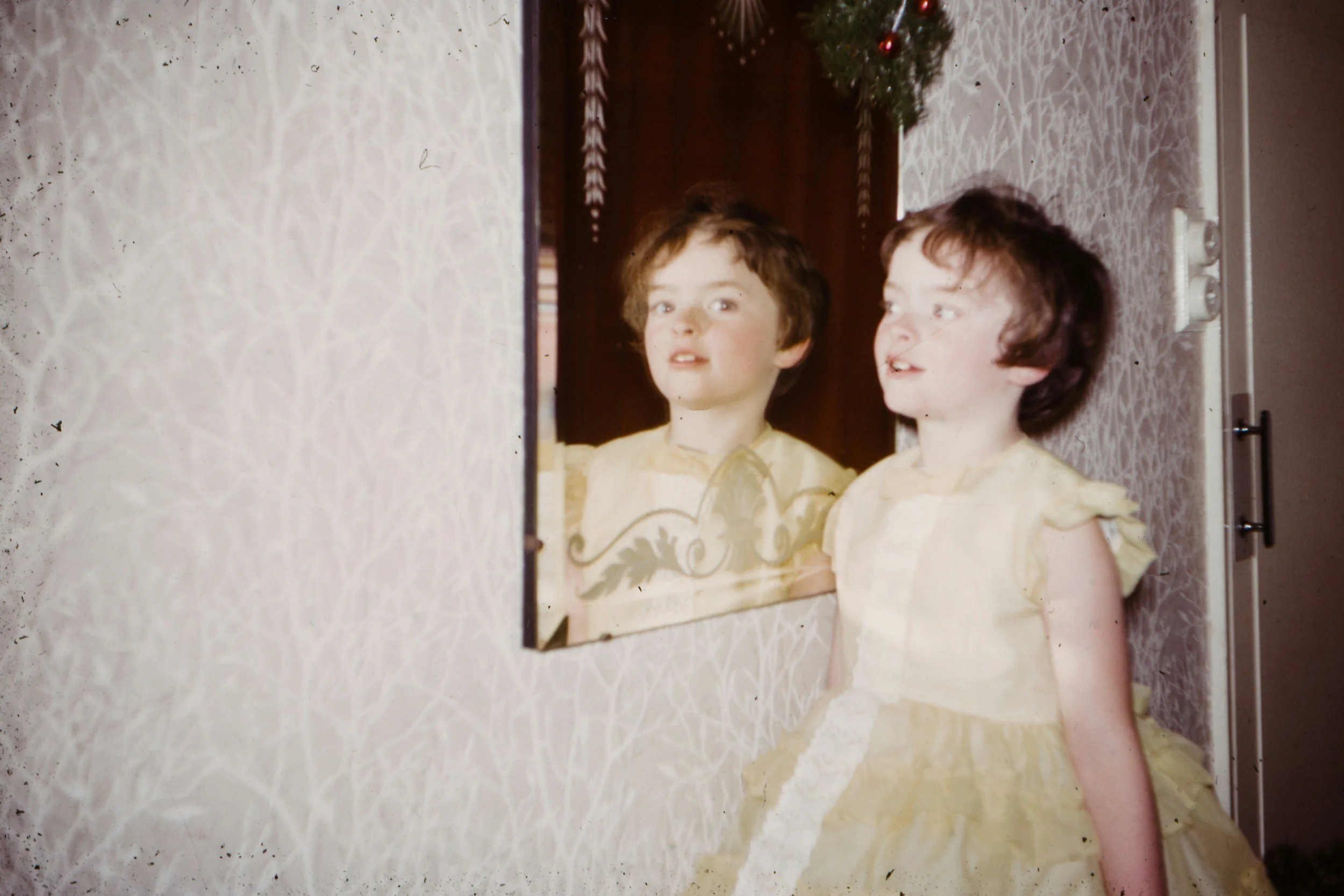
Sunday, October 12, 2025. This is for Danny Kulesco.
No one sets out to raise a narcissist. You don’t cradle your newborn and whisper, “One day you’ll make every dinner conversation about you.”
Yet somehow, it happens.
Narcissism doesn’t bloom in adulthood—it’s cultivated in childhood, usually not through malice but through emotional distortion and disturbance.
It isn’t born of too much love but of love that has gone lopsided: too indulgent, too conditional, or too absent.
As a couples therapist in Massachusetts, I’ve seen this play out countless times—partners locked in power struggles that began decades before they met.
What looks like arrogance is often a fragile self trying to survive.
Case Study #1: The Overvalued Child
Parenting style: “You’re the most special human to ever exist.”
Likely outcome: Entitlement dressed as confidence.
In a longitudinal PNAS study, Brummelman et al. (2015) found that children whose parents overvalued them (“You’re better than other kids”) were more likely to develop narcissistic traits—and lower self-esteem.
That’s the paradox: narcissism isn’t self-love—it’s self-doubt in costume.
The overvalued child learns that affection must be earned through exceptionalism. They grow into adults who chase admiration the way others chase affection.
Case Study #2: The Unmirrored Child
Parenting style: “I feed you, don’t I?”
Likely outcome: Emotional invisibility disguised as superiority.
Heinz Kohut (1971) proposed that when caregivers fail to mirror a child’s inner world—fail to see and reflect their emotions—the child compensates by constructing a grandiose self.
Imagine showing your parent a drawing and hearing, “Why is the sky purple?, that’s not right.” instead of, “You were feeling creative today.” Without reflection, children trade authenticity for applause.
By adulthood, they crave admiration not as pleasure, but as proof they exist.
Case Study #3: The Wounded Child
Parenting style: “You can cry when you’ve earned it.”
Likely outcome: Shame buried under charm.
Neglect and emotional abuse don’t always create villains; sometimes, they create performers. Otway and Vignoles (2006) found that adults high in narcissism often recalled rejection and humiliation in childhood.
The grandiose self becomes a survival mask—a way to control how others see them before others can wound them. Beneath the confidence is a scared kid rehearsing for love.
Case Study #4: The Trophy Child
Parenting style: “You’re my everything, so please don’t fail me.”
Likely outcome: Achievement addiction.
When a parent’s self-worth depends on their child’s success, affection becomes performance-based currency. Horton et al. (2006) linked these dynamics to higher narcissistic vulnerability later in life.
Such children grow into adults who equate love with productivity and affection with achievement. They don’t rest—they retire from the stage temporarily.
Case Study #5: The Ghost Child
Parenting style: “We’re all just trying to survive.”
Likely outcome: Empathy impairment.
Meta-analysis confirms that Adverse Childhood Experiences (ACEs)—neglect, chaos, abuse—also tend to predict higher narcissistic traits in adulthood (Zhang et al., 2024).
When emotions are unsafe, children numb them.
Later, they may describe feelings with fluency but experience them faintly. Their empathy doesn’t totally vanish; it just seeps away, and tends to pool in areas of the self that are deeper. The narcissism of those seriously afflicted with multiple threats as children often are robustly self-absorbed.
The Developmental Recipe for Narcissism
To cook up narcissism from scratch, you’d need:
A temperament prone to shame or sensitivity.
Conditional love—or too much praise without grounding.
Cultural seasoning: social media, competition, and endless self-promotion.
A pinch of luck and a large audience.
Bake until reality disappoints. Serve cold.
What Narcissism Isn’t
Narcissism isn’t confidence or even vanity—it’s fragility with good lighting.
It’s what happens when self-worth depends entirely on external reflection. The goal in therapy isn’t to break it but to repair it—to help a person build an inner mirror sturdy enough to replace the applause.
How Narcissists Are Made—But Not Doomed
The good news: narcissism may begin in childhood, but it isn’t destiny. The self, like the brain, has neuroplastic grace. People can—and do—change.
Step One: The Collapse
The grandiose self eventually fails under the weight of reality—divorce, job loss, or simple irrelevance. Kernberg (1975) called this the narcissistic injury—the emotional implosion that occurs when the performance no longer works.
It’s humiliating. It’s also the beginning of freedom.
Step Two: The Shaky Birth of Empathy
Empathy doesn’t sprout naturally in the narcissistic psyche—it must be trained. Hepper, Hart, and Sedikides (2014) found narcissists can learn empathy when it benefits them personally.
It starts as imitation, but repetition rewires. When they realize empathy feels better than domination, something shifts: connection becomes relief, not risk.
Step Three: Reparenting the Self
Healing narcissism is a kind of emotional re-parenting. In therapy, the narcissist experiences warmth and boundaries—mirroring without indulgence. Kohut (1977) called this optimal frustration: enough empathy to feel safe, enough limit to grow.
It’s the first time love doesn’t depend on applause.
Step Four: Integration, Not Perfection
The opposite of narcissism isn’t modesty—it’s integration. Learning to hold both “I matter” and “so do you” without collapsing.
Therapy softens extremes—no more “all good” or “all bad.” Ordinary life stops feeling like exile and starts feeling like peace.
Step Five: Repair as Cultural Rebellion
In a culture that rewards branding over being, recovery from narcissism is radical. Every time someone raised on performance chooses presence—listens instead of lectures, apologizes instead of defends—the temperature of the culture drops one degree toward sanity.
This transformation is beautifully visible in couples work, where empathy becomes the new oxygen.
The Takeaway
If narcissism was forged from too much spotlight and too little warmth, recovery is its inverse: less performance, more presence.
The cure isn’t shame or exposure—it’s empathy, practiced until it feels like home.
Because beneath every narcissist isn’t a monster—it’s a child still waiting for love that didn’t arrive on time.
FAQ: Childhood Origins of Narcissism
Can narcissists change?
Yes—We’re often told that narcissistic recovery is achieved though slowly. Long-term psychotherapy, which can help these folks internalize empathy and form more stable self-esteem (Kohut, 1977; Hepper et al., 2014). I expect an emerging model from neuroscience to challenge and eventually replace long term psychotherapy for narcissism.
What parenting styles cause narcissism?
Both extremes: overvaluation (the “special snowflake” model) and emotional neglect. Balanced warmth and realistic feedback build healthy self-esteem.
Is all narcissism bad?
No. Healthy narcissism fuels self-respect and ambition. It becomes destructive only when insecurity turns admiration into addiction.
Can therapy help someone married to a narcissist?
Yes. Understanding narcissistic defenses can restore compassion without enabling abuse. Couples therapy can help partners set boundaries and re-establish reciprocity.
Closing Reflection
In the end, the story of narcissism isn’t really about ego—it’s about injury.
Every inflated self began as a child trying to stay visible in a house where love was unpredictable.
Some were over-praised into performance; others were ignored into invisibility.
Different roads, same destination: a fragile sense of self built on applause.
What therapy offers is not punishment, but repair.
It’s a slow apprenticeship in the art of being ordinary—and finding safety in that ordinariness. When narcissistic defenses soften, what emerges isn’t a new personality but a restored humanity: the ability to feel without fear, to connect without control.
Healing narcissism, at its core, is a return to mutual recognition. The mirror becomes less about reflection and more about relationship. Two people finally see each other, not as competitors in a hierarchy of worth, but as equals in the messy miracle of being human.
If you grew up in a family where attention felt conditional, or if you’re in a relationship shadowed by performance and perfection, there’s still time to rewrite the script.
Therapy doesn’t erase the past—but it might teach you how to carry it differently.
Because empathy, once learned, is contagious. And every person who learns to love without performance subtly and eventually lowers the emotional temperature of our entire culture.
That’s the quiet revolution—less performance, more presence.
Be Well, Stay Kind, and Godspeed.
REFERENCES:
Brummelman, E., Thomaes, S., Nelemans, S. A., Orobio de Castro, B., & Bushman, B. J. (2015).
Origins of narcissism in children. Proceedings of the National Academy of Sciences, 112(12), 3659–3662.
Hepper, E. G., Hart, C. M., & Sedikides, C. (2014).
Moving Narcissus: Can narcissists be empathic? Personality and Social Psychology Bulletin, 40(9), 1079–1091.
Horton, R. S., Bleau, G., & Drwecki, B. (2006).
Parenting Narcissus: Parenting correlates of narcissism. Personality and Individual Differences, 40(5), 863–874.
Kernberg, O. F. (1975).
Borderline conditions and pathological narcissism. Jason Aronson.
Kohut, H. (1971).
The analysis of the self. International Universities Press.
Kohut, H. (1977).
The restoration of the self. International Universities Press.
Otway, L. J., & Vignoles, V. L. (2006).
Narcissism and childhood recollections: A quantitative test of psychoanalytic predictions. Personality and Social Psychology Bulletin, 32(1), 104–116.
Zhang, X., Chen, J., & Wang, J. (2024).
Childhood adversity and narcissistic traits: A meta-analytic review. Frontiers in Psychology, 15, 1287632.